

Page Contents
1. Introduction
Joint pain and stiffness represent one of the most prevalent health challenges facing millions of individuals worldwide. As our understanding of musculoskeletal disorders has evolved, so too has our approach to treating these debilitating conditions. The emergence of Class IV laser therapy represents a paradigm shift in how we address joint-related dysfunction, offering patients a non-invasive, scientifically-backed alternative to traditional interventions. The journey from restricted mobility to restored function begins with understanding the underlying mechanisms that contribute to joint dysfunction. When joints become locked or painful, the impact extends far beyond mere discomfort, affecting every aspect of daily life from basic activities of daily living to professional performance and recreational pursuits.
1.1 Why Joint Pain and Stiffness Are More Than Just Annoying
Joint pain and stiffness constitute a complex clinical presentation that encompasses multiple pathophysiological processes. The articular cartilage, synovial membrane, and surrounding periarticular tissues work in harmony to facilitate smooth, pain-free movement. When this intricate system becomes compromised, the resulting dysfunction can manifest as chronic pain, reduced range of motion, and functional impairment. The economic burden of joint-related disorders extends beyond individual suffering, contributing to decreased productivity, increased healthcare utilization, and reduced quality of life metrics. Research indicates that musculoskeletal conditions account for approximately 20% of all healthcare visits, with joint-specific complaints representing a significant portion of these encounters.
1.2 Common Triggers: Aging, Arthritis, Overuse, Injury, Inflammation
The etiology of joint dysfunction encompasses a broad spectrum of causative factors, each contributing to the overall pathophysiology through distinct mechanisms. Age-related changes in articular cartilage composition, including decreased proteoglycan content and collagen fiber organization, create an environment conducive to joint degeneration. The natural aging process affects chondrocyte metabolism, reducing the synthesis of essential matrix components while increasing catabolic enzyme activity. Arthritis, both osteoarthritis and rheumatoid arthritis, represents the most common cause of joint pain and stiffness globally. Osteoarthritis involves progressive cartilage degradation accompanied by subchondral bone remodeling and synovial inflammation. Rheumatoid arthritis, an autoimmune condition, targets the synovial membrane through inflammatory cascades involving tumor necrosis factor-alpha, interleukin-1, and other pro-inflammatory cytokines.
1.3 The Rise of Non-Invasive Solutions: Class IV Laser Therapy Steps In
The evolution of therapeutic interventions has witnessed a significant shift toward non-invasive modalities that address underlying pathophysiology without the risks associated with surgical procedures or pharmaceutical interventions. Class IV laser therapy has emerged as a promising therapeutic option, offering clinicians a tool that combines scientific rigor with practical application. This innovative approach harnesses the principles of photobiomodulation to stimulate cellular repair mechanisms, reduce inflammation, and promote tissue healing. Unlike traditional treatments that often focus on symptom management, Class IV laser therapy targets the fundamental processes underlying joint dysfunction, offering patients the potential for sustained improvement in function and comfort.
2. Understanding Class IV Laser Therapy
The therapeutic application of laser technology in medicine has undergone significant advancement since its initial introduction. Class IV laser therapy represents the culmination of decades of research in photobiomodulation, offering clinicians a sophisticated tool for addressing various musculoskeletal conditions. Understanding the fundamental principles underlying this technology is essential for appreciating its therapeutic potential and clinical applications. The classification system for medical lasers is based on power output and potential for tissue damage, with Class IV lasers representing the highest therapeutic power category. This classification system ensures appropriate safety protocols while maximizing therapeutic efficacy.
2.1 What Is Class IV Laser Therapy?
Class IV laser therapy utilizes high-power laser devices typically operating between 1-60 watts, delivering specific wavelengths of light to targeted tissues. These devices generate coherent, monochromatic light in the near-infrared spectrum, typically between 800-1000 nanometers, which corresponds to optimal tissue penetration and cellular absorption characteristics. The therapeutic mechanism involves the delivery of photons to target tissues, where they interact with cellular chromophores, particularly cytochrome c oxidase in the mitochondrial electron transport chain. This interaction triggers a cascade of cellular responses including increased adenosine triphosphate production, enhanced cellular metabolism, and modulation of inflammatory pathways.
2.2 How It Works: The Science of Photobiomodulation
Photobiomodulation represents a complex biological process involving the absorption of specific wavelengths of light by cellular components, resulting in measurable physiological changes. The primary mechanism involves the interaction between photons and cytochrome c oxidase, the terminal enzyme in the mitochondrial respiratory chain. This interaction enhances electron transport efficiency, leading to increased adenosine triphosphate synthesis and cellular energy availability. Secondary mechanisms include the modulation of reactive oxygen species, nitric oxide signaling, and transcription factor activation. These processes contribute to enhanced cellular proliferation, reduced apoptosis, and improved tissue repair mechanisms. The therapeutic effects extend beyond the cellular level, influencing tissue-level processes including angiogenesis, collagen synthesis, and inflammatory resolution.
2.3 Class IV vs Class III (Cold) Lasers
The distinction between Class IV and Class III laser systems extends beyond power output, encompassing fundamental differences in therapeutic approach and clinical outcomes. Class III lasers, commonly referred to as low-level laser therapy or cold laser therapy, typically operate at power levels below 500 milliwatts and require longer treatment durations to achieve therapeutic effects. Class IV systems deliver significantly higher power densities, enabling deeper tissue penetration and more robust cellular responses. The increased power output allows for shorter treatment durations while maintaining therapeutic efficacy. Clinical studies have demonstrated superior outcomes with Class IV systems for conditions requiring deep tissue penetration, such as joint disorders and chronic pain conditions.
2.4 FDA-Approved and Clinically Backed Applications
The regulatory approval process for Class IV laser devices involves rigorous evaluation of safety and efficacy data. The Food and Drug Administration has cleared numerous Class IV laser systems for specific therapeutic indications, including pain reduction, inflammation management, and tissue healing enhancement. These approvals are based on comprehensive clinical trials demonstrating both safety and therapeutic benefit. Clinical evidence supporting Class IV laser therapy continues to expand, with peer-reviewed studies documenting efficacy for various musculoskeletal conditions. Randomized controlled trials have demonstrated significant improvements in pain scores, functional outcomes, and quality of life measures across diverse patient populations.
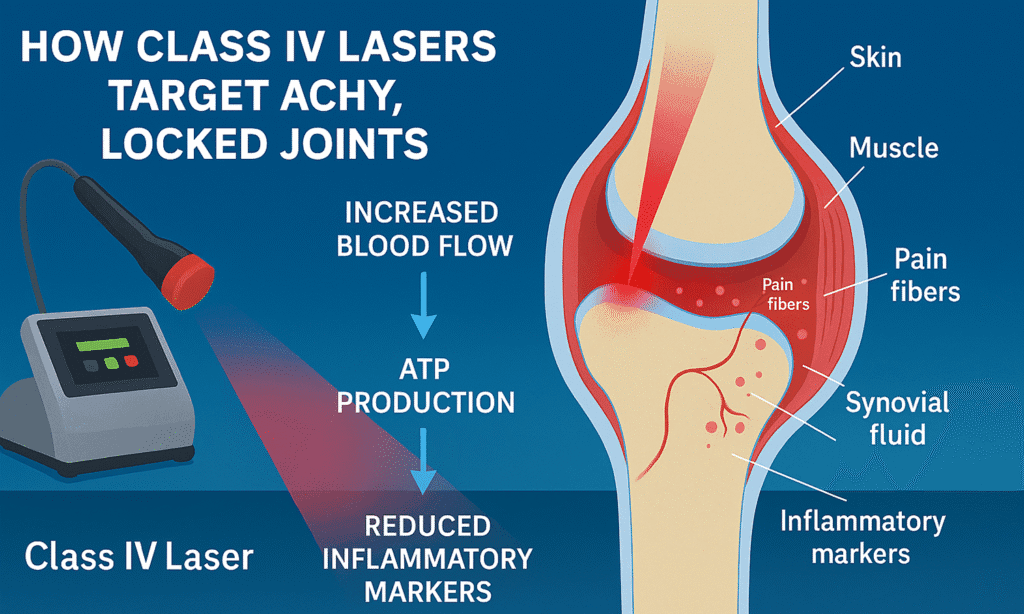
3. How Class IV Lasers Target Achy, Locked Joints
The therapeutic efficacy of Class IV laser therapy in addressing joint dysfunction stems from its ability to target multiple pathophysiological processes simultaneously. Joint pain and stiffness result from complex interactions between inflammatory mediators, tissue damage, and altered biomechanics. Class IV laser therapy addresses these underlying mechanisms through direct cellular effects and systemic responses. The multi-modal approach of Class IV laser therapy distinguishes it from traditional interventions that typically target single pathways. By simultaneously addressing inflammation, circulation, and tissue repair, this therapeutic modality offers comprehensive treatment for joint-related dysfunction.
3.1 Penetration to Deep Joint Structures (Cartilage, Capsule, Ligaments)
The therapeutic success of Class IV laser therapy in joint applications depends critically on adequate photon penetration to target tissues. Unlike superficial treatments, joint dysfunction requires intervention at the level of articular cartilage, joint capsule, and surrounding ligamentous structures. Class IV lasers deliver sufficient power density to achieve therapeutic photon levels at depths of 3-5 centimeters, enabling direct treatment of intra-articular structures. The penetration characteristics are influenced by wavelength selection, with near-infrared wavelengths (800-1000 nm) demonstrating optimal tissue penetration while minimizing absorption by hemoglobin and water. This wavelength range ensures maximal photon delivery to target tissues while maintaining safety parameters.
3.2 Anti-Inflammatory Effects: Blocking Prostaglandins and Cytokines
The anti-inflammatory mechanisms of Class IV laser therapy involve multiple pathways, including the modulation of prostaglandin synthesis and cytokine expression. Photobiomodulation has been shown to reduce the expression of cyclooxygenase-2, the rate-limiting enzyme in prostaglandin production, thereby decreasing inflammatory mediator synthesis. Additionally, laser therapy modulates the nuclear factor-kappa B pathway, reducing the transcription of pro-inflammatory genes. Clinical studies have demonstrated significant reductions in inflammatory markers including interleukin-1 beta, tumor necrosis factor-alpha, and prostaglandin E2 following Class IV laser treatment. These biochemical changes correlate with clinical improvements in pain and functional outcomes, supporting the therapeutic rationale for laser intervention in inflammatory joint conditions.
3.3 Enhanced Circulation and Oxygenation
Vascular effects represent a crucial component of Class IV laser therapy’s therapeutic mechanism. Photobiomodulation stimulates nitric oxide release from vascular endothelium, promoting vasodilation and increased blood flow to treated tissues. Enhanced circulation facilitates the delivery of oxygen and nutrients while promoting the removal of metabolic waste products and inflammatory mediators. The improved vascular supply supports tissue repair processes by providing essential substrates for cellular metabolism and protein synthesis. Additionally, enhanced lymphatic drainage reduces tissue edema and promotes the resolution of inflammatory infiltrates, contributing to improved joint function and reduced pain perception.
3.4 Restoring Synovial Fluid and Reducing Joint Friction
Synovial fluid plays a critical role in joint function, providing lubrication and nutrient delivery to articular cartilage. Class IV laser therapy has been shown to influence synovial fluid composition and volume, potentially through effects on synovial membrane function. The treatment may enhance hyaluronic acid production by synovial cells, improving the viscoelastic properties of synovial fluid. Reduced joint friction resulting from improved synovial fluid quality contributes to enhanced range of motion and decreased pain during movement. This mechanism is particularly relevant for degenerative joint conditions where synovial fluid quality is compromised, leading to increased friction and accelerated cartilage wear.
4. Conditions Treated with Class IV Laser Therapy
The therapeutic applications of Class IV laser therapy in joint disorders encompass a broad spectrum of conditions, each presenting unique pathophysiological characteristics and treatment challenges. The versatility of photobiomodulation allows for effective intervention across diverse diagnostic categories, from acute inflammatory conditions to chronic degenerative processes. Clinical evidence supporting Class IV laser therapy continues to expand, with studies demonstrating efficacy for both common and complex joint disorders. The non-invasive nature of the treatment makes it particularly valuable for patients seeking alternatives to pharmacological interventions or surgical procedures.
4.1 Osteoarthritis and Rheumatoid Arthritis
Osteoarthritis represents the most common form of arthritis, affecting millions of individuals worldwide. The condition involves progressive cartilage degradation accompanied by subchondral bone changes and synovial inflammation. Class IV laser therapy addresses multiple aspects of osteoarthritis pathophysiology, including cartilage preservation, inflammation reduction, and pain management. Clinical trials have demonstrated significant improvements in Western Ontario and McMaster Universities Osteoarthritis Index scores following laser treatment. Rheumatoid arthritis presents distinct therapeutic challenges due to its autoimmune etiology and systemic nature. Class IV laser therapy offers adjunctive benefits by reducing local inflammation and pain while supporting tissue repair processes. The treatment’s immunomodulatory effects may help balance inflammatory responses, providing symptomatic relief without interfering with disease-modifying antirheumatic drug therapy.
4.2 Frozen Shoulder and Adhesive Capsulitis
Adhesive capsulitis, commonly known as frozen shoulder, involves inflammation and fibrosis of the shoulder joint capsule, resulting in severe pain and restricted range of motion. The condition typically progresses through distinct phases, including freezing, frozen, and thawing stages. Class IV laser therapy has shown particular efficacy in accelerating recovery and improving functional outcomes across all phases of the condition. The therapeutic mechanism involves reducing capsular inflammation, promoting collagen remodeling, and enhancing tissue extensibility. Clinical studies have demonstrated significant improvements in range of motion and pain scores, with some patients experiencing accelerated progression through the natural healing phases of adhesive capsulitis.
4.3 Knee Stiffness and Meniscal Degeneration
Knee joint dysfunction encompasses various conditions affecting the tibiofemoral and patellofemoral articulations. Meniscal degeneration, a common cause of knee pain and stiffness, involves progressive breakdown of fibrocartilaginous structures essential for joint stability and load distribution. Class IV laser therapy addresses both the degenerative process and associated inflammatory responses. Treatment protocols targeting knee dysfunction focus on reducing intra-articular inflammation, promoting tissue repair, and enhancing periarticular muscle function. The deep penetration capabilities of Class IV lasers enable effective treatment of intra-articular structures while addressing surrounding soft tissue dysfunction. Clinical outcomes include improved range of motion, reduced pain, and enhanced functional capacity.
4.4 Post-Surgical Joint Recovery
Post-operative joint recovery presents unique therapeutic challenges, involving tissue healing, inflammation management, and functional restoration. Class IV laser therapy offers significant advantages in the post-surgical setting by accelerating tissue repair processes and reducing inflammatory responses. The treatment’s ability to enhance cellular metabolism and promote angiogenesis supports optimal healing conditions. Clinical protocols for post-surgical patients typically begin within days of the procedure, focusing on reducing edema, minimizing scar tissue formation, and promoting early mobilization. Studies have demonstrated reduced recovery times, improved functional outcomes, and decreased pain medication requirements in patients receiving Class IV laser therapy as part of their post-operative rehabilitation program.
4.5 Sports Injuries Affecting Joints
Sports-related joint injuries often involve acute trauma superimposed on chronic overuse patterns. Conditions such as lateral epicondylitis (tennis elbow) and patellar tendinopathy (jumper’s knee) represent common presentations in athletic populations. Class IV laser therapy addresses both acute inflammatory responses and chronic degenerative changes associated with these conditions. The treatment’s ability to enhance tissue repair while reducing inflammation makes it particularly valuable for athletes seeking to return to competition quickly. Clinical studies have demonstrated accelerated recovery times, reduced pain scores, and improved functional performance in athletes receiving Class IV laser therapy for joint-related sports injuries.
5. What a Class IV Laser Session Looks Like
Understanding the clinical experience of Class IV laser therapy helps patients prepare for treatment and sets appropriate expectations for the therapeutic process. The treatment protocol involves careful assessment, precise laser application, and ongoing monitoring to ensure optimal outcomes. The standardized approach ensures consistency while allowing for individualized treatment modifications based on patient response and condition severity. The clinical environment for Class IV laser therapy requires specialized equipment and trained personnel to ensure both safety and efficacy. Treatment rooms are equipped with appropriate laser systems, safety equipment, and monitoring devices to maintain optimal therapeutic conditions throughout the session.
5.1 Treatment Timeline: 10–15 Minutes Per Joint
Class IV laser therapy sessions are characterized by their efficiency and convenience, typically requiring 10-15 minutes per treated joint. The treatment duration depends on several factors including joint size, condition severity, and specific therapeutic goals. Larger joints such as the knee or shoulder may require slightly longer treatment times to ensure adequate photon delivery to all relevant structures. The treatment protocol begins with patient positioning to optimize laser access to target tissues. The clinician then applies the laser handpiece directly to the skin surface, moving systematically across the treatment area to ensure uniform photon distribution. Real-time monitoring of treatment parameters ensures consistent therapeutic dose delivery throughout the session.
5.2 Sensations During Therapy: Warmth, Pulsing, No Pain
Patients typically experience mild warming sensations during Class IV laser therapy, reflecting the therapeutic heating of target tissues. The sensation is generally described as comfortable and relaxing, with some patients reporting a gentle pulsing feeling corresponding to the laser’s output parameters. Unlike some therapeutic modalities, Class IV laser therapy does not produce painful sensations or require anesthesia. The absence of pain during treatment represents a significant advantage for patients with acute conditions or those who have had negative experiences with other therapeutic interventions. Most patients find the treatment relaxing and may experience immediate improvements in pain and stiffness following the session.
5.3 Typical Course: 6–10 Sessions Based on Severity
Treatment protocols for Class IV laser therapy typically involve a series of 6-10 sessions, with frequency and duration adjusted based on condition severity and patient response. Acute conditions may require more frequent initial treatments (daily or every other day) to maximize anti-inflammatory effects, while chronic conditions may benefit from less frequent but longer treatment courses. The treatment schedule is individualized based on patient assessment, condition characteristics, and therapeutic goals. Regular reassessment allows for protocol modifications to optimize outcomes and ensure appropriate treatment progression. Many patients experience cumulative benefits with each session, leading to progressive improvements in pain and function.
5.4 No Downtime: Resume Normal Activity Immediately
One of the significant advantages of Class IV laser therapy is the absence of post-treatment restrictions or downtime. Patients can immediately return to normal activities following treatment, including work, exercise, and recreational pursuits. This characteristic makes the treatment particularly attractive for active individuals who cannot afford extended periods of activity restriction. The lack of downtime reflects the non-invasive nature of the treatment and its favorable safety profile. Unlike surgical interventions or some pharmaceutical treatments, Class IV laser therapy does not require recovery periods or activity modifications, allowing patients to maintain their normal routines throughout the treatment course.
6. Proven Benefits of Class IV Laser for Joint Health
The therapeutic benefits of Class IV laser therapy for joint health are supported by extensive clinical research and documented patient outcomes. These benefits extend beyond simple pain reduction to encompass comprehensive improvements in joint function, tissue health, and overall quality of life. The evidence base continues to grow, with new studies confirming and expanding our understanding of the treatment’s therapeutic potential. The multi-dimensional benefits of Class IV laser therapy make it a valuable addition to comprehensive joint health management programs. By addressing multiple aspects of joint dysfunction simultaneously, the treatment offers patients a holistic approach to joint health improvement.
6.1 Pain Reduction Without Drugs or Injections
Pain reduction represents one of the most significant and immediate benefits of Class IV laser therapy. Clinical studies have consistently demonstrated substantial reductions in pain scores across various joint conditions, with many patients experiencing meaningful improvements within the first few treatment sessions. The analgesic effects result from multiple mechanisms including reduced inflammation, enhanced endorphin release, and modulation of pain signaling pathways. The drug-free nature of pain relief offers particular advantages for patients seeking alternatives to pharmaceutical interventions. Unlike medications that may have systemic effects or contraindications, Class IV laser therapy provides localized pain relief without the risk of drug interactions or adverse effects associated with long-term medication use.
6.2 Improved Range of Motion and Flexibility
Restoration of joint mobility represents a crucial therapeutic outcome for patients with joint dysfunction. Class IV laser therapy has been shown to significantly improve range of motion across various joint conditions, with improvements often maintained long-term following treatment completion. The enhanced mobility results from reduced inflammation, improved tissue extensibility, and enhanced synovial fluid quality. Functional improvements in range of motion translate to enhanced quality of life and improved ability to perform activities of daily living. Patients frequently report increased confidence in movement and reduced fear of joint injury, leading to improved overall activity levels and functional capacity.
6.3 Accelerated Tissue Healing and Cartilage Support
The tissue healing benefits of Class IV laser therapy extend beyond symptomatic relief to encompass actual tissue repair and regeneration. Photobiomodulation stimulates cellular repair mechanisms, enhances collagen synthesis, and promotes angiogenesis, all of which contribute to improved tissue quality and function. For cartilage specifically, laser therapy may help maintain chondrocyte viability and support matrix synthesis. The regenerative effects of Class IV laser therapy offer particular promise for conditions involving tissue degeneration or damage. While the treatment cannot reverse severe structural damage, it may help slow progression and support the body’s natural repair processes, potentially delaying the need for more invasive interventions.
6.4 Safe for Seniors, Athletes, and Post-op Patients
The safety profile of Class IV laser therapy makes it suitable for diverse patient populations, including seniors, athletes, and post-operative patients. The non-invasive nature of the treatment eliminates many of the risks associated with surgical interventions or pharmaceutical treatments. Age-related considerations, such as medication interactions or compromised healing capacity, do not contraindicate laser therapy. For athletes, the treatment offers the advantage of maintaining training and competition schedules while addressing joint dysfunction. The absence of performance-affecting medications or activity restrictions makes Class IV laser therapy particularly attractive for competitive athletes seeking to optimize performance while managing joint health.
7. Real Patients, Real Relief: Testimonials and Use Cases
Clinical outcomes data provides valuable insights into the real-world effectiveness of Class IV laser therapy for joint conditions. Patient testimonials and case studies illustrate the practical impact of treatment on individual lives and functional capacity. These real-world examples complement clinical research data by demonstrating the treatment’s effectiveness across diverse patient populations and conditions. The following case studies represent typical patient presentations and outcomes, illustrating the versatility and effectiveness of Class IV laser therapy in clinical practice.
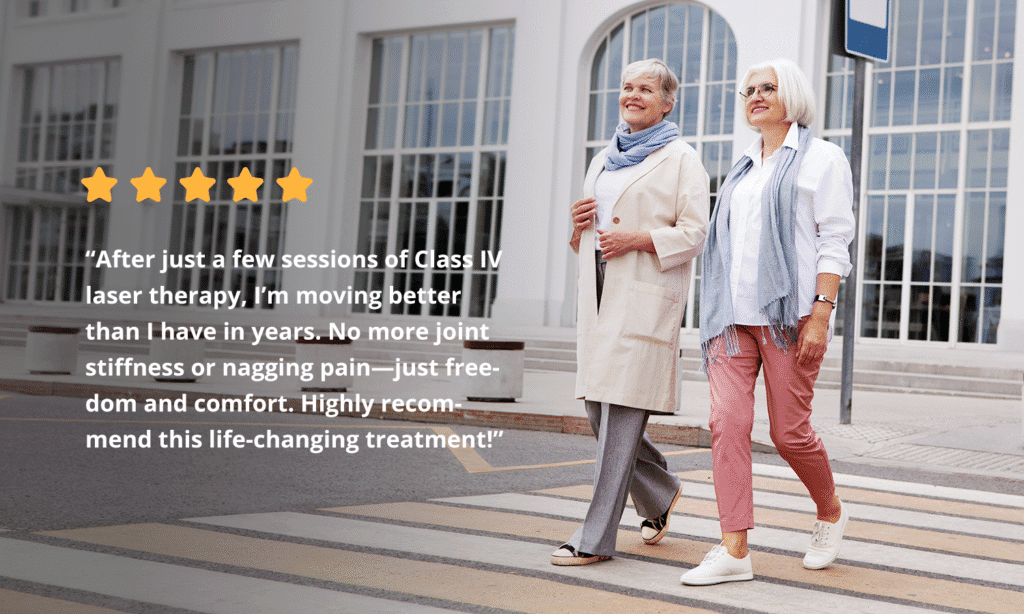
7.1 Senior with Chronic Knee Pain Walks Again Without a Cane
A 72-year-old female patient presented with severe bilateral knee osteoarthritis, experiencing constant pain and significant functional limitation requiring ambulatory assistance. Despite multiple interventions including anti-inflammatory medications, physical therapy, and corticosteroid injections, she continued to experience progressive deterioration in function and quality of life. Her pain levels consistently registered 8/10 on the visual analog scale, severely limiting her independence and social activities. Following a comprehensive assessment, she began a 10-session Class IV laser therapy protocol targeting both knees. Treatment sessions were conducted three times weekly, with each knee receiving 12 minutes of therapy using specific parameters optimized for deep tissue penetration. By the fourth session, she reported noticeable improvements in morning stiffness and overall comfort levels.
7.2 Athlete Returns to Training After Shoulder Stiffness
A 28-year-old competitive swimmer developed adhesive capsulitis following a minor shoulder injury that was initially undertreated. The condition progressed to severe range of motion restriction and intense pain, effectively ending her competitive career and significantly impacting her coaching activities. Traditional treatments including anti-inflammatory medications and conventional physical therapy provided minimal improvement over a six-month period. Class IV laser therapy was initiated as an adjunctive treatment to her existing rehabilitation program. The treatment protocol involved 15-minute sessions three times weekly, focusing on the anterior and posterior shoulder capsule. Within two weeks, she experienced significant improvements in range of motion and pain levels, allowing for progression in her physical therapy program.
7.3 Post-Surgical Patient Regains Joint Mobility in Half the Time
A 45-year-old construction worker underwent total knee replacement surgery following severe post-traumatic arthritis. Despite following standard post-operative protocols, his recovery progressed slowly with persistent stiffness and discomfort limiting his ability to return to work. At six weeks post-surgery, his range of motion remained significantly below expected levels, raising concerns about long-term functional outcomes. Class IV laser therapy was incorporated into his rehabilitation program beginning at eight weeks post-surgery. Treatment sessions lasted 10 minutes and were conducted daily for the first two weeks, then three times weekly for an additional four weeks. The combination of laser therapy and conventional rehabilitation resulted in accelerated improvements in range of motion and functional capacity.
8. FAQs: What Patients Want to Know
Yes, when used by trained professionals, Class IV laser therapy is FDA-cleared and considered safe for treating arthritis, joint stiffness, and inflammation. It’s non-invasive and drug-free.
Most patients require 6–10 sessions, depending on the severity and chronicity of the condition. Some feel relief after just 1–2 treatments.
No. Patients typically feel a warm, soothing sensation during treatment. It’s pain-free and doesn’t require anesthesia or downtime.
Yes, while it doesn’t regenerate cartilage, it can reduce inflammation, relieve pain, and improve joint function, even in advanced arthritis cases.
Side effects are rare. Some may experience temporary redness or slight warmth at the treatment site. It’s well-tolerated by most people, including seniors.
Class IV laser therapy does not interfere with medications and can be safely combined with most treatments. However, you should inform your provider about all medications and supplements you are taking.
9. Conclusion: The Light at the End of Joint Pain
Class IV laser therapy is a breakthrough in joint care, offering a non-invasive, scientifically validated solution for pain, stiffness, and reduced mobility. Unlike traditional treatments that target one aspect of joint dysfunction, Class IV lasers work on multiple biological pathways—reducing inflammation, easing pain, and promoting tissue repair. Backed by a growing body of clinical evidence, this therapy proves effective across various conditions—from sports injuries to chronic arthritis. Its safety, speed, and compatibility with other therapies make it a powerful addition to modern joint health management. As photobiomodulation technology advances, Class IV laser therapy is poised to become a cornerstone of integrative treatment plans. For patients seeking alternatives to medications or surgery, this light-based therapy offers real relief—and real hope.
 English
 العربية
 Français
 日本語
日本語 Português
 Español
 Русский
 Deutsch