

Page Contents
1. Introduction: The Growing Problem of Knee Pain
Knee pain has become one of the most prevalent musculoskeletal complaints affecting millions of people worldwide. As our understanding of non-invasive treatment modalities continues to evolve, laser therapy has emerged as a promising therapeutic option for various knee conditions. This comprehensive guide explores the science, benefits, and applications of laser treatment for knee pain management.
1.1 Why Knee Pain is So Common
The knee joint represents one of the most complex anatomical structures in the human body, comprising the tibiofemoral and patellofemoral articulations. This intricate joint bears significant biomechanical stress during daily activities, making it particularly susceptible to injury and degenerative changes. The prevalence of knee pain has increased substantially due to factors including sedentary lifestyles, obesity epidemic, aging populations, and increased participation in high-impact sports activities. Modern lifestyle factors contribute significantly to knee pathology. Prolonged sitting weakens the quadriceps muscles, leading to altered patellofemoral tracking and increased risk of patellofemoral pain syndrome. Additionally, the rising incidence of metabolic syndrome and diabetes creates inflammatory conditions that can accelerate cartilage degeneration and contribute to osteoarthritic changes within the knee joint.
1.2 The Impact of Knee Pain on Daily Life
Chronic knee pain significantly impacts functional mobility and quality of life. Patients often experience difficulty with activities of daily living (ADLs) including stair climbing, squatting, and prolonged walking. The psychological impact is equally profound, with many individuals developing kinesiophobia (fear of movement) and subsequent deconditioning. Research indicates that knee pain affects approximately 25% of adults, with higher prevalence rates observed in individuals over 55 years of age. The economic burden is substantial, with direct healthcare costs exceeding billions annually when considering physician visits, imaging studies, pharmaceutical interventions, and surgical procedures. Lost productivity and disability claims further compound the societal impact of knee disorders.
1.3 Traditional Treatments for Knee Pain: Pros and Cons
Conventional treatment approaches for knee pain typically follow a stepwise progression from conservative to invasive interventions. Non-steroidal anti-inflammatory drugs (NSAIDs) provide temporary symptomatic relief but carry significant risks including gastrointestinal bleeding, cardiovascular events, and renal dysfunction with long-term use. Corticosteroid injections offer short-term anti-inflammatory benefits but may accelerate cartilage breakdown with repeated administration. Physical therapy remains a cornerstone of conservative management, focusing on strengthening the quadriceps, hamstrings, and hip abductors to improve joint stability and biomechanics. However, patient compliance and access to qualified providers can limit effectiveness. Surgical interventions, while sometimes necessary, carry inherent risks including infection, thromboembolism, and prolonged recovery periods. These limitations have driven the search for alternative therapeutic modalities.
2. What Is Laser Treatment for Knee Pain?
Laser therapy represents a revolutionary approach to knee pain management, utilizing specific wavelengths of light to stimulate cellular healing processes. This non-invasive treatment modality has gained significant traction in clinical practice due to its favorable safety profile and documented therapeutic benefits.
2.1 Understanding Laser Therapy and Its Mechanisms
Therapeutic laser systems operate within specific electromagnetic wavelengths, typically ranging from 630 to 1064 nanometers. These wavelengths are selected based on their ability to penetrate tissue effectively while minimizing absorption by hemoglobin and water. The therapy works through photobiomodulation, a process where light energy is absorbed by cellular chromophores, particularly cytochrome c oxidase within mitochondria. The mechanism involves several key processes: enhanced adenosine triphosphate (ATP) production, increased cellular metabolism, improved microcirculation, and modulation of inflammatory mediators. This cascade of cellular events promotes tissue repair, reduces inflammation, and provides analgesic effects through the modulation of pain signaling pathways.
2.1.1 How Laser Energy Works on Knee Tissue
When laser energy penetrates knee tissues, it interacts with various cellular components to initiate therapeutic responses. The photons are absorbed by cytochrome c oxidase in the mitochondrial respiratory chain, leading to increased ATP synthesis and enhanced cellular metabolism. This process, known as photobiomodulation, stimulates fibroblast proliferation, collagen synthesis, and angiogenesis, all crucial for tissue repair. The therapeutic effects extend beyond cellular metabolism. Laser therapy modulates the release of inflammatory mediators including prostaglandins, leukotrienes, and cytokines. Additionally, it influences nerve conduction, reducing pain perception through the gate control theory mechanism and direct effects on nerve fiber transmission.
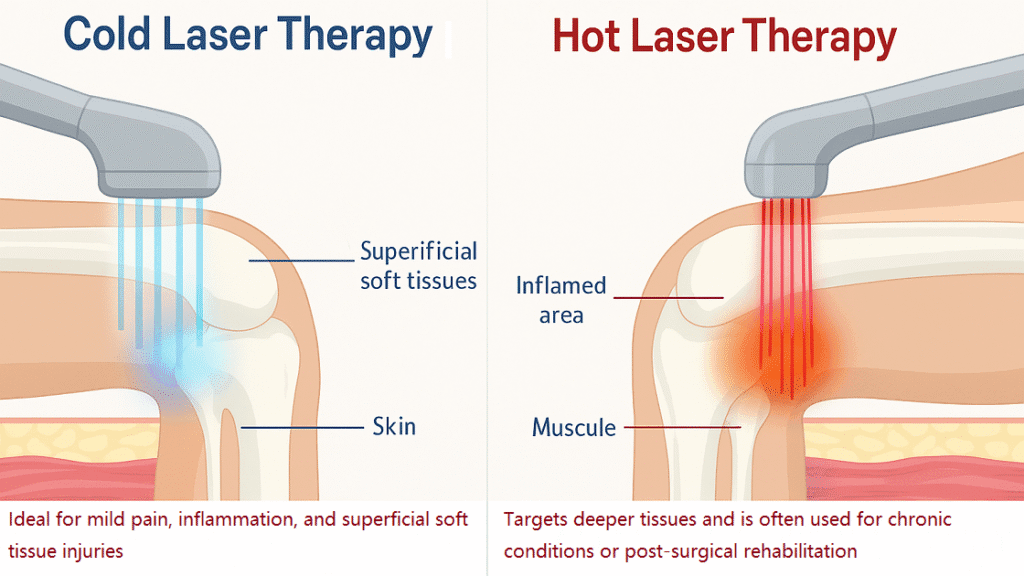
2.1.2 Cold Laser Therapy vs. Hot Laser Therapy: Key Differences
Low-level laser therapy (LLLT), also known as cold laser therapy, utilizes power densities typically below 500 milliwatts per square centimeter, producing minimal thermal effects. This approach focuses on photobiomodulation without causing tissue heating, making it suitable for superficial and deeper tissue treatment without thermal damage concerns. High-intensity laser therapy (HILT) operates at higher power densities, often exceeding 1000 milliwatts per square centimeter, capable of producing controlled thermal effects. This modality allows for deeper tissue penetration and more intensive therapeutic effects. However, it requires careful application to prevent thermal injury and typically involves shorter treatment durations with appropriate cooling periods.
2.2 The Science Behind Laser Treatment for Knee Pain
The scientific foundation of laser therapy for knee pain rests on extensive research demonstrating its effects at cellular, tissue, and systemic levels. Multiple randomized controlled trials have documented significant improvements in pain reduction, functional outcomes, and inflammatory markers following laser treatment protocols.
2.2.1 Photobiomodulation (PBM) and Tissue Healing
Photobiomodulation represents the primary therapeutic mechanism underlying laser therapy effectiveness. This process involves the absorption of photons by cellular chromophores, leading to a cascade of biological responses that promote healing and reduce inflammation. The mitochondrial respiratory chain, particularly cytochrome c oxidase, serves as the primary photoacceptor for red and near-infrared wavelengths. Following photon absorption, several cellular events occur: increased ATP synthesis, enhanced nitric oxide production, modulation of reactive oxygen species, and activation of transcription factors. These changes result in improved cellular metabolism, enhanced protein synthesis, and accelerated tissue repair processes. The anti-inflammatory effects are mediated through the modulation of nuclear factor-kappa B (NF-κB) pathways and reduced production of pro-inflammatory cytokines.
2.2.2 Stimulating Cellular Activity and Reducing Inflammation
Laser therapy’s anti-inflammatory effects are multifaceted, involving both direct and indirect mechanisms. Direct effects include the modulation of inflammatory mediator production, while indirect effects involve improved microcirculation and enhanced lymphatic drainage. Studies have demonstrated significant reductions in inflammatory markers including C-reactive protein, interleukin-1 beta, and tumor necrosis factor-alpha following laser treatment protocols. The enhanced cellular activity promotes tissue regeneration through several pathways. Increased fibroblast proliferation and collagen synthesis support connective tissue repair, while enhanced angiogenesis improves tissue perfusion and nutrient delivery. These combined effects create an optimal environment for tissue healing and pain reduction.
3. The Benefits of Laser Treatment for Knee Pain
Laser therapy offers numerous advantages over traditional treatment approaches, making it an attractive option for patients seeking non-invasive knee pain management. The cumulative benefits extend beyond symptom relief to include functional improvement and enhanced quality of life.
3.1 Non-Invasive and Drug-Free Solution
One of the most significant advantages of laser therapy is its non-invasive nature, eliminating the risks associated with surgical interventions. Patients avoid potential complications including infection, bleeding, and anesthetic risks. This characteristic makes laser therapy particularly suitable for elderly patients or those with multiple comorbidities who may not be candidates for surgical procedures. The drug-free approach is equally important, as it eliminates concerns about medication interactions, side effects, and dependency issues. Patients taking multiple medications benefit from avoiding additional pharmaceutical interventions that could potentially interact with existing regimens. This is particularly relevant for elderly patients who often experience polypharmacy-related complications.
3.2 Reduces Inflammation and Swelling
Laser therapy demonstrates significant anti-inflammatory effects through multiple mechanisms. The treatment modulates the inflammatory cascade by reducing pro-inflammatory cytokine production while enhancing anti-inflammatory mediator release. This dual action helps resolve acute inflammatory responses and prevents chronic inflammatory conditions from developing. The reduction in swelling occurs through improved lymphatic drainage and enhanced microcirculation. Laser therapy stimulates lymphatic flow, facilitating the removal of inflammatory debris and excess interstitial fluid. Additionally, the improved vascular function enhances tissue perfusion, supporting the delivery of nutrients and oxygen necessary for healing while removing metabolic waste products.
3.3 Improves Joint Mobility and Flexibility
Patients typically experience improved range of motion and joint flexibility following laser treatment protocols. The reduction in inflammation and pain allows for better muscle activation and improved joint mechanics. This enhancement in mobility is particularly important for maintaining functional independence and preventing secondary complications associated with immobility. The improved flexibility results from several factors including reduced muscle tension, enhanced tissue elasticity, and decreased joint stiffness. Laser therapy promotes the synthesis of high-quality collagen fibers with improved tensile strength and flexibility. Additionally, the analgesic effects allow patients to participate more actively in rehabilitation exercises, further enhancing mobility outcomes.
3.4 Promotes Natural Healing and Tissue Repair
Laser therapy accelerates the natural healing process through photobiomodulation effects on cellular metabolism. The enhanced ATP production provides energy necessary for cellular repair processes, while increased protein synthesis supports tissue regeneration. This acceleration of natural healing is particularly beneficial for chronic conditions where healing processes have stalled. The treatment promotes the formation of new blood vessels (angiogenesis) and enhances the migration of reparative cells to injured areas. This improved vascularization ensures adequate nutrient and oxygen delivery to healing tissues while facilitating the removal of cellular debris and inflammatory mediators. The result is more efficient and complete tissue repair.
3.5 Fewer Side Effects Compared to Conventional Therapies
Laser therapy exhibits an excellent safety profile with minimal reported side effects. Unlike pharmaceutical interventions, laser treatment does not cause systemic effects or organ toxicity. The most commonly reported side effects are mild and transient, including temporary skin erythema or slight discomfort during treatment. The absence of significant side effects makes laser therapy suitable for long-term use without concerns about cumulative toxicity. This characteristic is particularly advantageous for chronic pain conditions requiring extended treatment periods. Patients can undergo repeated treatment sessions without the risk of developing tolerance or dependency issues associated with pharmaceutical pain management.

4. Laser Treatment for Specific Knee Conditions
Laser therapy has demonstrated efficacy across a wide spectrum of knee conditions, from acute injuries to chronic degenerative conditions. Understanding the specific applications and expected outcomes for different pathologies helps clinicians and patients make informed treatment decisions.
4.1 Ligament Injuries
Ligamentous injuries represent some of the most common and functionally limiting knee conditions. Laser therapy offers significant benefits for both acute and chronic ligament injuries by promoting healing, reducing inflammation, and improving functional outcomes.
Anterior Cruciate Ligament (ACL) Tears
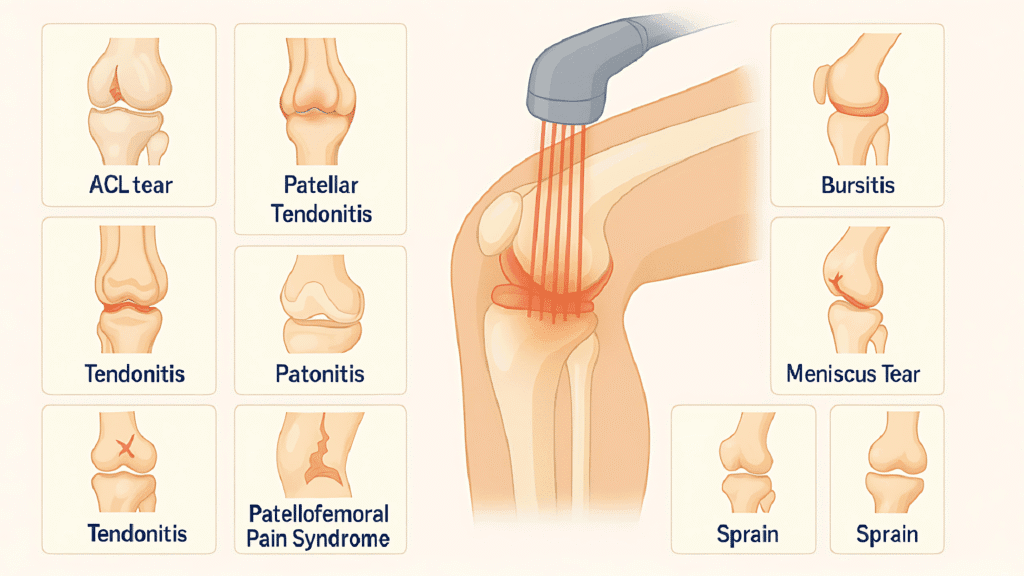
ACL injuries are among the most devastating knee injuries, particularly for athletes and active individuals. While complete ACL tears typically require surgical intervention, laser therapy can play a valuable role in pre-operative conditioning and post-operative rehabilitation. The treatment helps reduce inflammation, promote tissue healing, and accelerate the recovery process. For partial ACL tears managed conservatively, laser therapy can support natural healing processes and help prevent progression to complete rupture. The enhanced cellular metabolism and improved vascularization promote ligament healing and strengthen the remaining intact fibers. Studies have shown improved functional outcomes and reduced re-injury rates when laser therapy is incorporated into comprehensive rehabilitation programs.
Medial Collateral Ligament (MCL) Sprains
MCL injuries commonly occur in contact sports and typically heal well with conservative management. Laser therapy accelerates the healing process by promoting collagen synthesis and reducing inflammatory responses. The treatment is particularly effective for Grade I and II MCL sprains, where complete ligament rupture has not occurred. Clinical studies demonstrate faster return to activity and improved functional outcomes when laser therapy is combined with traditional rehabilitation approaches. The enhanced healing response allows for earlier mobilization and progressive loading, which is crucial for restoring normal knee biomechanics and preventing chronic instability.
Posterior Cruciate Ligament (PCL) Damage
PCL injuries are less common but can result in significant functional limitations, particularly with activities requiring knee flexion under load. Laser therapy helps manage the chronic pain and inflammation often associated with PCL injuries, even when surgical intervention is not indicated. The treatment promotes healing of the ligament substance and surrounding soft tissues, helping to restore some degree of stability and function. While complete restoration of PCL function may not be achievable with conservative treatment alone, laser therapy can significantly improve symptoms and functional capacity.
4.2 Meniscus Injuries
Meniscal pathology is extremely common, particularly in middle-aged and older adults. The limited vascular supply to certain areas of the meniscus makes healing challenging, but laser therapy can enhance the healing environment and improve outcomes.
Meniscal Tears
Acute meniscal tears, particularly those in the vascular zone, may benefit from laser therapy to promote healing and prevent progression. The treatment enhances cellular metabolism and promotes angiogenesis, potentially improving healing outcomes for tears that might otherwise require surgical intervention. For patients with meniscal tears managed conservatively, laser therapy helps reduce pain and inflammation while improving joint function. The treatment can be particularly beneficial for older adults with degenerative meniscal tears who are not candidates for surgery or prefer conservative management.
Degenerative Meniscal Changes
Age-related meniscal degeneration is a common cause of knee pain and functional limitation. Laser therapy can help manage symptoms and slow progression by reducing inflammation and promoting tissue repair. The treatment is particularly effective when combined with appropriate exercise therapy and activity modification. Studies have shown that laser therapy can improve pain scores and functional outcomes in patients with degenerative meniscal changes. The treatment helps maintain joint mobility and may delay the need for more invasive interventions.
4.3 Patellofemoral Pain Syndrome (Runner’s Knee)
Patellofemoral pain syndrome is one of the most common knee conditions, particularly among runners and other athletes. The condition involves pain around the patella due to abnormal tracking and increased pressure on the patellofemoral joint. Laser therapy addresses multiple aspects of this condition. The treatment helps reduce inflammation in the patellofemoral joint and surrounding soft tissues, while also promoting healing of any damaged cartilage or synovial tissue. The analgesic effects allow patients to participate more effectively in corrective exercises aimed at improving patellar tracking and strengthening the quadriceps muscle.
4.4 Patellar Tendinopathy (Jumper’s Knee)
Patellar tendinopathy is a common overuse injury affecting athletes involved in jumping sports. The condition involves degeneration of the patellar tendon, often with associated inflammation. Laser therapy has shown particular promise for this condition due to its effects on tendon healing and regeneration. The treatment promotes collagen synthesis and tendon remodeling while reducing inflammatory responses. Studies have demonstrated significant improvements in pain and function when laser therapy is incorporated into comprehensive treatment programs for patellar tendinopathy. The enhanced healing response allows for earlier return to activity with reduced risk of re-injury.
4.5 Iliotibial Band Syndrome (ITBS)
ITBS is a common overuse injury causing lateral knee pain, particularly in runners and cyclists. The condition involves inflammation of the iliotibial band as it passes over the lateral femoral condyle. Laser therapy helps reduce inflammation and promote healing of the affected tissues. The treatment addresses both the inflammatory component and any associated tissue damage. By reducing inflammation and promoting tissue repair, laser therapy helps resolve symptoms more quickly than traditional approaches alone. The treatment is often combined with biomechanical corrections and stretching exercises for optimal outcomes.
4.6 Bursitis of the Knee
Knee bursitis involves inflammation of the fluid-filled sacs that cushion the knee joint. Various bursae around the knee can become inflamed, causing pain and limiting function. Laser therapy effectively addresses the inflammatory component while promoting healing.
Prepatellar Bursitis
Prepatellar bursitis, also known as “housemaid’s knee,” involves inflammation of the bursa in front of the kneecap. This condition often results from repetitive kneeling or direct trauma. Laser therapy helps reduce inflammation and promotes healing of the bursal tissue. The treatment is particularly effective for chronic prepatellar bursitis, where traditional anti-inflammatory approaches have failed. The enhanced cellular metabolism and improved circulation help resolve chronic inflammatory processes and prevent recurrence.
Pes Anserine Bursitis
Pes anserine bursitis affects the bursa located on the medial aspect of the knee, beneath the insertion of the hamstring tendons. This condition is common in runners and individuals with diabetes or obesity. Laser therapy helps reduce inflammation and promotes healing of the affected bursa. The treatment addresses both the inflammatory response and any associated tendon pathology. By promoting healing and reducing inflammation, laser therapy helps restore normal function and prevents chronic pain development.
4.7 Post-Surgical Knee Pain
Laser therapy has proven valuable for managing post-surgical knee pain and promoting healing following various knee procedures. The treatment can accelerate recovery and improve outcomes across different surgical interventions.
Post-Meniscectomy or Ligament Repair Recovery
Following arthroscopic procedures such as meniscectomy or ligament repair, laser therapy can accelerate healing and reduce post-operative pain. The treatment promotes tissue repair and reduces inflammation, allowing for earlier mobilization and return to function. Studies have shown that post-operative laser therapy can reduce pain medication requirements and improve functional outcomes. The enhanced healing response allows for more aggressive rehabilitation protocols and faster return to normal activities.
Laser for Knee Replacement Recovery
Total knee replacement surgery, while highly successful, involves significant tissue trauma and prolonged recovery. Laser therapy can help manage post-operative pain and promote healing of the surgical site. The treatment reduces inflammation and supports tissue repair around the prosthetic implant. Patients receiving post-operative laser therapy often experience reduced pain, improved range of motion, and faster functional recovery. The treatment can be particularly beneficial for managing chronic pain and stiffness that sometimes persists after knee replacement surgery.
4.8 Tendon and Muscle Strains Around the Knee
Various tendons and muscles around the knee can become strained or injured, leading to pain and dysfunction. Laser therapy promotes healing of these soft tissue injuries and helps restore normal function. The treatment enhances cellular metabolism in the affected tissues, promoting protein synthesis and tissue repair. The improved circulation helps deliver nutrients necessary for healing while removing inflammatory debris. This combination of effects accelerates the healing process and reduces the risk of chronic pain development.
4.9 Synovitis (Joint Lining Inflammation)
Synovitis involves inflammation of the synovial membrane that lines the knee joint. This condition can be acute or chronic and may be associated with various underlying pathologies. Laser therapy effectively reduces synovial inflammation and promotes healing. The treatment modulates inflammatory responses within the synovial tissue while promoting healing and restoration of normal synovial function. This helps reduce pain and joint effusion while improving overall joint health.
4.10 Baker’s Cyst (Popliteal Cyst)
Baker’s cysts are fluid-filled swellings that develop in the popliteal fossa behind the knee. While often asymptomatic, these cysts can cause pain and limit knee flexion. Laser therapy can help reduce inflammation and promote absorption of the cyst contents. The treatment addresses underlying synovial inflammation that often contributes to cyst formation. By reducing inflammation and promoting normal synovial function, laser therapy may help prevent cyst recurrence and improve symptoms.
5. Who Can Benefit from Laser Knee Therapy?
Laser therapy is suitable for a wide range of patients with knee conditions, from acute injuries to chronic degenerative conditions. Understanding the ideal candidates and contraindications helps ensure optimal treatment outcomes and patient safety. Ideal candidates include individuals with acute or chronic knee pain who prefer non-invasive treatment options or those who have not responded adequately to conventional therapies. Patients with inflammatory conditions, soft tissue injuries, and certain degenerative conditions often experience significant benefits from laser therapy. Athletes and active individuals particularly benefit from laser therapy due to its ability to accelerate healing and reduce recovery time. The treatment allows for earlier return to activity while reducing the risk of re-injury. Additionally, older adults who may not be candidates for surgical intervention can benefit from the pain relief and functional improvement provided by laser therapy.
6. Finding a Qualified Provider
Selecting an appropriate healthcare provider for laser therapy is crucial for ensuring safe and effective treatment. Various healthcare professionals offer laser therapy, each bringing different expertise and approaches to treatment.
6.1 Chiropractors, Physical Therapists, and Pain Specialists
Chiropractors often incorporate laser therapy into comprehensive treatment plans that include spinal and extremity adjustments, soft tissue therapies, and exercise rehabilitation. Their understanding of biomechanics and joint function can enhance treatment outcomes for knee conditions. Physical therapists combine laser therapy with exercise therapy, manual techniques, and functional training. This integrated approach is particularly effective for addressing both symptoms and underlying causes of knee pain. Pain management specialists may use laser therapy as part of multimodal treatment approaches for complex chronic pain conditions.
6.2 Questions to Ask Before Treatment
Before beginning laser therapy, patients should inquire about the provider’s experience with laser treatment, the specific type of laser equipment used, and the proposed treatment protocol. Understanding the expected number of treatments, duration of each session, and anticipated outcomes helps set realistic expectations. Patients should also ask about the provider’s training and certification in laser therapy, as well as their experience treating similar conditions. Understanding the rationale for laser therapy in their specific case and how it fits into the overall treatment plan is important for informed decision-making.
6.3 Certifications, Technology, and Experience to Look For
Look for providers who have completed formal training in laser therapy and maintain current certifications. Many professional organizations offer specialized training programs and certification in therapeutic laser applications. Additionally, providers should use FDA-approved laser devices and follow established protocols for safe and effective treatment. Experience with similar conditions is crucial, as treatment protocols may vary depending on the specific pathology and patient characteristics. Providers should be able to explain their approach and provide realistic expectations for treatment outcomes based on their clinical experience.
6.4 Balancing Risks and Benefits
While laser therapy has an excellent safety profile, patients should understand both the potential benefits and any possible risks or contraindications. Providers should conduct thorough evaluations to ensure laser therapy is appropriate for each individual case. The decision to pursue laser therapy should consider factors such as the severity of symptoms, previous treatment responses, patient preferences, and overall health status. A comprehensive approach that may include laser therapy along with other interventions often provides the best outcomes for complex knee conditions.
7. Summary
Laser therapy represents a valuable addition to the treatment options available for knee pain management. The scientific evidence supporting its use continues to grow, with studies demonstrating significant benefits for pain reduction, functional improvement, and accelerated healing across various knee conditions. The non-invasive nature of laser therapy, combined with its excellent safety profile, makes it an attractive option for many patients. Whether used as a primary treatment or as part of a comprehensive multimodal approach, laser therapy can provide significant benefits for individuals suffering from knee pain. As technology continues to advance and our understanding of photobiomodulation deepens, laser therapy is likely to play an increasingly important role in knee pain management. Patients considering this treatment option should work with qualified providers to develop individualized treatment plans that address their specific needs and goals. The future of knee pain management will likely involve increasingly sophisticated applications of laser therapy, potentially combined with other emerging technologies. For now, laser therapy offers a proven, safe, and effective option for many individuals seeking relief from knee pain and improved function.
 English
 العربية
 Français
 日本語
日本語 Português
 Español
 Русский
 Deutsch