

Page Contents
1. Introduction: Revisiting Old Injuries
For millions of people worldwide, old injuries represent more than just painful memories—they manifest as persistent physical reminders that impact daily life, mobility, and overall well-being. Understanding why these injuries continue to affect us and exploring innovative treatment modalities has become increasingly crucial in modern healthcare.
1.1 Why Past Injuries Still Haunt Us
Old injuries persist due to incomplete healing processes, chronic inflammation, and structural changes within affected tissues. When initial trauma occurs, the body’s natural healing cascade involves hemostasis, inflammatory response, proliferation, and remodeling phases. However, disruptions in this process can lead to fibrotic tissue formation, adhesions, and compromised vascular supply. These pathophysiological changes create a cycle of persistent pain, reduced functionality, and compromised tissue integrity that can last for years or even decades.
1.2 The Need for New, Non-Invasive Healing Options
Traditional treatment approaches for chronic injuries often involve pharmacological interventions, invasive procedures, or lengthy rehabilitation protocols. However, these methods frequently provide only temporary relief or carry significant side effects. The growing demand for evidence-based, non-invasive therapeutic options has driven healthcare professionals to explore photobiomodulation therapy. This shift reflects patients’ preferences for treatments that address root causes rather than merely masking symptoms, while minimizing risks associated with surgical interventions or long-term medication dependence.
1.3 Introducing Laser Therapy for Chronic Injury Management
Laser therapy, also known as photobiomodulation, represents a revolutionary approach to treating chronic musculoskeletal conditions. This therapeutic modality utilizes specific wavelengths of coherent light to stimulate cellular processes, enhance tissue repair, and modulate pain pathways. Unlike surgical lasers that generate heat and cause tissue destruction, therapeutic lasers operate at power densities that promote healing without thermal damage, making them ideal for treating sensitive or previously injured tissues.
2. What Is Laser Therapy?
Understanding the fundamental principles of laser therapy requires exploring the intersection of physics, biology, and clinical medicine. This section examines the scientific foundation underlying photobiomodulation and its therapeutic applications.
2.1 The Science Behind Laser Therapy
Laser therapy operates on the principle of photobiomodulation, where specific wavelengths of light interact with chromophores within cellular structures. When photons are absorbed by mitochondrial cytochrome c oxidase, they trigger a cascade of biochemical reactions that enhance cellular metabolism and ATP production. This process, known as the Arndt-Schulz law, demonstrates that low-intensity stimulation can produce beneficial biological effects. The therapeutic window typically ranges from 660 to 1000 nanometers, corresponding to red and near-infrared wavelengths that penetrate effectively through skin and soft tissues.
2.2 Types of Laser Therapy (Class III vs. Class IV)
Therapeutic lasers are classified based on their power output and safety requirements. Class III lasers, operating below 500 milliwatts, provide gentle stimulation suitable for superficial tissues and sensitive areas. These devices require minimal safety precautions and are commonly used in clinical settings. Class IV lasers, exceeding 500 milliwatts, deliver higher power densities capable of penetrating deeper tissues. While more powerful, these devices require enhanced safety protocols including protective eyewear and specialized training. The choice between classifications depends on treatment depth requirements, tissue characteristics, and specific therapeutic goals.
2.3 How It Works: Cellular Regeneration and Pain Relief
The therapeutic effects of laser therapy result from complex interactions between photons and biological tissues. Understanding these mechanisms provides insight into how light-based treatments can effectively address chronic injury-related problems.
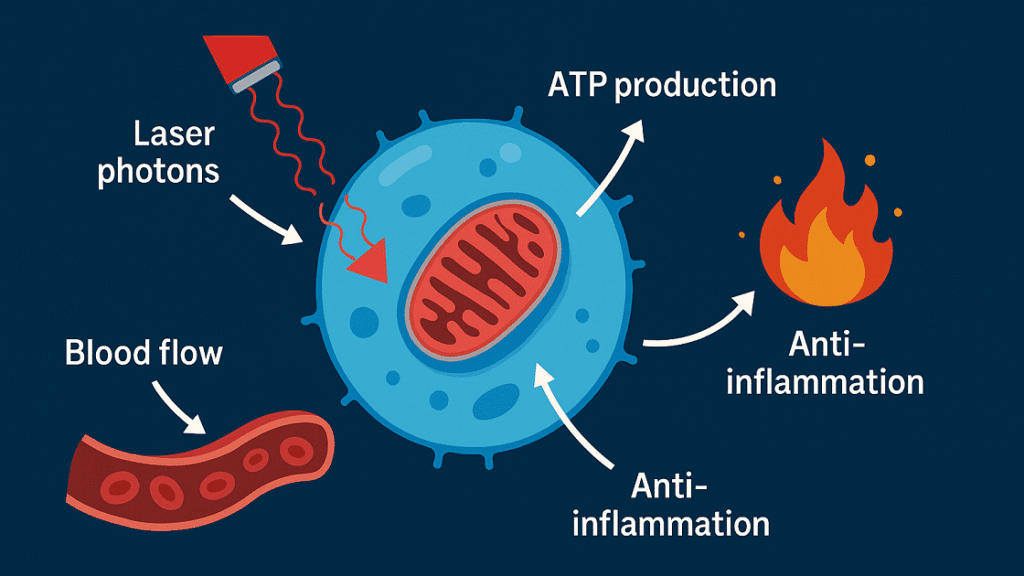
2.3.1 Stimulating ATP and Mitochondrial Activity
Photobiomodulation primarily affects mitochondrial function by increasing cytochrome c oxidase activity, leading to enhanced electron transport chain efficiency. This biochemical enhancement results in increased adenosine triphosphate (ATP) synthesis, providing cells with additional energy for repair processes. Simultaneously, reactive oxygen species production decreases while nitric oxide synthesis increases, creating an optimal cellular environment for healing. These changes activate cellular proliferation, protein synthesis, and enzymatic activities essential for tissue regeneration and functional restoration.
2.3.2 Enhancing Blood Flow and Reducing Inflammation
Laser therapy promotes vasodilation through nitric oxide release, improving local circulation and oxygen delivery to compromised tissues. Enhanced microcirculation facilitates nutrient transport, waste removal, and immune cell migration to injury sites. Additionally, photobiomodulation modulates inflammatory mediators including prostaglandins, leukotrienes, and cytokines, reducing excessive inflammatory responses while maintaining beneficial healing processes. This dual action creates an optimal microenvironment for tissue repair while minimizing pain-generating inflammatory cascades.
3. Can Laser Therapy Help Old Injuries Heal?
The potential for laser therapy to address chronic injuries lies in its ability to reactivate stalled healing processes and address the underlying pathophysiology that perpetuates symptoms. This section explores the specific mechanisms through which photobiomodulation can benefit long-standing injuries.
3.1 Reawakening Dormant Healing Pathways
Chronic injuries often exist in a state of incomplete healing, where initial inflammatory responses have subsided but optimal tissue repair remains unachieved. Photobiomodulation can reactivate dormant cellular pathways by stimulating growth factor production, enhancing cellular proliferation, and promoting angiogenesis. Research demonstrates that specific light wavelengths can upregulate transforming growth factor-beta (TGF-β), platelet-derived growth factor (PDGF), and vascular endothelial growth factor (VEGF), creating conditions conducive to renewed healing processes even in chronically compromised tissues.
3.2 Breaking Down Scar Tissue and Fibrosis
Excessive collagen deposition and disorganized tissue architecture characterize many chronic injuries, leading to functional limitations and persistent discomfort. Laser therapy can modulate collagen synthesis and promote matrix metalloproteinase (MMP) activity, facilitating remodeling of fibrotic tissues. Studies indicate that photobiomodulation influences collagen fiber orientation, reduces excessive cross-linking, and promotes more organized tissue architecture. This remodeling process can improve tissue flexibility, reduce adhesions, and restore normal biomechanical properties in previously injured areas.
3.3 Improving Circulation in Damaged Areas
Chronic injuries frequently develop compromised vascular supply due to scar tissue formation, adhesions, or persistent inflammation. Laser therapy addresses these circulatory deficits through multiple mechanisms including endothelial cell stimulation, smooth muscle relaxation, and capillary proliferation. Enhanced blood flow delivers essential nutrients, oxygen, and immune factors while facilitating waste product removal. Improved circulation also supports the delivery of pharmacological agents when used as adjunctive therapy, potentially enhancing overall treatment efficacy.
3.4 Promoting Nerve Repair in Chronic Pain Cases
Neuropathic pain components often contribute to chronic injury symptoms, resulting from nerve damage, sensitization, or altered pain processing pathways. Photobiomodulation demonstrates significant potential for nerve regeneration through enhanced Schwann cell proliferation, increased nerve growth factor production, and improved axonal transport. Additionally, laser therapy can modulate pain transmission by influencing gate control mechanisms, reducing substance P release, and promoting endorphin production. These neurological effects can provide both immediate pain relief and long-term functional improvements.
4. Common Old Injuries Treated with Laser Therapy
Clinical applications of laser therapy span numerous musculoskeletal conditions, with particular efficacy demonstrated in specific injury patterns. Understanding these applications helps identify appropriate candidates for photobiomodulation treatment.
4.1 Muscle Tears and Strains
Chronic muscle injuries, including partial tears, strain injuries, and myofascial trigger points, respond favorably to laser therapy due to enhanced cellular metabolism and improved tissue perfusion. Photobiomodulation promotes satellite cell activation, facilitating muscle fiber regeneration and functional restoration. Additionally, reduced inflammation and improved circulation help resolve chronic muscle tension and trigger point sensitivity. Treatment protocols typically involve multiple sessions targeting affected muscle groups with appropriate wavelengths and dosing parameters based on tissue depth and injury severity.
4.2 Chronic Joint Pain and Arthritis
Osteoarthritis and other degenerative joint conditions benefit from laser therapy’s anti-inflammatory and pain-modulating effects. Photobiomodulation can reduce synovial inflammation, promote cartilage matrix synthesis, and improve joint mobility through enhanced synovial fluid production. Studies demonstrate significant pain reduction and functional improvement in patients with knee osteoarthritis, rheumatoid arthritis, and other chronic joint conditions. The non-invasive nature of laser therapy makes it particularly valuable for patients seeking alternatives to joint replacement surgery or long-term anti-inflammatory medication use.
4.3 Tendonitis and Ligament Damage
Chronic tendinopathies and ligamentous injuries represent ideal candidates for laser therapy due to these tissues’ limited vascular supply and tendency toward incomplete healing. Photobiomodulation enhances collagen synthesis, promotes organized tissue repair, and reduces the chronic inflammation that perpetuates tendon degeneration. Common conditions including Achilles tendinopathy, lateral epicondylitis, and rotator cuff injuries demonstrate significant improvement with appropriate laser therapy protocols. Treatment success depends on proper wavelength selection, adequate penetration depth, and sufficient treatment duration to promote meaningful tissue remodeling.
4.4 Post-Surgical Scar Tissue and Nerve Damage
Surgical complications including excessive scar formation, adhesions, and nerve damage can benefit significantly from laser therapy intervention. Photobiomodulation promotes organized collagen remodeling, reduces excessive fibrosis, and supports nerve regeneration processes. Post-operative laser therapy can minimize scar formation when initiated early, while established adhesions may respond to longer treatment protocols. Nerve damage, whether from surgical trauma or chronic compression, demonstrates potential for recovery through enhanced Schwann cell activity and improved axonal regeneration supported by photobiomodulation.

5. Clinical Benefits and Evidence
The therapeutic value of laser therapy for chronic injuries is supported by extensive research demonstrating both physiological mechanisms and clinical outcomes. This evidence base continues to expand as treatment protocols become more refined and standardized.
5.1 Research Supporting Laser Therapy for Chronic Pain
Systematic reviews and meta-analyses consistently demonstrate laser therapy’s efficacy for various chronic pain conditions. Randomized controlled trials show significant pain reduction, improved function, and enhanced quality of life across multiple musculoskeletal conditions. Neurophysiological studies reveal altered pain processing, reduced central sensitization, and improved descending pain inhibition following laser therapy. Brain imaging studies demonstrate normalized activity in pain-processing regions, supporting the treatment’s central nervous system effects. This robust evidence base has led to recommendations from major medical organizations and inclusion in clinical practice guidelines.
5.2 Success Rates in Managing Long-Term Injuries
Clinical studies report success rates ranging from 70-85% for various chronic musculoskeletal conditions treated with appropriate laser therapy protocols. Factors influencing treatment success include injury duration, tissue type, patient age, concurrent medications, and treatment compliance. Best outcomes occur with conditions involving soft tissue inflammation, nerve entrapment, and incomplete healing processes. Long-term follow-up studies demonstrate sustained benefits extending months to years after treatment completion, particularly when combined with appropriate exercise and lifestyle modifications.
5.3 Testimonials and Real-World Case Studies
Clinical case reports document remarkable recoveries in patients with previously treatment-resistant conditions. Examples include complete resolution of chronic plantar fasciitis, significant improvement in post-stroke shoulder pain, and restored function following chronic rotator cuff injuries. Patient testimonials consistently report not only pain reduction but improved sleep quality, increased activity levels, and enhanced overall well-being. Healthcare providers report high patient satisfaction rates and reduced need for pharmacological interventions following successful laser therapy treatment courses.
6. Comparing Laser Therapy to Other Treatment Options
Understanding laser therapy’s position within the broader treatment landscape helps patients and providers make informed decisions about appropriate therapeutic approaches. This comparison examines relative benefits, limitations, and optimal applications.
6.1 Physical Therapy vs. Laser Therapy
Physical therapy and laser therapy complement each other effectively, with photobiomodulation enhancing tissue healing while exercise therapy improves strength, flexibility, and functional capacity. Physical therapy excels at addressing movement dysfunction, muscle imbalances, and biomechanical issues but may struggle with persistent inflammation or pain that limits exercise tolerance. Laser therapy can reduce pain and inflammation, creating conditions more conducive to effective exercise participation. Combined approaches often yield superior outcomes compared to either treatment modality used independently.
6.2 Medication vs. Light-Based Treatment
Pharmacological approaches provide rapid symptom relief but often carry significant side effects and fail to address underlying pathophysiology. Anti-inflammatory medications can interfere with natural healing processes, while opioid analgesics carry addiction risks and tolerance development. Laser therapy offers pain relief without systemic side effects while actively promoting tissue healing and functional restoration. However, medication may be necessary for severe acute exacerbations or as adjunctive therapy during initial treatment phases when pain levels limit function significantly.
6.3 Is Surgery Avoidable with Laser Therapy?
Laser therapy can potentially delay or eliminate the need for surgical intervention in selected cases, particularly when structural damage is minimal and symptoms result primarily from inflammation or incomplete healing. Conditions such as carpal tunnel syndrome, plantar fasciitis, and some rotator cuff injuries may respond sufficiently to avoid surgical management. However, significant structural abnormalities, complete tissue ruptures, or mechanically unstable joints typically require surgical correction. Laser therapy can optimize healing following necessary surgical procedures, potentially improving outcomes and reducing recovery time.
7. Is It Right for You?
Determining candidacy for laser therapy requires careful evaluation of individual circumstances, injury characteristics, and treatment goals. This assessment helps optimize treatment outcomes and manage expectations appropriately.
7.1 Identifying Good Candidates for Laser Therapy
Ideal candidates include individuals with chronic soft tissue injuries, localized pain syndromes, or incomplete healing following previous trauma. Patients seeking non-invasive alternatives to surgery or medication represent excellent candidates, particularly when symptoms significantly impact quality of life. Those with inflammatory conditions, nerve entrapment syndromes, or post-surgical complications often respond favorably. Good candidates typically demonstrate realistic expectations, willingness to complete recommended treatment courses, and ability to combine laser therapy with appropriate exercise or lifestyle modifications.
7.2 Conditions Where Laser Therapy May Not Help
Laser therapy demonstrates limited efficacy for conditions involving significant structural abnormalities, complete tissue ruptures, or advanced degenerative changes requiring mechanical correction. Patients with unrealistic expectations for immediate, complete symptom resolution may experience disappointment with gradual improvement timelines. Certain medical conditions including active cancer, pregnancy, or photosensitivity disorders may contraindicate laser therapy. Additionally, patients unable to commit to multiple treatment sessions or comply with post-treatment recommendations may not achieve optimal outcomes.
8. What to Do Next: Find a Certified Laser Therapy Provider
Selecting an appropriate healthcare provider ensures safe, effective laser therapy treatment. Qualified practitioners possess proper training, equipment, and experience necessary for optimal outcomes. Healthcare providers offering laser therapy should demonstrate specific training in photobiomodulation principles, safety protocols, and treatment techniques. Look for practitioners with relevant professional credentials, continuing education in laser therapy, and experience treating your specific condition. Facilities should maintain proper safety equipment, calibrated laser devices, and appropriate documentation systems. Initial consultations should include thorough evaluation, realistic treatment planning, and clear communication about expected outcomes and timelines.
9. FAQs: Everything You Still Want to Know
Yes. Laser therapy stimulates cellular activity, improves circulation, and reduces inflammation—even in tissues affected by long-standing injuries or scar tissue.
Most chronic injuries require a series of 6 to 12 sessions, depending on the severity, duration, and individual healing response.
No. Laser therapy is non-invasive and painless. Most patients feel only a gentle warmth during the session.
Yes. Class IV laser therapy can be safely applied over implants and surgical sites, helping improve healing and reduce scar tissue.
Some patients report relief within 24 hours, while others notice improvement gradually over multiple sessions. Results vary by condition.
Yes. Unlike painkillers, laser therapy addresses the underlying tissue damage, leading to longer-lasting or even permanent improvements.
 English
 العربية
 Français
 日本語
日本語 Português
 Español
 Русский
 Deutsch