

Page Contents
1. Introduction
The landscape of autoimmune disease treatment is evolving rapidly as patients and healthcare providers seek more comprehensive, less invasive therapeutic approaches. Traditional pharmaceutical interventions, while effective in managing symptoms, often come with significant side effects and may not address the underlying pathophysiological mechanisms driving autoimmune dysfunction. This growing awareness has sparked renewed interest in photobiomodulation therapies, particularly High-Level Laser Therapy (HLLT), as potential adjunctive or alternative treatments.
1.1 Understanding Autoimmune Diseases
Autoimmune diseases represent a complex group of disorders characterized by aberrant immune system activation against the body’s own tissues and organs. These conditions affect approximately 5-8% of the global population, with women disproportionately affected at a ratio of 2:1. The pathogenesis involves a multifactorial interplay of genetic predisposition, environmental triggers, and dysregulated immune homeostasis, resulting in chronic inflammation, tissue destruction, and progressive functional impairment across multiple organ systems. The molecular basis of autoimmunity involves the breakdown of self-tolerance mechanisms, leading to the production of autoantibodies and autoreactive T-cells. Pro-inflammatory cytokines such as tumor necrosis factor-alpha (TNF-α), interleukin-1β (IL-1β), and interleukin-6 (IL-6) create a persistent inflammatory milieu that perpetuates tissue damage. This chronic inflammatory cascade contributes to oxidative stress, mitochondrial dysfunction, and impaired cellular repair mechanisms, ultimately compromising quality of life and long-term prognosis.
1.2 Why Alternative and Adjunctive Therapies Are Gaining Attention
Conventional immunosuppressive therapies, while providing symptom relief, often compromise overall immune function and increase susceptibility to infections and malignancies. Disease-modifying antirheumatic drugs (DMARDs), biologics, and corticosteroids can produce significant adverse effects including hepatotoxicity, nephrotoxicity, and increased cardiovascular risk. Additionally, treatment-resistant cases and inadequate response rates highlight the need for innovative therapeutic modalities that can modulate immune function without compromising host defense mechanisms. Photobiomodulation therapy represents a paradigm shift toward non-pharmacological interventions that harness the body’s innate healing capacity. Laser therapy is a promising therapeutic, particularly for those diseases of skin and joints because they are most accessible to treatment. Indeed, the known mechanisms of laser therapy support its use for anti-inflammatory purposes, as well as stimulation of tissue growth and repair. The increasing body of scientific evidence supporting photobiomodulation’s immunomodulatory effects has positioned HLLT as a viable complementary therapy for autoimmune conditions.
2. What Is High-Level Laser Therapy (HLLT)?
High-Level Laser Therapy represents an advanced evolution of photobiomodulation technology, incorporating higher power densities and sophisticated wavelength combinations to achieve deeper tissue penetration and enhanced therapeutic outcomes. Understanding the fundamental principles and mechanisms underlying HLLT is crucial for appreciating its potential applications in autoimmune disease management.
2.1 Definition and Core Principles
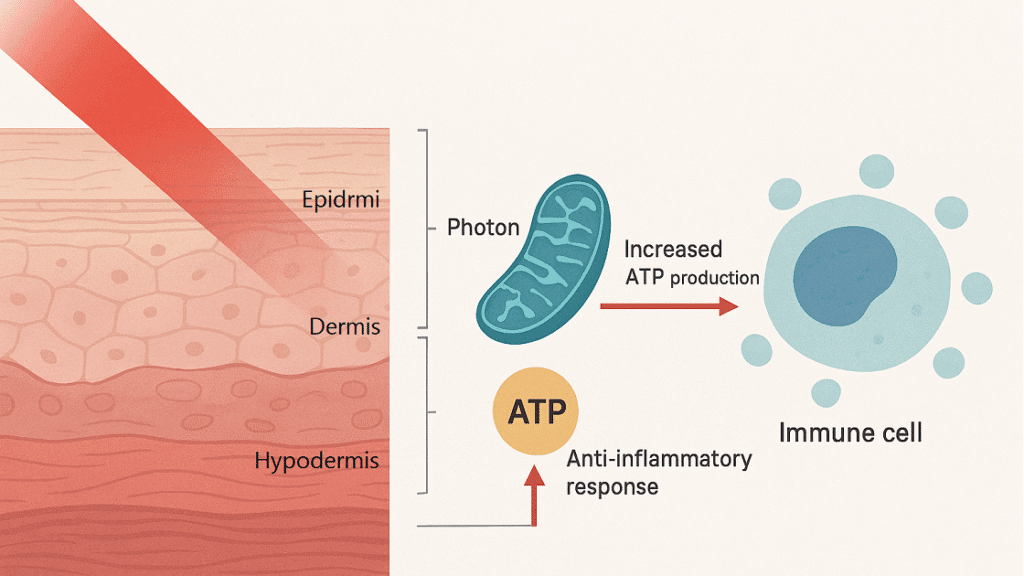
High-Level Laser Therapy (HLLT), or Class 4 laser therapy, uses high-power diodes (7–60 watts) to deliver therapeutic light energy deep into tissues. Unlike low-level laser therapy, HLLT operates at much higher power densities but maintains non-thermal effects via pulsed delivery and advanced cooling. It works through photobiomodulation, where specific wavelengths interact with cellular chromophores to trigger healing, reduce inflammation, and modulate immune activity. A key target is cytochrome c oxidase, the final enzyme in the mitochondrial electron transport chain. Photon absorption by this enzyme boosts ATP production, regulates reactive oxygen species, and releases nitric oxide from binding sites. These changes enhance cellular energy, support tissue repair, stimulate angiogenesis, and help regulate immune responses. The ability to act on these pathways makes HLLT particularly suited for addressing the complex, multi-system effects of autoimmune diseases.
2.2 Mechanism of Action
The therapeutic effects of HLLT are mediated through multiple interconnected pathways at the cellular and molecular levels. Primary photoacceptors, including cytochrome c oxidase, flavins, and porphyrins, absorb specific wavelengths of light energy, triggering immediate biochemical responses. This photon absorption leads to increased mitochondrial membrane potential, enhanced ATP synthesis, and modulation of cellular calcium levels, collectively promoting optimal cellular function and metabolic activity. Secondary cellular responses include the activation of transcription factors such as nuclear factor kappa B (NF-κB) and activator protein 1 (AP-1), which regulate the expression of genes involved in inflammation, cell survival, and tissue repair. HLLT also influences the production of growth factors including vascular endothelial growth factor (VEGF), fibroblast growth factor (FGF), and transforming growth factor-beta (TGF-β), promoting angiogenesis and tissue regeneration. Additionally, the therapy modulates neurotransmitter release and nerve conduction, contributing to its analgesic effects.
2.3 HLLT vs. LLLT
The main difference between High-Level Laser Therapy (HLLT) and Low-Level Laser Therapy (LLLT) lies in power, penetration depth, and treatment time. LLLT operates below 500 milliwatts, while HLLT uses much higher power densities, allowing deeper tissue penetration and stronger biological effects. Class 4 lasers, used in HLLT, are significantly faster and more powerful than cold lasers, yet both can stimulate photobiomodulation (PBM) when using the 810nm wavelength. HLLT can deliver therapeutic doses to tissues 3–5 cm deep, compared to LLLT’s 1–2 cm range, making it especially effective for deep-seated inflammation common in autoimmune diseases. Higher power output also means shorter treatment sessions—typically 3–10 minutes—versus 15–30 minutes for LLLT, while still achieving equal or superior results. Advanced HLLT systems often combine multiple wavelengths for enhanced outcomes, offering a faster, deeper, and more efficient therapy option.
3. How HLLT May Offer Deeper Healing for Autoimmune Disorders
The therapeutic potential of HLLT in autoimmune disease management stems from its ability to address multiple pathophysiological mechanisms simultaneously. By targeting chronic inflammation, modulating immune responses, providing pain relief, and potentially offering neuroprotective benefits, HLLT presents a comprehensive approach to autoimmune disease treatment that addresses both symptoms and underlying disease processes.
3.1 Targeting Chronic Inflammation
Chronic inflammation represents the hallmark of autoimmune diseases, perpetuating tissue damage and functional impairment through sustained activation of inflammatory cascades. HLLT exerts potent anti-inflammatory effects through multiple mechanisms, including the modulation of pro-inflammatory cytokine production and the enhancement of anti-inflammatory mediator synthesis. The therapy reduces levels of TNF-α, IL-1β, and IL-6 while promoting the production of anti-inflammatory cytokines such as interleukin-10 (IL-10) and transforming growth factor-beta. At the cellular level, HLLT influences macrophage polarization, promoting the shift from pro-inflammatory M1 phenotype to anti-inflammatory M2 phenotype. This phenotypic switch is crucial for resolution of inflammation and tissue repair in autoimmune conditions. Additionally, the therapy reduces nuclear factor kappa B activation, a key transcription factor that regulates inflammatory gene expression, thereby attenuating the production of inflammatory mediators and reducing tissue damage associated with autoimmune processes.
3.2 Immune Modulation
The immunomodulatory effects of HLLT represent one of its most promising applications in autoimmune disease management. It has also been shown to act directly and selectively on the autoimmune system, restoring immunocompetence to immunocompetence cells. The therapy influences various immune cell populations, including T-cells, B-cells, and antigen-presenting cells, promoting immune system balance rather than global suppression. HLLT can modulate T-helper cell differentiation, potentially shifting the balance from pro-inflammatory Th1 and Th17 responses toward regulatory T-cell (Treg) expansion. This shift is particularly important in autoimmune diseases where Treg dysfunction contributes to loss of self-tolerance. The therapy also influences dendritic cell maturation and function, potentially reducing antigen presentation efficiency and breaking the cycle of autoimmune activation. Furthermore, HLLT may impact B-cell function and autoantibody production, though this mechanism requires further investigation in clinical settings.
3.3 Pain Relief and Functional Gains
Pain management represents a critical aspect of autoimmune disease treatment, as chronic pain significantly impacts quality of life and functional capacity. HLLT provides analgesic effects through multiple pathways, including direct nerve stimulation, endorphin release, and inflammation reduction. The therapy influences nerve conduction velocity and reduces neuropeptide release from sensory nerve terminals, providing both immediate and sustained pain relief for autoimmune patients. Based on current research, the utilization of laser therapy for pain management and osteoarthritic conditions may be a complementary strategy used in clinical practice to provide symptom management for patients suffering from osteoarthritis and chronic pain. The functional improvements associated with pain reduction enable patients to maintain physical activity levels, which is crucial for preserving joint mobility and preventing muscle atrophy in autoimmune conditions. Additionally, the therapy may enhance sleep quality by reducing pain-related sleep disruptions, contributing to overall well-being and immune system function.
3.4 Potential Neuroprotective Benefits
Emerging evidence suggests that HLLT may offer neuroprotective benefits relevant to autoimmune diseases with neurological involvement, such as multiple sclerosis. Our results showed that HLLT consistently reduced the clinical score of EAE and delayed the disease onset, and also prevented weight loss induced by immunization. Furthermore, these beneficial effects of HLLT seem to be associated with the down-regulation of NO levels in the CNS in experimental autoimmune encephalomyelitis, an animal model of multiple sclerosis. The neuroprotective mechanisms may involve enhanced mitochondrial function in neural tissues, reduced oxidative stress, and modulation of microglial activation. HLLT may promote oligodendrocyte survival and potentially stimulate remyelination processes, which could be particularly beneficial in demyelinating diseases. Additionally, the therapy may influence neurotrophic factor production, supporting neuronal survival and axonal regeneration in the context of autoimmune-mediated neural damage.
4. Applications of HLLLT in Autoimmune Diseases
The versatility of HLLT technology enables its application across a broad spectrum of autoimmune conditions. Each disease presents unique pathophysiological challenges that can potentially benefit from the multi-modal therapeutic effects of high-level laser therapy. The following sections examine specific applications and mechanisms relevant to major autoimmune diseases.
4.1 Rheumatoid Arthritis (RA)
Rheumatoid arthritis (RA) is one of the most studied autoimmune conditions for laser therapy. Evidence suggests High-Level Laser Therapy (HLLT) can provide short-term pain relief in RA and other chronic joint disorders. RA’s inflammatory synovitis involves complex immune cell interactions that lead to joint damage and loss of function. HLLT targets these processes by reducing synovial inflammation, modulating immune cell activity, and supporting cartilage and bone repair. Its anti-inflammatory effects help lessen morning stiffness and swelling, while analgesic benefits improve mobility and quality of life. Wavelengths such as 810nm and 980nm penetrate deeply into synovial tissues to influence cytokine production and cellular metabolism. Treatment often uses multiple wavelengths applied to affected joints, with session frequencies ranging from daily to three times per week based on severity and goals. By addressing both symptoms and underlying inflammatory mechanisms, HLLT offers a promising adjunctive therapy for RA management.
4.2 Lupus (Systemic Lupus Erythematosus – SLE)
Systemic lupus erythematosus presents unique challenges for photobiomodulation therapy due to its multi-system involvement and photosensitivity concerns in some patients. However, HLLT may offer benefits for specific manifestations of lupus, particularly musculoskeletal symptoms, skin lesions, and fatigue. The therapy’s immunomodulatory effects could potentially help address the aberrant B-cell activation and autoantibody production characteristic of lupus. Cutaneous lupus lesions may respond favorably to specific wavelengths that promote tissue healing and reduce local inflammation. The 635nm wavelength, in particular, may be beneficial for superficial skin manifestations due to its optimal absorption by hemoglobin and melanin. Joint pain and arthralgia associated with lupus could benefit from the analgesic and anti-inflammatory effects of deeper-penetrating wavelengths such as 810nm and 915nm. However, careful patient selection and monitoring are essential, as some lupus patients may experience photosensitivity reactions that could be exacerbated by light therapy.
4.3 Multiple Sclerosis (MS)
Multiple sclerosis represents a promising application for HLLT due to the therapy’s potential neuroprotective and immunomodulatory effects. The demyelinating pathology of MS involves inflammatory lesions in the central nervous system, oligodendrocyte dysfunction, and progressive axonal damage. HLLT may address these pathophysiological mechanisms through multiple pathways, including enhanced mitochondrial function, reduced oxidative stress, and modulation of microglial activation. The therapy’s potential to promote remyelination processes could be particularly valuable in progressive forms of MS where conventional treatments show limited efficacy. Wavelengths such as 810nm and 980nm can penetrate to deeper brain structures when applied transcranially, potentially reaching areas of demyelination and inflammation. Clinical applications may include treatment of specific neurological symptoms, such as spasticity, pain, and fatigue, while potentially addressing underlying disease processes. However, the complex pathophysiology of MS requires careful treatment protocol development and close monitoring of neurological function during therapy.
4.4 Psoriasis and Psoriatic Arthritis
Psoriasis and psoriatic arthritis are well-suited for High-Level Laser Therapy (HLLT) due to the accessibility of skin and joint targets and the proven benefits of light therapy in dermatology. Psoriatic lesions, marked by hyperproliferative epidermis and immune cell infiltration, respond to wavelengths that regulate cell growth and immune activity. The 635nm wavelength is particularly effective for superficial skin lesions, offering anti-inflammatory benefits and ideal tissue penetration. For psoriatic arthritis, combining superficial treatment with deeper joint therapy using multiple wavelengths enables comprehensive care. Wavelengths of 810–980nm penetrate to joint tissues, helping reduce inflammation and pain. HLLT’s ability to influence Th17-mediated inflammation is especially relevant, as this pathway drives psoriatic disease progression. Protocols often use sequential application—635nm for skin lesions and 810–980nm for joints. Non-invasive and well-tolerated, HLLT provides an appealing alternative or complement to systemic immunosuppressive treatments for patients seeking safer, targeted therapy options.
5. Scientific Evidence and Research Findings
The scientific foundation supporting HLLT in autoimmune disease management continues to expand, with growing evidence from both mechanistic studies and clinical trials. Understanding the current state of research, including limitations and gaps in knowledge, is essential for evidence-based implementation of HLLT in clinical practice.
5.1 Clinical Trials on HLLT for Autoimmune Diseases
Clinical research on High-Level Laser Therapy (HLLT) for autoimmune diseases is still developing, with most existing evidence derived from low-level laser therapy studies. Emerging trials on higher-power systems show promise. In rheumatoid arthritis, HLLT used alongside conventional care has yielded significant reductions in pain, stiffness, and improved function. Early studies in multiple sclerosis patients report benefits in fatigue, quality of life, and select neurological measures, though larger trials are needed for confirmation. Given the variability of autoimmune diseases and patient responses, personalized protocols and standardized assessment methods are essential. Current research aims to define optimal parameters—such as wavelength combinations, power density, treatment frequency, and session duration—for different conditions. Efforts are also underway to identify validated biomarkers to track treatment response, which could improve patient selection and protocol design. While preliminary findings are encouraging, robust, controlled studies are critical for establishing HLLT’s role in mainstream autoimmune disease management.
5.2 Mechanistic Research
Laboratory studies have clarified the molecular mechanisms behind HLLT’s benefits in autoimmune diseases. In vitro work with immune cell cultures shows it can modulate cytokine production, influence cell viability, and alter inflammation-related gene expression, with research identifying optimal wavelength and power settings for specific biological effects. Animal models provide translational evidence: in experimental autoimmune encephalomyelitis (EAE), HLLT reduces disease severity, delays onset, and improves function via lowered nitric oxide levels and immune modulation. Models of inflammatory arthritis demonstrate anti-inflammatory effects and potential preservation of joint structure. Mechanistic research also examines tissue optical properties and photon delivery in anatomical sites relevant to autoimmune disorders. Monte Carlo modeling and spectroscopic analyses help define wavelength combinations and exposure parameters that deliver therapeutic photon doses to target tissues. These findings are critical for refining treatment protocols and translating laboratory results into effective clinical applications.
6. Risks, Contraindications, and Safety Protocols
While HLLT is generally considered safe when properly administered, understanding potential risks, contraindications, and safety protocols is essential for clinical implementation. The higher power levels used in HLLT compared to traditional low-level laser therapy require additional safety considerations and protective measures.

6.1 Potential Side Effects
Transient skin erythema – Mild skin redness may occur after treatment and usually resolves quickly.
Mild heating sensation – A gentle warmth at the treatment site is common and typically well tolerated.
Temporary fatigue – Some patients feel briefly tired after a session, especially during initial treatments.
Rare burns or thermal injury – Can happen if higher power or prolonged exposure is used without proper safety measures.
Herxheimer-like reaction – Temporary symptom flare-up that usually resolves within 24–48 hours.
Headaches or dizziness – Occasionally reported after transcranial applications, especially for neurological cases.
Photosensitivity reactions – More likely in patients with lupus or those on photosensitizing medications.
Risk with compromised skin or active infection – Treatment may need adjustment or postponement until skin heals.
6.2 Who Should Avoid HLLT
Pregnancy – Avoid due to unknown effects on fetal development, especially near the abdomen or pelvis.
Active malignancy in treatment area – Theoretical risk of stimulating tumor growth warrants caution.
Severe cardiovascular disease or pacemakers – Requires medical evaluation before starting treatment.
Use of photosensitizing medications – Certain drugs may increase the risk of adverse skin reactions.
Epilepsy or seizure disorders – Precautions are needed to prevent potential light-induced seizures.
Severe immune deficiency or high-dose immunosuppressants – Close monitoring is necessary to prevent infection.
Unrealistic expectations or poor compliance – May limit the effectiveness and safety of therapy.
7. Integrating HLLT into a Holistic Care Plan
Healthcare professionals using HLLT for autoimmune diseases report consistent improvements in pain, function, and quality of life. Rheumatologists see particular benefits in inflammatory arthritis, with reduced pain and morning stiffness. The therapy’s non-invasive nature and low side effect profile make it appealing to patients seeking alternatives to increasing drug use. Dermatologists treating psoriatic conditions note strong patient preference for laser over topical or UV therapies, with the added advantage of targeting lesions while sparing healthy skin. Neurologists applying HLLT in multiple sclerosis report reduced fatigue and some functional gains, though further research is needed. Physical therapists and rehabilitation specialists find HLLT valuable for managing musculoskeletal symptoms, integrating it with exercise and manual therapy to enhance recovery. Training and certification programs support consistent, safe, and effective application across different clinical settings, helping optimize outcomes for diverse autoimmune conditions.
8. Expert Opinions and Real-World Results
The clinical implementation of HLLT for autoimmune diseases benefits from insights from experienced practitioners and patient testimonials. Understanding real-world applications and outcomes provides valuable perspective on the practical aspects of HLLT therapy.
8.1 Insights from Medical Professionals
Healthcare professionals using HLLT for autoimmune diseases report benefits including pain reduction, improved function, and better quality of life. Rheumatologists see notable improvements in inflammatory arthritis, with reduced pain and morning stiffness. Its non-invasive nature and low side effect profile make it appealing for patients seeking alternatives to escalating drug use. Dermatologists treating psoriatic conditions note high patient acceptance, with many preferring laser therapy over topical or UV treatments; precise targeting of lesions while sparing healthy skin is a key advantage. Neurologists applying HLLT in multiple sclerosis report reduced fatigue and some functional gains, though further research is needed. Physical therapists and rehabilitation specialists find HLLT effective for musculoskeletal symptoms, complementing exercise and manual therapy to enhance recovery. Professional training and certification programs help ensure safe, consistent, and effective application across healthcare settings, supporting optimal treatment outcomes.
8.2 Patient Testimonials
Patient experiences with High-Level Laser Therapy (HLLT) for autoimmune diseases are generally positive, with many reporting reduced pain, better sleep, and improved daily functioning. The non-invasive approach and minimal side effects are especially valued by those who have struggled with medication-related issues. Rheumatoid arthritis patients often note less joint pain and stiffness, and some reduce pain medication use. Short, preparation-free sessions make HLLT convenient for busy lifestyles. Many patients describe cumulative benefits over time, such as increased energy and enhanced well-being. However, responses vary—some experience dramatic improvements, while others see only modest gains. Proper expectation setting and adequate treatment duration are essential for satisfaction. Practical challenges include treatment costs and inconsistent insurance coverage, which may limit accessibility. Overall, patient feedback highlights HLLT’s potential as a safe, effective, and convenient adjunct to conventional autoimmune disease management.
9. Conclusion
High-Level Laser Therapy (HLLT) is an emerging, non-invasive option for autoimmune disease management, capable of modulating inflammation, balancing immune responses, relieving pain, and potentially offering neuroprotection. Clinical and mechanistic research supports its therapeutic effects, with advanced systems offering multiple wavelengths (635nm, 810nm, 915nm, 980nm) for disease-specific customization. Combining wavelengths, such as 650nm, 810nm, 915nm, and 980nm, can enhance pain relief and healing outcomes. While promising, HLLT’s role requires confirmation through larger controlled trials and standardized treatment protocols. It should be integrated into comprehensive, multidisciplinary care rather than used in isolation. Safety protocols, professional training, and careful patient selection remain critical to minimizing risks and optimizing benefits. With advancing technology and expanding research, HLLT holds potential as a key element in personalized medicine for autoimmune conditions, reflecting growing recognition of photobiomodulation’s value in complex disease management.
 English
 العربية
 Français
 日本語
日本語 Português
 Español
 Русский
 Deutsch