

Page Contents
Raynaud’s disease is a chronic condition that affects blood flow, often causing pain, discomfort, and significant limitations in daily life. Traditional treatment options for this condition have limitations, but emerging therapies, such as laser treatment, offer promising new hope. This blog will explore how lasers can help combat Raynaud’s disease by understanding the disease, how lasers work, their mechanisms of action, existing medical uses, challenges, and patient experiences.
1. Understanding Raynaud’s Disease
Raynaud’s disease is a condition in which blood flow to certain parts of the body—usually the fingers and toes—becomes restricted in response to cold or stress. This leads to symptoms such as color changes in the skin (from white or blue to red), coldness, numbness, and, in some cases, pain.

1.1 Pathophysiology of Raynaud’s
At the heart of Raynaud’s disease is the abnormal constriction of blood vessels, known as vasospasm, in response to triggers such as cold or emotional stress. Normally, the blood vessels constrict to preserve body heat and maintain homeostasis. However, in Raynaud’s, this response is exaggerated, leading to prolonged vasoconstriction that reduces blood flow, depriving tissues of oxygen and nutrients. In severe cases, the persistent reduction in blood flow can cause tissue damage, ulcers, and even permanent necrosis, especially in the fingers and toes. The pathophysiology involves endothelial dysfunction, where the blood vessels’ ability to dilate (expand) is impaired, and an imbalance in the sympathetic nervous system, which may also play a role in the exaggerated response.
1.2 Classification: Primary vs. Secondary Raynaud’s
Raynaud’s disease is divided into two categories:
- Primary Raynaud’s: This is the most common form, which occurs without an underlying medical condition. It’s often triggered by environmental factors like cold temperatures or stress. While it is bothersome, it typically doesn’t cause permanent damage to the affected tissues.
- Secondary Raynaud’s (Raynaud’s Phenomenon): This form is associated with other health conditions, such as autoimmune diseases (e.g., scleroderma, lupus, or rheumatoid arthritis). Secondary Raynaud’s is generally more severe and can result in more significant tissue damage due to the underlying disease.
1.3 Current Treatment Limitations
Currently, treatments for Raynaud’s are mainly symptomatic. Medications such as calcium channel blockers (e.g., nifedipine) and alpha-blockers can help dilate blood vessels and improve blood flow. However, these medications may come with side effects like headaches, dizziness, and low blood pressure. In more severe cases, surgical interventions such as sympathectomy (cutting nerves to prevent vasoconstriction) or revascularization surgery may be necessary. These treatments, however, are invasive, come with significant risks, and are often not suitable for all patients. This is where innovative treatments, like laser therapy, are stepping in to offer a promising alternative.
2. Basics of Therapeutic Lasers for Raynaud’s
Therapeutic lasers, also known as low-level lasers or cold lasers, are non-invasive devices that use specific wavelengths of light to promote healing and reduce pain and inflammation. They have been used in a variety of medical fields, including wound healing, pain management, and tissue repair.
2.1 What Are Therapeutic Lasers?
Therapeutic lasers work by emitting light energy at specific wavelengths, which can penetrate tissues to varying depths depending on the laser type. The energy from the laser is absorbed by the cells, leading to biological changes that promote healing. Unlike high-intensity lasers used in surgery, therapeutic lasers do not generate heat and do not damage tissue, making them ideal for chronic conditions like Raynaud’s. One of the most commonly used therapeutic lasers for Raynaud’s disease is the Class IV laser, typically operating at wavelengths between 600 and 1,000 nm. These lasers are known for their ability to penetrate the skin and influence underlying blood vessels and tissues without causing harm.
2.2 How Laser Light Affects the Body
Laser therapy works through a process known as photobiomodulation (PBM). When the laser light interacts with tissues, it stimulates mitochondria within the cells, which are responsible for producing energy (ATP). Increased ATP production accelerates tissue repair, improves circulation, reduces inflammation, and promotes healing. In the context of Raynaud’s, laser therapy can specifically help by promoting vasodilation (widening of blood vessels), reducing the frequency and intensity of vasospasms, and improving the overall blood flow to the affected areas. This is particularly beneficial in preventing the debilitating effects of cold-induced vasoconstriction.
2.3 Safety and Efficacy of Laser Treatment
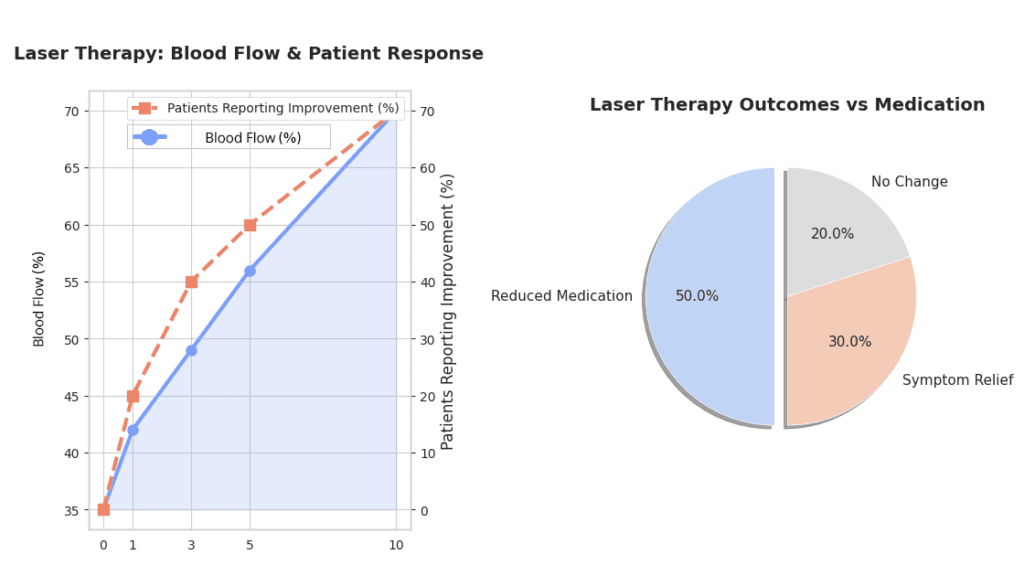
Laser therapy is considered a safe and non-invasive treatment option, with minimal side effects when administered correctly. Common side effects may include temporary redness or a slight warming sensation at the treatment site. More severe side effects are rare and typically occur when the treatment is not properly regulated. Clinical studies have demonstrated the efficacy of laser therapy in treating Raynaud’s, with patients reporting improvements in circulation, reduction in symptoms, and even fewer episodes of Raynaud’s attacks. However, the success of laser therapy often depends on the severity of the disease and the consistency of treatment.
3. Mechanisms of Action in Raynaud’s
The therapeutic effects of laser treatment in Raynaud’s disease occur through a variety of mechanisms, primarily centered around improving blood flow, modulating nervous system responses, and influencing cellular processes. By understanding these mechanisms, we can better appreciate how laser therapy addresses the underlying causes of Raynaud’s and provides relief from its symptoms.
3.1 Vasodilation and Blood Flow Improvement
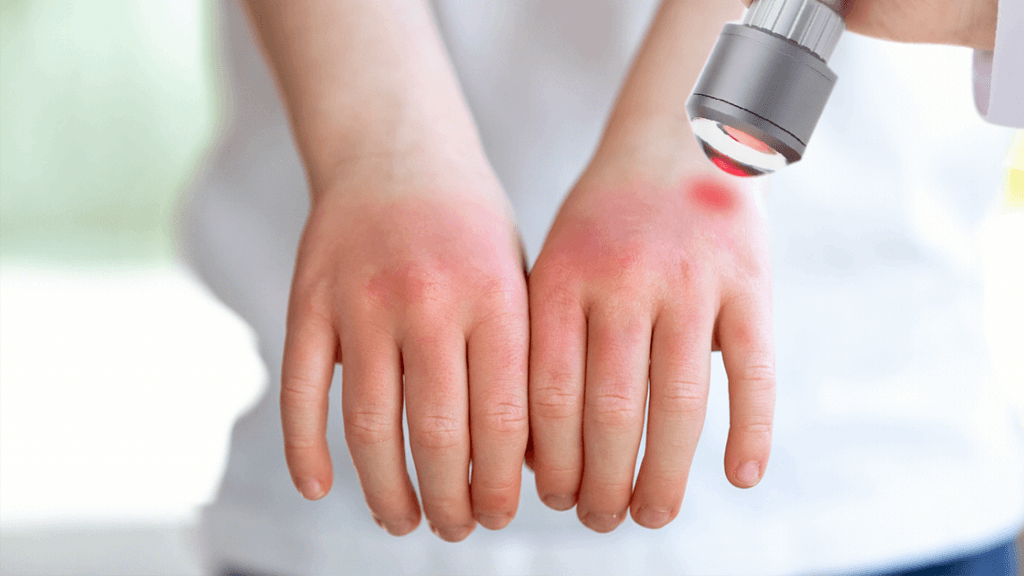
One of the core therapeutic effects of laser treatment for Raynaud’s disease is vasodilation, or the expansion of blood vessels. In Raynaud’s, blood vessels constrict in response to cold or stress, reducing blood flow to the extremities and causing color changes, coldness, and discomfort. Laser therapy stimulates the endothelial cells lining the blood vessels, promoting the production of nitric oxide (NO), a powerful vasodilator that helps blood vessels relax and expand. This action counters the excessive vasoconstriction in Raynaud’s, improving circulation. Studies have shown that laser therapy enhances peripheral circulation, reduces the frequency of Raynaud’s attacks, and improves tissue oxygenation. For individuals with frequent or severe episodes, laser therapy offers significant long-term symptom relief by restoring normal blood flow to affected areas.
3.2 Modulating Nervous System Responses
In addition to its effects on blood vessels, laser therapy can also influence the sympathetic nervous system, which plays a significant role in regulating blood vessel tone. In Raynaud’s disease, an exaggerated response by the sympathetic nervous system can trigger vasoconstriction, even in response to mild triggers like stress or temperature changes. Laser therapy helps modulate the sympathetic nervous system by reducing excessive sympathetic activity. This process is thought to occur through the stimulation of certain receptors on the nerve cells, leading to reduced nerve activity and, consequently, reduced blood vessel constriction. By balancing the autonomic nervous system’s response, laser therapy helps regulate the flow of blood to the extremities, thus reducing the likelihood of a Raynaud’s attack. Furthermore, the calming effect on the nervous system can result in a reduction in the stress-induced vasoconstriction that many patients with Raynaud’s experience.
3.3 Cellular and Molecular Effects
On a cellular level, laser therapy promotes tissue healing and reduces inflammation through photobiomodulation (PBM). When the laser light penetrates the skin, it is absorbed by mitochondria, boosting the production of adenosine triphosphate (ATP), which fuels cellular energy. Increased ATP enhances metabolism, accelerating repair processes. In Raynaud’s, laser therapy aids in regenerating damaged tissues, particularly blood vessels and endothelial cells, and stimulates the production of collagen and elastin, improving vascular integrity. Additionally, laser therapy has anti-inflammatory effects, reducing the release of pro-inflammatory cytokines that may exacerbate symptoms. The combined benefits of improved tissue repair, reduced inflammation, and enhanced energy production help manage Raynaud’s disease, promoting long-term vascular health.
4. Existing Uses in Medical Fields
While laser therapy for Raynaud’s is still being researched, it has already found widespread use in a variety of other medical fields. Its ability to improve circulation, reduce inflammation, and accelerate tissue healing makes it particularly useful in treating vascular, musculoskeletal, and tissue repair conditions.
4.1 Laser Therapy in Vascular and Circulatory Conditions
Laser therapy has been extensively used to treat a variety of vascular and circulatory conditions, such as chronic venous insufficiency, diabetic ulcers, and peripheral artery disease. In these conditions, blood flow to the extremities is compromised, leading to poor healing, pain, and discomfort. By stimulating the blood vessels and improving circulation, laser therapy can help reduce the symptoms associated with these vascular conditions. The therapy’s ability to promote angiogenesis (the formation of new blood vessels) has been particularly beneficial in patients with chronic wounds or compromised circulation. This ability to improve blood flow and oxygen delivery is directly relevant to Raynaud’s disease, where the goal is to enhance circulation to the extremities and prevent vasospasm.
4.2 Wound Healing and Tissue Repair
Laser therapy is also widely used in wound healing and tissue repair. The ability of therapeutic lasers to promote collagen synthesis, stimulate cell regeneration, and reduce inflammation makes them an effective treatment for chronic and acute wounds. This is especially useful in conditions like diabetic foot ulcers, pressure ulcers, and surgical wounds. In the case of Raynaud’s, tissue damage caused by prolonged vasospasm or frequent episodes of reduced blood flow can lead to ulcers or other forms of necrosis in the fingers and toes. Laser therapy can help accelerate healing by improving circulation, promoting tissue regeneration, and reducing inflammation. This can significantly enhance the healing process in patients with severe Raynaud’s disease, particularly those with secondary complications.
4.3 Pain Management in Musculoskeletal Disorders
Laser therapy is also an effective tool for pain management in various musculoskeletal disorders, including arthritis, tendonitis, and muscle strains. By reducing inflammation and stimulating the body’s natural healing processes, laser therapy helps alleviate pain and promote recovery in soft tissues. In Raynaud’s, the discomfort associated with reduced circulation and vasospasm can often lead to chronic pain in the extremities. Laser therapy’s anti-inflammatory and analgesic effects can provide significant relief for patients suffering from this type of pain. Moreover, its non-invasive nature and lack of serious side effects make it an attractive alternative to traditional pain management strategies.
5. Challenges and Future Directions
Despite its promising potential, laser therapy for Raynaud’s disease faces several challenges. From technological limitations to barriers in accessibility, there are still obstacles to be addressed before laser therapy can become a mainstream treatment for Raynaud’s.
5.1 Limitations of Current Laser Therapies
While laser therapy has shown promise in clinical trials, there are still several limitations. One significant challenge is the lack of standardization in treatment protocols. Laser devices vary in power, wavelength, and other parameters, and different protocols may be used in different clinical settings. More research is needed to establish optimal treatment parameters for Raynaud’s disease, including the ideal wavelength, intensity, and duration of treatment. Moreover, while laser therapy has been shown to be effective in improving circulation and reducing symptoms in many patients, the results are not always consistent. Some patients may experience significant improvement, while others may show little to no benefit. Further research is needed to identify factors that may influence treatment success and to refine treatment protocols accordingly.
5.2 Ongoing Research and Innovations
Exciting advances in laser technology offer potential improvements in the efficacy of laser therapy for Raynaud’s disease. Newer, higher-powered lasers with wider wavelengths may enable deeper tissue penetration, allowing for more effective treatment of severe cases. Additionally, combination therapies, such as combining laser therapy with other modalities like cryotherapy or physical therapy, may offer enhanced benefits. Research is also focusing on developing personalized treatment plans based on an individual’s specific disease severity, response to previous treatments, and other health factors. Personalized approaches could help optimize the benefits of laser therapy, making it more effective and accessible to patients with different needs.
5.3 Barriers to Widespread Use of Laser Therapy in Raynaud’s
One of the main barriers to the widespread use of laser therapy for Raynaud’s is the cost. Therapeutic laser devices can be expensive, and insurance coverage for laser therapy is not always available, especially for less common indications like Raynaud’s disease. In addition, laser therapy typically requires multiple sessions, further increasing the cost burden on patients. Furthermore, accessibility is a significant issue. Not all healthcare providers are equipped with laser therapy devices, and patients in rural or underserved areas may not have easy access to the necessary treatments. Training healthcare providers to use laser devices safely and effectively is also essential to ensure the therapy’s success.
5.4 Broader Implications for Vascular Disorders
The success of laser therapy in treating Raynaud’s disease could have broader implications for other vascular disorders. Conditions like peripheral artery disease (PAD), varicose veins, and chronic venous insufficiency could potentially benefit from laser treatment, given the therapy’s ability to enhance circulation and promote tissue healing. Moreover, laser therapy could be used as part of a broader comprehensive vascular treatment plan, especially for patients who suffer from multiple vascular conditions. By offering a non-invasive, low-risk alternative to traditional interventions, laser therapy could play a key role in improving the quality of life for patients with vascular disorders.
6. Patient Testimonials: Experiences with Laser Therapy
Patient testimonials provide valuable insights into how laser therapy works in real-world scenarios, offering a human perspective on the treatment’s benefits and challenges.
6.1 Positive Outcomes
Many patients report significant improvements in their symptoms after undergoing laser therapy. Sarah, a 42-year-old woman with primary Raynaud’s disease, shares, “Before starting laser therapy, I often experienced numbness and color changes in my fingers, especially in winter. After just a few sessions, I saw a significant reduction in these attacks. My hands stay warmer for longer, and I feel much less discomfort.” This feedback is common among those who find laser therapy beneficial. The vasodilation effect of the laser, which enhances blood flow and circulation, has been a game-changer for many. Patients report better cold tolerance and fewer Raynaud’s episodes, making daily activities easier to manage.
6.2 Challenges: A Learning Curve for Some
However, not all experiences are uniformly positive. James, a 55-year-old man with secondary Raynaud’s disease due to lupus, explains, “I’ve tried several rounds of laser therapy, but the results have been inconsistent. Sometimes it works well, other times not so much.” This variability can be due to factors like disease severity, laser type, and individual responses. Inconsistent results highlight the need for personalized treatment plans to improve therapy effectiveness.
6.3 Long-Term Benefits: A Lasting Solution for Some
For patients like Linda, who has been using laser therapy for over a year, the benefits are long-lasting. She says, “I used to rely on medication to manage my Raynaud’s symptoms. Now, after starting laser therapy, I feel less pain during cold weather, and my hands and feet stay warmer.” For many, laser therapy offers lasting relief from chronic symptoms, especially when combined with lifestyle changes. The therapy’s cumulative effects suggest its potential as a long-term solution for Raynaud’s disease.
7. Summary
Laser therapy has emerged as a promising non-invasive treatment for Raynaud’s disease, offering both immediate relief and long-term benefits. By improving blood flow through vasodilation, modulating nervous system responses, and encouraging cellular regeneration, it targets the core issues of Raynaud’s, helping patients better manage their symptoms. Despite its potential, laser therapy faces challenges, including variability in patient responses and a lack of standardized treatment protocols. However, ongoing research into laser optimization and innovative combination therapies holds promise for improving its effectiveness. Patient testimonials reflect the positive impact laser therapy can have, with many reporting better symptom control and improved quality of life. However, for those who experience inconsistent results, personalized treatment plans are essential. As research progresses, laser therapy’s role in treating Raynaud’s disease is potential to grow, potentially offering a more widely accepted and effective option for managing the condition.
8. FAQs
Q1. How does laser therapy help with Raynaud’s disease?
Laser therapy helps by promoting vasodilation, or the expansion of blood vessels, which improves blood flow to the extremities. It also enhances cellular regeneration and reduces inflammation, addressing the core issues of Raynaud’s disease.
Q2. How many laser therapy sessions are needed to see results?
The number of sessions varies based on the severity of Raynaud’s disease. Some patients report improvements after just a few sessions, while others may require multiple treatments. Typically, a series of 5-10 sessions is recommended for optimal results.
Q3. Are the effects of laser therapy permanent?
While laser therapy can provide significant relief and improve circulation, its effects are not always permanent. Ongoing treatments may be necessary to maintain symptom relief, depending on the individual’s condition.
Q4. Can laser therapy replace other treatments for Raynaud’s disease?
Laser therapy can be an effective complementary treatment to manage symptoms, but it is not intended to replace conventional treatments like medication or lifestyle modifications. It is best used as part of a comprehensive management plan.
Q5. Are there any side effects of laser therapy for Raynaud’s disease?
Laser therapy is generally safe with few side effects. However, some patients may experience mild skin irritation, redness, or warmth at the treatment site. These effects are usually temporary and subside after treatment. Always consult with a healthcare provider to ensure suitability for your specific condition.
Q6. Can laser therapy be used for both primary and secondary Raynaud’s disease?
Yes, laser therapy can be used for both primary and secondary Raynaud’s disease. However, patients with secondary Raynaud’s—especially those with underlying conditions like lupus or scleroderma—should consult their healthcare provider to assess treatment suitability.
9. References
Current medical and surgical management of Raynaud’s syndrome:
https://www.sciencedirect.com/science/article/pii/S0741521413005983
Photobiomodulation—Underlying Mechanism and Clinical Applications:
https://pmc.ncbi.nlm.nih.gov/articles/PMC7356229
Low Level Laser Therapy in Primary Raynaud’s Phenomenon:
 English
 العربية
 Français
 日本語
日本語 Português
 Español
 Русский
 Deutsch