

Page Contents
Delayed Onset Muscle Soreness (DOMS) is a common condition experienced by anyone who has pushed their muscles to new limits, whether through a new workout routine or an intense training session. While DOMS is often seen as an inevitable part of muscle growth and fitness progress, there’s a growing tool in the recovery arsenal that promises to shorten recovery times and alleviate pain: laser therapy. But does it really work? Let’s dive in to explore how laser therapy can help DOMS fade fast and enhance muscle recovery.
1. DOMS Is an Opportunity for Muscle Optimization
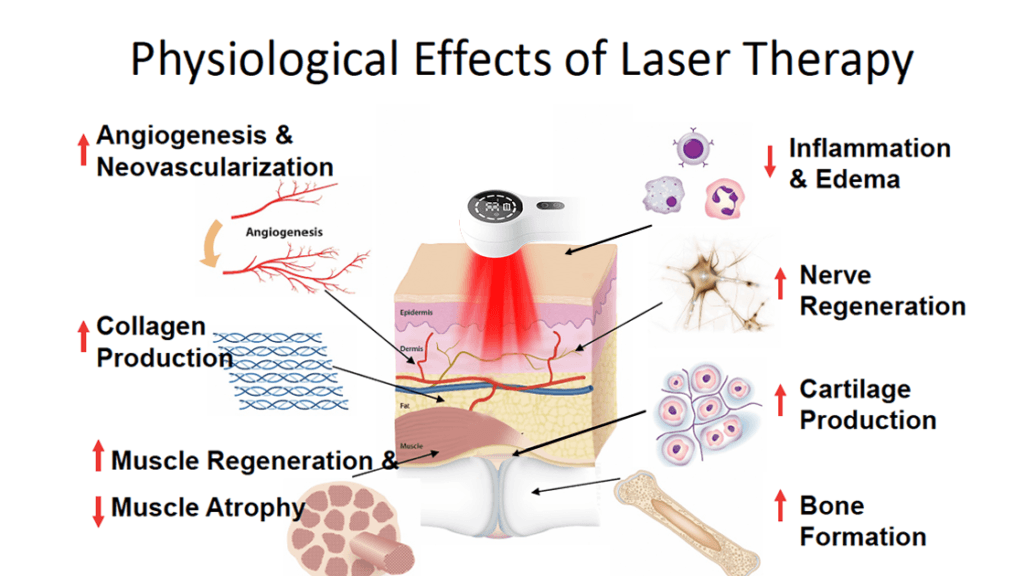
DOMS is more than just muscle pain. It’s a signal that your muscles are adapting to a new workload and beginning the process of rebuilding stronger than before. However, the pain and stiffness that come with DOMS can make it difficult to perform at your best during subsequent workouts. Fortunately, understanding DOMS as an opportunity for muscle optimization can shift your perspective and lead you to more effective recovery methods. When muscles undergo strenuous activity, microscopic tears occur in muscle fibers. The body then works to repair these fibers, making them stronger and more resistant to future stress. Laser therapy plays a vital role in accelerating this repair process, reducing inflammation, and ensuring a quicker recovery, so you’re not sidelined for long.
2. How Laser Therapy Interacts with Muscle Tissue
Laser therapy, also known as Low-Level Laser Therapy (LLLT) or Photobiomodulation (PBM), typically uses lower-intensity lasers (Class III) to stimulate healing processes in the body. However, Class IV lasers, which are higher-intensity lasers, can also be used in specific applications for deeper tissue penetration. These lasers emit light that interacts with cells, particularly within the mitochondria, enhancing the body’s natural healing and recovery processes. While LLLT is often used for surface-level and less intense treatments, Class IV lasers are capable of reaching deeper tissues, making them suitable for more severe conditions or targeting muscles during recovery from intense workouts.
2.1 The Biological Mechanism of Laser Therapy
2.1.1 Photobiomodulation Explained Simply
Photobiomodulation (PBM) refers to the process by which light energy, typically delivered by low-level lasers or LEDs, is absorbed by tissues. The light energy is particularly absorbed by the mitochondria, the cell’s energy generators. This energy absorption triggers biochemical reactions that enhance cellular functions, leading to accelerated healing. Studies have demonstrated that PBM can boost ATP production, improve circulation, and promote tissue regeneration, all of which are crucial for effective muscle recovery after intense physical exertion.
2.1.2 Mitochondrial Stimulation and ATP Production
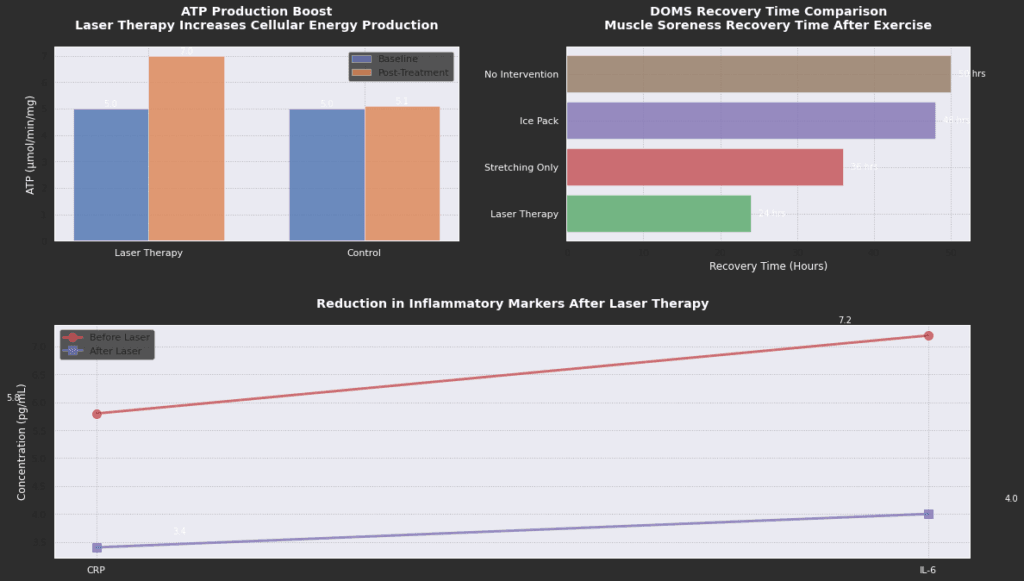
Mitochondria play a central role in energy production within cells, generating adenosine triphosphate (ATP), the primary energy currency for cellular processes. Laser therapy stimulates these mitochondria, boosting ATP production. With more ATP available, cells have the necessary energy to repair damaged muscle fibers, speeding up recovery. Research published in the Journal of Athletic Training has shown that Low-Level Laser Therapy (LLLT) can increase ATP synthesis by up to 40%, significantly accelerating the recovery of muscle tissue after intense workouts or injury.
2.1.3 Anti-Inflammatory and Circulatory Effects
Another key benefit of laser therapy is its ability to reduce inflammation, a common response to muscle strain and soreness. Laser therapy stimulates the production of nitric oxide, a molecule that helps dilate blood vessels, improving circulation. This enhanced circulation aids in the removal of metabolic waste products, such as lactic acid, which build up in muscles after strenuous activity. Additionally, increased blood flow ensures that nutrients and oxygen are delivered to the affected areas, further promoting healing and reducing discomfort associated with DOMS.
2.2 Tailoring Wavelengths for Specific Muscle Groups
Laser therapy is not a universal solution—it’s most effective when the right wavelength is chosen for the targeted tissue. The wavelength determines how deeply the light penetrates the skin and muscles. Each muscle group may benefit from a different wavelength for optimal results:
- Red Light (600-650 nm): This wavelength is ideal for treating superficial muscles or minor, surface-level injuries, as it penetrates the skin only a short distance.
- Near-Infrared Light (800-1000 nm): With deeper penetration capabilities, near-infrared light is more effective for targeting deeper muscle tissues and more complex injuries. It can reach deeper into the muscles and accelerate healing at greater depths.
Selecting the appropriate wavelength based on the injury type or muscle group ensures that laser therapy is as effective as possible for each specific case.
2.3 Treatment Area and Application Technique
The effectiveness of laser therapy is also influenced by how and where it is applied. Proper targeting of the treatment area is critical. The laser should be focused on the muscle group suffering from soreness or injury. In some cases, practitioners may use a grid pattern to ensure that the entire affected area is adequately treated, maximizing the healing potential. The duration and consistency of each treatment session also play a role in achieving optimal results. Depending on the severity of DOMS, each session typically lasts between 5 to 20 minutes. More severe muscle soreness may require longer sessions or additional treatments to fully address the issue. Consistent application of laser therapy over several sessions can significantly enhance recovery times and reduce muscle soreness.
3. Laser Therapy’s Impact on the Muscle
Laser therapy does not just reduce pain; it accelerates the body’s healing processes, improving long-term muscle function and recovery. Below are some of the key ways laser therapy impacts muscle tissue.
3.1 ATP Acceleration: The “Battery Boost” Effect
As mentioned earlier, one of the primary benefits of laser therapy is the stimulation of ATP production. Think of it as giving your muscles a “battery boost.” When muscles have more energy at their disposal, they recover faster and are better prepared for future exercise. By accelerating ATP production, laser therapy ensures that your muscles have the energy needed to repair and rebuild more effectively.
3.2 Clearing the Backlog: Laser-Assisted Waste Removal
After intense physical activity, muscle cells accumulate waste products like lactic acid. These waste products contribute to the soreness and stiffness that come with DOMS. Laser therapy helps clear this backlog by improving circulation and enhancing the lymphatic drainage system. Studies show that LLLT can effectively reduce the concentration of metabolic waste products, leading to quicker muscle recovery and less soreness.
3.3 Recovery Time Compression: From 48 Hours to 24?
One of the most appealing benefits of laser therapy is its ability to compress recovery time. Normally, it may take up to 48 hours for muscle soreness to subside. However, with consistent use of laser therapy, some individuals report experiencing reduced recovery times, with soreness diminishing in as little as 24 hours. Research from the European Journal of Applied Physiology has indicated that laser therapy can significantly reduce recovery time after muscle-damaging exercises, making it an excellent tool for athletes who want to stay in top shape.
4. Suitability and Accessibility for Different Populations
Laser therapy is not limited to professional athletes. It can be beneficial for a wide range of individuals, from fitness enthusiasts to the general population.
4.1 Who’s Actually Using This?
Athletes, especially those in sports like football, basketball, and tennis, often experience muscle soreness from repeated strain and physical activity. Laser therapy helps them recover faster and perform better in subsequent workouts. However, it’s not just for athletes. Weekend warriors, people recovering from surgery, and individuals with chronic conditions like fibromyalgia can all benefit from laser therapy.
4.2 At-Home Use: Is It Feasible and Effective?
With the rise of portable laser devices, more people are turning to at-home laser therapy as a cost-effective and convenient alternative to professional treatments. Studies have shown that low-level laser devices designed for home use can be just as effective when applied correctly. However, for more complex or deeper muscle issues, seeking professional treatment may still be the best option.
4.3 Is It Just a Placebo with Pretty Lights?
There’s always skepticism around new treatments, but numerous studies and clinical trials have shown that laser therapy is not just a placebo. Research consistently supports its efficacy in reducing muscle soreness, inflammation, and recovery times. According to a study published in Lasers in Medical Science, laser therapy significantly reduced pain in patients with muscle injuries compared to placebo treatments.
5. Expert Insights and Final Considerations
5.1 What Top Practitioners Are Saying
Leading practitioners in sports medicine and physical therapy have praised the benefits of laser therapy for muscle recovery. Dr. Mark Davis, a sports rehabilitation expert, explains, “Laser therapy provides a non-invasive, effective solution for muscle recovery. It enhances healing, reduces pain, and helps athletes get back to peak performance faster.”
5.2 Recommendations for First-Time Users
For those new to laser therapy, starting with low-intensity treatments and gradually increasing the exposure time and frequency is recommended. It’s essential to follow the device’s instructions carefully to avoid overuse. Beginners should consult a healthcare professional to ensure they’re using the right device and technique.
5.3 Possible Side Effects and How to Avoid Them
While laser therapy is generally safe, overuse can lead to temporary skin irritation or discomfort. To avoid this, it’s crucial to follow recommended guidelines for treatment duration and frequency. Additionally, individuals with certain conditions, such as pregnancy or active cancer, should consult with their doctor before using laser therapy.
6. Conclusion
Laser therapy represents a breakthrough in muscle recovery, offering a scientifically-backed approach to alleviating DOMS and speeding up muscle repair. By stimulating cellular activity and enhancing circulation, laser therapy allows athletes and everyday fitness enthusiasts to recover faster and get back to their workouts with less discomfort. As research continues to validate its benefits, laser therapy could become a staple in recovery routines for muscle optimization.
7. FAQs
Q1. What is the difference between DOMS and a muscle strain?
DOMS (Delayed Onset Muscle Soreness) is a natural response to unaccustomed or intense exercise, whereas a muscle strain involves actual tearing of muscle fibers and may require longer recovery.
Q2. Is laser therapy safe for treating muscle soreness?
Yes, both low-level (Class III) and higher-intensity (Class IV) therapeutic lasers are considered safe when used appropriately under guidelines. Side effects are minimal and rare.
Q3. How soon after a workout should I use laser therapy?
Laser therapy can be effective both immediately post-exercise and within the first 24 hours to help reduce inflammation and accelerate recovery.
Q4. How many laser therapy sessions are needed for DOMS relief?
Depending on severity, 1–3 sessions may be sufficient for mild DOMS. Chronic or intense soreness may benefit from ongoing sessions.
Q5. Can I use a home laser therapy device for DOMS?
Yes. Many Class II or Class III portable PBM devices are available for home use. Always follow manufacturer guidelines and consult a healthcare provider.
Q6. Will I feel results immediately after a laser therapy session?
Some users report immediate relief, while others may notice improvement within 12–24 hours as inflammation and soreness gradually subside.
8. References
The effect of low-level laser therapy on delayed onset muscle soreness when delivered pre- and post- eccentric exercise:
Mechanisms and applications of the anti-inflammatory effects of photobiomodulation:
 English
 العربية
 Français
 日本語
日本語 Português
 Español
 Русский
 Deutsch