
Page Contents
Introduction
Retirement from competitive sports marks a major life transition. After years of structured training, intense competition, and peak physical performance, the body enters a new phase where daily movement replaces athletic demand. Yet for many retired athletes, this transition comes with an unwelcome companion: persistent joint discomfort that affects how they move, sleep, and enjoy everyday activities. The years of repetitive loading, prior injuries, and accumulated wear on the joints do not simply disappear when the uniform comes off. This article focuses on how Class IV laser therapy, a non-invasive light-based approach, may help retired athletes manage ongoing joint discomfort and support long-term mobility without relying heavily on medications or invasive procedures.
1. Understanding the Joint Challenges Retired Athletes Face
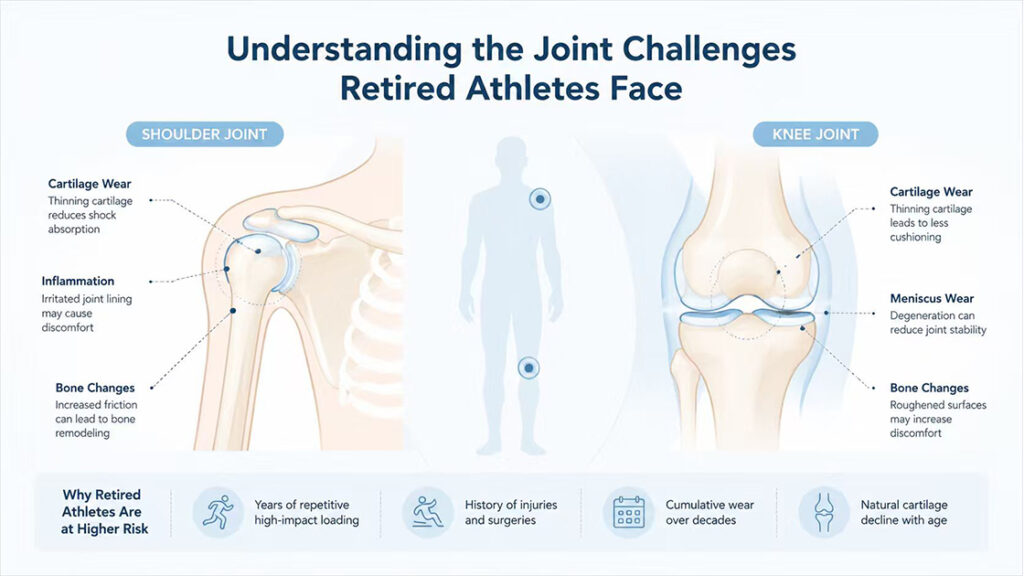
Elite sports participation offers many physical benefits, but it also leaves lasting marks on the body‘s joints. Former athletes often experience joint-related conditions at higher rates than the general population.
1.1 The Lasting Impact of an Athletic Career
Research consistently shows that former elite athletes have a higher prevalence of osteoarthritis compared to their non-athletic peers. The knee is the most commonly affected joint, and prior injuries significantly increase the odds of developing joint issues later in life. Every additional severe knee injury sustained during a playing career raises the risk. This does not mean every retired athlete will develop significant problems, but the cumulative wear from years of high-impact training creates a real need for ongoing joint support.
1.2 How Prior Injuries Contribute to Joint Changes
A history of injury is one of the strongest predictors of future joint discomfort. During a competitive career, athletes often sustain sprains, strains, fractures, and ligament tears. Even when these injuries heal well, they can alter the biomechanics of the joint. Slight changes in how a joint moves can place extra stress on certain areas of cartilage, accelerating gradual wear over time. This explains why many retired athletes notice that an old injury site becomes the first place to feel stiff or achy as they age.
1.3 The Natural Decline of Joint Cartilage
Joint cartilage does not regenerate easily. Over years of high-impact training, the protective cartilage layer within joints gradually thins. This thinning reduces the joint‘s ability to absorb shock during weight-bearing activities. As cartilage continues to thin, the underlying bone may become more exposed, leading to increased friction and discomfort during movement. Unlike acute injuries that heal over weeks, this gradual cartilage change develops over decades, often becoming noticeable only after athletic careers have ended.
2. The Transition Challenge: From Performance to Maintenance
For retired athletes, the shift from high-output training to everyday movement brings its own set of challenges. Understanding these challenges helps explain why proactive joint management matters.
2.1 The Sudden Drop in Physical Activity
When competitive training stops, daily energy expenditure often decreases dramatically. Where an athlete once logged hours of practice each day, the retired athlete may find themselves sitting more and moving less. This sudden reduction in mechanical loading affects the joints in complex ways. Without the regular stimulation of activity, supporting muscles around the joints may weaken, and joint mobility may gradually decline. Some retired athletes adopt sedentary habits early after retirement that become difficult to break later.
2.2 The Identity Shift and Its Physical Impact
For many elite athletes, training and competition form a core part of identity. Retirement can feel like losing a fundamental part of who they are. Without the structure of a training schedule, finding motivation to stay active becomes challenging. Physical activity that once had clear purpose—winning competitions, improving performance—now requires reframing as maintenance for long-term health. This psychological shift can affect how retired athletes perceive and respond to joint discomfort.
2.3 Why Pain Management Requires a Different Approach
The pain that retired athletes experience differs from the acute injuries they handled during their careers. During competition, pain often signaled something that needed immediate attention—a sprain, a strain, or a tear. In retirement, the discomfort tends to be more diffuse and chronic. It may not follow a clear pattern or respond to the same strategies that worked during playing days. This shift requires retired athletes to adopt new ways of understanding and responding to what their bodies tell them.
3. How Class IV Laser Therapy Supports Joint Comfort
Class IV laser therapy offers a non-invasive approach for managing ongoing joint discomfort. Rather than relying on medications or invasive procedures, this method uses light energy to support the body‘s natural recovery processes at the cellular level.
3.1 Photobiomodulation at the Cellular Level
At its core, Class IV laser therapy delivers specific wavelengths of red or near-infrared light to targeted tissues. The light energy penetrates the skin and reaches deeper structures such as joints, tendons, and muscles. When cells absorb this light, it triggers a process called photobiomodulation. This process has been studied for its potential to support healing, modulate inflammation, and relieve discomfort associated with various musculoskeletal conditions.
3.2 How Light Energy Affects Joint Tissues
The light energy interacts with mitochondria, the energy-producing components within cells. This interaction increases the production of adenosine triphosphate (ATP), the molecule that fuels cellular activities. With more energy available, joint tissues may perform their maintenance functions more effectively. Additionally, photobiomodulation helps regulate the inflammatory environment within the joint. For retired athletes dealing with chronic joint discomfort, this combined cellular support may help manage ongoing symptoms without heavy reliance on pain medications that can have side effects.
3.3 What Makes Class IV Different from Other Lasers
Class IV lasers deliver higher power output compared to lower-level therapeutic lasers. This higher power allows the light to penetrate deeper into tissues, reaching the joint capsule and surrounding structures effectively. The increased energy delivery means that treatment sessions can be relatively short while still providing meaningful tissue exposure. Unlike surgical interventions or injections, Class IV laser therapy does not require any incision, anesthesia, or recovery time. A typical session lasts only a few minutes, and patients can resume their normal activities immediately afterward.
3.4 A Supportive Tool, Not a Replacement
Class IV laser therapy does not reverse existing joint damage or replace the cartilage that has already worn away. The underlying joint changes that occurred during an athletic career remain. What the therapy can do is help manage the discomfort associated with those changes. By modulating inflammation and supporting cellular metabolism, laser therapy may help retired athletes feel more comfortable during daily activities. This can make it easier to stay active and maintain the muscle strength that protects the joints. It works best as one component of a comprehensive joint health plan.
4. Building a Joint-Friendly Lifestyle After Sport
Managing joint health in retirement requires more than any single therapy. A thoughtful combination of lifestyle habits, activity choices, and supportive approaches tends to produce the best long-term outcomes.
4.1 Staying Active Without Overloading Joints
Activity remains essential for joint health, but the type of activity matters. High-impact exercises that once formed the core of athletic training may need modification. Low-impact options such as swimming, cycling, elliptical training, and walking provide cardiovascular benefits while placing less stress on weight-bearing joints. The goal is not to eliminate movement but to choose movements that the joints can tolerate well. Consistent moderate activity tends to serve retired athletes better than sporadic intense sessions.
4.2 Strengthening Supporting Muscles
Strong muscles around a joint help absorb force that would otherwise transfer directly to the joint surfaces. Quadriceps strength, for example, reduces load on the knee joint during walking and climbing stairs. Hip stabilizers support the pelvis and lower back. Core strength protects the spine. A well-designed strengthening program focuses on the muscles that support the joints most affected by prior athletic activity. Working with a physical therapist familiar with retired athletes can help design an appropriate routine.
4.3 Using Class IV Laser Therapy as Part of the Routine
For retired athletes who choose to incorporate Class IV laser therapy, consistency often matters more than intensity. Regular sessions—whether after activity or on scheduled rest days—may help manage the low-level inflammation that contributes to chronic joint discomfort. The therapy is non-invasive and quick, making it easy to fit into a busy schedule. Some retired athletes find that using laser therapy alongside their strengthening and mobility work helps them stay more consistent with their overall joint health plan.
5. Practical Steps for Retired Athletes
Taking a proactive approach to joint health helps retired athletes maintain mobility and quality of life. These practical considerations can be incorporated into daily routines without requiring major lifestyle overhauls.
5.1 Establishing a Sustainable Routine
Without the external structure of a team or coach, retired athletes benefit from creating their own movement routines. Scheduling specific times for activity, just as they once scheduled practices, helps maintain consistency. The routine does not need to be intense; a daily walk, several weekly strength sessions, and regular stretching can provide meaningful joint support. The most sustainable routine is one that feels manageable and enjoyable, not like another training obligation.
5.2 Working With Knowledgeable Professionals
Physical therapists, sports medicine physicians, and certified strength coaches who understand the unique needs of retired athletes can provide valuable guidance. These professionals can assess movement patterns, identify muscle imbalances, and design programs that address specific joint concerns. When considering Class IV laser therapy, seeking a qualified practitioner ensures proper application and appropriate expectations. A collaborative approach that integrates multiple professionals tends to produce better outcomes than any single intervention alone.
5.3 Maintaining a Healthy Body Weight
Excess body weight increases the load on weight-bearing joints with every step. For every pound of body weight, the knees experience roughly four pounds of force during walking. Maintaining a healthy weight reduces this baseline load, potentially decreasing discomfort during daily activities. For retired athletes who have reduced their activity levels without adjusting calorie intake, gradual dietary modifications may help achieve a weight that supports rather than strains their joints.
Frequently Asked Questions
Q1: Does previous athletic activity cause joint problems directly?
Not directly. But prior joint injuries significantly increase the risk, and many athletes sustain injuries during their careers. Class IV laser therapy helps manage associated discomfort.
Q2: How does Class IV laser therapy help retired athletes?
It uses light energy to support cellular function and modulate inflammation in joint tissues. It may help manage ongoing discomfort, not reverse existing joint damage.
Q3: Is laser therapy a replacement for exercise?
No. Staying active and maintaining muscle strength remain the foundation of joint health. Laser therapy can support these efforts by helping manage discomfort.
Q4: How often should retired athletes use laser therapy?
Frequency depends on individual needs and activity levels. Some may use it after activity sessions; others may benefit from regular weekly sessions. A practitioner can recommend a schedule.
Q5: Can Class IV laser therapy delay or prevent joint replacement?
The therapy helps manage symptoms but does not prevent the underlying progression of joint changes. Decisions about surgery should be made with a healthcare provider.
Conclusion
Retired athletes face a unique set of joint health challenges that stem from years of repetitive loading, prior injuries, and the natural transition away from competitive training. Proactive management strategies can make a meaningful difference in daily comfort and long-term mobility. Class IV laser therapy offers a non-invasive supportive tool that may help retired athletes manage ongoing joint discomfort through photobiomodulation, cellular energy support, and inflammation modulation. It does not reverse existing joint changes, but it may make daily activities more comfortable, supporting the active lifestyle that retired athletes need to maintain joint health. By combining appropriate activity choices, strengthening exercises, healthy weight management, and supportive therapies like Class IV laser therapy, retired athletes can continue moving well for years after their competitive careers have ended.
References
Le Roux, J., et al. (2025). Shoulder and knee surgery double odds of osteoarthritis in retired professional rugby players.
https://pubmed.ncbi.nlm.nih.gov/40254506
Palmer, D., et al. (2022). Prevalence of and factors associated with osteoarthritis and pain in retired Olympians compared with the general population: part 1 – the lower limb.
Gouttebarge, V., Aoki, H., & Kerkhoffs, G. M. M. J. (2018). Knee osteoarthritis in professional football is related to severe knee injury and knee surgery.
Effects of Photobiomodulation on Osteoarthritis from In Vivo and In Vitro Studies: A Narrative Review. (2025). International Journal of Molecular Sciences.
https://pmc.ncbi.nlm.nih.gov/articles/PMC12470002
Smart Laser Therapy. Class IV Laser Therapy for Joint Health.
 English
 العربية
 Français
 日本語
日本語 Português
 Español
 Русский
 Deutsch