
Page Contents
1. Introduction
The therapeutic applications of laser technology have revolutionized modern medicine, offering non-invasive treatment options for a wide array of medical conditions. From wound healing to pain management, the precise control of light energy has opened new frontiers in patient care. Understanding the intricate relationship between wavelength selection and therapeutic outcomes is crucial for both healthcare providers and patients seeking optimal treatment results.
1.1 What is Laser Therapy?
Laser therapy, also known as photobiomodulation (PBM), utilizes specific wavelengths of light to stimulate cellular processes and promote healing. PBM involves the use of red or near-infrared light at low power densities to produce a beneficial effect on cells or tissues, used to reduce pain, inflammation, edema, and to regenerate damaged tissues such as wounds, bones and tendons. The therapeutic laser systems deliver coherent, monochromatic light energy directly to targeted tissues, initiating complex biochemical cascades that enhance natural healing mechanisms without generating significant thermal effects.
1.2 Importance of Wavelength in Laser Therapy
Wavelength selection represents the fundamental parameter determining therapeutic efficacy in laser therapy applications. Scientists describe the range from 500 nm to 1100 nm as the “biological window,” which means the light can penetrate through the skin and enter the cells to affect tissue. Different wavelengths exhibit varying absorption characteristics, penetration depths, and cellular interactions, directly influencing treatment outcomes. The optimal wavelength selection depends on the targeted tissue depth, chromophore absorption properties, and desired therapeutic effects, making wavelength understanding essential for successful clinical applications.
1.3 Why Understanding Laser Wavelength Matters for Your Health
For patients considering laser therapy, comprehending wavelength implications empowers informed treatment decisions and realistic expectation setting. Understanding how specific wavelengths interact with your tissues helps optimize treatment protocols, minimize potential risks, and maximize therapeutic benefits. Healthcare providers can tailor treatment parameters based on individual anatomy, condition severity, and treatment goals. This knowledge also enables patients to actively participate in their care, recognize appropriate treatment sensations, and understand the scientific rationale behind their prescribed therapy protocols.
2. Understanding Laser Wavelengths
The electromagnetic spectrum encompasses a vast range of wavelengths, with therapeutic lasers utilizing specific portions that demonstrate optimal tissue interaction and minimal adverse effects. This targeted approach ensures maximum therapeutic benefit while maintaining patient safety and comfort throughout treatment protocols.
2.1 What is Wavelength?
Wavelength represents the distance between successive peaks of electromagnetic radiation, measured in nanometers (nm) for therapeutic laser applications. This fundamental physical property determines light behavior, including absorption characteristics, scattering patterns, and penetration depths within biological tissues. Shorter wavelengths exhibit higher energy per photon but limited penetration capacity, while longer wavelengths demonstrate deeper penetration with reduced energy density. The relationship between wavelength and photon energy follows Planck’s equation (E = hf), where energy inversely correlates with wavelength, establishing the foundation for therapeutic wavelength selection based on desired tissue interactions.
2.2 Types of Laser Wavelengths Used in Therapy
- 630–670 nm: Best for superficial tissue treatment, skin conditions, wound healing.
- 780–850 nm: Moderate penetration, ideal for muscles, joints, and deep soft tissue.
- 904–940 nm: Deeper penetration, suited for musculoskeletal applications.
- 1064 nm: Longest wavelength, high-powered PBM therapy (>0.5 W), unique biophysical effects, reaches very deep tissues.
2.3 How Different Wavelengths Affect Tissue Absorption
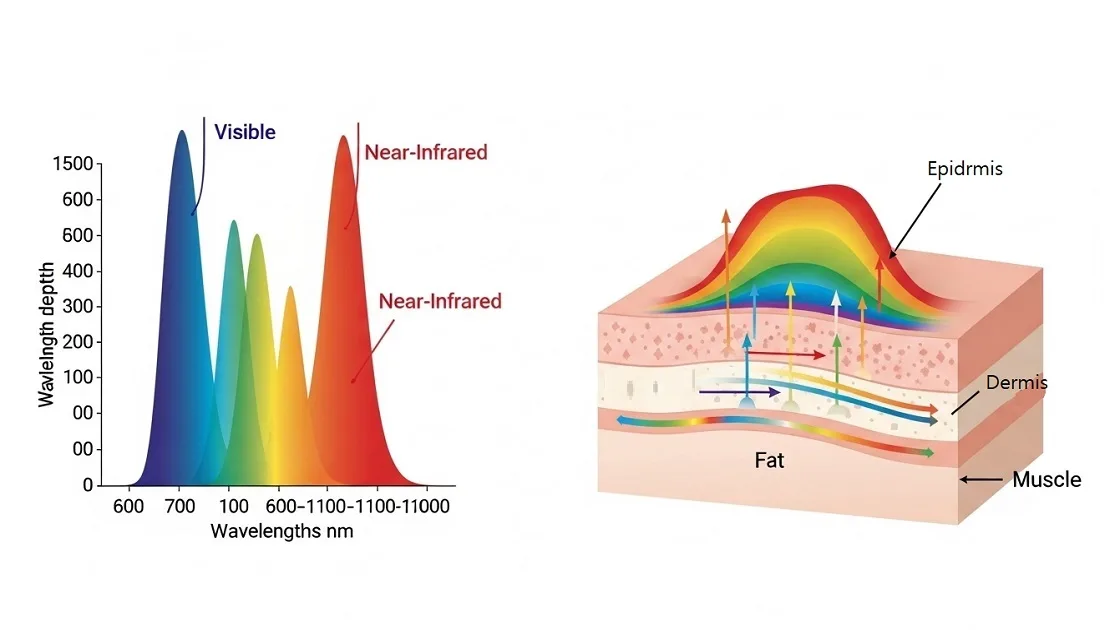
Tissue absorption patterns vary significantly across the therapeutic spectrum, primarily determined by chromophore concentrations including hemoglobin, melanin, and water content. Red wavelengths (600-700 nm) demonstrate strong absorption by hemoglobin and melanin, making them ideal for vascular and superficial applications. Near-infrared wavelengths (780-950 nm) exhibit reduced chromophore absorption, enabling deeper tissue penetration with minimal surface heating. Chromophores, ubiquitous in tissue, including hemoglobin, oxy-hemoglobin, and melanin, absorb light at varying degrees, creating wavelength-specific absorption windows that determine optimal therapeutic applications for different tissue types and treatment depths.
2.4 The Science Behind Wavelength Selection for Therapy
Scientific wavelength selection involves complex considerations of tissue optics, target chromophores, penetration requirements, and desired biological effects. The Beer-Lambert law governs light attenuation through tissues, describing exponential intensity reduction with depth. Optimal therapeutic windows exist where chromophore absorption is minimized while maintaining sufficient photon flux for biological activation. Treatment protocols must balance wavelength penetration capabilities with energy density requirements, considering individual patient factors including skin pigmentation, tissue thickness, and underlying pathology. Evidence-based wavelength selection ensures maximum therapeutic efficacy while minimizing unnecessary energy exposure and potential adverse effects.
3. Laser Penetration Depth: How Far Can the Light Go?
Understanding penetration depth is crucial for selecting appropriate laser parameters and achieving optimal therapeutic outcomes at target tissue levels. The depth of light penetration determines which anatomical structures receive therapeutic energy doses and influences treatment protocol design.
3.1 Factors That Affect Penetration Depth
- Wavelength: Different wavelengths penetrate tissues to varying depths, with near-infrared light reaching deeper than red light.
- Tissue Optical Properties: Tissue density, scattering, and absorption influence how far laser light can travel.
- Chromophore Concentration: The amount and type of light-absorbing molecules (e.g., hemoglobin, melanin) affect absorption.
- Anatomical Location: Penetration varies depending on the body area and underlying tissue types.
- Skin Thickness: Thicker skin layers reduce laser penetration compared to thinner areas.
- Subcutaneous Fat and Muscle Density: Higher fat or muscle content can decrease light transmission.
- Vascular Perfusion: Blood flow can absorb or scatter light, influencing effective penetration.
- Tissue Hydration: Well-hydrated tissues transmit light more efficiently than dehydrated tissues.
- Temperature: Tissue temperature can slightly modify light absorption and scattering properties.
- Oxygenation Status: Oxygen levels in tissues can affect chromophore activity and light absorption.
3.2 Comparing Red Light vs Near-Infrared Light Penetration
| Wavelength | Type of Light | Estimated Penetration Depth | Ideal Applications |
| 633 nm | Red Light (RL) | 1–3 mm | Superficial wounds, skin conditions, dermatology |
| 810 nm | Near-Infrared (NIR) | 2–10 mm | Deep tissue therapy, muscle injuries, joint pain |
| 890 nm | Near-Infrared (NIR) | 5–15 mm | Musculoskeletal structures, deeper soft tissues, joint pathology |
| 1072 nm | Near-Infrared (NIR) | 5–10 mm | Deeper soft tissues, neurological conditions, joint therapy |
3.3 Clinical Implications of Penetration Depth
Penetration depth directly correlates with clinical applications and treatment effectiveness for various medical conditions. Superficial conditions including wounds, ulcers, and dermatological disorders benefit from red light wavelengths with limited penetration requirements. Deeper pathologies including muscle strains, joint inflammation, and neurological conditions require near-infrared wavelengths capable of reaching target tissues. Inadequate penetration depth results in subtherapeutic energy delivery, while excessive penetration may affect unintended tissues. Understanding penetration limitations helps clinicians select appropriate wavelengths, adjust treatment parameters, and set realistic therapeutic expectations based on target tissue depth and accessibility.
4. Cellular Response to Laser Therapy
The therapeutic effects of laser therapy result from complex cellular interactions initiated by photon absorption and subsequent biochemical cascades. Understanding these mechanisms provides insight into treatment efficacy, optimal dosing protocols, and expected therapeutic outcomes.
4.1 How Cells Absorb Laser Light
Cellular photon absorption occurs through specific chromophores and photoacceptors located within various cellular components, particularly mitochondria. Photons from RL and NIR are absorbed by endogenous photoreceptors including mitochondrial cytochrome C oxidase (COX). The primary photoacceptor for therapeutic wavelengths is cytochrome c oxidase (CCO), the terminal enzyme in the mitochondrial electron transport chain. This copper-containing enzyme demonstrates peak absorption in the red and near-infrared spectrum, making it the ideal target for photobiomodulation. Upon photon absorption, CCO undergoes conformational changes that enhance enzymatic activity and electron transport efficiency, initiating downstream cellular responses.
4.2 Photobiomodulation: The Healing Process at the Cellular Level
Photobiomodulation represents a complex series of cellular responses triggered by therapeutic light absorption. Activation of COX leads to the following changes: modulation of mitochondrial adenosine triphosphate (ATP), generation of reactive oxygen species (ROS), and alterations in intracellular calcium levels. These primary effects cascade through multiple cellular pathways, influencing gene expression, protein synthesis, and cellular metabolism. The process involves both immediate biochemical changes and delayed genomic responses that continue for hours to days post-treatment.
4.2.1 Increased ATP Production
The leading hypothesis is that the photons dissociate inhibitory nitric oxide from the enzyme, leading to an increase in electron transport, mitochondrial membrane potential and ATP production. Enhanced mitochondrial function results from improved electron transport chain efficiency and reduced cytochrome c oxidase inhibition. Photobiomodulation therapy activates cytochrome C oxidase in the mitochondria, leading to the activation that accelerates cellular metabolism and increases ATP production, providing a vital energy source that optimizes cellular biochemical and photochemical processes. This increased energy availability supports enhanced cellular repair, proliferation, and regenerative processes essential for tissue healing and recovery.
4.2.2 Enhanced Collagen Synthesis
Increased ATP availability and cellular activation stimulate fibroblast proliferation and collagen production, essential for tissue repair and remodeling processes. Enhanced protein synthesis pathways support collagen type I and III production, improving tensile strength and structural integrity of healing tissues. Growth factor upregulation, including transforming growth factor-beta and platelet-derived growth factor, promotes collagen cross-linking and tissue maturation. These effects contribute to improved wound healing, reduced scar formation, and enhanced tissue quality in various therapeutic applications including injury recovery and aesthetic treatments.
4.2.3 Reduced Inflammation and Pain
Photobiomodulation modulates inflammatory cascades through multiple pathways, including cytokine regulation, prostaglandin synthesis inhibition, and immune cell activation patterns. Reduced pro-inflammatory mediators including tumor necrosis factor-alpha, interleukin-1 beta, and nuclear factor-kappa B contribute to decreased tissue inflammation and pain perception. Enhanced anti-inflammatory responses, including interleukin-10 and transforming growth factor-beta production, promote resolution of inflammatory processes. Pain reduction occurs through direct neural effects, including altered nerve conduction, endorphin release, and gate control mechanism activation, providing both immediate and sustained analgesic effects.
4.3 Wavelength-Specific Cellular Responses
Different wavelengths demonstrate unique cellular interaction patterns, influencing treatment selection based on desired therapeutic effects and target tissue characteristics. Understanding these wavelength-specific responses enables precise treatment customization for optimal therapeutic outcomes.
4.3.1 Red Light and Superficial Tissue Response
Red light wavelengths (630-670 nm) demonstrate strong absorption by superficial chromophores, making them ideal for surface-level cellular activation. These wavelengths efficiently stimulate epidermal and dermal fibroblasts, keratinocytes, and endothelial cells involved in wound healing and tissue repair. Enhanced angiogenesis, epithelialization, and granulation tissue formation characterize red light responses. The limited penetration depth ensures concentrated energy delivery to superficial targets while minimizing deeper tissue effects. Red light applications include wound healing, dermatological conditions, oral mucositis treatment, and cosmetic applications requiring epidermal and superficial dermal activation.
4.3.2 Near-Infrared and Deep Tissue Healing
Near-infrared wavelengths (780-1000 nm) penetrate deeper into tissues, targeting musculoskeletal structures, nerve tissue, and deeper organ systems. These wavelengths effectively activate deeper cellular populations including muscle satellite cells, chondrocytes, osteoblasts, and neural tissue. Enhanced mitochondrial function in deep tissues supports muscle recovery, bone healing, and neurological regeneration processes. The reduced scattering and absorption characteristics of near-infrared light enable therapeutic effects at depths exceeding superficial treatments. Applications include muscle injury recovery, joint pathology, nerve regeneration, and deep tissue pain management requiring cellular activation beyond surface tissues.

5. Practical Applications of Wavelength Knowledge
Clinical application of wavelength knowledge enables healthcare providers to optimize treatment protocols based on specific condition requirements, patient characteristics, and therapeutic goals. Understanding wavelength selection criteria ensures maximum treatment efficacy while maintaining patient safety and comfort.
5.1 Red Light (600–700 nm) for Superficial Pain and Tissue Healing
Red light wavelengths excel in treating superficial conditions including acute wounds, surgical incisions, ulcers, and dermatological disorders. The strong chromophore absorption and limited penetration depth provide concentrated energy delivery to target tissues while minimizing deeper effects. Clinical applications include diabetic ulcer treatment, post-surgical wound healing, oral mucositis management, and dermatological phototherapy. Treatment protocols typically utilize moderate power densities with longer exposure times to achieve therapeutic doses without thermal effects. Red light therapy demonstrates excellent safety profiles with minimal contraindications, making it suitable for sensitive patient populations and frequent treatment applications.
5.2 Near-Infrared Light (780–1000 nm) for Deep Tissue and Musculoskeletal Injuries
Near-infrared wavelengths provide optimal therapeutic effects for deep tissue pathologies including muscle injuries, joint inflammation, nerve pathology, and bone healing applications. The majority of RCTs related to accelerating the tooth movement in orthodontic treatments are ideally between 780 and 830 nm wavelengths. The enhanced penetration depth enables therapeutic energy delivery to musculoskeletal structures, requiring higher power densities and shorter treatment times for effective dose delivery. Clinical applications include sports injury recovery, arthritis management, neuropathy treatment, and bone fracture healing. Treatment protocols must consider individual tissue characteristics, depth requirements, and desired therapeutic effects to optimize outcomes.
5.3 Multi-Wavelength Therapy for Chronic and Complex Conditions
Complex and chronic conditions often benefit from multi-wavelength approaches that combine red and near-infrared wavelengths for comprehensive tissue treatment. This approach addresses both superficial and deep tissue components simultaneously, providing synergistic therapeutic effects. Multi-wavelength systems enable customized treatment protocols based on individual pathology patterns, tissue involvement, and response characteristics. Clinical applications include chronic pain syndromes, complex wound healing, fibromyalgia, and multi-tissue injury patterns. The combined approach maximizes therapeutic coverage while maintaining treatment efficiency and patient compliance through reduced session requirements and enhanced outcomes.
6. Safety Considerations and Best Practices
Patient safety remains paramount in laser therapy applications, requiring thorough understanding of wavelength-specific risks, appropriate parameter selection, and comprehensive safety protocols. Proper training, equipment maintenance, and patient screening ensure optimal therapeutic outcomes while minimizing potential adverse effects.
6.1 Recommended Power and Duration by Wavelength
Power density and treatment duration recommendations vary significantly across therapeutic wavelengths based on penetration characteristics, absorption patterns, and target tissue requirements. Red light treatments typically utilize 5-50 mW/cm² power densities with treatment times ranging from 30 seconds to 10 minutes depending on condition severity and treatment area size. Near-infrared applications require higher power densities of 50-500 mW/cm² with shorter treatment durations to achieve therapeutic doses at target depths. Individual patient factors including skin pigmentation, tissue thickness, and pain tolerance influence parameter selection and require careful monitoring during initial treatment sessions.
6.2 Avoiding Overexposure and Tissue Damage
While therapeutic lasers demonstrate excellent safety profiles, overexposure can result in thermal effects, cellular damage, and treatment complications. Biphasic dose response curves characterize photobiomodulation, where excessive energy doses may inhibit rather than stimulate healing responses. Signs of overexposure include persistent erythema, increased pain, delayed healing, or adverse tissue reactions. Prevention strategies include conservative parameter selection, gradual dose escalation, patient education regarding normal treatment sensations, and regular reassessment of treatment responses. Emergency protocols should address potential adverse reactions and ensure immediate access to appropriate medical intervention when necessary.
7. Summary of Wavelength Effects on Penetration and Cellular Response
The relationship between laser wavelength and therapeutic outcomes demonstrates clear scientific principles that guide clinical applications. Red light wavelengths (600-700 nm) provide excellent superficial tissue treatment with limited penetration but strong chromophore interaction. Near-infrared wavelengths (780-1000 nm) offer deeper tissue penetration essential for musculoskeletal applications and complex pathology management. The associated modulation of ATP, ROS and calcium levels promotes the activation of various signaling pathways (eg, insulin-like growth factors, phosphoinositide 3-kinase pathways), which contribute to downstream effects on cellular proliferation, migration, and differentiation. Understanding these wavelength-specific characteristics enables healthcare providers to select optimal treatment parameters, maximize therapeutic efficacy, and ensure patient safety throughout treatment protocols. The continued evolution of laser technology and growing evidence base support expanding clinical applications while maintaining scientific rigor in treatment selection and protocol development.
8. FAQs about Different Wavelengths in Laser Therapy
Red light wavelengths (630-670 nm) are most effective for superficial wound healing, while near-infrared (810-850 nm) may be beneficial for deeper tissue involvement.
Yes, multi-wavelength therapy combining red and near-infrared light can provide synergistic effects for complex conditions requiring both superficial and deep tissue treatment.
Near-infrared wavelengths (780-1000 nm) can penetrate 2-15 mm depending on specific wavelength, tissue characteristics, and individual anatomy.
All therapeutic wavelengths demonstrate excellent safety profiles when used appropriately, but red light generally has fewer contraindications due to limited penetration depth.
Yes, melanin absorption varies across wavelengths, with darker skin types potentially requiring parameter adjustments or specific wavelength selection for optimal results.
Inappropriate wavelength selection may result in suboptimal therapeutic effects, inadequate energy delivery to target tissues, or unnecessary exposure of non-target structures.
 English
 العربية
 Français
 日本語
日本語 Português
 Español
 Русский
 Deutsch