

Page Contents
1. Introduction: Why Circulation and Inflammation Matter
Modern healthcare continues to evolve with innovative therapeutic modalities that address fundamental physiological processes. Among these breakthrough treatments, laser therapy has emerged as a scientifically-backed intervention capable of simultaneously enhancing vascular function and modulating inflammatory responses. Understanding the intricate relationship between circulation and inflammation provides crucial insight into how photobiomodulation therapy can transform patient outcomes across diverse medical conditions.
1.1 The Role of Circulation in Health
Optimal circulatory function serves as the cornerstone of cellular metabolism and tissue homeostasis. The cardiovascular system delivers oxygen, nutrients, and immune mediators while facilitating the removal of metabolic waste products through venous return and lymphatic drainage. Microcirculation, encompassing arterioles, capillaries, and venules, represents the critical interface where gas exchange and nutrient transfer occur at the cellular level. When circulatory compromise develops, tissues experience hypoxia, nutrient depletion, and accumulation of toxic metabolites, ultimately leading to cellular dysfunction and pathological processes.
1.2 The Impact of Chronic Inflammation on the Body
Chronic inflammation represents a persistent immune response that occurs when acute inflammatory processes fail to resolve appropriately. This maladaptive state involves sustained activation of inflammatory mediators including cytokines, prostaglandins, and reactive oxygen species. The inflammatory cascade disrupts normal tissue architecture, impairs cellular regeneration, and contributes to various pathological conditions including cardiovascular disease, autoimmune disorders, and degenerative joint conditions. Understanding inflammation’s systemic effects helps clinicians appreciate why targeted anti-inflammatory interventions like photobiomodulation therapy offer significant therapeutic potential.
1.3 How Laser Therapy Can Address Both Issues
Laser therapy and photobiomodulation represent evidence-based interventions that simultaneously target circulatory enhancement and inflammatory modulation through specific wavelength interactions with cellular chromophores. This dual-action mechanism makes laser therapy uniquely positioned to address complex pathophysiological processes where vascular compromise and inflammatory dysfunction coexist. By understanding these fundamental therapeutic principles, healthcare providers can optimize treatment protocols and improve patient outcomes across various clinical presentations.
2. The Science Behind Laser Therapy and Circulation
The vascular benefits of photobiomodulation stem from complex molecular interactions that occur when specific wavelengths of coherent light interact with cellular structures. These photochemical processes trigger cascading effects that enhance multiple aspects of circulatory function, from microscopic capillary networks to larger vessel dynamics.
2.1 How Laser Therapy Enhances Microcirculation and Oxygen Delivery
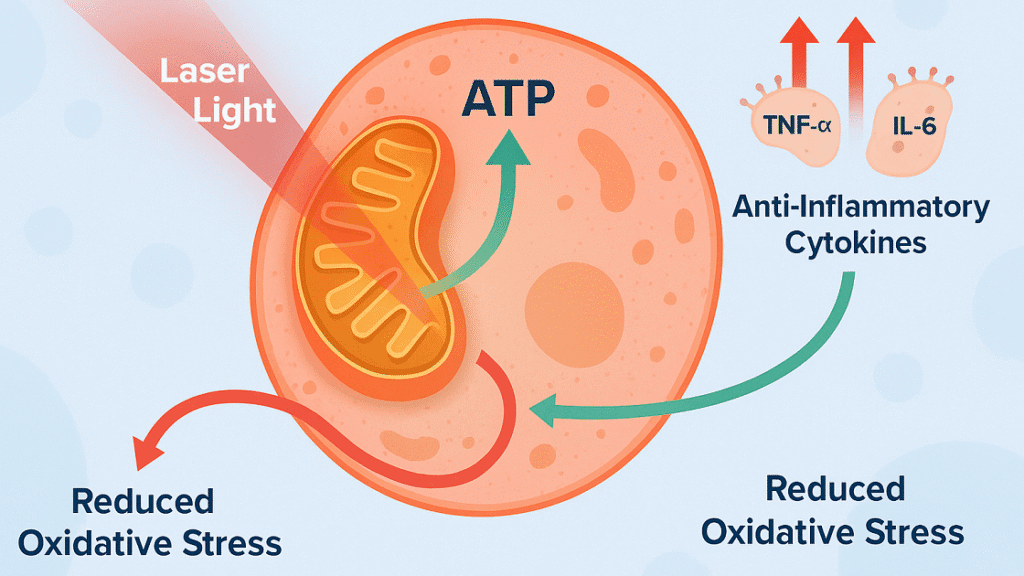
Photobiomodulation therapy optimizes microcirculatory function through vasodilation mediated by nitric oxide (NO) release from vascular endothelium. Near-infrared wavelengths (660-850nm) penetrate tissue and interact with cytochrome c oxidase in mitochondrial respiratory chains, enhancing adenosine triphosphate (ATP) synthesis and cellular energy production. This improved cellular metabolism supports endothelial function and promotes local vasodilation, increasing perfusion pressure and capillary density. Enhanced microcirculation directly correlates with improved tissue oxygenation, facilitating aerobic metabolism and reducing hypoxic tissue damage in compromised areas.
2.2 Boosting Lymphatic Flow and Waste Removal
The lymphatic system plays a crucial role in tissue fluid balance and immune surveillance, making its optimization essential for therapeutic outcomes. Laser therapy stimulates lymphatic vessel contractility through enhanced smooth muscle function and improved lymphatic valve competency. Photobiomodulation increases lymphatic flow velocity and reduces interstitial fluid accumulation, effectively addressing edema and facilitating removal of inflammatory mediators and metabolic waste products. This enhanced lymphatic drainage supports tissue healing by maintaining optimal interstitial pressure and preventing accumulation of pro-inflammatory substances that could perpetuate tissue damage.
2.3 Laser’s Role in Angiogenesis (New Blood Vessel Formation)
Therapeutic angiogenesis represents a fundamental mechanism through which laser therapy promotes long-term vascular improvement in compromised tissues. Photobiomodulation stimulates vascular endothelial growth factor (VEGF) expression and enhances endothelial cell proliferation and migration. Near-infrared wavelengths activate multiple signaling pathways including hypoxia-inducible factor-1α (HIF-1α) and nuclear factor-kappa B (NF-κB), promoting new capillary formation and vascular remodeling. This neovascularization process improves tissue perfusion capacity, supports cellular regeneration, and provides sustained circulatory benefits that extend beyond the immediate treatment period.
3. Laser Therapy as an Inflammation Fighter
The anti-inflammatory properties of photobiomodulation therapy represent one of its most clinically significant therapeutic mechanisms. Through precise wavelength selection and dosimetry, laser therapy can modulate inflammatory cascades at the molecular level while promoting resolution of chronic inflammatory states.
3.1 Cellular-Level Anti-Inflammatory Mechanism
Photobiomodulation exerts anti-inflammatory effects through multiple cellular pathways involving mitochondrial signaling and gene expression modulation. Specific wavelengths interact with photoacceptors including cytochrome c oxidase and porphyrins, triggering downstream effects that reduce pro-inflammatory cytokine production. Laser therapy decreases interleukin-1β (IL-1β), tumor necrosis factor-α (TNF-α), and interleukin-6 (IL-6) while promoting anti-inflammatory mediators such as interleukin-10 (IL-10). Additionally, photobiomodulation reduces nuclear factor-kappa B (NF-κB) activation, a key transcription factor regulating inflammatory gene expression, resulting in decreased inflammatory protein synthesis and cellular inflammatory responses.
3.2 Immune System Modulation
Laser therapy demonstrates sophisticated immunomodulatory effects that help restore balanced immune responses rather than simply suppressing immunity. Photobiomodulation influences macrophage polarization, promoting transition from pro-inflammatory M1 phenotype to anti-inflammatory M2 phenotype, which supports tissue repair and inflammation resolution. The therapy also modulates T-cell function and reduces excessive inflammatory T-helper cell responses while preserving regulatory T-cell function. This balanced immunomodulation helps resolve chronic inflammatory states without compromising essential immune surveillance functions, making laser therapy particularly valuable for autoimmune and inflammatory conditions.
3.3 Reducing Swelling and Pain in Musculoskeletal Conditions
Musculoskeletal inflammation often involves complex interactions between mechanical stress, tissue damage, and inflammatory mediator release. Laser therapy addresses these multifactoral processes by reducing prostaglandin E2 (PGE2) synthesis and cyclooxygenase-2 (COX-2) expression, key mediators of pain and inflammation. Photobiomodulation also decreases substance P release from nociceptive nerve fibers and reduces neurogenic inflammation. The combined anti-inflammatory and analgesic effects result in decreased tissue swelling, improved joint mobility, and significant pain reduction. These benefits make laser therapy particularly effective for conditions such as osteoarthritis, tendinopathies, and acute soft tissue injuries.
4. Who Can Benefit from Laser Therapy?
The versatility and safety profile of laser therapy make it suitable for a wide range of patients experiencing circulatory and inflammatory conditions. Understanding the specific populations that can benefit most from this treatment helps clinicians and patients make informed decisions about therapeutic options.
4.1 People with Chronic Circulatory Conditions
Individuals suffering from chronic circulatory conditions such as peripheral arterial disease, diabetic microangiopathy, and venous insufficiency can experience significant improvements with laser therapy. These conditions often result in compromised tissue perfusion, delayed wound healing, and increased risk of complications. Laser therapy’s ability to enhance microcirculation, promote angiogenesis, and improve tissue oxygenation makes it particularly valuable for these patients. The non-invasive nature of the treatment also makes it suitable for patients who may not be candidates for surgical interventions due to comorbidities or advanced age.
4.2 Patients with Autoimmune and Inflammatory Disorders
Autoimmune and inflammatory disorders, including rheumatoid arthritis, systemic lupus erythematosus, and inflammatory bowel disease, are characterized by chronic inflammation that can be difficult to manage with conventional therapies alone. Laser therapy’s immunomodulatory effects can help reduce inflammatory activity, decrease disease symptoms, and potentially reduce the need for immunosuppressive medications. The therapy’s ability to promote tissue healing and reduce oxidative stress also supports overall health and may help prevent disease progression. Patients with these conditions often report improved pain levels, reduced stiffness, and enhanced functional capacity following laser therapy treatments.
4.3 Athletes and Individuals with Soft Tissue Injuries
Athletes and active individuals frequently experience soft tissue injuries that require effective treatment to ensure rapid return to activity while preventing long-term complications. Laser therapy’s dual action on circulation and inflammation makes it ideal for treating sports-related injuries such as muscle strains, ligament sprains, and tendon injuries. The therapy accelerates the healing process by improving blood flow to injured tissues, reducing inflammatory response, and promoting cellular repair mechanisms. Additionally, laser therapy can help prevent the formation of excessive scar tissue, maintaining tissue flexibility and function essential for athletic performance.
4.4 Aging Adults Seeking Non-Invasive Relief
The aging population often experiences declining circulation, increased inflammation, and multiple comorbidities that make invasive treatments less desirable or feasible. Laser therapy offers a safe, non-invasive alternative that can address multiple age-related health concerns simultaneously. Older adults can benefit from improved circulation, reduced joint pain and stiffness, enhanced wound healing, and better overall tissue health. The lack of significant side effects and the ability to combine laser therapy with other treatments make it particularly attractive for this population, who may be taking multiple medications or have contraindications to other therapeutic interventions.
5. Types of Laser Therapy: Choosing the Right Modality
The landscape of laser therapy includes various types of devices and treatment protocols, each with specific characteristics and applications. Understanding the differences between these modalities is essential for selecting the most appropriate treatment approach for individual patient needs.
5.1 Class III vs. Class IV Lasers
Class III lasers, also known as cold lasers or low-level lasers, typically operate at power outputs below 500 milliwatts and are considered safer for direct skin contact and home use. These devices provide gentle stimulation without producing significant thermal effects, making them suitable for treating superficial conditions and sensitive areas. Class IV lasers operate at higher power outputs (typically 500 milliwatts to 60 watts) and can penetrate deeper into tissues, making them more effective for treating deep-seated conditions and larger treatment areas. However, Class IV lasers require more careful handling and professional supervision due to their increased power and potential for thermal damage.
5.2 Cold Laser vs. High-Intensity Laser
Cold laser therapy (LLLT) utilizes low-power laser light to stimulate cellular processes without generating significant heat, making it comfortable for patients and suitable for extended treatment sessions. This modality is particularly effective for superficial conditions, wound healing, and situations where gentle stimulation is preferred. High-intensity laser therapy (HILT) uses higher power settings to achieve deeper tissue penetration and more rapid treatment effects. HILT can produce mild thermal effects that may enhance the therapeutic response, but requires careful dosimetry and professional oversight to prevent adverse effects while maximizing therapeutic benefits.
6. What to Expect During a Laser Therapy Session
Laser therapy sessions typically begin with comprehensive assessment including medical history review and physical examination to determine optimal treatment parameters. The clinician will identify target tissues, select appropriate wavelengths and power settings, and position the laser device for maximum therapeutic benefit. Treatment duration varies from 5-20 minutes depending on the condition being treated and device specifications. Patients generally experience minimal sensation during treatment, with some reporting mild warmth or tingling. Most protocols involve multiple sessions over several weeks, with treatment frequency adjusted based on condition severity and patient response. Post-treatment care instructions may include activity modifications and complementary therapies to optimize outcomes.
7. Backed by Science: Clinical Studies and Results
The efficacy of laser therapy for circulation enhancement and inflammation reduction is supported by extensive scientific research and clinical evidence. Multiple peer-reviewed studies have demonstrated significant benefits across various conditions and patient populations.
7.1 Research Supporting Circulatory Improvements
Clinical studies have consistently demonstrated laser therapy’s ability to improve circulation parameters in various patient populations. Research published in the Journal of Clinical Medicine has shown significant improvements in microcirculation, as measured by laser Doppler flowmetry, following laser therapy treatments. Studies involving patients with diabetic foot ulcers have demonstrated enhanced wound healing rates, improved tissue oxygenation, and reduced amputation risk when laser therapy is incorporated into standard care protocols. Additionally, research in patients with peripheral arterial disease has shown improvements in walking distance, ankle-brachial index, and quality of life measures following laser therapy interventions.
7.2 Studies on Inflammation Reduction and Pain Relief
Numerous randomized controlled trials have evaluated laser therapy’s anti-inflammatory and analgesic effects across various conditions. Meta-analyses published in Pain Medicine and Physical Therapy journals have demonstrated significant reductions in inflammatory markers, including C-reactive protein and erythrocyte sedimentation rate, following laser therapy treatments. Studies in patients with rheumatoid arthritis have shown decreased joint swelling, reduced morning stiffness, and improved functional capacity. Research in sports medicine has demonstrated faster recovery times, reduced muscle soreness, and improved performance outcomes when laser therapy is used as part of injury rehabilitation protocols.
7.3 Expert Endorsements and Practitioner Use
Leading medical organizations and healthcare professionals increasingly recognize laser therapy as a valuable treatment modality for circulation and inflammation-related conditions. The World Health Organization has acknowledged photobiomodulation therapy as an effective treatment for various musculoskeletal conditions. Professional societies, including the American Physical Therapy Association and the International Association for the Study of Pain, have published guidelines supporting the use of laser therapy in specific clinical contexts. Many healthcare providers report high patient satisfaction rates and positive clinical outcomes when incorporating laser therapy into their treatment protocols.
8. Precautions, Contraindications, and Best Practices
While laser therapy is generally considered safe and well-tolerated, certain precautions and contraindications must be observed to ensure patient safety and optimize treatment outcomes. Healthcare providers must carefully screen patients and follow established protocols to minimize risks and maximize therapeutic benefits.
8.1 Who Should Avoid Laser Therapy?
Absolute contraindications include pregnancy (due to unknown effects on fetal development), direct irradiation over cancerous lesions (potential for tumor growth stimulation), and treatment of the thyroid gland (risk of altering hormone production). Patients taking photosensitizing medications may experience enhanced light sensitivity and require modified treatment protocols or alternative therapies. Individuals with active bleeding disorders or those taking anticoagulant medications may have increased bleeding risk with certain laser applications. Patients with epilepsy may be sensitive to flashing lights, requiring careful protocol modification. Healthcare providers must conduct thorough medical screening to identify contraindications before initiating treatment.
8.2 Safe Use Guidelines for Clinics and Home Devices
Professional laser therapy requires proper training, equipment maintenance, and adherence to regulatory guidelines for medical device use. Clinicians must understand dosimetry principles, wavelength selection, and treatment protocols specific to various conditions. Eye protection is mandatory for both patients and operators when using Class IV devices. Home-use devices should meet FDA approval standards and include comprehensive user instructions with safety warnings. Regular equipment calibration and maintenance ensure consistent therapeutic outcomes and prevent device malfunction. Proper documentation of treatment parameters and patient responses supports quality assurance and regulatory compliance.
8.3 Finding a Qualified Laser Therapist
Qualified laser therapy practitioners should have appropriate professional credentials, specialized training in photobiomodulation, and experience with the specific conditions being treated. Healthcare providers should demonstrate understanding of laser physics, dosimetry principles, and contraindications. Professional certification programs and continuing education ensure practitioners maintain current knowledge of best practices and emerging research. Patients should inquire about practitioner qualifications, treatment experience, and device specifications when selecting a laser therapy provider. Referrals from primary care physicians and professional recommendations help identify qualified practitioners with proven track records.
9. Taking the Next Step: Exploring Laser Therapy for Yourself
If you’re considering laser therapy for circulation enhancement or inflammation management, begin by consulting with your primary healthcare provider to discuss your specific condition and treatment goals. They can help determine if laser therapy is appropriate for your situation and provide referrals to qualified practitioners. Research local providers who specialize in your particular condition and have appropriate credentials and experience. Schedule consultations to discuss treatment expectations, protocols, and costs. Many insurance plans now cover laser therapy for certain conditions, so investigate coverage options. Consider the time commitment involved, as most conditions require multiple sessions for optimal results.
10. FAQ: Common Questions About Laser Therapy
Laser therapy isn’t snake oil—it’s science. While it may not replace medication entirely in all cases, many patients report reduced reliance on NSAIDs and steroids after consistent treatments. The therapy works by calming inflammation at the cellular level, not just masking symptoms.
Laser therapy increases nitric oxide release, which relaxes blood vessels and boosts microcirculation. Think of it like clearing a traffic jam in your capillaries—more blood, more oxygen, faster healing.
Not quite. Those use low-level light for surface-level effects (like skin tone). Clinical laser therapy penetrates deeper—targeting muscles, nerves, blood vessels, and inflammation with therapeutic wavelengths. It’s like comparing a flashlight to a laser pointer.
If you deal with chronic pain, inflammation, poor circulation, autoimmune flares, or even athletic injuries—you’re likely a candidate. A quick consultation with a certified provider can confirm. Bonus: no needles, no downtime, no meds.
It’s real—and it’s called angiogenesis. Studies show that laser therapy promotes the formation of new capillaries in damaged or oxygen-deprived tissue, which helps restore long-term circulation and speeds tissue repair.
Home-use devices can be effective if FDA-cleared and used correctly. They’re great for maintenance and mild issues. For deep tissue problems or complex inflammatory conditions, a clinic-grade Class IV laser offers stronger, faster results—best handled by a trained therapist.
 English
 العربية
 Français
 日本語
日本語 Português
 Español
 Русский
 Deutsch