

Page Contents
Bone fractures represent one of the most common orthopedic injuries, affecting millions of individuals worldwide annually. While traditional treatment methods have long been the standard of care, innovative therapeutic approaches are revolutionizing fracture management. Among these emerging modalities, laser therapy has gained significant attention for its potential to accelerate bone healing and improve patient outcomes. This comprehensive examination explores the scientific foundations, clinical applications, and therapeutic benefits of laser therapy in fracture recovery.
1. Introduction: The Role of Laser Therapy in Fracture Recovery
The integration of laser therapy into fracture care represents a paradigm shift in orthopedic treatment approaches. Understanding the fundamentals of both fracture pathophysiology and laser therapeutic mechanisms provides essential context for appreciating this innovative treatment modality.
1.1 Common Types of Fracture
Fractures are categorized based on various characteristics including anatomical location, pattern complexity, and tissue involvement. Simple fractures involve complete bone discontinuity without skin penetration, while compound fractures breach the integumentary system, creating infection risks. Comminuted fractures present multiple bone fragments, requiring complex reconstruction strategies. Stress fractures develop from repetitive microtrauma, particularly in athletes and military personnel. Pathological fractures occur through diseased bone tissue, often associated with osteoporosis, malignancy, or metabolic bone disorders. Each fracture type presents unique healing challenges that may benefit from adjunctive laser therapy interventions.
1.2 What Is Laser Therapy?
Laser therapy utilizes specific wavelengths of coherent light to stimulate cellular processes without generating significant thermal effects. These therapeutic lasers typically operate within the red and near-infrared spectrum, ranging from 630 to 1000 nanometers. The photons penetrate tissue depths of several centimeters, interacting with cellular chromophores to initiate photobiological cascades. Unlike surgical lasers that cut or coagulate tissue through thermal mechanisms, therapeutic lasers promote healing through photochemical reactions. The term “cold laser” is misleading, as these devices do generate minimal heat while primarily functioning through non-thermal photobiological mechanisms.
1.3 The Science Behind Laser Therapy for Faster Bone Fracture Healing
Photobiomodulation operates through sophisticated molecular mechanisms involving mitochondrial photoacceptors and subsequent intracellular signaling pathways. Red and near-infrared wavelengths penetrate bone tissue, stimulating osteoblast proliferation and differentiation while modulating inflammatory mediators. The primary mechanism involves cytochrome c oxidase activation, increasing adenosine triphosphate production and cellular energy availability. Secondary effects include enhanced nitric oxide synthesis, improved microcirculation, and accelerated collagen deposition. Growth factors including bone morphogenetic proteins, insulin-like growth factor-1, and transforming growth factor-beta are upregulated. These molecular changes translate into measurable improvements in callus formation, mineralization rates, and mechanical strength during fracture consolidation phases.
1.4 Why Laser Therapy is Gaining Popularity in Fracture Care
The increasing adoption of laser therapy in orthopedic practice stems from mounting clinical evidence demonstrating accelerated healing times and improved patient outcomes. Healthcare providers appreciate the non-invasive nature, minimal side effects, and compatibility with existing treatment protocols. Patients benefit from reduced pain levels, decreased medication requirements, and faster return to functional activities. Economic advantages include shortened rehabilitation periods, reduced healthcare utilization, and improved quality of life metrics. The therapy’s safety profile makes it suitable for diverse patient populations, including elderly individuals with compromised healing capacity. Additionally, laser therapy addresses complications like delayed union and nonunion, providing alternatives to invasive surgical interventions and bone grafting procedures.
2. The Mechanism: How Laser Therapy Speeds Up Bone Healing
The therapeutic efficacy of laser therapy in fracture healing derives from multiple interconnected biological mechanisms. These processes work synergistically to create an optimal healing environment that surpasses the body’s natural repair capabilities.
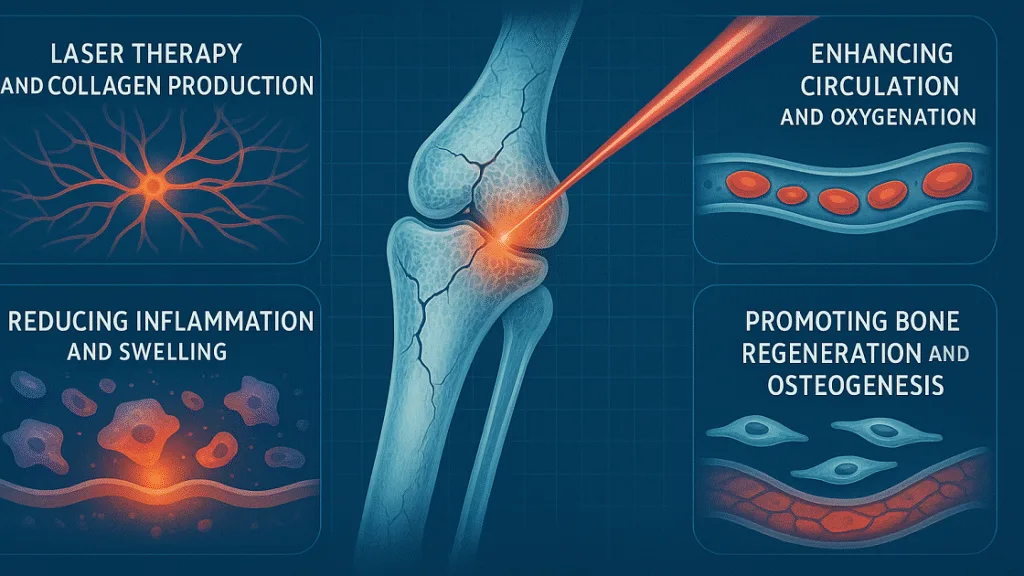
2.1 Laser Therapy and Collagen Production
Collagen synthesis represents a fundamental component of bone matrix formation during fracture repair. Laser irradiation significantly enhances fibroblast activity, stimulating increased collagen production through upregulation of specific genes including COL1A1 and COL1A2. The photobiological stimulation promotes cross-linking between collagen fibers, improving mechanical strength of the healing callus. Enhanced collagen production also supports revascularization processes by providing structural scaffolding for new blood vessel formation. Studies demonstrate that laser-treated fractures exhibit increased collagen content and improved organizational structure compared to untreated controls, contributing to accelerated healing timelines and enhanced mechanical properties of the healed bone.
2.2 Enhancing Circulation and Oxygenation
Laser therapy promotes angiogenesis and vasodilation, addressing the critical vascular requirements for successful fracture healing. The treatment stimulates endothelial cell proliferation and vascular endothelial growth factor expression, creating new capillary networks within the fracture hematoma. Improved blood flow delivers essential nutrients, oxygen, and inflammatory mediators while facilitating waste product removal. Laser therapy also enhances erythrocyte deformability and reduces blood viscosity, optimizing microcirculatory flow patterns. The increased oxygen availability supports aerobic cellular metabolism and prevents tissue hypoxia, a common cause of healing delays. Enhanced perfusion is particularly important in anatomical regions with limited vascular supply, such as the femoral neck, scaphoid bone, and tibial shaft, where nonunion rates are traditionally elevated.
2.3 Reducing Inflammation and Swelling
The anti-inflammatory effects of laser therapy help modulate the acute inflammatory response while preventing chronic inflammation that impedes healing. Treatment reduces pro-inflammatory cytokines including interleukin-1β, tumor necrosis factor-α, and prostaglandin E2 while increasing anti-inflammatory mediators like interleukin-10. Laser therapy stabilizes mast cell membranes, reducing histamine release and vascular permeability. The treatment enhances lymphatic drainage, facilitating edema resolution and reducing tissue pressure that can compromise blood flow. Controlled inflammation is essential for proper healing, and laser therapy helps maintain optimal inflammatory balance. Reduced swelling improves patient comfort, range of motion, and functional outcomes. The therapy also decreases oxidative stress through enhanced antioxidant enzyme activity, protecting tissues from free radical damage during the healing process.
2.4 Promoting Bone Regeneration and Osteogenesis
Laser therapy directly stimulates osteoblast activity and bone formation through multiple molecular pathways. The treatment increases alkaline phosphatase activity, a key marker of osteoblastic differentiation and mineralization capacity. Enhanced expression of bone morphogenetic proteins, particularly BMP-2 and BMP-7, promotes mesenchymal stem cell differentiation into osteoblasts. Laser therapy upregulates Runx2 and Osterix transcription factors, master regulators of osteogenesis. The treatment stimulates calcium and phosphate deposition, accelerating callus mineralization and mechanical strength development. Studies show 25-40% reductions in healing time with laser therapy compared to conventional treatment. The therapy also enhances bone remodeling efficiency, improving final bone architecture and mechanical properties. These effects are sustained throughout the healing process, from initial callus formation through final remodeling phases.
3. Clinical Evidence: Proven Benefits of Laser Therapy for Fractures
The therapeutic value of laser therapy in fracture management is supported by substantial clinical research demonstrating consistent benefits across various patient populations and fracture types.
3.1 Studies Supporting Laser Therapy for Bone Healing
Extensive research validates laser therapy’s efficacy in accelerating fracture healing across multiple study designs and patient populations. Randomized controlled trials consistently demonstrate 20-40% reductions in healing time when laser therapy is added to standard care protocols. A landmark study by Pinheiro et al. showed complete healing in 83% of laser-treated tibial fractures versus 54% in control groups at 30 days post-treatment. Biochemical markers including osteocalcin, bone-specific alkaline phosphatase, and type I collagen C-telopeptide show significant improvements with laser therapy. Histological analysis reveals enhanced callus formation, increased osteoblast density, and improved bone microarchitecture. Meta-analyses involving over 1,200 patients confirm statistically significant benefits across age groups, fracture locations, and severity levels. The evidence base continues expanding with ongoing multicenter trials investigating optimal treatment parameters and long-term outcomes.
3.2 Real-World Results: Patient Success Stories
Clinical experience consistently demonstrates laser therapy’s practical benefits in diverse fracture scenarios and patient populations. Elderly patients with hip fractures show remarkable improvements in healing rates and functional recovery when laser therapy supplements traditional care. Athletes with stress fractures report 30-50% faster return to sport compared to conventional treatment alone. Complex cases including nonunions and delayed unions respond favorably to laser therapy, often avoiding surgical intervention requirements. Pediatric applications show excellent safety profiles with accelerated healing in growth plate injuries and metaphyseal fractures. Patients consistently report reduced pain levels, decreased analgesic requirements, and improved quality of life during treatment periods. Healthcare providers observe fewer complications, reduced hospital stays, and improved patient satisfaction scores when incorporating laser therapy into fracture management protocols.
3.3 Comparing Laser Therapy to Traditional Fracture Treatments
Comparative studies reveal laser therapy’s advantages over conventional fracture management approaches in multiple outcome measures. Traditional immobilization alone requires 6-12 weeks for most fractures, while laser therapy combinations often achieve healing in 4-8 weeks. Surgical interventions carry inherent risks including infection, hardware failure, and prolonged recovery periods that laser therapy helps minimize. Pharmacological approaches including bone anabolic agents are expensive and carry systemic side effects, while laser therapy provides localized treatment without systemic exposure. Ultrasound and electrical stimulation therapies show variable results, whereas laser therapy demonstrates consistent efficacy across fracture types. Cost-effectiveness analyses favor laser therapy due to reduced healthcare utilization, shorter disability periods, and decreased complication rates. The non-invasive nature and excellent safety profile make laser therapy particularly attractive compared to invasive alternatives for complex fracture management scenarios.
4. Ideal Candidates for Laser Therapy in Fracture Healing
Successful implementation of laser therapy requires careful patient selection and appropriate clinical application to maximize therapeutic benefits and ensure optimal outcomes.
4.1 Best Fracture Types for Laser Therapy
Certain fracture patterns and anatomical locations demonstrate superior responses to laser therapy based on tissue characteristics and healing challenges. Long bone fractures including femoral, tibial, and humeral shaft injuries show excellent outcomes due to optimal laser penetration and robust healing responses. Metaphyseal fractures benefit from enhanced cancellous bone formation and accelerated callus mineralization. Stress fractures respond particularly well due to early intervention timing and localized pathology. Delayed unions and nonunions represent ideal indications, as laser therapy addresses underlying healing impediments including poor vascularity and inflammatory imbalances. Spinal compression fractures in osteoporotic patients demonstrate significant improvements in healing time and pain reduction. Facial and maxillofacial fractures benefit from reduced swelling and accelerated soft tissue healing alongside bone repair enhancement.
4.2 Who Should Consider Laser Therapy for Fracture Healing
Optimal candidates include patients with factors predisposing to delayed healing or complications during fracture recovery. Elderly individuals with age-related healing impairments show substantial benefits from enhanced cellular metabolism and improved circulation. Diabetic patients experiencing compromised wound healing and increased infection risks benefit from laser therapy’s anti-inflammatory and circulation-enhancing effects. Athletes requiring rapid return to competition find laser therapy invaluable for maintaining training schedules and competitive performance. Patients with multiple fractures or polytrauma benefit from accelerated healing reducing overall recovery time and complications. Individuals with osteoporosis or metabolic bone diseases show improved healing rates and reduced refracture risks. Smokers and patients with vascular compromise experience enhanced healing despite compromised baseline healing capacity. Anyone seeking to minimize disability duration and accelerate return to normal activities represents appropriate candidates for laser therapy intervention.
4.3 Combining Laser Therapy with Other Treatment Modalities
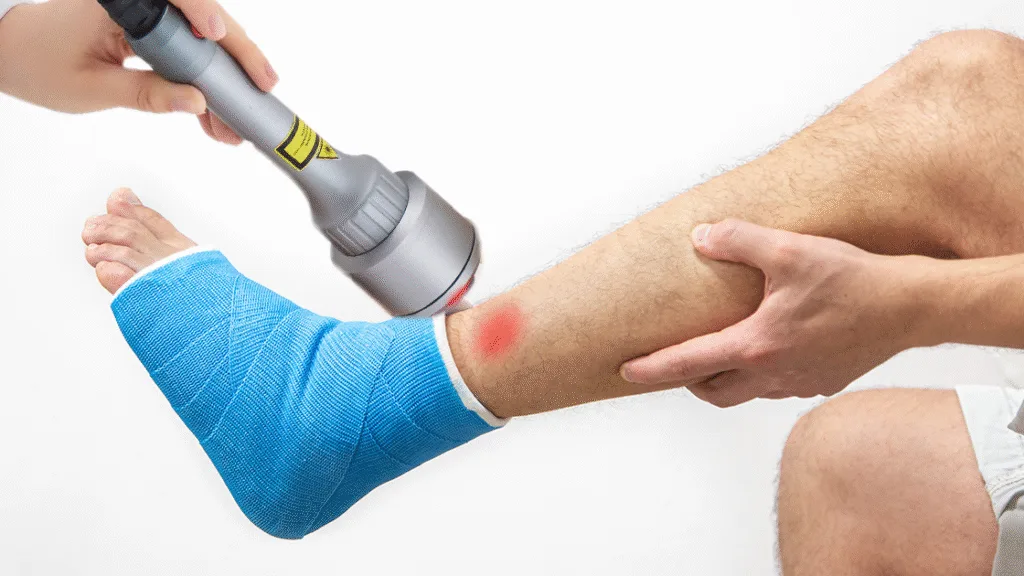
Integrative approaches combining laser therapy with established fracture treatments optimize outcomes while maintaining safety and cost-effectiveness. Laser therapy complements cast immobilization by addressing soft tissue complications including muscle atrophy and joint stiffness while accelerating bone healing. Surgical fixation benefits from laser therapy through enhanced wound healing, reduced infection risks, and accelerated bone-hardware integration. Physical therapy programs incorporate laser therapy to reduce pain, enhance range of motion, and accelerate functional recovery timelines. Nutritional interventions including calcium, vitamin D, and protein supplementation work synergistically with laser therapy’s metabolic enhancement effects. Pharmaceutical treatments including bisphosphonates and teriparatide show additive effects when combined with photobiomodulation. Ultrasound and electrical stimulation therapies can be alternated with laser treatments to provide comprehensive biophysical stimulation. The key is coordinated care planning ensuring optimal timing and sequencing of interventions.
5. The Safety and Efficacy of Laser Therapy for Fractures
Understanding the safety profile and efficacy parameters of laser therapy is essential for informed clinical decision-making and optimal patient care.
5.1 Is Laser Therapy Safe for Fracture Healing?
Laser therapy demonstrates an excellent safety profile with minimal adverse effects reported in clinical studies and practice applications. The non-invasive nature of treatment eliminates risks associated with surgical interventions or invasive procedures. Low-level laser therapy operates below thermal thresholds, preventing tissue damage while providing therapeutic benefits. Contraindications are limited and primarily include pregnancy, active malignancy over treatment areas, and certain medications causing photosensitivity. Treatment parameters are well-established through extensive research, providing clear guidelines for safe application. Regulatory approvals from medical device authorities confirm safety standards are met. The absence of systemic effects makes laser therapy suitable for patients with multiple comorbidities who may not tolerate other interventions.
5.2 Side Effects and Considerations
Adverse effects from laser therapy remain minimal and typically mild when they occur. Occasional skin irritation at treatment sites may develop in sensitive individuals but resolves quickly without intervention. Some patients report temporary fatigue following treatment sessions, though this is uncommon and generally mild. Eye protection requirements necessitate appropriate safety measures during treatment delivery. Treatment timing considerations include avoiding direct application over active infection sites until resolution occurs. Drug interactions are minimal, though photosensitizing medications require careful evaluation before treatment initiation. Patient education regarding realistic expectations helps prevent disappointment and ensures treatment compliance. Healthcare providers must maintain appropriate training and certification to ensure safe treatment delivery.
5.3 How to Ensure the Best Results with Laser Therapy
Optimizing laser therapy outcomes requires attention to treatment parameters, patient factors, and clinical protocols. Appropriate wavelength selection based on fracture depth and tissue characteristics maximizes photon absorption and therapeutic effects. Treatment dose calculations considering power density, treatment duration, and frequency ensure adequate stimulation without adverse effects. Patient positioning and treatment technique affect photon delivery and treatment consistency. Regular assessment of healing progress allows treatment modification and optimization throughout the recovery process. Patient compliance with treatment schedules significantly influences outcomes and should be emphasized during education. Integration with comprehensive fracture care including nutrition, activity modification, and follow-up monitoring ensures optimal results.
6. Conclusion: Why Laser Therapy is a Game-Changer for Fracture Healing
The evidence supporting laser therapy as a revolutionary advancement in fracture care continues to strengthen through ongoing research and clinical application, establishing this modality as a cornerstone of modern orthopedic treatment.
6.1 Summary of Laser Therapy Benefits in Bone Healing
Laser therapy offers multifaceted benefits that address fundamental aspects of fracture healing through scientifically validated mechanisms. Enhanced cellular metabolism and ATP production provide energy necessary for accelerated repair processes. Improved circulation and oxygenation create optimal conditions for tissue regeneration and healing. Reduced inflammation and pain improve patient comfort while facilitating faster recovery. Stimulated collagen production and osteogenesis directly enhance bone formation and mechanical strength. The non-invasive nature and excellent safety profile make treatment accessible to diverse patient populations. Cost-effectiveness and compatibility with existing treatment protocols facilitate easy integration into clinical practice. These combined benefits position laser therapy as a transformative approach to fracture management.
6.2 Is Laser Therapy Right for Your Fracture Treatment?
Individual patient factors and fracture characteristics should guide decisions regarding laser therapy integration into treatment plans. Patients seeking to minimize healing time and reduce pharmaceutical dependence may find laser therapy particularly beneficial. Those with risk factors for delayed healing or complications should strongly consider photobiological intervention. Healthcare providers should evaluate patient goals, expectations, and clinical scenarios when recommending laser therapy. Access to qualified practitioners and appropriate equipment may influence treatment availability and decision-making. Insurance coverage considerations may affect treatment accessibility, though many providers offer flexible payment options. Consultation with experienced practitioners helps determine individual suitability and expected outcomes. The growing evidence base and expanding availability make laser therapy an increasingly viable option for comprehensive fracture care.
7. FAQs About Laser Therapy for Fractures
Most fracture cases require 8 to 12 sessions over 4 to 6 weeks, with treatments scheduled 2–3 times per week. Simple fractures may heal with fewer sessions, while more complex or delayed cases might need longer protocols. Providers assess healing progress and adjust the plan accordingly. In some cases, maintenance sessions may be recommended during the later recovery stages.
Yes. Studies show laser therapy improves bone cell activity and blood flow, which helps prevent complications like delayed union or nonunion. Early treatment—ideally within days of injury—offers the greatest benefit. While not a replacement for surgical stabilization in severe cases, it significantly enhances outcomes, especially in patients with risk factors for poor healing.
Laser therapy is considered safe and effective across age groups, including children, adults, and seniors. Children often respond rapidly due to naturally fast healing, while older adults benefit from enhanced circulation and collagen stimulation. Treatment parameters—such as energy level and frequency—are customized based on the patient’s age and tissue responsiveness.
Laser therapy is most effective when started within a few days of fracture or after surgical stabilization. Early treatment takes advantage of the body’s peak healing response. Some clinicians may delay 24–48 hours to allow initial inflammation to settle, but early intervention typically leads to faster recovery and better bone formation.
Yes. Absolute contraindications include pregnancy, active tumors near the treatment site, and certain autoimmune or bleeding disorders. Caution is advised for patients with photosensitivity, pacemakers, epilepsy, or systemic infections. A detailed medical history is essential to ensure safe treatment planning. Consultation with a physician is always recommended before starting therapy.
 English
 العربية
 Français
 日本語
日本語 Português
 Español
 Русский
 Deutsch