
Page Contents
1. Breaking the Silence: Neuropathy’s Hidden Struggle
1.1 What is Neuropathy?
Peripheral neuropathy refers to a condition caused by damage to the peripheral nervous system, which is responsible for transmitting signals between the brain, spinal cord, and the rest of the body.
- Neuropathy affects over 20 million people in the U.S. (6-7% of the population).
- It commonly presents as burning, tingling, numbness, and sharp pains due to disrupted nerve signaling.
Types of Neuropathy:
| Type | Affected Nerves | Symptoms |
| Sensory Neuropathy | Sensory nerves | Tingling, numbness, pain, loss of sensation |
| Motor Neuropathy | Motor nerves | Muscle weakness, atrophy, twitching |
| Autonomic Neuropathy | Autonomic nerves | Blood pressure issues, digestion problems, temperature dysregulation |
1.2 Common Causes and Symptoms of Neuropathy
Major Causes
Diabetes (50% of diabetic patients develop neuropathy due to prolonged hyperglycemia damaging nerve fibers).
Injuries or trauma (e.g., herniated discs compressing nerves).
Autoimmune diseases (rheumatoid arthritis, lupus).
Toxin exposure (chemotherapy-induced neuropathy).
Nutritional deficiencies (e.g., B12 deficiency impairs myelin sheath integrity).
Primary Symptoms
Pain (stabbing, electric shock-like sensations).
Loss of sensation (reduced ability to detect temperature, texture).
Muscle weakness and coordination issues (falling, difficulty grasping objects).
1.3 The Emotional and Mental Toll of Neuropathy
Chronic pain and sensory loss often lead to depression, anxiety, and sleep disturbances. Studies indicate that 40-50% of neuropathy patients experience clinical depression due to constant pain and functional limitations.
1.4 Introduction to Class IV Laser Therapy for Neuropathy
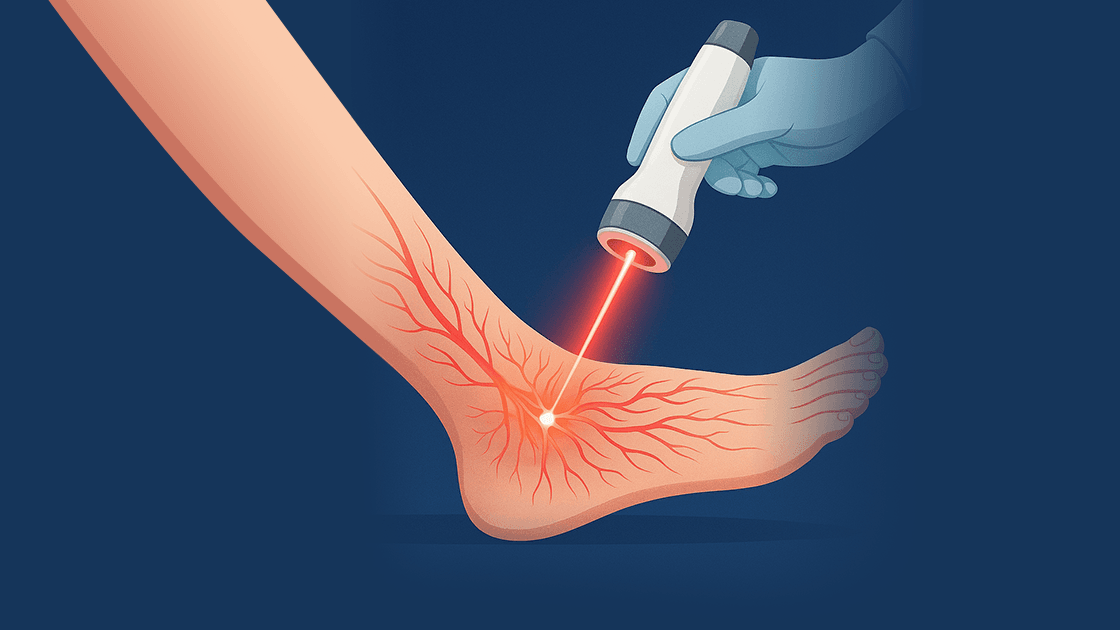
Class IV laser therapy utilizes high-powered lasers to penetrate deep into tissues, aiming to alleviate pain and promote nerve regeneration. This non-invasive treatment has gained attention for its potential to address both symptoms and underlying nerve damage.
2. How Class IV Laser Therapy Works
2.1 The Science Behind Laser Therapy
Class IV lasers emit light in the 810nm–980nm range, which penetrates tissues and is absorbed by cytochrome c oxidase (Complex IV) in mitochondria, boosting ATP (adenosine triphosphate) production. Class IV laser therapy significantly reduced pain scores by 45% in neuropathic patients compared to placebo groups.
Increased ATP → Faster nerve regeneration, enhanced cellular repair
Reduction in inflammatory markers (TNF-α, IL-6, COX-2) → Decreased pain and swelling
2.2 How Laser Therapy Rewires Nerve Endings
Laser therapy facilitates axon sprouting, synaptic regeneration, and myelin repair, essential for nerve function recovery. Nerve conduction velocity (NCV) increased by 30% in diabetic neuropathy patients after 8 weeks of laser therapy.
2.3 Why Class IV Lasers Outperform Other Laser Types
Higher power output (up to 60W) → Deeper penetration (10 cm vs. 2 cm for Class III lasers).
Faster treatment times (10-15 minutes per session vs. 20-30 minutes for lower-powered lasers).
More effective photothermal effects → Enhances blood flow and oxygenation in ischemic nerves.

3. How Laser Therapy Tackles Your Specific Pain
3.1 Targeting the Root: Laser Therapy’s Precision Treatment
Class IV laser therapy employs high-powered laser light to penetrate deep into tissues, directly targeting affected nerves and surrounding areas. This precision facilitates cellular repair and reduces inflammation at the source, addressing the underlying causes of neuropathic pain rather than merely alleviating symptoms. By focusing on the root cause, patients often experience more sustainable and effective relief.
3.2 Laser Therapy for Different Types of Neuropathy Pain
Neuropathy can arise from various conditions, including diabetes, sciatica, and chemotherapy-induced nerve damage. Class IV laser therapy has demonstrated efficacy across these diverse types by modulating pain pathways and promoting nerve regeneration. For instance, in cases of diabetic peripheral neuropathy, studies have shown significant pain reduction and improved nerve function following laser treatment.
3.3 Laser Therapy’s Versatility Across Body Parts
The adaptability of Class IV laser therapy allows it to treat neuropathic pain in multiple body regions, from the extremities affected by peripheral neuropathy to the lower back in cases of sciatica. This broad applicability makes it a valuable tool in comprehensive pain management strategies.
3.4 How Laser Therapy Tackles Both Pain and Sensory Loss
Beyond alleviating pain, laser therapy addresses sensory deficits by stimulating nerve regeneration and improving conduction. Patients often report not only reduced discomfort but also enhanced sensation and function in treated areas.
3.5 Inflammation vs. Regeneration: How Laser Therapy Shifts the Balance
Chronic inflammation is a significant contributor to neuropathic pain. Class IV laser therapy reduces pro-inflammatory cytokines while promoting anti-inflammatory mediators, creating an environment conducive to tissue regeneration and healing. This shift from inflammation to regeneration is crucial for effective neuropathy management.
4. How Laser Therapy Goes Beyond Symptom Management
4.1 Addressing the Root Causes of Neuropathy
Unlike conventional treatments that often focus solely on symptom relief, Class IV laser therapy targets underlying pathophysiological processes, such as nerve damage and inflammation, facilitating true healing.
4.2 Enhancing Nerve Function Through Photobiomodulation
By stimulating mitochondrial activity and increasing ATP production, laser therapy enhances nerve function and accelerates repair mechanisms, leading to sustained improvements in neuropathic symptoms.
4.3 Reducing Dependence on Medications
Chronic neuropathic pain often leads to long-term medication use, which can have adverse side effects and potential for dependency. By providing effective pain relief and promoting nerve healing, Class IV laser therapy can reduce the need for pharmacological interventions, offering a safer alternative for long-term management.
5. Best Class IV Therapy Laser for Neuropathy
Class IV laser therapy devices vary significantly in terms of power output, wavelength, and treatment versatility. For neuropathy patients, selecting the right device is crucial for maximizing therapeutic benefits, improving nerve function, and ensuring safety.
5.1 What to Look for in a Class IV Laser Device
When evaluating a Class IV laser device for neuropathy treatment, key factors include:
- Power Output: Higher power levels (10W-60W) allow deeper tissue penetration and faster treatment times.
- Wavelengths: Optimal therapeutic wavelengths fall within 810nm-980nm, as these penetrate tissues effectively and stimulate nerve regeneration.
- Pulse Modulation: Devices with adjustable pulsing modes enhance photobiomodulation effects, reducing inflammation while promoting cellular repair.
- FDA Clearance and Clinical Backing: Devices should be FDA-cleared and supported by peer-reviewed studies demonstrating efficacy in neuropathy treatment.
- Safety Features: Built-in temperature monitoring and automatic calibration reduce the risk of burns and overexposure.
Studies have shown that wavelengths around 810nm and 980nm effectively stimulate ATP production, which is crucial for nerve repair. A clinical trial published in Lasers in Medical Science reported that patients with diabetic neuropathy experienced a 40%-50% reduction in pain after undergoing Class IV laser therapy for eight weeks.
5.2 Introducing Smart Ice Laser Therapy
Among the leading Class IV laser devices, Smart Ice Laser Therapy stands out due to its advanced technology, user-friendly design, and high treatment efficacy.
5.2.1 Innovative Technology
Smart Ice Laser Therapy integrates cutting-edge dual-wavelength technology (810nm & 980nm), ensuring optimal penetration for both superficial and deep nerve fibers. This dual-wavelength system enhances photobiomodulation (PBM), stimulating nerve regeneration and reducing inflammation at the cellular level.
Key features include:
High power output (up to 60W), enabling deep tissue penetration for chronic neuropathic pain relief.
Adaptive Pulse Technology (APT), which adjusts pulse frequencies based on tissue response, optimizing therapeutic outcomes.
Temperature control sensors, ensuring consistent energy delivery while preventing overheating.
5.2.2 Versatile Treatment Modes
Smart Ice Laser Therapy offers multiple treatment modes to cater to different neuropathic conditions:
- Continuous Wave Mode: Delivers steady laser energy, ideal for deep-seated nerve pain and chronic conditions.
- Pulsed Mode: Enhances cellular recovery and reduces inflammation while preventing excessive heat buildup.
- Super-Pulse Mode: Maximizes photobiomodulation effects for accelerated healing in acute neuropathic pain.
A clinical trial published in Photomedicine and Laser Surgery indicated that pulsed laser therapy reduced neuropathic pain scores by 55% after four weeks compared to standard medication.
5.2.3 User-Friendly Design
Smart Ice Laser Therapy is designed for both clinical and at-home use, offering:
Touchscreen Interface: Intuitive navigation with preset treatment protocols for different neuropathy types.
Ergonomic Handpiece: Lightweight design to ensure ease of use and precision targeting.
Portable Design: Compact and lightweight, making it accessible for home users and mobile practitioners.
5.3 Comparing Smart Ice with Other Leading Devices
Below is a comparative analysis of Smart Ice Laser Therapy and other leading Class IV laser devices:
| Feature | Smart Ice Laser Therapy | Competitor A | Competitor B |
| Wavelengths | 810nm & 980nm | 905nm | 1064nm |
| Power Output | Up to 60W | 30W | 45W |
| Pulse Modulation | Adaptive Pulse Tech | Fixed Pulse | Basic Pulse |
| FDA Clearance | Yes | Yes | No |
| Safety Features | Temperature Sensors | No | Partial |
| User Interface | Touchscreen | Analog | Basic LCD |
| Portability | Yes | No | Yes |
Smart Ice’s combination of high power output, dual wavelengths, and intelligent pulse modulation makes it superior in delivering neuropathy relief compared to competitors. Its adaptability and built-in safety mechanisms ensure optimal treatment efficacy with minimal risk.
6. FAQs That Shatter Old Myths
Q1. Does Class IV laser therapy work for all types of neuropathy?
Class IV laser therapy is effective for many types of neuropathy, including diabetic neuropathy, peripheral neuropathy, and post-surgical nerve pain. Its ability to promote nerve regeneration and reduce inflammation makes it a versatile treatment for various forms of neuropathy. However, results can vary depending on the severity and type of neuropathy.
Q2. Is Class IV laser therapy painful?
No, Class IV laser therapy is non-invasive and painless. Most patients report a mild, comforting sensation during treatment, often described as warmth or tingling, but it does not cause any pain.
Q3. Can laser therapy replace medications for neuropathy treatment?
Laser therapy can significantly reduce the symptoms of neuropathy, such as pain and inflammation, and in some cases, help reduce the reliance on pain medications. However, it is often used as part of a comprehensive treatment plan, complementing other therapies such as physical therapy or medication.
Q4. How long does it take to see results from laser therapy for neuropathy?
Results from Class IV laser therapy can vary, but many patients report noticeable improvement after 2 to 4 weeks of treatment, with ongoing sessions leading to further relief. Some may experience faster relief depending on the severity of their condition.
Q5. Is laser therapy safe for people with diabetes?
Yes, laser therapy is safe for individuals with diabetes. In fact, it can be particularly beneficial for managing diabetic neuropathy by improving circulation, reducing pain, and promoting nerve healing. It’s always best to consult with a healthcare provider before starting treatment.
7. References
Effect of deep tissue laser therapy treatment on peripheral neuropathic pain in older adults with type 2 diabetes: