

Page Contents
Introduction
In professional sports, injury recovery is not just a medical concern—it is a competitive imperative. Elite athletes operate under intense physical demands, tight competition schedules, and constant performance pressure. Even minor injuries can significantly affect team outcomes, player availability, and long-term athletic careers. As a result, professional sports teams continuously seek advanced, evidence-based rehabilitation methods that can accelerate healing while minimizing risk. Class IV Laser Therapy has emerged as a powerful tool in modern sports medicine clinics. Known for its deep tissue penetration and ability to stimulate cellular repair, this high-power laser modality is increasingly integrated into professional athletic rehabilitation programs. By addressing pain, inflammation, and tissue recovery at the cellular level, Class IV Laser Therapy helps athletes return to peak performance faster and more safely.
1. Injury Recovery Challenges in Professional Sports
1.1 High Injury Rates in Elite Athletes
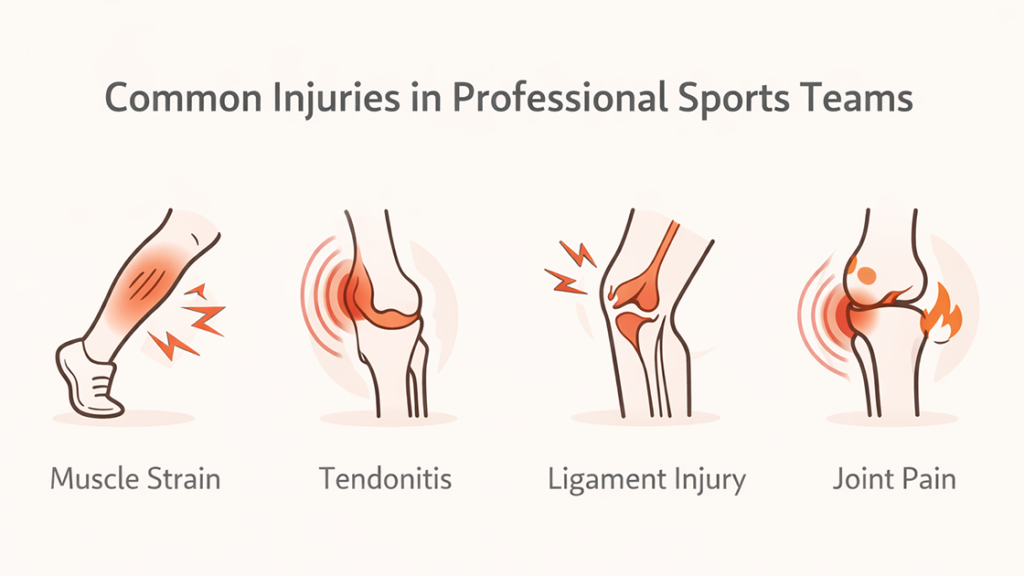
Professional athletes experience injury rates far exceeding those of the general population. High-intensity training, repetitive motion, physical contact, and cumulative load stress the musculoskeletal system. Common injuries include muscle strains, ligament sprains, tendon overuse injuries, and joint inflammation. These injuries often involve deep soft tissues that are slow to heal, particularly when compounded by continued training or competition demands.
Moreover, elite athletes frequently push their physiological limits, which can compromise natural recovery processes. Without effective intervention, minor injuries may progress into chronic conditions, affecting performance longevity and increasing the risk of reinjury.
1.2 Pressure to Minimize Downtime
In professional sports, time lost to injury directly impacts team success, financial investments, and athlete careers. Coaches, medical staff, and management face constant pressure to reduce downtime without compromising safety. Traditional rehabilitation approaches—while effective—may not always provide the speed or depth of recovery required in elite sports environments.
This pressure has driven professional teams to adopt advanced therapeutic technologies that can enhance conventional rehabilitation strategies. Class IV Laser Therapy fits this need by offering a non-invasive, efficient method to accelerate tissue repair and pain reduction.
2. What Is Class IV Laser Therapy?
2.1 Definition and Power Characteristics
Class IV Laser Therapy refers to high-power therapeutic lasers that typically operate above 500 milliwatts, with some systems reaching power outputs of several watts. Unlike low-level laser therapy (LLLT), Class IV lasers deliver higher energy densities, allowing deeper tissue penetration and broader treatment coverage.
These lasers emit specific wavelengths of light that interact with biological tissues through a process known as photobiomodulation. When properly applied, the energy is absorbed by cellular chromophores, triggering physiological responses without causing thermal damage.
2.2 Deep Tissue Penetration Advantages
One of the primary advantages of Class IV Laser Therapy is its ability to reach deep musculoskeletal structures. Muscles, tendons, ligaments, and joint capsules often lie beneath layers of tissue that lower-powered lasers cannot adequately penetrate. Class IV lasers overcome this limitation, making them particularly suitable for treating injuries common in professional athletes.
This depth of penetration allows clinicians to target the root causes of pain and dysfunction rather than focusing solely on superficial symptoms.
3. How Class IV Laser Therapy Supports Injury Recovery
3.1 Cellular Repair and ATP Stimulation
At the cellular level, Class IV Laser Therapy enhances mitochondrial activity by stimulating the production of adenosine triphosphate (ATP). ATP serves as the primary energy currency of cells and is essential for tissue repair and regeneration. Increased ATP availability accelerates cellular metabolism, enabling faster synthesis of structural proteins and repair enzymes.
For injured athletes, this means damaged muscle fibers, tendons, and connective tissues can heal more efficiently. Enhanced cellular repair reduces recovery time and supports stronger tissue remodeling.
3.2 Inflammation Reduction and Pain Modulation
Inflammation is a natural response to injury, but excessive or prolonged inflammation can delay healing and increase pain. Class IV Laser Therapy modulates inflammatory pathways by influencing cytokine activity and reducing the production of pro-inflammatory mediators.
Additionally, laser therapy affects peripheral nerve conduction and pain signaling. By decreasing nerve sensitivity and promoting endogenous pain relief mechanisms, athletes often experience rapid pain reduction, allowing earlier engagement in active rehabilitation exercises.
3.3 Improved Blood Flow and Tissue Oxygenation
Laser-induced vasodilation improves microcirculation in treated tissues. Enhanced blood flow delivers oxygen and essential nutrients while facilitating the removal of metabolic waste products. Improved tissue oxygenation creates an optimal environment for healing and reduces localized tissue hypoxia often associated with chronic injuries.
For professional athletes, improved circulation supports both acute injury recovery and long-term tissue health.
4. Common Injuries Treated in Professional Sports Teams
4.1 Soft Tissue Injuries
Muscle strains, contusions, and soft tissue tears are among the most frequent injuries in professional sports. These injuries often involve deep muscle layers that respond well to high-power laser therapy. Class IV Laser Therapy helps reduce muscle spasms, decrease swelling, and accelerate fiber regeneration.
As a result, athletes regain strength and flexibility more quickly, reducing the likelihood of compensatory injuries during return-to-play phases.
4.2 Tendon and Ligament Injuries
Tendons and ligaments have limited blood supply, making them particularly slow to heal. Conditions such as Achilles tendinopathy, patellar tendinitis, and rotator cuff injuries are common in elite athletes. Class IV Laser Therapy enhances collagen synthesis and promotes tissue remodeling, supporting tendon and ligament integrity.
This approach is especially valuable in managing overuse injuries, where reducing inflammation while promoting tissue adaptation is critical.
4.3 Joint Pain and Overuse Conditions
Chronic joint pain resulting from repetitive stress is prevalent in professional sports. Knees, shoulders, ankles, and hips are particularly vulnerable. Laser therapy reduces synovial inflammation, improves joint mobility, and alleviates pain, enabling athletes to maintain training intensity while minimizing joint stress.
5. Integration into Professional Team Rehabilitation Programs
5.1 Combining Laser Therapy with Physical Therapy
Professional sports teams rarely rely on a single treatment modality. Class IV Laser Therapy is typically integrated with physical therapy, manual therapy, strength training, and mobility exercises. Laser treatments are often administered before or after physical therapy sessions to optimize tissue readiness and recovery.
This multimodal approach enhances rehabilitation efficiency and supports a seamless transition from injury management to performance optimization.
5.2 Treatment Frequency and Protocol Design
Treatment protocols vary based on injury severity, athlete condition, and competitive schedules. In professional settings, laser therapy may be applied multiple times per week during acute phases and reduced as healing progresses. Individualized protocols ensure optimal dosing while minimizing the risk of over-treatment.
6. Benefits of Class IV Laser Therapy for Elite Athletes
6.1 Faster Recovery Timelines
By accelerating cellular repair and reducing inflammation, Class IV Laser Therapy shortens recovery periods. Faster healing allows athletes to resume training sooner without compromising tissue integrity.
6.2 Non-Invasive and Drug-Free Approach
Laser therapy offers a non-invasive alternative to pharmacological pain management. Reducing reliance on medications minimizes potential side effects and supports long-term athlete health.
6.3 Improved Return-to-Play Confidence
Athletes who experience effective pain relief and functional improvement gain confidence during rehabilitation. This psychological benefit is critical in ensuring a safe and successful return to competition.
7. Safety Considerations in Professional Sports Settings
7.1 Athlete Screening and Contraindications
Proper screening ensures laser therapy is applied safely. Contraindications such as malignancy at the treatment site or direct eye exposure are carefully considered. Professional teams rely on trained clinicians to assess suitability.
7.2 Proper Dosage and Clinical Supervision
Accurate dosing and professional supervision are essential. When applied correctly, Class IV Laser Therapy has a strong safety profile and is well tolerated by elite athletes.
FAQ
How often do professional athletes receive Class IV Laser Therapy?
Frequency varies but typically ranges from two to five sessions per week during acute recovery phases.
Can laser therapy be used during the competitive season?
Yes. Its non-invasive nature makes it suitable for in-season recovery and maintenance.
Does Class IV Laser Therapy improve performance directly?
While not a performance enhancer, it supports faster recovery and injury prevention, indirectly improving performance consistency.
Is laser therapy suitable for all sports?
It is applicable across most sports, particularly those with high musculoskeletal demands.
Can it help prevent injuries?
Yes. Preventive use can support tissue resilience and reduce overuse injury risk.
Conclusion
Class IV Laser Therapy has become an integral component of professional sports rehabilitation. By addressing injury recovery at the cellular level, it offers elite athletes a safe, efficient, and non-invasive method to accelerate healing, reduce pain, and support long-term performance. When integrated into comprehensive rehabilitation programs, Class IV Laser Therapy helps professional sports teams maintain athlete availability and competitive excellence.
References
Photobiomodulation in Sports Medicine
https://pubmed.ncbi.nlm.nih.gov/31239833
High-Power Laser Therapy in Musculoskeletal Injuries
https://www.sciencedirect.com/science/article/pii/S209525462030089X
Class IV Laser Therapy Overview
 English
 العربية
 Français
 日本語
日本語 Português
 Español
 Русский
 Deutsch