
Page Contents
Introduction
Cycling is a popular endurance activity that requires continuous muscle engagement, repetitive movement, and long periods of physical effort. Whether riding for fitness, competition, or personal enjoyment, cyclists often experience temporary muscle fatigue, stiffness, and physical stress in areas such as the knees, hips, lower back, shoulders, and legs. Class IV laser therapy, a high-power photobiomodulation technology used in professional wellness and rehabilitation settings, has gained attention as a supportive recovery approach for active individuals. By delivering concentrated light energy to targeted areas, this advanced laser technology can complement traditional recovery routines and help cyclists focus on maintaining muscle comfort, mobility, and overall physical readiness after long-distance riding.
1. Understanding the Physical Demands of Cycling
1.1 Why Long-Distance Cycling Creates Muscle Stress
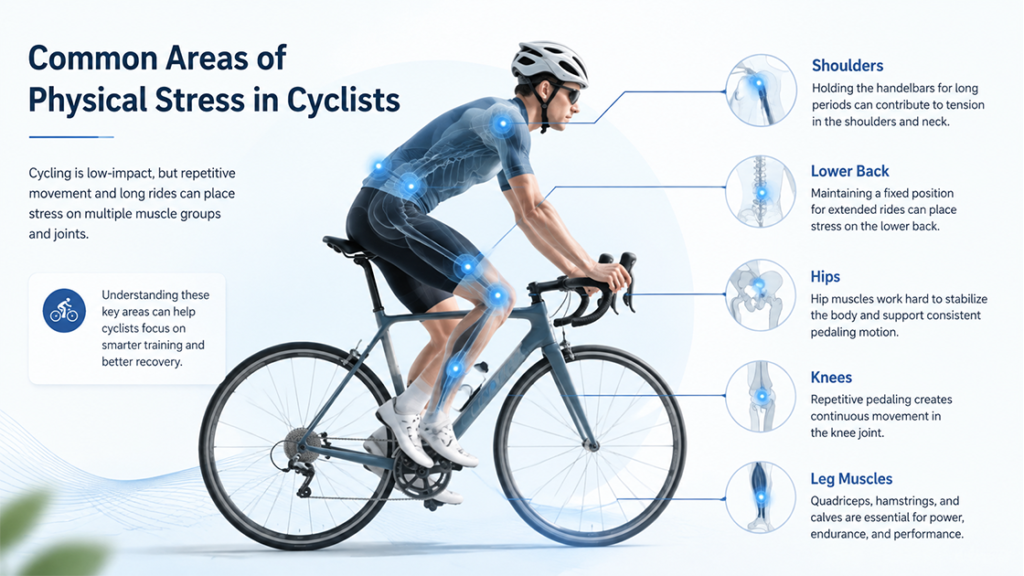
Cycling requires repetitive lower-body movement for extended periods, with thousands of pedal rotations during longer rides. The quadriceps, hamstrings, calves, and hip muscles continuously work to generate power and maintain cycling efficiency.
Although cycling is generally considered a low-impact activity, repetitive motion and prolonged positions can still create temporary physical stress. Cyclists who frequently train or participate in endurance events often pay attention to recovery strategies that support muscle relaxation and everyday comfort.
1.2 Common Areas Cyclists Focus on During Recovery
Different parts of the body contribute to cycling performance and comfort. The knees experience repeated movement throughout each pedal cycle, while the hips and lower back help maintain body positioning during rides.
The upper body also plays an important role. Holding the handlebars for extended periods may contribute to temporary tension in the shoulders, neck, and wrists. Because cycling involves the entire body, many riders prefer recovery methods that can address multiple areas as part of a complete wellness routine.
1.3 The Importance of Recovery for Cycling Performance
Recovery is an important part of maintaining an active lifestyle. Cyclists need to balance training intensity with appropriate rest and supportive care to continue participating comfortably.
A complete cycling recovery routine may include stretching, hydration, mobility exercises, proper nutrition, and professional recovery technologies. Class IV laser therapy can be considered one supportive option that works alongside these practices to help cyclists manage physical demands from regular riding.
2. How Class IV Laser Therapy Supports Cycling Recovery
2.1 Understanding Class IV Laser Technology
Class IV laser therapy uses high-power laser energy to deliver targeted photobiomodulation. Unlike basic light-based devices, Class IV systems are designed to provide deeper energy delivery through controlled applications.
Professional users can adjust treatment settings based on different areas and recovery goals. This flexibility allows the technology to be used as part of personalized recovery programs for athletes and active individuals.
2.2 The Role of Photobiomodulation in Muscle Recovery
Photobiomodulation refers to the use of specific light energy wavelengths to interact with biological tissues. In professional settings, this technology is used to support natural cellular responses and promote a comfortable recovery experience.
For cyclists, photobiomodulation-based laser therapy may be incorporated into recovery routines after demanding rides or training sessions. The goal is not to replace traditional recovery methods but to provide an additional tool for supporting muscle wellness.
2.3 Why Cyclists Consider Deep Tissue Laser Applications
Cycling involves repeated activation of large muscle groups, especially in the lower body. Some cyclists explore deep tissue laser applications because they want targeted support for areas affected by prolonged physical activity.
High-power laser technology allows professionals to focus on specific muscle groups, including the thighs, calves, hips, and lower back. This targeted approach makes it suitable for individuals who participate in endurance sports and require personalized recovery strategies.
3. Common Cycling Areas Supported by Laser Therapy Applications
3.1 Supporting Knee Comfort After Repetitive Pedaling
The knees are among the most active joints during cycling. Each ride involves continuous flexion and extension, making knee comfort an important consideration for many cyclists.
Class IV laser therapy may be included in recovery routines that focus on maintaining comfortable movement around the knee area. When combined with proper bike fitting, strength training, and mobility exercises, targeted laser applications can support overall cycling wellness.
3.2 Supporting Hip and Lower Back Recovery
The hips and lower back help stabilize the body during cycling, especially during longer rides where riders maintain a fixed position for extended periods.
Many cyclists pay attention to these areas because posture, riding position, and endurance demands can influence physical comfort. Targeted laser therapy applications may complement other recovery approaches by focusing on areas involved in cycling posture and movement.
3.3 Supporting Leg Muscle Recovery After Endurance Training
The quadriceps, hamstrings, and calves generate much of the power required for cycling. After long-distance rides or intense training sessions, these muscle groups may require additional recovery attention.
Class IV laser therapy can be integrated into sports recovery programs that focus on muscle comfort and readiness. By targeting specific muscle areas, professionals can create recovery approaches that match individual cycling demands.
4. Incorporating Class IV Laser Therapy Into a Cyclist’s Routine
4.1 When Cyclists May Explore Laser Recovery Options
Cyclists may consider supportive recovery technologies during periods of increased training volume, preparation for endurance events, or after physically demanding rides.
The timing and frequency of recovery methods depend on individual goals, activity levels, and professional recommendations. Class IV laser therapy can be incorporated into broader wellness plans designed around each cyclist’s routine.
4.2 Combining Laser Therapy With Traditional Cycling Recovery
Laser therapy works best as part of a comprehensive recovery strategy. Professional cyclists and recreational riders often combine multiple approaches, including stretching, foam rolling, strength exercises, rest days, and proper hydration.
By combining different recovery methods, cyclists can create a balanced approach focused on maintaining mobility and supporting long-term participation in the sport.
4.3 The Advantage of Targeted Recovery Technology
One of the key benefits of modern recovery technology is customization. Instead of using the same approach for every situation, professionals can adjust laser applications based on specific areas and individual needs.
For cyclists, this means recovery strategies can focus on areas that experience the most physical demand, whether from endurance riding, training schedules, or changes in cycling intensity.
5. The Future of Laser Technology in Cycling Recovery
5.1 Growing Interest in Advanced Sports Recovery Solutions
As more people participate in endurance sports, interest in advanced recovery technologies continues to grow. Cyclists are increasingly looking beyond basic recovery habits and exploring professional solutions that support active lifestyles.
Class IV laser therapy represents one of the technologies being integrated into modern sports wellness environments. Its combination of targeted application and adjustable settings makes it a valuable option for individuals seeking personalized recovery support.
5.2 How Professional Laser Therapy Supports Modern Cycling Wellness
Modern cycling recovery focuses on maintaining balance between performance goals and physical wellness. Professional laser technologies provide another option within a larger recovery framework.
For cyclists, Class IV laser therapy can support recovery routines by focusing on muscle comfort, mobility, and overall physical readiness. When combined with proper training, recovery habits, and professional guidance, it can become part of a comprehensive approach to staying active.
FAQ
What is Class IV laser therapy?
Class IV laser therapy is a high-power photobiomodulation technology that uses targeted light energy for professional recovery applications.
Why do cyclists use laser therapy?
Cyclists may use laser therapy as part of recovery routines focused on muscle comfort and mobility after long-distance riding.
Which areas can cyclists focus on with Class IV laser therapy?
Common areas include knees, hips, lower back, thighs, calves, and shoulders.
Can laser therapy replace cycling recovery habits?
No. Laser therapy should complement stretching, exercise, rest, and other healthy recovery practices.
Is Class IV laser therapy only for professional cyclists?
No. Both competitive and recreational cyclists may explore professional recovery options based on their individual needs.
Conclusion
Cycling places continuous demands on the body through repetitive movement, endurance training, and prolonged riding positions. Class IV laser therapy provides a modern recovery technology that can support cyclists looking to maintain muscle comfort and mobility as part of a complete wellness routine. By combining targeted photobiomodulation applications with traditional recovery methods, cyclists can develop personalized strategies that match their training goals and lifestyle. As interest in advanced sports recovery continues to grow, professional laser technology remains an important option within the evolving field of cycling wellness.
References
Photobiomodulation Therapy: Mechanisms and Applications in Medicine
https://pubmed.ncbi.nlm.nih.gov/30778283
Photobiomodulation and Exercise Performance: Current Perspectives
https://www.ncbi.nlm.nih.gov/pmc/articles/PMC4743666
Low-Level Laser Therapy and Muscle Recovery After Exercise
https://pubmed.ncbi.nlm.nih.gov/22463980
The Effects of Photobiomodulation on Musculoskeletal Conditions
https://www.ncbi.nlm.nih.gov/pmc/articles/PMC5523871
Laser Therapy in Sports Medicine and Rehabilitation
 English
 العربية
 Français
 日本語
日本語 Português
 Español
 Русский
 Deutsch