

Page Contents
Introduction
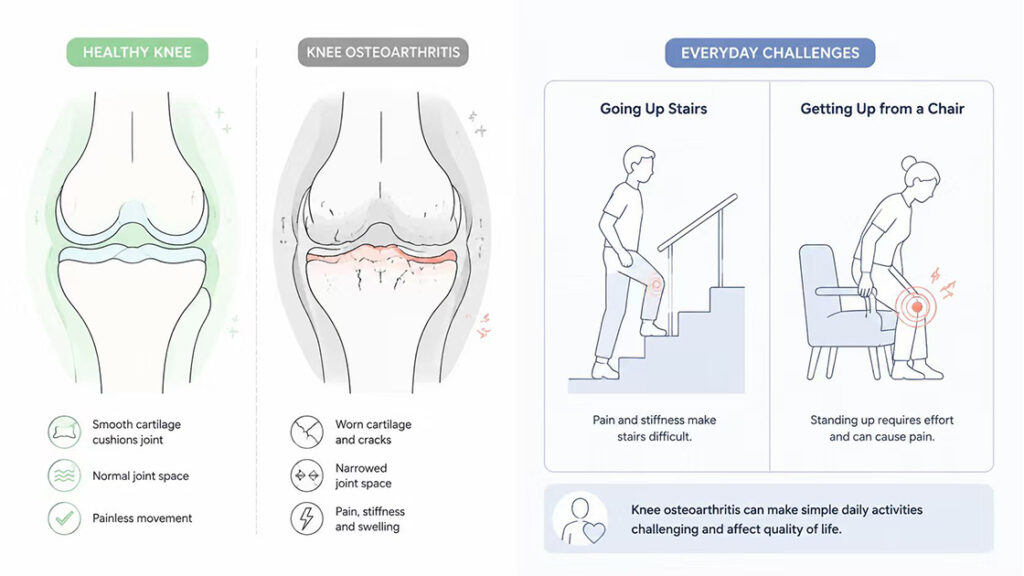
Knee osteoarthritis affects millions of people worldwide. The condition brings persistent pain, morning stiffness, and a gradual loss of mobility that makes everyday activities increasingly difficult. Walking up stairs becomes a challenge. Getting out of a chair requires careful planning. Simple tasks that once felt effortless now demand effort and often cause discomfort. For many patients, the standard approach involves physical therapy, exercise, and sometimes medication. While these methods help, they do not always provide complete relief. Many patients continue to experience pain that limits their daily function and quality of life. This gap between treatment and full recovery has led clinicians to explore additional options that can work alongside traditional physiotherapy. Class IV laser therapy has emerged as one such option. Also known as high-intensity laser therapy, this treatment delivers deep-penetrating light energy to the tissues around the knee joint. It offers a non-invasive, drug-free way to support the body’s natural healing processes and may enhance the outcomes of conventional rehabilitation.
1. Understanding Knee Osteoarthritis and Its Burden
Knee osteoarthritis is a degenerative joint disease that affects the cartilage, the smooth tissue that cushions the ends of bones within the joint. As the cartilage wears away, the bones begin to rub against each other, causing pain, swelling, and stiffness. Over time, the joint loses its normal function, and the surrounding muscles may weaken from disuse.
1.1 Why Knee Osteoarthritis Is So Common
Several factors contribute to the development of knee osteoarthritis. Age is the most significant risk factor; the condition becomes more prevalent as people grow older. Obesity adds mechanical stress to the knee joint, accelerating cartilage breakdown. Previous injuries, such as ligament tears or meniscus damage, can also predispose individuals to osteoarthritis later in life. Genetics play a role as well, with some people inheriting a tendency to develop the condition. The combination of these factors means that knee osteoarthritis affects a substantial portion of the adult population. Globally, the condition is a leading cause of disability and chronic pain, making it a major public health concern.
1.2 The Limitations of Conventional Treatment
Traditional management of knee osteoarthritis typically includes exercise, weight management, and physical therapy. Exercise helps strengthen the muscles around the knee, providing better support for the joint. Weight loss reduces the mechanical load on the joint, slowing the progression of cartilage damage. Physical therapy modalities such as heat packs, cold packs, and electrical stimulation can provide temporary pain relief. Medications, including non-steroidal anti-inflammatory drugs, help manage pain and inflammation but come with potential side effects with long-term use. For many patients, these approaches offer partial relief but do not fully restore function or eliminate pain. Some patients continue to struggle despite adhering to their treatment plans, leading them to seek additional options.
2. How Class IV Laser Therapy Works
Class IV laser therapy uses high-power light energy that penetrates deep into musculoskeletal tissues. Unlike lower-class lasers that primarily affect superficial tissues, Class IV devices can reach the deeper structures within the knee joint, including the cartilage, ligaments, and bone. This deeper penetration is essential for treating a condition like knee osteoarthritis, where the source of pain and dysfunction lies beneath the surface.
2.1 Photobiomodulation at the Cellular Level
The core mechanism of Class IV laser therapy is photobiomodulation. When specific wavelengths of light penetrate the tissue, they interact with mitochondria within the cells. Mitochondria absorb this light energy through a key enzyme called cytochrome c oxidase. This absorption enhances the production of adenosine triphosphate (ATP), the primary energy carrier in cells. Higher ATP availability supports essential cellular functions, including protein synthesis, membrane transport, and waste removal. This cellular energy boost helps shift tissues from a dysfunctional state toward an active repair phase.
2.2 Stimulating Tissue Repair
The laser energy stimulates chondrocyte activity in cartilage and fibroblast activity in tendons and ligaments. Chondrocytes are the cells responsible for maintaining cartilage health. When these cells become more active, they can produce the components needed to maintain the cartilage matrix. Fibroblasts produce collagen, which provides structural support to connective tissues. By promoting the activity of these cells, Class IV laser therapy supports the maintenance and repair of the tissues within the knee joint. The therapy also increases collagen cross-linking, reduces inflammatory cytokines, and promotes angiogenesis, the formation of new blood vessels around healing tissue. These combined effects create a more favorable environment for tissue repair and recovery.
2.3 Reducing Pain and Inflammation
Class IV laser therapy influences both pain signaling and inflammation. The laser energy can reduce the activity of pro-inflammatory enzymes and mediators, helping to calm the inflammatory environment within the joint. This modulation of inflammation contributes to reduced swelling and stiffness. At the same time, the therapy affects how pain signals are transmitted. It can alter the way pain receptors send signals to the brain, effectively reducing the perception of pain without the use of medication. This dual action makes Class IV laser therapy particularly relevant for knee osteoarthritis, where both inflammation and pain play central roles.
3. The Role of Class IV Laser as an Adjunct to Physiotherapy
Class IV laser therapy is not intended to replace conventional physiotherapy but rather to complement it. When used alongside physical therapy and exercise, the laser may help patients achieve better outcomes than with physiotherapy alone.
3.1 Enhancing the Effects of Exercise
Exercise remains a cornerstone of knee osteoarthritis management. Strengthening the muscles around the knee provides better joint stability and reduces the load on the cartilage. However, pain can limit a patient’s ability to participate fully in exercise. When pain is severe, patients may avoid certain movements or reduce the intensity of their workouts. This can lead to muscle weakness and further joint instability. Class IV laser therapy may help reduce pain enough to allow patients to engage more fully in their exercise programs. By decreasing discomfort, the therapy enables patients to perform the strengthening and mobility exercises that are essential for long-term joint health.
3.2 Supporting Rehabilitation Progress
Physical therapy often involves a variety of modalities, including heat packs, cold packs, and electrical stimulation. These treatments provide temporary relief but do not always address the underlying tissue dysfunction. Class IV laser therapy offers a different approach. By stimulating cellular repair and reducing inflammation, the therapy targets the biological processes that contribute to joint degeneration. When used alongside other physiotherapy modalities, the laser may support a more comprehensive recovery. Patients may experience less stiffness, improved range of motion, and better overall function.
3.3 Reducing Reliance on Medications
Many patients with knee osteoarthritis rely on medications to manage their pain. Non-steroidal anti-inflammatory drugs are commonly used but can cause gastrointestinal issues and other side effects with prolonged use. Class IV laser therapy offers a drug-free alternative that can help reduce the need for these medications. By providing pain relief and supporting tissue repair, the therapy may allow patients to manage their symptoms with less pharmaceutical intervention. This can be particularly valuable for patients who cannot tolerate certain medications or who wish to avoid long-term drug use.
4. What Patients Can Expect from Treatment
For patients considering Class IV laser therapy as an adjunct to physiotherapy, understanding the typical course of treatment helps set realistic expectations.
4.1 The Treatment Experience
A typical Class IV laser session for the knee lasts between 10 and 15 minutes. The patient lies comfortably while the practitioner positions the applicator over the knee joint, targeting the areas of pain and inflammation. Most patients describe the sensation as a gentle warmth or mild tingling. The treatment requires no anesthesia, and patients can return to their normal activities immediately afterward. The non-invasive nature of the therapy and the absence of downtime make it a convenient addition to a rehabilitation program.
4.2 Number of Sessions and Timeline
The number of sessions varies depending on the severity of the condition and the individual’s response to treatment. Some patients notice improvement after a few sessions, while others benefit from a longer series. A typical course of treatment may involve several sessions over a few weeks. The full effect of the therapy often becomes apparent over time, as the cumulative benefits of the treatment build. Consistent attendance and adherence to the recommended schedule are important for achieving optimal outcomes.
4.3 Integrating with Physiotherapy
Class IV laser therapy works most effectively when combined with a comprehensive rehabilitation program. Patients should continue with their prescribed exercises and physical therapy sessions. The laser does not replace these essential components but supports them by reducing pain and improving tissue quality. By working alongside the physiotherapy program, the laser may help patients get more out of their rehabilitation efforts.
5. Long-Term Strategies for Managing Knee Osteoarthritis
Managing knee osteoarthritis is an ongoing process that requires attention to multiple aspects of health.
5.1 Maintaining a Healthy Weight
Excess body weight places additional stress on the knee joint, accelerating cartilage breakdown. Maintaining a healthy weight reduces this mechanical load and can slow the progression of the disease. Even modest weight loss can make a meaningful difference in pain and function. Patients should work with their healthcare providers to develop a sustainable weight management plan that includes both dietary changes and regular physical activity.
5.2 Staying Active
Regular physical activity is essential for maintaining joint health. Low-impact exercises such as walking, swimming, and cycling can help strengthen the muscles around the knee without placing excessive stress on the joint. Patients should aim for consistent, moderate activity rather than sporadic intense workouts. Staying active also supports weight management and overall cardiovascular health.
5.3 Monitoring Symptoms
Patients should pay attention to their symptoms and adjust their activities accordingly. If pain increases, it may be a sign that the joint needs more rest or that the current activity level is too high. Working with a physical therapist to modify exercises and maintain proper form can help prevent further injury. Regular check-ups with a healthcare provider allow for ongoing assessment and adjustment of the treatment plan.
FAQ
Q1: Is Class IV laser therapy painful for knee osteoarthritis?
Most patients describe a gentle warmth or mild tingling sensation during treatment. The procedure is generally comfortable and brief.
Q2: How many sessions does a patient typically need?
The number varies. Some patients notice improvement after a few sessions, while others benefit from a longer series. A typical course may involve several sessions over a few weeks.
Q3: Can I continue my normal activities during treatment?
Yes. The treatment requires no downtime, and patients can return to their normal activities immediately after each session.
Q4: How soon after treatment will I feel less pain?
Some patients notice reduced discomfort within a few sessions. The most noticeable improvement often takes several weeks to appear as the cumulative effects of the therapy build.
Q5: Does Class IV laser therapy replace physical therapy or exercise?
No. The therapy is most effective when used alongside a comprehensive rehabilitation program that includes exercise and physical therapy. It supports these essential components but does not replace them.
Conclusion
Knee osteoarthritis can significantly affect quality of life, turning simple movements into sources of pain and frustration. While conventional physiotherapy and exercise remain the foundation of management, many patients continue to experience limitations that affect their daily lives. Class IV laser therapy offers a non-invasive, drug-free option that may enhance the outcomes of traditional rehabilitation. By stimulating cellular repair, reducing inflammation, and modulating pain signals, the therapy supports the body’s natural healing processes. When combined with exercise, weight management, and other conservative measures, Class IV laser therapy may help patients achieve better pain relief, improved function, and a greater ability to engage in the activities that matter to them.
References
Özgözen S, Özgözen AL, Analan PD, İncekaş C. Additional effect of high-intensity laser therapy with conventional physiotherapy related to pain and function in patients with knee osteoarthritis: a randomized, double-blind, placebo-controlled, 12-week follow-up study. Lasers Med Sci. 2025 Jun 7;40(1):256.
https://pmc.ncbi.nlm.nih.gov/articles/PMC12145289
Laotammateep C, et al. Efficacy of high intensity laser therapy versus sham laser in symptomatic knee osteoarthritis: a double-blind randomized controlled trial. Lasers Med Sci. 2025 Feb 13;40(1):87.
https://pubmed.ncbi.nlm.nih.gov/39945920
Sharma D, et al. Comparative efficacy of high intensity laser therapy (Class IV) and ibuprofen gel phonophoresis in the treatment of knee osteoarthritis among people living in hilly terrain: A randomized controlled study. Lasers Med Sci. 2025 Oct 20;40(1):440.
https://pubmed.ncbi.nlm.nih.gov/41114869
FotonMedix. Class 4 Laser Therapy in Orthopedic Rehabilitation.
https://fotonmedix.com/class-4-laser-therapy-in-orthopedic-rehabilitation.html
Class 4 Laser Knee Treatment. Advanced Laser Therapy in Orthopedic Rehabilitation.
 English
 العربية
 Français
 日本語
日本語 Português
 Español
 Русский
 Deutsch