

Page Contents
Introduction
You sit through back‑to‑back virtual meetings, your head tilted slightly forward toward the screen. By midday, a dull ache settles at the base of your skull. The pain creeps up one side of your head and lingers behind your eye. Turning your neck feels stiff, and the headache worsens when you look down at your phone or resume typing. This pattern—a headache that truly starts in the neck—is called a cervicogenic headache. Unlike migraines or tension‑type headaches, this condition originates from the cervical spine, not the head itself. For desk workers who spend hours each day in front of a computer, the sustained forward head posture places chronic strain on the upper neck structures, triggering these secondary headaches. When conventional measures like rest or over‑the‑counter pain relievers offer only temporary relief, Class IV laser therapy provides a non‑invasive, drug‑free option that targets the underlying cervical dysfunction.
1. What Is a Cervicogenic Headache?
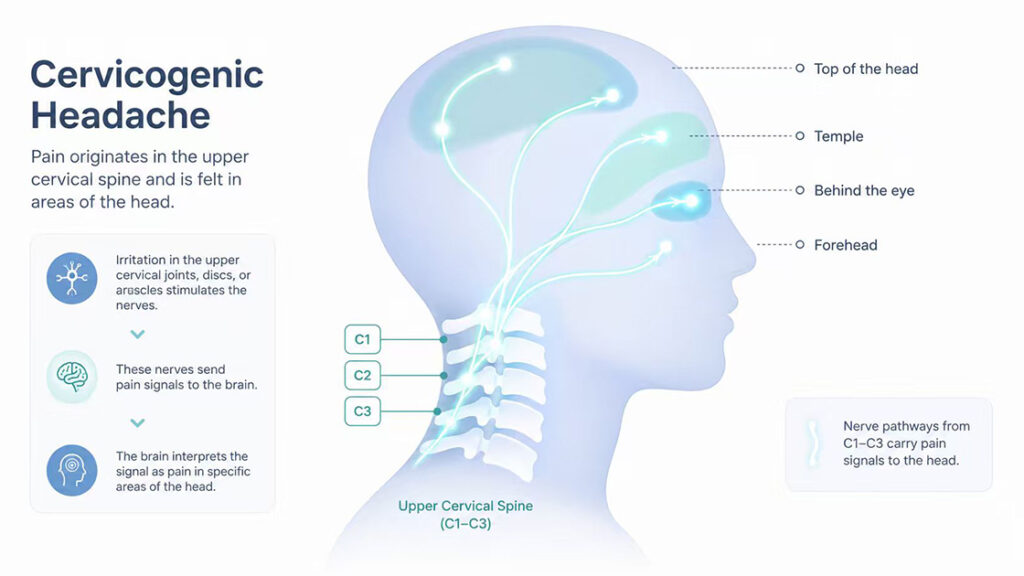
A cervicogenic headache is a secondary headache disorder, meaning the pain arises from a physical problem in the neck rather than from a primary headache condition. The source of the pain lies in the bones, discs, or soft tissues of the upper cervical spine, but the discomfort is felt in the head.
1.1 How the Neck Causes Head Pain
The upper three spinal nerves (C1, C2, and C3) innervate both the structures of the upper neck and parts of the scalp, face, and skull. When a problem exists in the atlanto‑occipital joint, the facet joints, the intervertebral discs, or the paraspinal muscles at these levels, the irritation travels along these nerve pathways. The brain interprets this incoming signal as coming from the head, even though the actual source remains in the neck. This phenomenon explains why a stiff neck can trigger a headache that feels like a migraine but does not respond to typical migraine medications.
1.2 Key Features That Distinguish It from Other Headaches
Cervicogenic headaches typically affect one side of the head, though bilateral pain occurs in some cases. The pain often starts at the back of the neck or at the base of the skull and then radiates to the forehead, temple, or area behind the eye. Limited range of motion in the neck is a hallmark feature; turning the head or holding an awkward posture for a long time makes the headache worse. Unlike migraines, cervicogenic headaches usually do not cause nausea, vomiting, or sensitivity to light and sound. This distinction matters because treatments directed at the neck—such as physical therapy or laser therapy—often relieve the headache, while standard migraine drugs generally do not.
2. Why Desk Workers Are at High Risk
The modern office environment, especially the shift to remote and hybrid work, has increased the prevalence of cervicogenic headaches among desk workers.
2.1 The Role of Forward Head Posture
Maintaining an upright posture with the ears aligned over the shoulders places minimal strain on the cervical spine. However, when a worker leans toward a computer screen or looks down at a smartphone, the head moves forward. For every inch the head moves forward, the load on the neck muscles and upper cervical joints increases substantially. This forward head posture forces the suboccipital muscles and the upper trapezius to contract continuously to support the head’s weight. Over time, this static contraction reduces blood flow, irritates the facet joints, and creates tension in the C1‑C3 nerve roots, setting the stage for cervicogenic headaches.
2.2 Prolonged Static Postures and Lack of Movement
Desk workers often remain in the same seated position for hours without meaningful breaks. The muscles and ligaments of the cervical spine receive little movement, which limits the exchange of nutrients and waste products in the intervertebral discs and joint capsules. Stiffness accumulates, and the normal gliding of the facet joints becomes restricted. When the worker finally moves—turning to answer a phone or looking up from the screen—the sudden motion can provoke sharp pain or exacerbate an existing headache.
2.3 The Impact of Screen Height and Workstation Setup
A poorly arranged workstation forces the worker into an even more extreme posture. A monitor that sits too low encourages chin tucking and forward head carriage. A chair without proper lumbar support allows the pelvis to tilt backward, which flattens the natural curve of the lumbar spine and encourages compensatory forward head posture. Even the height of the desk affects the position of the shoulders and neck. Small ergonomic deficiencies, multiplied over thousands of hours, contribute directly to the development of cervicogenic headaches.
3. How Class IV Laser Therapy Targets the Cervical Spine
Class IV laser therapy uses near‑infrared light to penetrate deep into the soft tissues of the neck. Unlike superficial heat or low‑level lasers, Class IV devices deliver enough energy to reach the facet joints, intervertebral discs, and deep paraspinal muscles where the problems actually originate.
3.1 Photobiomodulation at the Cellular Level
When photons from a Class IV laser reach the target tissues, mitochondria within the cells absorb the light energy. This absorption temporarily increases the production of adenosine triphosphate (ATP), the primary energy currency of the cell. Higher ATP availability supports essential cellular functions, including membrane transport, protein synthesis, and the removal of metabolic waste. Additionally, photobiomodulation influences the activity of transcription factors that regulate genes involved in the cellular response to mechanical stress and inflammation. These molecular events occur without any thermal injury to the surrounding structures.
3.2 Reducing Inflammation and Improving Local Circulation
The laser energy reduces the levels of pro‑inflammatory markers in the treated area, such as prostaglandin E2 and tumor necrosis factor alpha. This modulation of the inflammatory environment helps the body transition from a chronic, unresolved state toward a more constructive healing process. Class IV laser therapy also increases local microcirculation by promoting the growth of new blood vessels—a process called neovascularization. Better blood flow brings oxygen and nutrients to the irritated facet joints and taut paraspinal muscles while carrying away metabolic byproducts that accumulate in chronically dysfunctional tissues.
3.3 Pain Modulation and Muscle Relaxation
The analgesic effects of photobiomodulation involve multiple pathways. The laser energy can influence how pain receptors transmit signals to the spinal cord and brain, effectively reducing the perception of pain without the use of pharmaceuticals. At the same time, the laser helps relax the hypertonic suboccipital and upper trapezius muscles by reducing nerve activity at the motor end plate. Relaxation of these muscles decreases the mechanical compression on the C1‑C3 nerve roots, further alleviating the headache.
4. What a Desk Worker Can Expect from Treatment
For someone who spends their workday at a computer, understanding the typical course of Class IV laser therapy helps set realistic expectations.
4.1 Number of Sessions and Duration
A common protocol for cervicogenic headaches involves six to ten sessions delivered over two to four weeks. Each session lasts only a few minutes. The practitioner positions the laser applicator over the suboccipital region, the upper trapezius, and the paravertebral muscles of the upper cervical spine. Most desk workers find the sensation—a gentle warmth or a mild tapping—comfortable and brief. No downtime is required, so the worker can return to their desk immediately after treatment.
4.2 When to Notice Improvement
Some workers notice reduced neck stiffness and less frequent headaches after the first few sessions. However, the full benefit typically becomes apparent several weeks after completing the series. Tissue remodeling and the resolution of chronic inflammation take time. Patience and consistency matter more than expecting an immediate fix.
4.3 Combining Treatment with Postural Correction
Class IV laser therapy works most effectively when the worker also addresses the postural habits that caused the problem in the first place. Using the laser to reduce pain and inflammation provides a window of opportunity to retrain posture without discomfort. Ergonomic adjustments—raising the monitor to eye level, using a headset for phone calls, and taking frequent micro‑breaks—complement the tissue‑level effects of the laser.
5. Practical Strategies for Preventing Cervicogenic Headaches
Preventing future headaches requires changes to the workstation, daily habits, and movement patterns.
5.1 Ergonomic Setup
Position the computer monitor so the top of the screen is at or slightly below eye level. The worker should sit with the hips pushed back in the chair, the feet flat on the floor, and the ears aligned over the shoulders. A chair with adjustable lumbar support helps maintain the natural curve of the lower back, which indirectly supports a neutral neck position. Using a document holder placed next to the screen prevents repeated turning of the head.
5.2 Taking Micro‑Breaks and Changing Posture
Sitting still for long periods is a major contributor to cervicogenic headaches. Setting a timer to stand, stretch, and walk for one minute every thirty minutes interrupts the sustained muscle contraction. Simple neck range‑of‑motion exercises—chin tucks, gentle rotations, and side bends—performed without pain help maintain joint mobility. Looking away from the screen every twenty minutes to focus on a distant object also relaxes the ciliary muscles and reduces unconscious forward head carriage.
5.3 Strengthening and Stretching
Strengthening the deep neck flexors improves the ability to hold the head in a neutral position without fatigue. A simple exercise involves lying on the back, gently nodding the chin toward the chest while keeping the head on the floor, and holding for a few seconds. Stretching the upper trapezius and levator scapulae relieves tension that pulls the head forward. A gentle stretch of the upper trapezius involves sitting upright, gently pulling the head toward one shoulder while keeping the opposite shoulder relaxed. These exercises should never provoke sharp pain.
FAQ
Q1: Is Class IV laser therapy painful for cervicogenic headaches?
Most desk workers feel a gentle warmth or mild tapping sensation. The treatment is generally comfortable, and any sensation stops when the applicator moves away.
Q2: How many sessions does a desk worker typically need?
A common protocol involves six to ten sessions over two to four weeks. Some notice improvement after a few sessions, while others benefit from the full series.
Q3: Can I continue working at my computer during laser therapy?
Yes. Most people resume normal work immediately after each session. Maintaining good posture and taking breaks supports the healing response.
Q4: How soon after treatment will I feel less headache?
Some individuals notice reduced neck stiffness and headache frequency within a few sessions. The most noticeable improvement often appears several weeks after completing the series.
Q5: Will laser therapy prevent cervicogenic headaches from returning?
Laser therapy helps resolve the existing inflammation and muscle tension. Maintaining proper ergonomics, regular movement, and strengthening exercises reduces the risk of recurrence.
Conclusion
Cervicogenic headaches are a common but often misunderstood condition among desk workers. The sustained forward head posture, prolonged static positioning, and poorly arranged workstations that characterize modern office life place chronic strain on the upper cervical spine, leading to referred head pain that does not respond to typical migraine treatments. For those who have tried rest, medication, or other measures without lasting relief, Class IV laser therapy offers a non‑invasive, drug‑free approach. By delivering deep‑penetrating near‑infrared light to the affected muscles and joints, photobiomodulation reduces inflammation, improves local circulation, modulates pain signaling, and promotes muscle relaxation. When combined with ergonomic adjustments, regular micro‑breaks, and targeted exercises, Class IV laser therapy can help desk workers manage their cervicogenic headaches and return to their daily tasks with less pain.
References
Cleveland Clinic – Cervicogenic Headache
https://my.clevelandclinic.org/health/diseases/cervicogenic-headache
Harvard Health Publishing – A Headache That Starts in Your Neck
https://www.health.harvard.edu/pain/a-headache-that-starts-in-your-neck
StatPearls – Cervicogenic Headache
https://www.ncbi.nlm.nih.gov/books/NBK507862
American Migraine Foundation – Cervicogenic Headache
https://americanmigrainefoundation.org/resource-library/cervicogenic-headache/
Ergonomics for Desk Workers: Preventing Neck Pain and Headaches
 English
 العربية
 Français
 日本語
日本語 Português
 Español
 Русский
 Deutsch