

Page Contents
1. Introduction: Why “Class 4 Laser Therapy Near Me” Is Becoming a Popular Search Term
As healthcare shifts toward non-pharmacological and non-invasive treatment strategies, more patients seek modalities that promote natural healing rather than masking symptoms. The rising concern over opioid medications, NSAID overuse, and surgical complications has driven widespread interest in medical technologies that help the body repair itself. Class 4 laser therapy, originally developed for sports medicine and elite athletic performance, is now becoming widely accessible to the public. Clinics across the country offer this therapy as an advanced option for patients with musculoskeletal disorders, neurological pain, inflammation, and soft tissue injuries. Because treatment requires an in-person visit with trained professionals, location-based searches—such as “laser therapy near me”—have surged dramatically.
2. What Is Class 4 Laser Therapy?
It’s essential to understand what Class 4 laser therapy is and why it has become a preferred treatment for patients and clinicians. Class 4 lasers are categorized by power output and therapeutic potential, setting them apart from lower-level devices commonly found in consumer products or wellness spas.
2.1 What Defines a Class 4 Laser: Power Output and Therapeutic Capabilities
Class 4 lasers are distinguished by their power output, which exceeds 500 milliwatts (mW). This higher intensity allows deeper penetration into tissues, enabling therapeutic effects in muscles, tendons, ligaments, and joint structures that lower-power lasers cannot reach. Because many chronic pain conditions originate in deep tissues, the ability to deliver energy several centimeters beneath the skin makes Class 4 lasers uniquely effective.
High-power laser energy stimulates cellular metabolism, enhances ATP production, and increases blood flow in the targeted region. This enables faster reduction of inflammation, quicker removal of metabolic waste, and accelerated tissue repair. While low-level lasers focus on surface-level or shallow tissue issues, Class 4 lasers are engineered specifically for deep musculoskeletal injuries and chronic pain syndromes. This makes them highly valuable for treating conditions that have resisted traditional modalities.
2.2 How Class 4 Laser Therapy Works: Mechanism of Action and Biological Effects
Class 4 laser therapy operates through a process known as photobiomodulation—the use of specific wavelengths of light to stimulate biological healing processes. When laser photons penetrate tissues, they interact with cellular photoreceptors, especially within the mitochondria. This stimulates increased production of adenosine triphosphate (ATP), the energy currency required for cellular repair.
Beyond ATP enhancement, laser therapy promotes vasodilation, improves microcirculation, reduces oxidative stress, and modulates inflammatory cytokines. Research also demonstrates increased fibroblast activity, accelerated collagen synthesis, and enhanced nerve regeneration. These mechanisms collectively support tissue healing, pain reduction, and improved mobility. Because of its multi-layered biological impact, Class 4 laser therapy is used in both acute injuries—such as sprains—and chronic degenerative conditions like osteoarthritis.
2.3 Clinical Applications: Why Class 4 Lasers Are Chosen for Deep Tissue Conditions
Class 4 lasers are frequently selected for patients with complex or longstanding pain conditions. Their deeper penetration and higher power allow clinicians to reach tissues that are otherwise inaccessible without invasive procedures. This is particularly valuable for issues involving spinal discs, hip joints, or deep muscle groups such as the piriformis.
Furthermore, because Class 4 lasers can deliver therapeutic energy quickly, they are ideal for time-sensitive clinical environments such as sports medicine clinics where rapid recovery is essential. Many elite athletes rely on this therapy to expedite recovery, reduce downtime, and improve performance. For patients with chronic inflammatory conditions, repeated laser sessions provide cumulative benefits, resulting in progressive pain reduction and improved function over time.
3. Conditions Commonly Treated with Class 4 Laser Therapy Near Me
Clinicians use Class 4 laser therapy to treat a wide range of conditions involving inflammation, soft tissue damage, nerve irritation, and musculoskeletal injury. It is often part of an integrated treatment plan that may include physical therapy, chiropractic care, or regenerative medicine.
3.1 Spine-Related Pain: Back Pain, Sciatica, Disc Herniation
Back pain is one of the most common reasons patients seek Class 4 laser treatment. Deep spinal structures—such as the facet joints, intervertebral discs, and paraspinal musculature—are difficult to reach with lower-level modalities. Class 4 lasers penetrate deeply enough to reduce inflammation around nerve roots, improve local tissue metabolism, and promote healing of disc-related injuries. Many patients report significant improvements in mobility, reduced stiffness, and decreased radiating pain associated with sciatica.
3.2 Joint Pain: Knee, Shoulder, Hip, and Elbow Disorders
Joint-related pain—whether from osteoarthritis, bursitis, tendinopathy, or ligament injuries—responds exceptionally well to Class 4 laser therapy. The laser’s ability to penetrate joint capsules enhances circulation and reduces inflammation in structures such as the rotator cuff, knee meniscus, and hip stabilizing muscles. This results in improved range of motion and decreased mechanical pain. Many patients use laser therapy to delay or avoid joint replacement surgery, especially when combined with strengthening exercises and mobility work.
3.3 Sports Injuries: Sprains, Strains, Tendonitis, Muscle Tears
Athletes frequently turn to Class 4 laser therapy for accelerated recovery. Sports injuries often involve microtears, inflammation, and soft tissue damage, all of which respond well to photobiomodulation. Increased ATP production allows injured tissues to repair themselves more efficiently, while improved microcirculation reduces swelling. Conditions like Achilles tendinitis, hamstring strains, and rotator cuff inflammation benefit from rapid pain relief and shorter downtime.
3.4 Chronic Conditions: Arthritis, Neuropathy, Inflammation
Patients with long-term inflammatory or degenerative conditions often see meaningful improvements from Class 4 laser treatment. Osteoarthritis pain is reduced as the laser decreases joint inflammation and improves cartilage metabolism. Neuropathy patients may experience improved nerve conductivity and reduced burning sensations. Chronic inflammation—a contributing factor in many pain syndromes—is significantly diminished with consistent laser therapy, leading to long-term functional improvements.
3.5 Post-Surgical Recovery and Tissue Healing
Post-operative recovery can be slow and uncomfortable, especially in orthopedic procedures. Class 4 laser therapy accelerates tissue repair, reduces post-surgical inflammation, and minimizes scar tissue formation. Patients recovering from knee arthroscopy, rotator cuff repair, or spinal surgery often incorporate laser therapy to speed healing. Its non-invasive nature allows early application, supporting recovery before traditional physical therapy begins.
4. How Class 4 Laser Therapy Near Me Compares to Other Pain Treatment Options
To make an informed decision, it’ s important to understand how Class 4 laser therapy compares to other common treatment approaches.
4.1 Compared to Traditional Physical Therapy
Physical therapy (PT) focuses on movement restoration, strengthening, and stabilization. While PT is essential for long-term rehabilitation, it may not always provide rapid pain relief on its own. Class 4 laser therapy complements physical therapy by reducing inflammation and pain more quickly, enabling patients to perform exercises more effectively. This synergy accelerates overall recovery and improves compliance.
4.2 Compared to Pain Medication
Pain medications—including NSAIDs and opioids—may provide temporary relief but come with risks such as gastrointestinal issues, dependency, or diminished effectiveness over time. Class 4 laser therapy treats the underlying cause of pain rather than masking symptoms. This drug-free approach avoids systemic side effects and helps patients achieve meaningful improvements without reliance on medication.
4.3 Compared to Surgery
While surgery may be necessary in certain cases, many patients seek alternatives due to risks, downtime, and long recovery periods. Class 4 laser therapy offers a non-invasive option to address pain and inflammation, sometimes preventing the need for surgical intervention. It is particularly valuable for patients with conditions like tendonitis, early-stage arthritis, or disc-related pain. In cases where surgery is unavoidable, laser therapy supports pre- and post-operative recovery.
4.4 Part of a Comprehensive Pain Management Plan
The best pain management outcomes often result from a multidisciplinary approach. Class 4 laser therapy integrates seamlessly with chiropractic adjustments, rehabilitation exercises, massage therapy, and lifestyle modifications. When combined, these methods address both structural and biochemical aspects of pain, leading to long-term improvements in function, mobility, and overall quality of life.
5. Is Class 4 Laser Therapy Safe? Understanding the Safety Profile
Safety is one of the most common concerns among patients considering new medical treatments. Fortunately, Class 4 laser therapy is widely regarded as safe when administered by trained professionals. These devices are FDA-cleared and designed for therapeutic use under clinical supervision. Treatments are non-invasive, require no anesthesia, and have no downtime. When performed correctly, the laser delivers controlled energy to targeted tissues while preventing overheating or tissue damage. Clinical studies consistently demonstrate low risk and high patient tolerance, making it a reliable and effective option for pain relief.
6. Side Effects, Contraindications, and Treatment Precautions
While Class 4 laser therapy is generally safe, it’s important to understand potential reactions and situations where caution is necessary.
6.1 Common Short-Term Reactions
Most patients experience minimal side effects. Some may notice a warm sensation during treatment due to increased blood flow and energy absorption. Mild redness or slight swelling may occur temporarily but typically resolves within minutes to hours. These reactions reflect positive physiological responses and are considered normal. Patients often report immediate pain reduction and improved mobility following treatment.
6.2 Contraindications
Class 4 laser therapy should be avoided in certain situations. Pregnant patients should not receive treatment over the abdominal or pelvic region. Individuals with active cancer should consult their oncologist before undergoing laser therapy. Areas with infection, open wounds, or active bleeding may require caution. Patients with light sensitivity disorders or those taking photosensitizing medications should discuss risks with their clinician. Proper screening ensures safe and effective treatment.
6.3 Clinic Safety Protocols
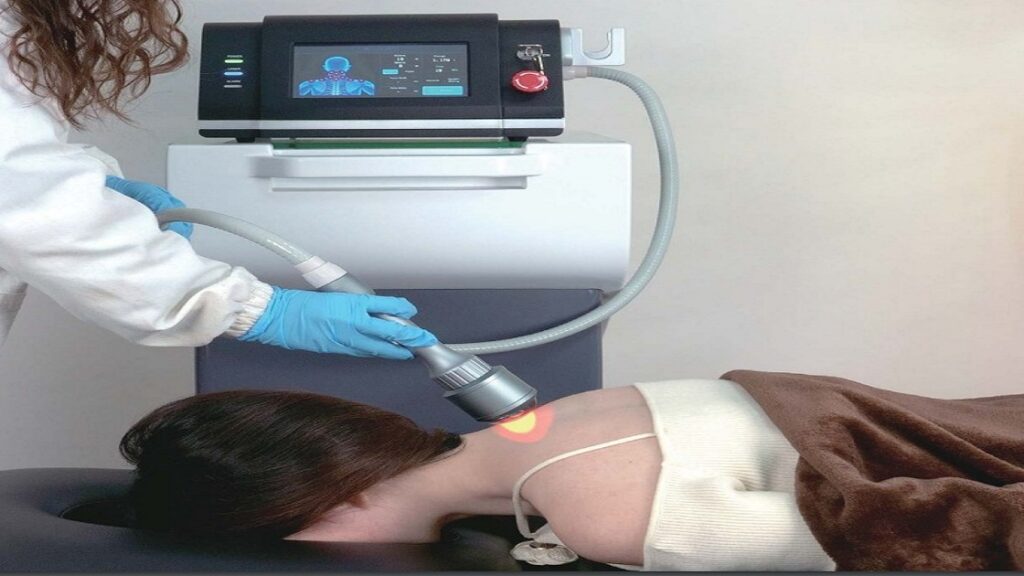
Licensed clinics follow strict safety guidelines. Protective eyewear is mandatory for both the patient and practitioner to prevent accidental retinal exposure. The clinician evaluates skin tone, tissue depth, and pain location to determine proper settings. Laser parameters such as wavelength, duty cycle, and power output are adjusted to ensure safe energy delivery. These protocols maintain safety and maximize therapeutic effectiveness.
7. What to Expect During a Class 4 Laser Therapy Session
Understanding what happens during treatment helps patients feel more comfortable and confident.
7.1 Initial Consultation and Pain Assessment
During the first appointment, the clinician conducts a thorough evaluation, including medical history, pain characteristics, and functional limitations. Diagnostic tools such as orthopedic tests, palpation, or imaging results may be reviewed to identify the exact source of pain. Based on the assessment, a personalized treatment plan is created, outlining recommended laser parameters and therapy frequency. This consultation ensures the treatment is appropriate and tailored to the patient’s needs.
7.2 Treatment Sensation and Experience
A typical session lasts between 5 and 15 minutes depending on the treatment area. The patient may feel a warm, soothing sensation as the laser moves across the skin. Because Class 4 lasers deliver energy deeper into tissues, patients often feel relief almost immediately. The treatment is comfortable, and many describe it as relaxing. There is no need for gels, needles, or invasive procedures. After the session, patients may experience improved range of motion and decreased pain.
7.3 Treatment Plans and Expected Outcomes
Most patients require multiple sessions to achieve optimal results. Acute injuries may respond within 3–6 sessions, while chronic conditions may require 8–12 treatments. Improvement typically begins within the first few visits as inflammation decreases and tissue repair accelerates. Consistency is key—regular sessions enable cumulative therapeutic benefits. Clinicians may combine laser therapy with exercise or manual therapy to reinforce long-term outcomes.
8. Scientific Evidence and Clinical Research Supporting Class 4 Laser Therapy
Class 4 laser therapy is well-supported by clinical research in photobiomodulation, sports medicine, and rehabilitation science.
8.1 Research on Pain Reduction and Inflammation
Numerous studies demonstrate that laser therapy effectively modulates inflammatory pathways by reducing pro-inflammatory cytokines and increasing circulation. This leads to significant reductions in pain intensity. Controlled trials show improvements in conditions like arthritis, tendonitis, and neuropathic pain. Laser therapy also decreases muscle tension and promotes faster resolution of inflammatory markers.
8.2 Comparison Studies with Lower-Level Lasers
Research comparing Class 4 lasers to lower-level devices (such as Class 3B or LED therapy) consistently shows superior outcomes in tissue penetration, treatment speed, and symptom reduction. Higher-power lasers deliver therapeutic doses more efficiently, making them more suitable for deep tissue injuries. Lower-power lasers may benefit superficial conditions but lack the capabilities required for complex musculoskeletal disorders.
8.3 Long-Term Functional Improvements
Beyond immediate pain relief, long-term studies highlight improvements in mobility, strength, and overall quality of life. Patients with chronic degenerative conditions report sustained functional gains with consistent treatment. Laser therapy promotes structural healing, allowing patients to maintain progress even after treatment concludes. This long-term impact distinguishes it from many short-term symptom-based therapies.
9. Conclusion
Class 4 laser therapy is rapidly becoming one of the most trusted and advanced solutions for safe, effective pain relief, offering deep tissue penetration, fast recovery, and scientifically proven photobiomodulation benefits. As more clinics adopt this technology, finding Class 4 laser therapy near you has never been easier, giving patients access to a non-invasive alternative to surgery, medication, and long-term discomfort. With its strong safety profile and ability to reduce inflammation, accelerate healing, and restore mobility, Class 4 laser therapy provides meaningful relief for chronic pain, sports injuries, joint degeneration, and nerve-related conditions. When performed by trained professionals, this therapy becomes a powerful part of a comprehensive pain management plan—helping patients return to daily activities, regain physical function, and improve overall quality of life. Whether you seek rapid recovery or long-term healing, Class 4 laser therapy stands out as a reliable, evidence-based treatment worth considering.
10. References
National Institutes of Health (NIH) – Photobiomodulation Research
https://www.ncbi.nlm.nih.gov/pmc/?term=photobiomodulation
PubMed – Class 4 Laser Therapy Clinical Studies
https://pubmed.ncbi.nlm.nih.gov/?term=class+4+laser+therapy
World Association for Laser Therapy (WALT) – Dosage Guidelines
https://waltpbm.org/dosage-recommendations
Journal of Photochemistry and Photobiology – Laser Therapy Mechanisms
https://www.sciencedirect.com/journal/journal-of-photochemistry-and-photobiology-b-biology
NIH – Laser Therapy for Musculoskeletal Pain Review
https://www.ncbi.nlm.nih.gov/pmc/articles/PMC4743666
Sports Medicine Research on Laser Therapy and Recovery
https://pubmed.ncbi.nlm.nih.gov/?term=laser+therapy+sports+injury
Clinical Evidence on Photobiomodulation and Inflammation
https://pubmed.ncbi.nlm.nih.gov/?term=photobiomodulation+inflammation
NIH – Low-Level and High-Power Laser Comparisons
https://www.ncbi.nlm.nih.gov/pmc/?term=high+power+laser+therapy
 English
 العربية
 Français
 日本語
日本語 Português
 Español
 Русский
 Deutsch