

Page Contents
1. Introduction to Photobiomodulation and Neurodegenerative Diseases
The intersection of photobiomodulation therapy and neurodegenerative disease prevention represents one of the most promising frontiers in modern neuroscience and clinical medicine. As our understanding of cellular mechanisms underlying neurodegeneration deepens, innovative therapeutic approaches like photobiomodulation are emerging as potential game-changers in the fight against devastating brain diseases. Recent research has demonstrated that photobiomodulation therapy can delay disease progression, promote brain function recovery, and reduce the frequency of relapses in various neurological conditions, offering hope for millions of patients worldwide facing neurodegenerative disorders.
1.1 What is Photobiomodulation (PBM)?
Photobiomodulation, previously known as laser therapy, represents a sophisticated therapeutic modality that harnesses specific wavelengths of light to stimulate cellular processes and promote tissue healing. This non-invasive treatment utilizes red and near-infrared light wavelengths, typically ranging from 660 to 1070 nanometers, to penetrate tissues and interact with cellular chromophores, particularly cytochrome c oxidase in mitochondria. The primary chromophores are cytochrome c oxidase in mitochondria and light/heat gated ion channels, leading to generation of reactive oxygen species that activate transcription factors. Unlike surgical lasers that create thermal effects, photobiomodulation operates through photochemical mechanisms, stimulating cellular metabolism without causing tissue damage. Modern PBM devices include various power classifications, from Class I therapeutic lasers to Class 4 laser therapy machines that offer deeper tissue penetration capabilities for comprehensive neurological applications.
1.2 What Are Neurodegenerative Diseases?
Neurodegenerative diseases encompass a heterogeneous group of progressive disorders characterized by the selective death of neurons in specific brain regions, leading to functional decline and disability. These conditions include Alzheimer’s disease (AD), Parkinson’s disease (PD), Huntington’s disease, amyotrophic lateral sclerosis (ALS), and frontotemporal dementia, among others. The pathophysiology involves protein misfolding and aggregation, oxidative stress, mitochondrial dysfunction, neuroinflammation, and synaptic dysfunction. Common pathological hallmarks include accumulation of amyloid-beta plaques and tau tangles in Alzheimer’s disease, alpha-synuclein Lewy bodies in Parkinson’s disease, and mutant huntingtin protein aggregates in Huntington’s disease. These diseases typically manifest with progressive cognitive decline, motor dysfunction, and behavioral changes, ultimately leading to significant morbidity and mortality.
2. The Science Behind Photobiomodulation and Brain Health
Understanding the fundamental mechanisms by which photobiomodulation influences brain health requires examination of cellular and molecular processes that occur when specific wavelengths of light interact with neural tissues. The therapeutic effects of PBM on the central nervous system involve multiple interconnected pathways that collectively promote neuroprotection and neuroregeneration.
2.1 How Photobiomodulation Affects the Brain at the Cellular Level
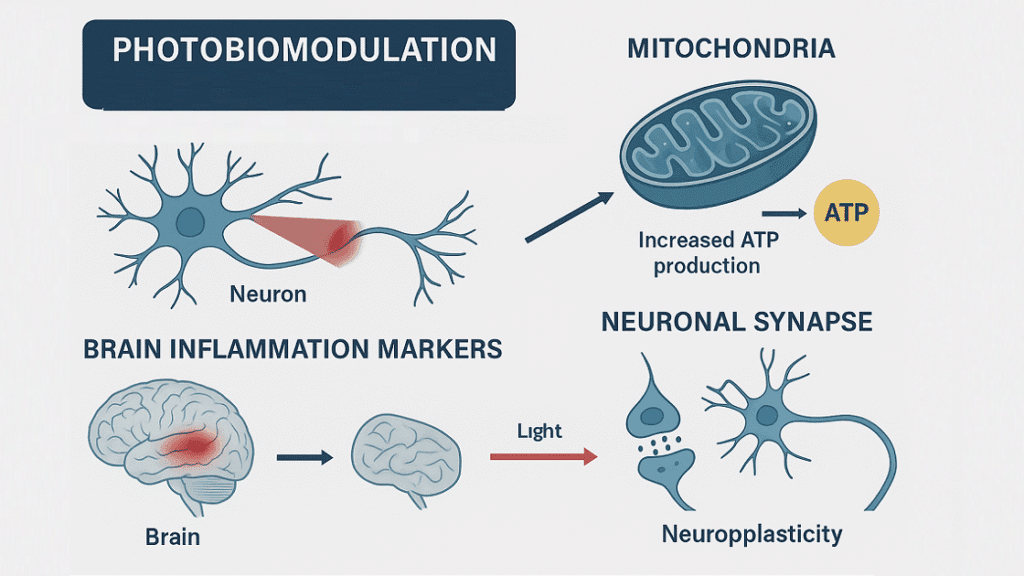
Photobiomodulation exerts profound effects on brain cells through direct interaction with mitochondrial respiratory complexes, particularly cytochrome c oxidase, the terminal enzyme in the electron transport chain. PBM enhances mitochondrial function by promoting nitric oxide photodissociation from cytochrome c oxidase, thereby increasing enzyme activity. This photochemical interaction increases adenosine triphosphate (ATP) synthesis, providing enhanced energy availability for neuronal processes including synaptic transmission, protein synthesis, and cellular repair mechanisms. Additionally, PBM modulates calcium homeostasis, reduces reactive oxygen species production while paradoxically generating beneficial levels of ROS for cellular signaling, and activates transcription factors such as nuclear factor kappa B (NF-κB) and activator protein-1 (AP-1). These molecular cascades promote neuronal survival, enhance synaptic plasticity, and stimulate the production of neurotrophic factors essential for brain health and cognitive function.
2.2 Role of PBM in Reducing Inflammation in the Brain
Neuroinflammation represents a critical pathological process in neurodegenerative diseases, characterized by microglial activation, astrocytic reactivity, and production of pro-inflammatory cytokines. The anti-inflammatory effects of PBM are particularly beneficial, as oxidative stress is limited by induction of antioxidant defenses. Photobiomodulation therapy effectively modulates neuroinflammatory responses by suppressing the release of pro-inflammatory mediators including tumor necrosis factor-alpha (TNF-α), interleukin-1 beta (IL-1β), and interleukin-6 (IL-6). Simultaneously, PBM promotes the production of anti-inflammatory cytokines such as interleukin-10 (IL-10) and transforming growth factor-beta (TGF-β). The therapy also reduces microglial activation and shifts microglia from the pro-inflammatory M1 phenotype toward the anti-inflammatory M2 phenotype, creating a more favorable environment for neuronal survival and repair. This anti-inflammatory action helps break the cycle of chronic neuroinflammation that contributes to progressive neurodegeneration.
2.3 Enhancing Neuroplasticity and Cognitive Function with PBM
Neuroplasticity, the brain’s ability to reorganize and form new neural connections, is fundamental to learning, memory, and recovery from brain injury. Photobiomodulation enhances neuroplasticity through multiple mechanisms that promote synaptic strengthening and neural network optimization. PBM increases synapse-related protein expression, promotes neuronal survival, and protects synapses from depletion. The therapy stimulates the production of brain-derived neurotrophic factor (BDNF), nerve growth factor (NGF), and other neurotrophic factors that support dendritic sprouting, synaptogenesis, and synaptic plasticity. PBM also enhances long-term potentiation (LTP), a cellular mechanism underlying learning and memory formation. Additionally, the therapy promotes neurogenesis in specific brain regions, including the hippocampus, contributing to improved cognitive function. Clinical studies have demonstrated that PBM can enhance working memory, attention, processing speed, and executive function in both healthy individuals and those with cognitive impairment.
2.4 PBM and Blood-Brain Barrier Penetration
The blood-brain barrier (BBB) represents a selective barrier that controls the passage of substances from the bloodstream into the brain parenchyma. In neurodegenerative diseases, BBB integrity is often compromised, contributing to neuroinflammation and disease progression. Blood flow and cerebral oxygenation are increased through PBM treatment. Photobiomodulation therapy can both improve BBB function and enhance the delivery of therapeutic agents to the brain. PBM strengthens tight junction proteins between endothelial cells, reducing BBB permeability and preventing the influx of harmful substances. Paradoxically, PBM can also facilitate controlled BBB opening when therapeutic delivery is desired, potentially enhancing the efficacy of neuroprotective compounds. The therapy improves cerebral blood flow through vasodilation and angiogenesis, ensuring adequate oxygen and nutrient delivery to brain tissues. These vascular effects contribute significantly to the neuroprotective benefits of PBM in neurodegenerative disease prevention and treatment.
3. Photobiomodulation’s Potential in Preventing Neurodegenerative Diseases
The application of photobiomodulation therapy in neurodegenerative disease prevention represents a paradigm shift from reactive treatment to proactive neuroprotection. Current research demonstrates promising results across multiple neurodegenerative conditions, suggesting that PBM may serve as a universal neuroprotective strategy targeting common pathological mechanisms.
3.1 PBM in Alzheimer’s Disease
Alzheimer’s disease, the most common form of dementia, is characterized by amyloid-beta plaque accumulation, tau protein tangles, and progressive neuronal loss. Clinical studies have systematically explored the potential of PBM on Alzheimer’s disease pathophysiology through comprehensive analysis. Photobiomodulation therapy addresses multiple aspects of Alzheimer’s pathology, including reducing amyloid-beta aggregation, promoting amyloid clearance through microglial activation, and preventing tau hyperphosphorylation. PBM alters tubulin structure by decreasing α-helix content and increasing β-sheets, which may reduce microtubule stability and promote remodeling. The therapy enhances cholinergic neurotransmission, improves synaptic function, and protects against oxidative stress and neuroinflammation. Clinical trials have shown improvements in cognitive function, daily living activities, and quality of life measures in patients with mild to moderate Alzheimer’s disease following PBM treatment protocols. Additionally, PBM may help preserve hippocampal volume and maintain connectivity within neural networks critical for memory formation.
3.2 PBM and Parkinson’s Disease: A Neuroprotective Strategy
Parkinson’s disease involves the progressive degeneration of dopaminergic neurons in the substantia nigra, leading to motor symptoms including tremor, rigidity, and bradykinesia. The neuroprotective effects of PBM against Parkinson’s disease ameliorate imbalances in neurotransmitter levels via the alleviation of mitochondrial dysfunction in neurons. Photobiomodulation therapy shows particular promise in Parkinson’s disease by targeting mitochondrial dysfunction, a key pathological feature of the condition. PBM protects dopaminergic neurons from alpha-synuclein toxicity, reduces oxidative stress, and enhances mitochondrial biogenesis through activation of PGC-1α pathways. The therapy may also promote dopamine synthesis and release, potentially improving motor function. Animal studies have demonstrated that PBM can prevent dopaminergic neuron loss and preserve motor function when applied early in the disease process. Clinical applications of PBM in Parkinson’s disease have shown improvements in motor scores, gait parameters, and quality of life measures, suggesting both symptomatic and disease-modifying effects.
3.3 PBM for Huntington’s Disease and Other Neurodegenerative Disorders
Huntington’s disease, an inherited neurodegenerative disorder caused by CAG repeat expansions in the huntingtin gene, presents with progressive motor, cognitive, and psychiatric symptoms. Photobiomodulation therapy addresses multiple pathological mechanisms in Huntington’s disease, including mitochondrial dysfunction, excitotoxicity, and protein aggregation. PBM may reduce mutant huntingtin protein toxicity, enhance cellular clearance mechanisms through autophagy stimulation, and protect against striatal neuronal loss. The therapy also shows promise in other neurodegenerative conditions including amyotrophic lateral sclerosis (ALS), where it may protect motor neurons and slow disease progression. In frontotemporal dementia, PBM could potentially address tau pathology and preserve frontal and temporal lobe function. Multiple sclerosis patients may benefit from PBM’s anti-inflammatory effects and myelin protection capabilities. The broad neuroprotective mechanisms of PBM make it a versatile therapeutic approach applicable across the spectrum of neurodegenerative disorders.
3.4 General Impact of PBM on Age-Related Cognitive Decline
Age-related cognitive decline, while not necessarily pathological, represents a risk factor for developing neurodegenerative diseases and significantly impacts quality of life in older adults. Photobiomodulation therapy offers a preventive approach to maintaining cognitive health throughout the aging process. PBM enhances brain metabolism, improves cerebral blood flow, and supports the integrity of neural networks involved in cognition. The therapy may help preserve gray matter volume, maintain white matter integrity, and support synaptic density in aging brains. Regular PBM treatment could potentially delay the onset of mild cognitive impairment and reduce the risk of progression to dementia. Clinical studies in healthy older adults have demonstrated improvements in working memory, processing speed, attention, and executive function following PBM interventions. The therapy’s safety profile and non-invasive nature make it particularly suitable for long-term preventive applications in aging populations, potentially serving as a cornerstone of comprehensive brain health maintenance strategies.
4. Mechanisms of Action: How PBM Protects the Brain from Neurodegeneration
The neuroprotective mechanisms of photobiomodulation operate through interconnected cellular and molecular pathways that address fundamental processes underlying neurodegeneration. Understanding these mechanisms provides insight into how PBM can serve as a comprehensive neuroprotective strategy targeting multiple aspects of brain health simultaneously.
4.1 PBM’s Impact on Mitochondrial Function in the Brain
Mitochondrial dysfunction represents a central feature of neurodegenerative diseases, characterized by reduced ATP production, increased reactive oxygen species generation, and impaired calcium homeostasis. Mitochondria are a promising target for neuroprotection, with methods targeting mitochondria considered as potential approaches for brain disease treatment through inhibition of inflammation and oxidative injury. Photobiomodulation directly targets mitochondrial respiratory complexes, particularly cytochrome c oxidase (Complex IV), enhancing electron transport chain efficiency and ATP synthesis. The therapy promotes mitochondrial biogenesis through activation of peroxisome proliferator-activated receptor gamma coactivator 1-alpha (PGC-1α), increasing mitochondrial mass and respiratory capacity. PBM treatment upregulates sirtuin 1 (SIRT1) and PGC-1α pathways, which are crucial for mitochondrial health and cellular longevity. PBM also improves mitochondrial membrane potential, enhances calcium handling capacity, and promotes the clearance of damaged mitochondria through mitophagy, collectively supporting optimal mitochondrial function and neuronal survival.
4.2 PBM’s Anti-Inflammatory and Antioxidant Effects
Chronic neuroinflammation and oxidative stress create a neurotoxic environment that accelerates neurodegeneration and impairs neuronal repair mechanisms. PBM alleviates oxidative stress, suppresses inflammation, and rescues mitochondrial function. Photobiomodulation therapy exerts potent anti-inflammatory effects by modulating microglial activation and reducing the production of pro-inflammatory cytokines including TNF-α, IL-1β, and IL-6. The therapy activates nuclear factor erythroid 2-related factor 2 (Nrf2), a master regulator of antioxidant responses, leading to increased expression of antioxidant enzymes such as superoxide dismutase, catalase, and glutathione peroxidase. PBM also enhances the brain’s endogenous antioxidant systems, including glutathione synthesis and recycling pathways. The therapy reduces lipid peroxidation, protein oxidation, and DNA damage while promoting the repair of oxidative damage. Additionally, PBM modulates the complement system and reduces the formation of the membrane attack complex, further contributing to neuroprotection against inflammatory damage in neurodegenerative conditions.
4.3 Enhancing Neurotrophic Factors with PBM
Neurotrophic factors play crucial roles in neuronal survival, differentiation, and synaptic plasticity, with their deficiency contributing to neurodegeneration. Photobiomodulation therapy significantly enhances the production and signaling of various neurotrophic factors essential for brain health. PBM increases brain-derived neurotrophic factor (BDNF) expression, which supports neuronal survival, promotes synaptic plasticity, and enhances learning and memory. The therapy also stimulates nerve growth factor (NGF), glial cell line-derived neurotrophic factor (GDNF), and neurotrophin-3 (NT-3) production, creating a supportive environment for neuronal maintenance and repair. PBM enhances the activation of neurotrophic factor receptors, including TrkB and TrkA, leading to downstream signaling cascades that promote neuronal survival and growth. The therapy also modulates the expression of neurotrophic factor receptors, optimizing cellular responsiveness to these protective signals. These neurotrophic effects contribute significantly to PBM’s neuroprotective properties and its ability to promote neuroplasticity and functional recovery in neurodegenerative conditions.
4.4 Neuroprotective Effects of PBM in Animal Models
Preclinical studies using animal models of neurodegenerative diseases have provided extensive evidence for PBM’s neuroprotective effects and elucidated underlying mechanisms. In in vivo models, PBM has reportedly preserved motor and cognitive skills through molecular mechanisms beyond mitochondrial stimulation. In Alzheimer’s disease models, PBM treatment reduces amyloid-beta plaque formation, decreases tau hyperphosphorylation, and improves cognitive performance in behavioral tests. Parkinson’s disease models demonstrate that PBM protects dopaminergic neurons from neurotoxin-induced death, preserves motor function, and maintains striatal dopamine levels. Stroke models show that PBM reduces infarct size, promotes neurogenesis, and enhances functional recovery. Traumatic brain injury studies reveal that PBM reduces neuronal death, modulates neuroinflammation, and improves behavioral outcomes. These animal studies consistently demonstrate dose-dependent neuroprotective effects, with optimal parameters varying based on the specific model and treatment objectives. The translational potential of these findings continues to drive clinical research and therapeutic development in human neurodegenerative diseases.
5. Clinical Research and Evidence on PBM for Neurodegenerative Diseases
The translation of preclinical findings to clinical applications represents a critical step in establishing photobiomodulation as a viable therapeutic intervention for neurodegenerative diseases. Current clinical evidence provides encouraging support for PBM’s therapeutic potential while highlighting areas requiring further investigation.
5.1 Key Clinical Trials on PBM and Neurodegenerative Diseases
Recent systematic reviews have identified 95 potentially eligible articles on PBM-combined treatment strategies for neurological disorders, including 29 preclinical studies and 66 clinical trials. Several landmark clinical trials have investigated PBM’s efficacy in neurodegenerative diseases, with promising results across multiple conditions. A randomized controlled trial examining transcranial PBM in Alzheimer’s disease patients demonstrated significant improvements in cognitive function, as measured by Mini-Mental State Examination (MMSE) scores and Alzheimer’s Disease Assessment Scale-Cognitive subscale (ADAS-Cog). Parkinson’s disease trials have shown improvements in Unified Parkinson’s Disease Rating Scale (UPDRS) motor scores, gait parameters, and quality of life measures. Studies investigating PBM in mild cognitive impairment have revealed enhanced memory performance, improved attention, and increased brain connectivity as measured by functional magnetic resonance imaging (fMRI). Long-term follow-up studies suggest sustained benefits lasting several months after treatment completion, indicating potential disease-modifying effects rather than purely symptomatic improvements.
5.2 Real-World Applications and Success Stories
Clinical implementation of photobiomodulation (PBM) therapy has shown promising real-world results that complement formal clinical trial data. Specialized neurology clinics report improvements in cognitive function, motor symptoms, and quality of life in patients with early-stage Alzheimer’s, Parkinson’s, and other neurodegenerative conditions receiving regular PBM as part of comprehensive care. Home-based PBM devices allow patients to maintain consistent treatment, often leading to sustained cognitive benefits and slowed symptom progression. Healthcare providers have successfully integrated PBM into multidisciplinary approaches alongside conventional therapies, cognitive training, and lifestyle interventions. In professional sports medicine, PBM has been effective in preventing and treating concussions, with athletes demonstrating faster recovery and reduced long-term neurological complications. These real-world applications provide valuable insights into optimal treatment protocols, patient selection, and long-term outcomes, highlighting PBM’s practical utility across diverse clinical settings and its potential as a supportive therapy for neurological health.
5.3 Potential Side Effects and Risks of PBM
Photobiomodulation therapy (PBM) is generally safe with minimal side effects when used according to established protocols. Common mild and transient effects include temporary headaches, eye fatigue, and minor skin irritation at treatment sites. Some individuals may experience an initial symptom worsening, called a “healing crisis,” which usually resolves within a few sessions. Contraindications include pregnancy, active cancer in the treatment area, photosensitizing medications, and certain skin conditions. Eye protection is essential to prevent retinal damage from direct light exposure. Patients with epilepsy should be monitored, as light stimulation may trigger seizures in photosensitive individuals. Drug interactions are minimal, though caution is advised with photosensitizing medications such as some antibiotics, antidepressants, or chemotherapy agents. Long-term safety data are limited, but current evidence shows no significant adverse effects with chronic use. Correct device selection, dosing, and qualified supervision help minimize risks and ensure optimal therapeutic outcomes.

6. How to Use Photobiomodulation for Neurodegenerative Disease Prevention
Implementing photobiomodulation therapy for neurodegenerative disease prevention requires a comprehensive approach that considers individual risk factors, optimal treatment protocols, and integration with other preventive strategies. Successful prevention programs combine scientific evidence with practical considerations to maximize therapeutic benefits while ensuring safety and accessibility.
6.1 Integrating PBM into a Comprehensive Neurodegenerative Disease Prevention Strategy
Effective neurodegenerative disease prevention requires a multifaceted approach that addresses various risk factors and protective mechanisms simultaneously. Photobiomodulation therapy serves as a cornerstone intervention that synergizes with other evidence-based preventive strategies. Optimal nutrition protocols, including Mediterranean diet patterns, omega-3 fatty acid supplementation, and antioxidant-rich foods, complement PBM’s neuroprotective effects. Regular physical exercise, particularly aerobic activities and resistance training, enhances PBM benefits through improved cerebral blood flow and neuroplasticity. Cognitive training programs, social engagement, and lifelong learning activities work synergistically with PBM to maintain cognitive reserve and neural connectivity. Sleep optimization, stress management, and meditation practices support PBM’s effects on neuroinflammation and cellular repair processes. Advanced Class 4 laser therapy machines provide deeper tissue penetration and enhanced therapeutic effects for comprehensive neuroprotection. Regular biomarker monitoring, including inflammatory markers, oxidative stress indicators, and neuroimaging assessments, enables personalized protocol optimization and progress tracking throughout prevention programs.
7. Final Thoughts on PBM’s Role in Neurodegenerative Disease Prevention
Photobiomodulation (PBM) represents a groundbreaking, non-invasive approach to preventing neurodegenerative diseases by supporting brain health and cognitive function. Its neuroprotective mechanisms—including mitochondrial enhancement, anti-inflammatory effects, neurotrophic factor stimulation, and synaptic plasticity promotion—target multiple pathological processes underlying neurodegeneration, offering potential disease-modifying benefits rather than merely symptom relief. Clinical evidence demonstrates PBM’s safety and efficacy across conditions such as Alzheimer’s and Parkinson’s disease, highlighting its value in addressing complex, multifactorial neurological disorders. Future advancements in PBM technology, personalized dosing protocols, and integration with precision medicine and AI will likely optimize treatment outcomes. For healthcare providers and patients, proper training, device selection, and patient assessment are essential to maximize benefits. PBM offers hope for preserving cognitive function, improving quality of life, and reducing the impact of neurodegenerative diseases, potentially becoming a standard component of brain health maintenance and preventive care strategies.
 English
 العربية
 Français
 日本語
日本語 Português
 Español
 Русский
 Deutsch