

Page Contents
1. Introduction: Understanding Patellofemoral Syndrome (PFS) and Knee Pain
Patellofemoral syndrome (PFS), or “runner’s knee,” causes anterior knee pain from abnormal patella tracking, stressing cartilage and soft tissue. Traditional treatments like NSAIDs, bracing, and physical therapy relieve symptoms but may not address chronic inflammation or tissue repair. High-intensity Class 4 laser therapy offers a non-invasive alternative, using photobiomodulation to reduce inflammation, stimulate healing, and accelerate recovery. This article explores the mechanisms, clinical evidence, treatment protocols, and outcomes of Class 4 laser therapy for effective PFS management.
1.1 What Is Patellofemoral Syndrome?
Patellofemoral syndrome is a biomechanical condition in which the patella does not track correctly over the femoral trochlea, leading to abnormal loading of cartilage and periarticular tissues. Contributing factors include muscular imbalances in the quadriceps, particularly vastus medialis obliquus weakness, tight lateral structures, excessive pronation of the foot, and anatomical variations such as increased Q-angle or patella alta. Over time, these abnormalities cause increased patellofemoral joint stress, microtrauma to cartilage, and irritation of the synovial tissue. Patients commonly report anterior knee pain, which worsens during activities like climbing stairs, squatting, running, or sitting for prolonged periods (the “theater sign”). Early diagnosis is critical to prevent chronic degenerative changes in the patellofemoral joint. Clinicians typically employ physical examination, functional testing, and sometimes imaging, such as MRI, to confirm cartilage health and identify contributing biomechanical deviations.
1.2 Common Symptoms and Functional Limitations
- PFS causes dull, aching pain or sharp discomfort during knee movement.
- Pain worsens with repetitive knee flexion-extension, prolonged sitting, or weight-bearing activities.
- Functional limitations include difficulty squatting, lunging, climbing stairs, running, or kneeling.
- Patients may develop compensatory gait patterns, affecting hips, ankles, or lower back.
- Swelling around the patella and crepitus are common clinical signs.
- Reduced quadriceps activation often accompanies chronic PFS.
- PFS can impair athletic performance, workplace productivity, and overall quality of life.
2. What Is Class 4 Laser Therapy?
Class 4 laser therapy uses high-intensity lasers (5–15 watts) to penetrate deep tissues, unlike low-level lasers. Emitting near-infrared light (800–1000 nm), it stimulates mitochondria, boosting ATP production to promote collagen synthesis, angiogenesis, and soft tissue repair. The therapy also modulates inflammatory mediators, reducing edema and pain, and reaches deeper structures in the patellofemoral joint for improved outcomes in chronic knee disorders. Proper training, dosage calibration, and safety protocols ensure effective, low-risk treatment.
2.1 Definition and Principles of Class 4 (High-Intensity) Laser Therapy
Class 4 laser therapy is defined as therapeutic application of high-power, coherent light capable of stimulating cellular repair processes beyond the superficial dermis. Its fundamental principle, photobiomodulation, relies on absorption of photons by chromophores within mitochondria, particularly cytochrome c oxidase. This interaction triggers a cascade of biological effects: enhanced ATP production, increased nitric oxide release, and modulation of reactive oxygen species (ROS). Collectively, these processes accelerate tissue regeneration, reduce inflammatory signaling, and support structural repair. In PFS, these effects translate to reduced joint inflammation, improved soft tissue elasticity, and attenuation of nociceptive signaling. Class 4 lasers are differentiated from lower-class lasers by higher output power and deeper penetration, enabling direct treatment of peri-patellar tendons, joint capsule, and cartilage interfaces, essential for achieving meaningful pain relief in chronic knee conditions.
2.2 Mechanism of Action: Photobiomodulation and Tissue Repair
The therapeutic effects of Class 4 lasers occur through photobiomodulation, wherein photon energy interacts with mitochondrial chromophores to influence cellular metabolism. This interaction promotes accelerated ATP synthesis, enhancing fibroblast proliferation, collagen deposition, and extracellular matrix remodeling. Concurrently, laser energy modulates inflammatory pathways by reducing prostaglandin E2, interleukin-1β, and tumor necrosis factor-alpha, decreasing edema and nociceptor sensitization. Increased nitric oxide production improves local vasodilation, boosting perfusion and nutrient delivery to damaged tissues. In PFS, these combined effects accelerate repair of the patellar tendon, quadriceps retinaculum, and cartilage surfaces while reducing anterior knee pain. Additionally, modulation of nociceptive neural pathways helps desensitize hyperactive pain fibers, providing both immediate analgesic effects and long-term functional improvement.
2.3 Advantages Over Low-Level Laser Therapy and Other Modalities
- Class 4 lasers penetrate deeper into tissues than low-level laser therapy (LLLT).
- Higher photon flux density enables faster therapeutic outcomes and more effective treatment.
- Class 4 systems reach peri-articular tendons, cartilage, and synovial tissues involved in PFS.
- Reduced number of sessions is required to achieve noticeable improvement compared with LLLT.
- Accelerates collagen remodeling and promotes soft tissue repair.
- Provides superior analgesic effects for pain relief.
- Non-invasive and drug-free, avoiding systemic side effects from NSAIDs or corticosteroids.
- Addresses both symptoms and underlying tissue dysfunction.
- Supports functional restoration and long-term knee health.
3. How Class 4 Laser Therapy Works for Patellofemoral Syndrome
Understanding the mechanisms by which Class 4 laser therapy alleviates patellofemoral syndrome pain is essential for both clinicians and patients seeking effective treatment. Unlike traditional modalities that primarily mask pain or reduce inflammation superficially, high-intensity laser therapy interacts at a cellular level to modulate biochemical processes, enhance tissue repair, and promote functional recovery. By targeting inflammation, soft tissue damage, and neural pain pathways simultaneously, Class 4 lasers offer a multi-faceted approach to knee rehabilitation, setting the stage for examining each specific mechanism in detail.
3.1 Reducing Inflammation and Swelling Around the Patella
Class 4 laser therapy reduces inflammation in the patellofemoral joint through photobiomodulation, a process in which near-infrared light stimulates cellular signaling pathways. The therapy modulates pro-inflammatory cytokines such as interleukin-1β and tumor necrosis factor-alpha while upregulating anti-inflammatory mediators, resulting in decreased edema and tissue hyperemia. Light energy penetrates deep into synovial tissues and surrounding tendons, promoting vasodilation and improved lymphatic drainage. This mechanism not only alleviates pain associated with local swelling but also reduces secondary cartilage stress caused by abnormal patellar tracking. Clinical studies demonstrate measurable decreases in knee circumference and subjective pain scores following a series of Class 4 laser treatments. The combination of biochemical modulation and mechanical reduction of swelling contributes to both immediate symptom relief and long-term tissue health, making it a critical component of PFS management.
3.2 Stimulating Collagen Production and Soft Tissue Repair
One of the primary benefits of Class 4 laser therapy in patellofemoral syndrome is its ability to stimulate collagen synthesis and soft tissue repair. Near-infrared light absorbed by mitochondrial chromophores enhances adenosine triphosphate (ATP) production, which provides energy for fibroblast proliferation and extracellular matrix remodeling. Increased collagen deposition strengthens tendons, ligaments, and peri-patellar soft tissue, improving patellar tracking and biomechanical stability. Histological studies in animal and human models show upregulation of type I and type III collagen following repeated laser exposure. Additionally, angiogenesis is promoted through vascular endothelial growth factor (VEGF) signaling, enhancing nutrient delivery and metabolic waste removal in affected tissues. Over successive sessions, these cellular and vascular adaptations reduce microtrauma accumulation, accelerate recovery, and decrease the risk of chronic degenerative changes in the patellofemoral joint.
3.3 Enhancing Blood Flow to Improve Healing
Class 4 laser therapy significantly enhances local blood flow, a key factor in tissue repair and recovery in patellofemoral syndrome. The high-intensity near-infrared photons penetrate deep tissues, inducing nitric oxide release from endothelial cells and smooth muscle relaxation, which results in vasodilation. Improved perfusion delivers oxygen and essential nutrients to injured tendons, cartilage, and periarticular soft tissue, while simultaneously facilitating the removal of metabolic byproducts and inflammatory mediators. Enhanced microcirculation also supports immune cell infiltration, promoting efficient tissue remodeling. Doppler imaging and thermography studies have confirmed increased blood flow in laser-treated regions, correlating with reductions in pain and swelling. By restoring optimal hemodynamics, Class 4 laser therapy not only addresses acute inflammation but also creates a more favorable environment for long-term healing and functional restoration of the patellofemoral joint.
3.4 Modulating Pain Through Neural Pathways
Pain modulation in Class 4 laser therapy involves both peripheral and central mechanisms. Photobiomodulation influences nociceptor activity by decreasing the excitability of A-delta and C fibers, reducing transmission of pain signals to the spinal cord. The therapy also stimulates endogenous opioid release, including endorphins and enkephalins, which bind to receptors in the central nervous system to attenuate pain perception. Additionally, laser-induced nitric oxide production and decreased pro-inflammatory mediator concentrations reduce sensitization of peripheral nerves surrounding the patella. Functional MRI studies suggest that repeated high-intensity laser treatments can modulate cortical pain processing, further contributing to analgesia. This multi-level neural modulation allows patients to experience immediate relief during and after treatment, improving compliance with physical therapy exercises and facilitating long-term joint rehabilitation.
4. Clinical Evidence and Scientific Studies
Examining the clinical evidence for Class 4 laser therapy is essential to validate its efficacy and safety for patellofemoral syndrome patients. Randomized controlled trials, observational studies, and meta-analyses provide insights into pain reduction, functional improvement, and tissue healing. Evidence-based practice ensures that therapy protocols are grounded in measurable outcomes rather than anecdotal experience. In this section, we review key studies, analyze results specific to patellofemoral syndrome, and summarize expert recommendations from orthopedic and sports medicine specialists, providing a comprehensive understanding of its clinical utility.
4.1 Key Clinical Trials on Class 4 Laser Therapy for Knee Pain
Several randomized controlled trials have investigated Class 4 laser therapy for knee pain, demonstrating statistically significant improvements in pain scores, joint function, and quality of life. Trials commonly employ visual analog scales (VAS) and Western Ontario and McMaster Universities Osteoarthritis Index (WOMAC) to measure outcomes. One study involving 60 participants with chronic anterior knee pain reported a 50% reduction in VAS scores after six sessions of Class 4 laser therapy, maintained over a 12-week follow-up. Another trial comparing high-intensity laser therapy to low-level laser therapy found superior pain relief, faster functional recovery, and decreased inflammatory markers in the Class 4 cohort. Adverse events were minimal and transient, typically limited to mild erythema or warmth. These results underscore the modality’s capacity to modulate inflammation, enhance tissue repair, and provide analgesia, offering objective support for its use in chronic knee conditions including patellofemoral syndrome.
4.2 Evidence Specific to Patellofemoral Syndrome
Although many studies focus on general knee pain, evidence specific to patellofemoral syndrome demonstrates meaningful benefits of Class 4 laser therapy. Patients with PFS often exhibit altered patellar tracking, quadriceps imbalance, and synovial irritation, all contributing to anterior knee pain. Clinical trials targeting PFS report reductions in pain scores ranging from 40–60% after 4–8 sessions, coupled with improved Kujala anterior knee pain scale results. Ultrasound and thermography assessments reveal decreased peripatellar inflammation and edema post-treatment. Exercise tolerance and functional activities, such as stair climbing and squatting, improve significantly, supporting integration with physical therapy. Histological analysis in animal models further confirms increased collagen deposition and microvascular proliferation, suggesting durable tissue remodeling. Collectively, these findings provide robust support for Class 4 laser therapy as a non-invasive, effective intervention specifically for patellofemoral syndrome.
4.3 Expert Opinions and Recommendations from Orthopedic and Sports Medicine Specialists
Orthopedic surgeons and sports medicine experts increasingly recognize Class 4 laser therapy as a valuable adjunct for managing patellofemoral syndrome. Professional societies recommend integrating high-intensity laser therapy into multimodal rehabilitation protocols, emphasizing its role in reducing pain, inflammation, and recovery time. Experts highlight the importance of patient selection, appropriate dosing, and combination with targeted quadriceps strengthening exercises. Consensus statements note that Class 4 laser therapy is particularly beneficial for patients with chronic anterior knee pain unresponsive to NSAIDs or bracing, offering a non-invasive alternative to corticosteroid injections. Specialists also stress safety protocols, including eye protection, calibrated energy settings, and session intervals, to minimize adverse events. Overall, expert guidance aligns with clinical trial data, supporting Class 4 laser therapy as both safe and effective for PFS management.
5. Treatment Protocols and Expectations
Understanding treatment protocols and realistic expectations is critical for optimizing outcomes with Class 4 laser therapy in patellofemoral syndrome. Proper session planning, dosing parameters, and integration with rehabilitation exercises determine both short-term pain relief and long-term functional improvement. Patients and clinicians must establish clear goals, including reduction of anterior knee pain, enhancement of quadriceps strength, and restoration of normal patellar tracking. This section outlines typical treatment schedules, session durations, expected outcomes, and factors influencing therapy effectiveness to guide evidence-based practice.
5.1 Typical Number of Sessions for PFS Relief
Clinical studies suggest that effective management of patellofemoral syndrome with Class 4 laser therapy typically requires 6 to 10 treatment sessions, administered over a period of 3 to 6 weeks. Session frequency depends on symptom severity, chronicity, and patient responsiveness. Acute flare-ups may benefit from higher initial intensity or more frequent sessions, whereas chronic PFS often responds gradually with moderate dosages. Individualized protocols are critical, as overexposure risks thermal irritation while under-dosing may reduce efficacy. Integration with physical therapy ensures synergistic improvement, supporting quadriceps re-education and patellar stabilization. Objective metrics, such as VAS scores, Kujala scales, and range-of-motion assessments, help monitor progress, allowing clinicians to adjust energy output, pulse duration, and session intervals to maximize therapeutic outcomes while minimizing discomfort or adverse effects.
5.2 Duration and Frequency of Each Session
Each Class 4 laser session typically lasts between 10 to 20 minutes, depending on the treatment area, tissue depth, and severity of inflammation. Energy is delivered in a controlled manner, targeting peripatellar soft tissue, patellar tendon, and lateral or medial retinaculum if necessary. Frequency is generally 2 to 3 sessions per week, allowing sufficient tissue recovery between treatments while maintaining cumulative photobiomodulation effects. Longer sessions or increased frequency may accelerate pain relief but require careful monitoring to avoid erythema or thermal discomfort. Clinicians often employ a gradual escalation protocol, starting with lower energy densities to assess tolerance, then increasing based on patient feedback and clinical response. Consistency in session timing ensures stable modulation of inflammatory mediators, enhanced collagen synthesis, and microvascular proliferation, collectively contributing to improved patellofemoral biomechanics and functional recovery.
5.3 Expected Short-Term and Long-Term Pain Relief Outcomes
Short-term outcomes from Class 4 laser therapy typically include decreased pain intensity within 1–3 sessions, with improvements in VAS scores ranging 30–50%. Patients often notice reduced swelling, enhanced knee flexibility, and diminished discomfort during activities like stair climbing or squatting. Long-term outcomes depend on adherence to the full treatment protocol, integration with physiotherapy, and underlying anatomical or biomechanical factors. Functional improvements, including restored quadriceps strength and normalized patellar tracking, generally manifest after 6–10 sessions, with pain relief persisting for weeks to months. Histological studies show increased collagen deposition, angiogenesis, and reduced inflammatory cytokine expression, supporting durable tissue repair. Realistic expectations are essential: while Class 4 laser therapy is highly effective, complete resolution of PFS symptoms may require supplemental interventions, including exercise therapy or orthotic support, to maintain optimal knee function and prevent recurrence.
5.4 Factors That Influence Effectiveness (Severity, Age, Activity Level)
- Symptom severity and chronicity dictate session intensity and duration, with acute cases responding faster.
- Age affects tissue healing, with younger patients showing higher collagen synthesis and vascular regeneration.
- Activity level and biomechanical demands influence treatment response and risk of relapse.
- Athletes or individuals with repetitive knee flexion require more comprehensive rehabilitation.
- Comorbidities like obesity, osteoarthritis, or systemic inflammation can reduce therapy efficacy.
- Treatment parameters, including energy density, pulse duration, and target accuracy, are critical for success.
6. Managing Discomfort and Maximizing Results
While Class 4 laser therapy is generally well-tolerated, some patients may experience mild thermal sensation, transient erythema, or soreness during and after treatment. Proper preparation, real-time monitoring, and post-session recovery strategies are essential to minimize discomfort and enhance therapeutic outcomes. Combining laser therapy with physiotherapy, targeted exercises, and patient education ensures synergistic benefits. This section provides practical guidance on pre-treatment preparation, intra-session management, post-treatment care, and complementary interventions to maximize both safety and effectiveness in patellofemoral syndrome management.
6.1 Pre-Treatment Guidelines (Hydration, Activity, Clothing)
- Hydration is essential, as well-hydrated tissues absorb laser energy more efficiently and reduce localized heat.
- Avoid strenuous knee activity for 24 hours prior to treatment to prevent increased inflammation and swelling.
- Wear loose, breathable clothing to allow easy access to the patellofemoral joint and minimize friction.
- Topical analgesics are generally unnecessary but can be used for highly sensitive patients under supervision.
- Clinicians should review patient medical history, including prior knee injuries, skin conditions, or photosensitivity.
- Explain session expectations, such as warmth, tingling, or mild discomfort, to reduce anticipatory pain.
6.2 During Treatment: What Patients Should Expect
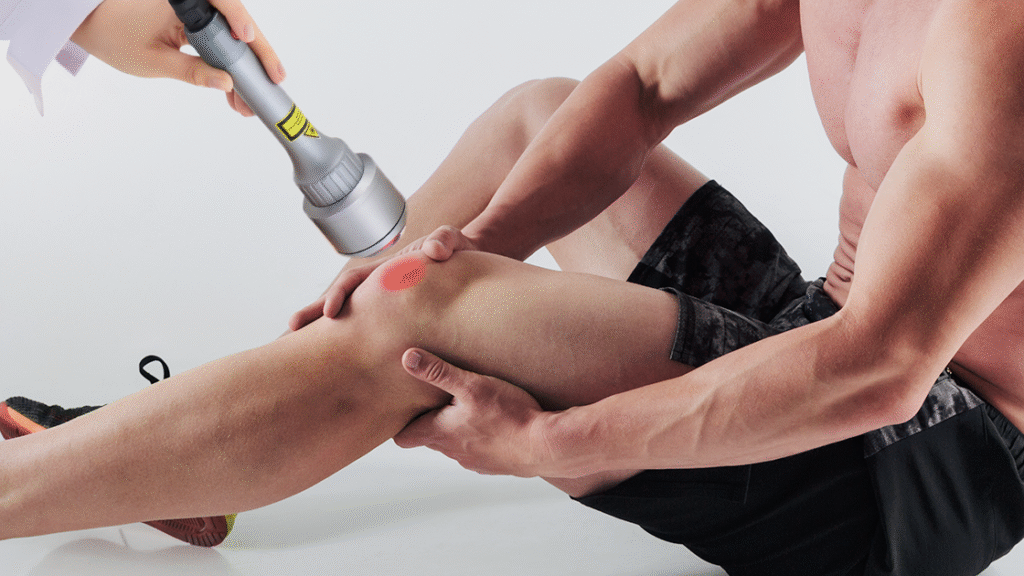
During Class 4 laser therapy, patients may experience a mild warming sensation around the patella or associated tendinous structures, which is typically well-tolerated. Energy is applied systematically, covering the peripatellar area, patellar tendon insertion, and lateral/medial retinacular tissues if clinically indicated. Clinicians frequently use a scanning or stationary technique depending on tissue depth and symptom localization. The therapist monitors skin temperature, patient feedback, and visual cues such as transient erythema to prevent overt thermal stress. Controlled breathing and relaxation techniques can further reduce perceived discomfort. Pulse duration, energy density, and treatment area size are carefully titrated to optimize photobiomodulation effects while minimizing adverse sensations. Any transient soreness or tingling generally resolves immediately after the session. Providing real-time reassurance and communication enhances patient confidence, facilitating adherence to the treatment protocol and maximizing therapeutic benefit.
6.3 Post-Treatment Care and Recovery Tips
- Mild erythema or warmth after treatment is normal and usually resolves within 2–4 hours.
- Slight edema may persist up to 24 hours and generally subsides without intervention.
- Apply gentle cryotherapy to reduce discomfort but avoid excessive cold that can impair tissue repair.
- Perform light, low-impact exercises like quadriceps activation or patellar mobilization to maintain joint mobility.
- Stay hydrated to support metabolic clearance of inflammatory mediators and optimize healing.
- Avoid NSAIDs immediately post-treatment to preserve beneficial laser-induced inflammatory responses.
- Compression or supportive knee sleeves can enhance comfort during daily activities.
6.4 Combining Laser Therapy with Physical Therapy and Exercise
Integrating Class 4 laser therapy with physical therapy significantly enhances patellofemoral syndrome outcomes by addressing both biological and biomechanical factors. While laser therapy reduces inflammation, stimulates collagen synthesis, and modulates neural pain pathways, targeted exercises restore quadriceps strength, correct patellar tracking, and improve lower limb alignment. Eccentric quadriceps training, hip abductor strengthening, and proprioceptive exercises complement laser-induced tissue repair, reducing recurrent stress on the patellofemoral joint. Coordination with physical therapists ensures exercise progression aligns with tissue healing timelines and laser treatment sessions, preventing overloading. Combining modalities supports neuro-muscular re-education, enhances joint stability, and prolongs symptom relief. Clinical studies demonstrate that multimodal interventions yield superior pain reduction, improved functional scores, and decreased recurrence rates compared to laser therapy alone. Patient adherence, monitoring, and individualized adjustments remain critical for maximizing combined therapeutic efficacy.
7. Summary and Takeaways
Class 4 laser therapy offers a promising, non-invasive approach for managing patellofemoral syndrome (PFS), targeting the underlying causes of anterior knee pain rather than merely masking symptoms. By delivering high-intensity near-infrared light, it promotes photobiomodulation, stimulating collagen synthesis, angiogenesis, and cellular repair while modulating inflammatory mediators to reduce swelling and discomfort. Clinical evidence demonstrates meaningful improvements in pain, function, and range of motion, particularly when combined with structured exercise or physical therapy. Treatment protocols typically involve multiple sessions spaced over several weeks, with outcomes influenced by severity, activity level, and patient adherence. Proper pre-treatment assessment, skilled practitioner administration, and post-treatment care are essential for safety and optimal efficacy. While temporary soreness or warmth may occur, the overall risk of adverse effects is minimal. In summary, Class 4 laser therapy represents an evidence-based, targeted modality offering effective symptom relief, enhanced tissue healing, and improved quality of life for patients with PFS.
 English
 العربية
 Français
 日本語
日本語 Português
 Español
 Русский
 Deutsch