

Содержание страницы
1. Introduction: The Hidden Challenge of Stress Fractures and Tendon Micro-Tears
Musculoskeletal injuries are common in athletes and active individuals, with stress fractures and tendon micro-tears often going unnoticed until they worsen. Caused by repetitive strain, these injuries progress silently, leading to chronic pain or even structural failure. Traditional care—rest and gradual return—can be slow. Emerging solutions like Class 4 Laser Therapy offer a faster, non-invasive approach to stimulate tissue regeneration, reduce inflammation, and accelerate recovery while minimizing downtime.
1.1 What Are Stress Fractures and Tendon Micro-Tears
Stress fractures are incomplete cortical or trabecular bone fractures resulting from repetitive submaximal loading that exceeds the bone’s capacity for adaptive remodeling. Unlike acute fractures caused by single traumatic events, stress fractures develop when osteoclastic bone resorption outpaces osteoblastic bone formation during the remodeling cycle. Common sites include the metatarsals, tibia, fibula, navicular, and femoral neck. Tendon micro-tears, conversely, represent partial disruption of collagen fiber continuity within the tendon matrix, typically occurring at the musculotendinous junction or tendon insertion sites. These microscopic lesions compromise the tendon’s biomechanical properties, reducing its load-bearing capacity and predisposing it to further injury.
1.2 Why These Injuries Are Often Underestimated in Early Stages
The initial presentation of stress fractures and tendon micro-tears is characterized by vague, intermittent discomfort that improves with rest and worsens with activity—a pattern that many individuals attribute to normal training adaptation or temporary soreness. Unlike ligamentous sprains or muscle strains that produce immediate functional impairment, these overuse injuries allow continued activity at reduced performance levels, creating a false sense of security. Diagnostic imaging in early stages may appear normal or show only subtle changes, as standard radiographs lack sensitivity for detecting early stress reactions or partial tendon tears. Advanced imaging modalities like MRI or bone scintigraphy may be required for definitive diagnosis, but are often not pursued until symptoms become debilitating.
1.3 Common Causes: Overuse, Repetitive Impact, and Training Load
The etiology of stress fractures and tendon micro-tears is multifactorial, involving the interaction between training variables, biomechanical factors, and individual biological characteristics. Rapid increases in training volume or intensity—commonly quantified through the acute-to-chronic workload ratio—create maladaptive stress that exceeds tissue tolerance. Repetitive impact loading, particularly in running and jumping sports, generates cumulative mechanical strain that overwhelms the body’s repair mechanisms. Biomechanical abnormalities such as excessive pronation, leg-length discrepancies, or muscle imbalances alter load distribution patterns, concentrating stress in vulnerable anatomical regions. Additional risk factors include nutritional deficiencies (particularly calcium, vitamin D, and protein), hormonal imbalances affecting bone metabolism, inadequate recovery between training sessions, and inappropriate footwear or training surfaces.
2. Understanding Class 4 Laser Therapy (HILT)
Class 4 Laser Therapy, or High-Intensity Laser Therapy (HILT), represents an advanced form of photobiomodulation distinguished by its deep tissue penetration and strong biological effects. Defined by the FDA as lasers exceeding 500 mW of continuous output, Class 4 devices deliver sufficient energy to reach deep musculoskeletal structures such as bone cortex and tendons. This capability makes them highly effective for treating stress fractures and tendon injuries located several centimeters beneath the skin.
2.1 What Makes Class 4 Lasers Different from Low-Level (Cold) Lasers
Лазеры класса 4 deliver significantly higher power densities (typically 1-15 watts) compared to Class 3B low-level lasers (5-500 milliwatts), enabling greater depth of penetration and shorter treatment times. While low-level laser therapy (LLLT) requires prolonged exposure periods and multiple treatment points for superficial conditions, Class 4 systems can effectively treat deep tissues in minutes through direct energy deposition. The higher irradiance levels generate measurable thermal effects alongside photochemical reactions, creating a synergistic therapeutic response. Class 4 devices typically operate at wavelengths between 800-1064 nanometers, optimizing absorption by cellular chromophores while minimizing superficial tissue absorption. This spectral range ensures effective energy transfer to mitochondrial cytochrome c oxidase and other photoacceptor molecules critical for cellular metabolism.
2.2 Mechanism of Action: How Laser Light Accelerates Healing at the Cellular Level
The therapeutic effects of Class 4 laser therapy stem from photobiomodulation—a process whereby non-ionizing photons interact with intracellular chromophores to initiate biochemical cascades that enhance cellular function. When photons at specific wavelengths are absorbed by cytochrome c oxidase in the mitochondrial respiratory chain, electron transport efficiency increases, boosting adenosine triphosphate (ATP) synthesis. This enhanced energy production supports anabolic processes essential for tissue repair, including protein synthesis, collagen production, and cellular proliferation. Additionally, photon absorption triggers nitric oxide release from cytochrome c oxidase, improving microcirculation and oxygen delivery to hypoxic tissues. The therapy modulates reactive oxygen species (ROS) production, maintaining levels within a beneficial hormetic range that promotes cellular signaling without causing oxidative damage.
2.3 Key Biological Effects of Class 4 Laser Therapy
Class 4 laser therapy produces multiple concurrent biological effects that collectively accelerate tissue regeneration and pain resolution. Increased ATP production supports energy-dependent healing processes including fibroblast proliferation, collagen synthesis, and osteoblast activation. Enhanced microcirculation through vasodilation and angiogenesis improves nutrient delivery and metabolic waste removal from injury sites. Anti-inflammatory effects occur through reduced prostaglandin synthesis, decreased cyclooxygenase-2 (COX-2) expression, and modulated cytokine production, shifting the inflammatory balance toward resolution. Analgesic effects result from elevated endorphin levels, normalized nerve conduction, and reduced substance P concentrations in nociceptive pathways. Tissue-specific responses include increased growth factor expression (TGF-β, VEGF, IGF-1), improved extracellular matrix organization, and accelerated differentiation of progenitor cells into mature tissue-specific phenotypes.
3. Class 4 Laser Therapy for Stress-Fracture Recovery
Stress fractures heal slowly due to limited bone metabolism and constant mechanical stress. Conventional care—rest, protected weight-bearing, and gradual return—often requires months. Class 4 Laser Therapy offers a promising adjunct by stimulating osteoblast activity, improving periosteal circulation, and reducing inflammation at fracture sites. These effects accelerate bone repair and address key barriers to recovery, providing a strong foundation for evidence-based treatment protocols in stress fracture management.
3.1 Pathophysiology of Stress Fractures: Micro-Damage and Remodeling
Stress fractures develop when repetitive mechanical loading creates microcracks in bone faster than the remodeling process can repair them. The normal adaptive response involves osteoclast activation to remove damaged bone, followed by osteoblast-mediated formation of new, structurally enhanced bone. However, when loading continues without adequate recovery, osteoclastic resorption creates temporary porosity that weakens the bone structure before osteoblastic filling occurs. This imbalance manifests as periosteal edema, marrow inflammation, and eventually cortical disruption visible on advanced imaging. The healing process requires vascular proliferation to deliver progenitor cells, synthesis of provisional extracellular matrix, and coordinated mineralization—all energy-intensive processes that benefit from metabolic enhancement.
3.2 Enhance Bone Healing and Accelerate Stress Fracture Recovery
Class 4 laser therapy accelerates stress fracture healing through multiple synergistic mechanisms targeting bone metabolism and the periosteal microenvironment. Photobiomodulation increases osteoblast proliferation and differentiation by upregulating bone morphogenetic proteins (BMPs) and other osteogenic transcription factors like Runx2 and Osterix. Enhanced mitochondrial function in osteoblasts supports the energy-intensive process of collagen type I synthesis and subsequent mineralization. The therapy stimulates angiogenesis around fracture sites, improving oxygen and nutrient delivery essential for callus formation. Anti-inflammatory effects reduce excessive cytokine activity that can impair healing, while maintaining the controlled inflammatory response necessary for repair initiation. Studies demonstrate measurable increases in bone mineral density, callus volume, and biomechanical strength in laser-treated fractures.
3.3 Comparative Advantages Over Traditional Methods
Class 4 laser therapy offers several distinct advantages over conventional stress fracture management approaches. Unlike pharmaceutical interventions that may have systemic side effects or contraindications, laser therapy provides localized therapeutic effects without drug interactions. The non-invasive nature eliminates infection risks associated with invasive procedures while delivering treatment directly to affected tissues. Treatment sessions are brief (typically 5-15 minutes), causing no discomfort and requiring no post-treatment restrictions, facilitating compliance. The therapy can be initiated immediately upon diagnosis without waiting for inflammatory resolution, potentially shortening overall healing timelines. When combined with appropriate load management and nutritional support, Class 4 laser therapy addresses both biological healing constraints and mechanical stability requirements, optimizing recovery conditions.
3.4 Case Studies and Clinical Evidence Supporting Bone Tissue Regeneration
Emerging clinical evidence supports the efficacy of Class 4 laser therapy in accelerating stress fracture healing. Prospective studies utilizing serial MRI imaging have demonstrated reduced bone marrow edema and accelerated cortical healing in laser-treated patients compared to standard care controls. Bone density measurements via DEXA scanning show enhanced mineralization rates in treatment groups, with some studies reporting 30-40% faster radiographic healing. Athletes treated with adjunctive laser therapy have demonstrated earlier return-to-sport with lower reinjury rates compared to historical cohorts. Mechanistic studies using animal models reveal increased expression of osteogenic markers, enhanced callus formation, and superior biomechanical properties in laser-treated fractures. While larger randomized controlled trials are needed, current evidence suggests meaningful clinical benefits.
4. Class 4 Laser Therapy in Tendon Micro-Tear Healing
Tendon injuries, especially chronic tendinopathies from repeated micro-tears, are difficult to heal due to poor blood supply and constant mechanical stress. Class 4 Laser Therapy offers a powerful solution by enhancing cellular metabolism in low-vascular tissues and stimulating collagen synthesis and matrix remodeling. These effects target key biological barriers to tendon repair, supporting faster recovery and reduced recurrence when integrated into comprehensive rehabilitation programs.
4.1 Understanding Tendon Micro-Tears and Chronic Tendinopathy
Tendon micro-tears represent partial disruptions of collagen fiber architecture that occur when tensile forces exceed the tissue’s mechanical tolerance. Unlike complete ruptures, these microscopic lesions may not present with dramatic loss of function but accumulate over time, leading to degenerative changes characteristic of chronic tendinopathy. The pathological cascade involves failed healing responses where the normal collagen type I matrix is replaced by disorganized collagen type III, increased ground substance, and neovascularization accompanied by nociceptive nerve ingrowth. Cellular populations shift from predominantly tenocytes to fibroblast-like cells with reduced mechanical responsiveness. This pathological tissue demonstrates inferior biomechanical properties, creating a self-perpetuating cycle where normal loading generates further micro-damage.
4.2 Role of Class 4 Laser in Tendon Repair
Class 4 laser therapy addresses multiple pathophysiological features of tendon micro-tears and chronic tendinopathy. Photobiomodulation enhances tenocyte metabolic activity, increasing production of collagen type I and other matrix proteins essential for structural restoration. The therapy stimulates growth factor expression, particularly TGF-β and IGF-1, which coordinate fibroblast recruitment and matrix synthesis. Improved microcirculation delivers oxygen and nutrients to the relatively hypovascular tendon tissue while removing inflammatory mediators and metabolic byproducts. Anti-inflammatory effects reduce the chronic inflammatory state that perpetuates degeneration without compromising the controlled inflammation necessary for remodeling. Enhanced matrix metalloproteinase (MMP) regulation promotes appropriate collagen turnover, facilitating replacement of pathological tissue with organized, mechanically competent matrix aligned along loading vectors.
4.3 Clinical Scenarios: Achilles, Rotator Cuff, and Hamstring Micro-Tears
Achilles tendinopathy responds particularly well to Class 4 laser therapy due to the tendon’s superficial location and high mechanical demands. Protocols typically target the mid-substance and insertion regions, with treatment parameters adjusted based on tendon thickness and pathology severity. Rotator cuff micro-tears benefit from deeper penetration capabilities of Class 4 systems, reaching supraspinatus and infraspinatus tendons through overlying deltoid muscle. Treatment addresses not only the torn fibers but also surrounding tissues including the subacromial bursa and rotator cuff interval. Hamstring proximal tendinopathy at the ischial tuberosity requires adequate energy delivery through gluteal tissues, making Class 4 power levels essential for therapeutic effect. Each anatomical region requires position-specific protocols and consideration of surrounding neurovascular structures.
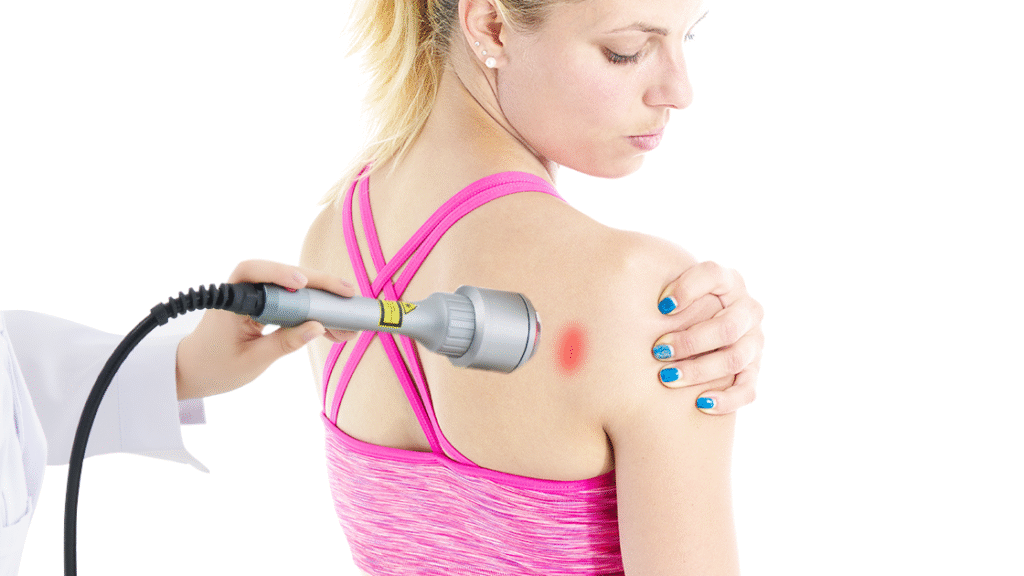
4.4 Combining Class 4 Laser with Physiotherapy and Eccentric Loading Exercises
Optimal tendon healing requires integration of Class 4 laser therapy with progressive mechanical loading protocols that stimulate appropriate tissue adaptation. Eccentric exercises, which emphasize lengthening contractions, have demonstrated superior outcomes for tendinopathy by promoting collagen fiber alignment and tenocyte mechanotransduction. When combined with laser therapy, the enhanced metabolic capacity supports the adaptive responses to mechanical stimuli. Treatment timing should coordinate laser sessions before exercise protocols to prime cellular metabolism and improve exercise tolerance. Manual therapy techniques addressing kinetic chain dysfunction and compensatory movement patterns complement laser-induced tissue changes. Gradual progression through loading phases—from isometric to isotonic to plyometric exercises—should be guided by symptom response and functional testing rather than fixed timelines.
4.5 Evidence-Based Outcomes: Pain Reduction and Accelerated Return to Sport
Clinical studies evaluating Class 4 laser therapy for tendinopathy consistently demonstrate significant pain reduction as measured by visual analog scales (VAS) and validated outcome instruments like the VISA scores. Functional improvements include increased range of motion, enhanced strength measurements, and improved sport-specific performance metrics. Ultrasound tissue characterization reveals structural improvements including reduced hypoechoic regions, decreased neovascularization on Doppler imaging, and improved fiber alignment. Return-to-sport timelines show meaningful reductions compared to standard physiotherapy alone, with some studies reporting 30-50% faster progression through rehabilitation phases. Long-term follow-up data suggest lower recurrence rates, possibly reflecting true tissue regeneration rather than temporary symptom suppression. Optimal outcomes occur when laser therapy is integrated early in the treatment course and continued through progressive loading phases.
5. The Science Behind the Light: Cellular Pathways and Dose Optimization
To optimize Class 4 Laser Therapy outcomes, clinicians must understand its photobiological mechanisms and precise dosing principles. Unlike drugs with fixed dose responses, laser effects depend on wavelength, power density, pulse settings, and tissue properties. Achieving the optimal therapeutic window—where energy is effective but not excessive—is essential. This section explores the molecular pathways behind photobiomodulation, its roles in pain relief and inflammation control, and key parameters for treating stress fractures and tendon injuries.
5.1 Cellular Signaling Pathways Activated by Class 4 Lasers
Photobiomodulation initiates multiple interconnected signaling cascades that collectively enhance tissue repair capacity. The primary photoacceptor, cytochrome c oxidase in complex IV of the mitochondrial electron transport chain, undergoes conformational changes upon photon absorption, improving electron transfer efficiency and increasing proton pumping. This enhances the proton motive force driving ATP synthase, directly increasing cellular energy availability. Simultaneously, photodissociation of nitric oxide from cytochrome c oxidase and other nitrosylated proteins increases NO bioavailability, causing vasodilation and improved microcirculation. Mild increases in reactive oxygen species activate transcription factors including NF-κB and AP-1, upregulating genes involved in antioxidant defense, growth factor production, and cellular proliferation. The PI3K/Akt pathway activation promotes cell survival and inhibits apoptosis in stressed tissues.
5.2 Anti-Inflammatory and Analgesic Mechanisms
Class 4 laser therapy exerts potent anti-inflammatory effects through multiple mechanisms operating at different timescales. Immediate effects include reduced prostaglandin synthesis via decreased cyclooxygenase activity and modulated leukotriene production, diminishing inflammatory mediator concentrations. Cytokine profiles shift from pro-inflammatory (TNF-α, IL-1β, IL-6) toward anti-inflammatory (IL-10, TGF-β) phenotypes, promoting inflammation resolution rather than simple suppression. Macrophage polarization favors M2 phenotypes associated with tissue repair over M1 pro-inflammatory states. Analgesic mechanisms involve multiple pathways: increased β-endorphin production, normalized nerve membrane potentials reducing ectopic firing, decreased substance P in dorsal root ganglia, and improved axonal transport. Gate control mechanisms are enhanced through preferential A-fiber stimulation, while descending pain modulation pathways show increased activity.
5.3 Wavelength, Frequency, and Treatment Duration: Defining the Therapeutic Window
Optimal outcomes in Class 4 Laser Therapy depend on selecting the appropriate wavelength, frequency, and treatment duration for each condition. Wavelengths between 800–1100 nm offer the best balance of tissue penetration and absorption, with shorter wavelengths favoring superficial tendons and longer ones targeting deeper bone structures. Frequency modulation influences cellular response—pulsed modes (5–1000 Hz) may reduce inflammation, while continuous modes promote metabolic activation. Treatment duration typically ranges from 5–15 minutes per region, ensuring adequate energy delivery without thermal overload. Individual parameters should be adjusted based on tissue depth, injury chronicity, and patient sensitivity to optimize therapeutic efficacy.
6. Клинические данные и мнения экспертов
As Class 4 Laser Therapy gains clinical acceptance, growing research supports its effectiveness for stress fractures and tendon injuries. Clinicians must interpret this evidence critically, acknowledging study limitations and evolving protocols. This section integrates findings from peer-reviewed studies, expert clinical insights, and emerging combination therapies to provide an evidence-informed framework. By combining research data with real-world experience, clinicians can optimize outcomes while setting realistic expectations for recovery timelines and treatment responses.
6.1 Review of Peer-Reviewed Studies on Stress Fracture and Tendon Healing
Systematic reviews examining photobiomodulation for bone healing demonstrate moderate-quality evidence supporting accelerated fracture union and enhanced bone formation markers. A meta-analysis of laser therapy for tendinopathy showed significant improvements in pain and function across multiple anatomical locations, with effect sizes generally classified as moderate to large. Studies specifically evaluating Class 4 systems report superior outcomes compared to Class 3B devices, likely attributable to greater tissue penetration and higher energy delivery. Randomized controlled trials remain limited, with many studies showing methodological limitations including small sample sizes, heterogeneous treatment parameters, and inadequate control groups. Nonetheless, the preponderance of positive findings across different research groups, anatomical sites, and outcome measures provides compelling evidence for clinical efficacy when protocols are appropriately designed.
6.2 Expert Commentary: Physiotherapists and Sports Medicine Specialists
Experienced clinicians incorporating Class 4 laser therapy into practice emphasize the importance of comprehensive assessment and individualized treatment planning rather than standardized protocols. Sports physiotherapists note that laser therapy is most effective when integrated with appropriate load management, addressing biomechanical contributors, and progressive tissue conditioning. Physicians specializing in sports medicine highlight the technology’s value for patients who cannot tolerate pharmaceutical anti-inflammatories or wish to avoid corticosteroid injections with their associated risks. Rehabilitation specialists stress that patient education regarding realistic timelines and the necessity of continued active treatment participation remains critical despite the addition of advanced modalities. Consensus among experienced practitioners suggests that laser therapy should be viewed as a powerful adjunct that enhances but does not replace fundamental rehabilitation principles.
6.3 Emerging Protocols and Combination Therapies (Shockwave + HILT)
Innovative treatment approaches combining Class 4 laser therapy with other evidence-based modalities show promise for enhancing outcomes beyond monotherapy. Extracorporeal shockwave therapy (ESWT), which delivers acoustic waves to stimulate tissue regeneration through mechanical stress, demonstrates complementary mechanisms to photobiomodulation. Sequential treatment protocols delivering shockwave therapy followed by laser may optimize tissue responsiveness, with shockwave creating mechanical stimuli for mechanotransduction and laser enhancing the metabolic capacity to respond to these signals. Combination with platelet-rich plasma (PRP) injections represents another emerging approach, where laser therapy may enhance the bioactivity of delivered growth factors and improve integration of the regenerative injection. Timing and sequencing of combination therapies require careful consideration to avoid interference between modalities or excessive inflammatory responses.
7. Real-World Results: Patient Case Examples
While research defines efficacy and safety, clinical case examples reveal how Class 4 Laser Therapy performs in real-world settings across diverse patients and injuries. These examples demonstrate how theoretical mechanisms translate into measurable gains in pain relief, function, and tissue repair. They also emphasize individualized treatment responses and the importance of integrating laser therapy within comprehensive rehabilitation plans for stress fractures and tendon micro-tears, guiding clinicians toward realistic, evidence-informed expectations.
7.1 Case Study 1– Runner With Metatarsal Stress Fracture
A 28-year-old competitive distance runner presented with progressive forefoot pain localized to the third metatarsal shaft, experiencing symptoms for approximately three weeks before seeking evaluation. MRI confirmed a grade 2 stress fracture with moderate periosteal edema and early cortical disruption. Initial management included partial weight-bearing with a walking boot and activity modification, with traditional protocols suggesting 6-8 weeks before return to running. Class 4 laser therapy was initiated at three sessions weekly, delivering 1200 joules per session over the fracture site using a scanning technique. Treatment parameters included 1064nm wavelength at 12 watts continuous mode. After four weeks combining laser therapy with progressive weight-bearing and cross-training, follow-up MRI showed significant resolution of bone marrow edema and early callus formation, enabling accelerated rehabilitation progression.
7.2 Case Study 2– Tennis Player With Rotator Cuff Micro-Tear
A 35-year-old competitive tennis player reported six months of progressive posterior shoulder pain exacerbated by serving and overhead movements, with failed conservative management including rest, NSAIDs, and traditional physiotherapy. Diagnostic ultrasound revealed partial-thickness infraspinatus tendon tear with significant tendinopathy and minimal vascularity on power Doppler. Treatment protocol combined Class 4 laser therapy (three sessions weekly for six weeks, then twice weekly for four weeks) with progressive eccentric strengthening and sport-specific rehabilitation. Laser parameters included 810nm wavelength at 10 watts, delivering 8 J/cm² over affected tendon and surrounding tissues. Serial ultrasound examinations demonstrated improved fiber organization, reduced hypoechoic regions, and normalization of tendon thickness. Functional outcomes showed 80% improvement in DASH scores and successful return to competitive play at three months.
7.3 Measurable Improvements: Pain Scores, Range of Motion, and Tissue Integrity
Objective outcome assessment across multiple domains provides essential documentation of treatment effectiveness and guides clinical decision-making regarding progression through rehabilitation phases. Pain measurements using validated visual analog scales (VAS) or numeric pain rating scales (NPRS) consistently demonstrate reductions of 40-60% within the first four weeks of laser therapy for both stress fractures and tendon pathology. Range of motion improvements, measured via goniometry, typically show gains of 15-25 degrees in restricted movements for tendon conditions, with functional range restored in most cases by treatment conclusion. Tissue integrity changes documented through serial imaging reveal reduced inflammation markers (decreased bone marrow edema signal or tendon hypoechoic regions), improved structural organization (normalized fiber patterns on ultrasound), and enhanced healing characteristics (callus formation in fractures, tendon thickness normalization).
7.4 Importance of Consistent Treatment Schedules
Clinical experience and research evidence consistently emphasize that treatment frequency and protocol adherence significantly influence outcomes with Class 4 laser therapy. The cumulative nature of photobiomodulation effects means that sporadic or irregular treatment scheduling may fail to achieve the sustained metabolic enhancement necessary for optimal tissue regeneration. Initial treatment phases typically require higher frequency (3 times weekly) to establish therapeutic momentum and overcome the inflammatory or degenerative state of chronic injuries. As healing progresses, frequency can be strategically reduced while maintaining gains, with maintenance phases preventing recurrence. Patient education regarding commitment requirements before initiating therapy helps ensure realistic expectations and optimal compliance. Documentation of attendance patterns and correlation with outcome trajectories provides valuable clinical data for refining protocols and identifying patients who may benefit from modified approaches or additional interventions.
8. Заключение
Class 4 Laser Therapy offers a powerful, evidence-based advancement in managing stress fractures and tendon micro-tears, accelerating healing by enhancing cellular metabolism and reducing inflammation. When integrated into holistic rehabilitation—addressing load management, biomechanics, nutrition, and progressive exercise—it optimizes recovery without replacing fundamental care principles. For stress fractures, it promotes faster bone remodeling and mineralization, shortening downtime and reducing progression risk. In tendon pathology, it improves collagen synthesis and matrix organization, supporting stronger, more resilient tissue when combined with eccentric training. As research refines dosage and patient selection, Class 4 Laser Therapy is becoming an essential tool in musculoskeletal rehabilitation, delivering measurable gains in pain relief, function, and recovery time when applied within evidence-based, individualized treatment protocols.
 English
 العربية
 Français
 日本語
日本語 Português
 Español
 Русский
 Deutsch