
Conteúdo da página
Introdução
Rock climbing requires a unique combination of strength, balance, coordination, and precise movement control. Climbers often rely heavily on their fingers, wrists, forearms, and shoulders during training sessions and outdoor climbs. Repetitive gripping, pulling movements, and sustained muscle engagement may influence how these areas feel after intense climbing activities. Modern recovery technologies such as Terapia laser de classe IV have gained attention in sports and wellness environments because they use high-power laser energy and photobiomodulation principles to support muscle and soft tissue recovery routines. By providing targeted energy delivery and customizable settings, advanced laser technology offers climbers another option for maintaining comfort, supporting mobility, and managing the physical demands associated with regular climbing.
1. Understanding Physical Demands in Rock Climbing
Rock climbing places continuous demands on multiple areas of the body. Unlike many traditional sports, climbing requires athletes to maintain body tension while controlling small movements with precision.
Understanding common physical challenges among climbers helps explain why recovery-focused technologies are becoming increasingly important within climbing communities.
1.1 Why Finger and Wrist Areas Matter in Climbing Performance
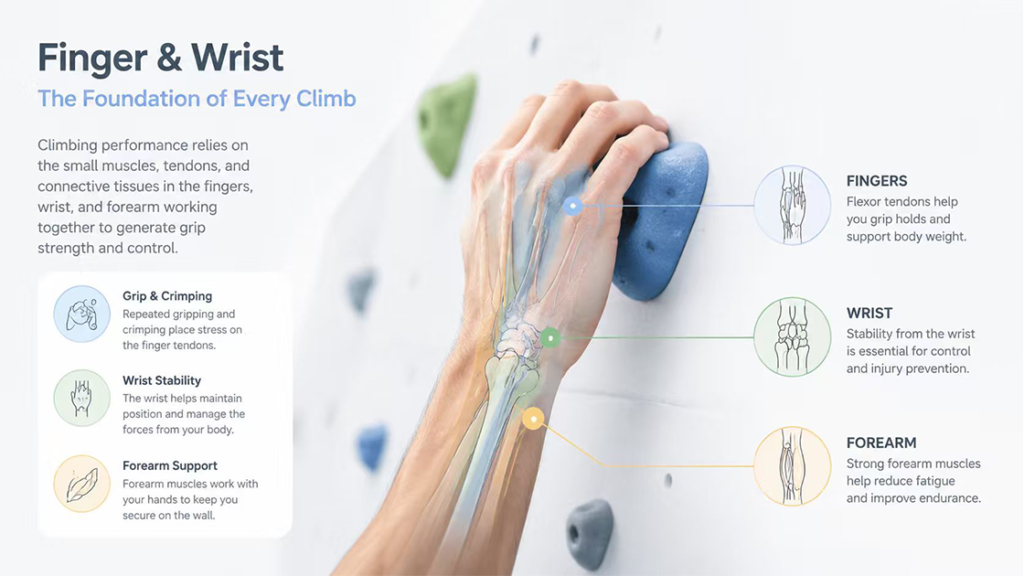
The fingers and wrists play a central role in climbing because they are responsible for gripping different types of holds and maintaining body control on the wall.
During climbing sessions, athletes frequently perform repeated gripping motions, crimping movements, and weight-bearing actions through their hands. These movements require coordination between small muscles, tendons, and connective tissues.
Over time, climbers may pay closer attention to hand and wrist comfort, especially when increasing training frequency or difficulty levels. Recovery routines that focus on supporting these areas can become an important part of a climber’s overall fitness plan.
Class IV laser therapy uses concentrated light energy to support targeted areas during professional recovery sessions. Its ability to deliver higher-power energy compared with lower-level laser systems makes it a technology considered in many sports recovery environments.
1.2 Shoulder and Upper Body Stress During Climbing Activities
Although climbing is often associated with finger strength, the shoulders and upper body also play an essential role.
Climbers frequently use pulling movements, overhead positions, and controlled body tension to complete routes. These movements require coordination between the shoulders, arms, back muscles, and core.
Regular climbing practice may create periods when athletes focus on maintaining shoulder mobility and upper body comfort. Supporting these areas can help climbers continue their training routines while paying attention to their physical condition.
Advanced laser therapy technology provides professionals with tools designed for targeted applications, allowing different body areas to receive customized energy settings based on individual needs.
1.3 The Importance of Recovery Management for Regular Climbers
For recreational climbers and competitive athletes, recovery is an important part of maintaining consistent training habits.
Climbing progression often involves gradually increasing difficulty, frequency, and technical demands. Without proper recovery habits, climbers may experience increased physical stress from repeated movements.
A complete recovery approach usually includes appropriate training schedules, mobility exercises, strength balance, and professional wellness support when needed.
Class IV laser therapy can be included as part of a broader recovery routine by providing focused energy application designed to support soft tissue comfort and overall physical wellness.
2. How Class IV Laser Therapy Supports Climbing Recovery Routines
Class IV laser therapy is a high-power photobiomodulation technology that uses specific wavelengths of light energy to interact with targeted tissues.
Unlike lower-power laser devices, Class IV systems deliver higher energy output, allowing professionals to customize sessions according to different applications and body areas.
2.1 The Role of Photobiomodulation in Modern Sports Recovery
Photobiomodulation refers to the use of specific light energy to influence biological responses within cells.
In sports and wellness settings, this technology is commonly explored as part of recovery-focused routines because light energy may support cellular activity and help create a favorable environment for tissue recovery.
For climbers, photobiomodulation technology provides another approach when focusing on areas frequently involved in climbing movements, including fingers, wrists, shoulders, and forearms.
The goal of this technology is not to replace proper training or professional guidance but to complement existing recovery strategies.
2.2 Why High-Power Laser Technology Is Considered for Climbers
Climbers often require recovery approaches that match the demands of their sport. Small joints and frequently used muscle groups may need focused attention after repeated activity.
High-power Class IV laser systems are designed to deliver controlled energy with adjustable settings, allowing professionals to select appropriate parameters for different areas.
This flexibility makes Class IV laser therapy suitable for various professional environments, including sports clinics, rehabilitation centers, and wellness facilities that support active individuals.
For climbers, this technology provides an additional option for maintaining physical comfort while continuing their training and outdoor activities.
2.3 Deep Tissue Energy Support for Areas Used in Climbing
Rock climbing involves complex movements that require cooperation between multiple body structures. While fingers and wrists receive significant attention, climbers also rely on forearms, elbows, shoulders, and upper back muscles to complete challenging routes.
Class IV laser therapy is designed to provide concentrated energy delivery that can be adjusted according to different application areas. This allows professionals to consider both smaller areas, such as hands and wrists, and larger areas, such as shoulders and back muscles.
For climbers who participate in frequent training sessions, targeted recovery approaches may help support overall comfort and mobility. By combining laser technology with proper stretching, strength training, and rest periods, climbers can develop a more complete approach to physical maintenance.
3. Common Climbing Situations Where Recovery Support May Be Valuable
Different climbing styles create different physical demands. Indoor bouldering, sport climbing, traditional climbing, and competition climbing all require specific movement patterns.
Understanding these situations helps climbers recognize how recovery-focused technologies can fit into their training routines.
3.1 Supporting Indoor Climbers During Frequent Training Sessions
Indoor climbing gyms allow athletes to practice regularly, making them popular among beginners and experienced climbers. However, frequent training sessions may involve repeated movements that place continuous demand on the same muscle groups.
Bouldering sessions often include powerful pulling movements, dynamic jumps, and challenging grip positions. Sport climbing may require longer periods of sustained body control and endurance.
For climbers who train multiple times per week, maintaining finger, wrist, and shoulder comfort becomes an important part of their routine.
Class IV laser therapy can support professional recovery programs by providing targeted energy application for areas commonly involved in climbing activities. This makes it a potential addition to wellness routines designed for active climbers.
3.2 Supporting Outdoor Climbers After Extended Climbing Activities
Outdoor climbing introduces additional physical challenges compared with indoor environments. Climbers may spend longer periods on routes, carry equipment, and adapt their movements to natural rock formations.
Long climbing days can require repeated gripping, pulling, and stabilization movements. As a result, many outdoor climbers pay attention to recovery practices after completing demanding routes.
Professional recovery technologies, including Class IV laser therapy, are often considered as part of a broader approach to maintaining physical readiness.
By focusing on areas that experience frequent use, climbers can better support their personal recovery routines while continuing to enjoy outdoor climbing experiences.
3.3 Supporting Competition Climbers With High Training Demands
Competition climbers often follow structured training programs that include strength exercises, technique practice, and endurance development.
Higher training intensity may require careful attention to recovery strategies. Athletes need to balance performance goals with maintaining physical condition throughout training cycles.
Class IV laser therapy provides a technology option that fits into professional sports environments where personalized recovery approaches are important.
With adjustable settings and targeted application capabilities, professionals can customize sessions based on different training demands and individual preferences.
4. Key Features of Class IV Laser Therapy for Climbing Recovery
Modern Class IV laser systems are designed to provide professionals with flexible tools for supporting active individuals.
Features such as adjustable energy output, targeted application, and advanced wavelength options allow professionals to customize recovery-focused sessions according to different needs.
4.1 Adjustable Energy Settings for Different Body Areas
Different parts of the body have different structures and recovery considerations. The fingers, wrists, forearms, and shoulders all experience different types of physical demands during climbing.
Adjustable energy settings allow professionals to modify laser parameters based on the selected application area.
For example, smaller areas such as fingers and wrists may require a different approach compared with larger areas like shoulders or upper back muscles.
This flexibility allows Class IV laser therapy to be integrated into personalized wellness programs rather than following a single approach for every individual.
4.2 Near-Infrared Laser Energy and Professional Recovery Applications
Many Class IV laser systems use near-infrared wavelengths because these wavelengths can provide deeper energy delivery compared with visible light wavelengths.
Near-infrared laser energy is commonly explored in photobiomodulation applications because of its ability to interact with biological tissues.
For climbers, this technology provides another professional option when focusing on areas affected by repetitive movement and physical training.
The application of laser technology should always be considered as part of a comprehensive approach that includes proper training techniques, recovery habits, and professional recommendations.
5. Building a Balanced Recovery Routine for Rock Climbers
Technology is only one part of maintaining long-term climbing performance and physical wellness.
A balanced recovery routine combines multiple strategies that support the body before, during, and after climbing activities.
5.1 Combining Laser Therapy With Mobility and Strength Training
Successful climbing requires more than grip strength. Flexibility, joint mobility, body control, and balanced muscle development all contribute to climbing ability.
Mobility exercises can help climbers maintain movement quality, while strength training can support balanced physical development.
When combined with professional recovery methods such as Class IV laser therapy, these practices create a more complete approach to managing the physical demands of climbing.
The purpose of recovery technology is to complement healthy habits rather than replace proper training principles.
5.2 Supporting Long-Term Climbing Wellness Through Consistent Care
Many climbers view climbing as a long-term lifestyle rather than a short-term activity. Maintaining physical condition becomes increasingly important as individuals continue progressing.
Consistent recovery habits can help climbers remain active and continue participating in the sport they enjoy.
Class IV laser therapy represents one of the technologies available in modern sports and wellness environments. Through customized professional applications, it can support climbers who want to focus on comfort, mobility, and overall recovery management.
FAQ
O que é a terapia laser de classe IV?
Class IV laser therapy is a high-power photobiomodulation technology that uses concentrated light energy to support professional recovery and wellness applications. It allows professionals to adjust energy settings based on different areas and individual needs.
Why do rock climbers consider laser therapy for recovery support?
Rock climbers often perform repetitive gripping, pulling, and stabilization movements that involve the fingers, wrists, forearms, and shoulders. Laser therapy is considered as part of recovery routines that focus on supporting comfort and mobility.
Can Class IV Laser Therapy be used for finger and wrist areas?
Yes. Class IV laser therapy can be applied to different body areas, including smaller areas such as fingers and wrists, depending on professional assessment and selected settings.
How is Class IV Laser Therapy different from lower-level laser devices?
Class IV laser systems typically provide higher power output and allow professionals to customize energy delivery. This provides more flexibility for different professional applications.
Is laser therapy a replacement for climbing training and recovery habits?
No. Laser therapy is designed to complement healthy training practices, mobility exercises, rest periods, and professional guidance as part of a complete recovery approach.
How often do climbers use recovery technologies?
The frequency of professional recovery sessions depends on individual training intensity, personal goals, and professional recommendations.
Conclusão
Rock climbing requires strength, precision, and repeated physical effort, making recovery an important part of maintaining an active climbing lifestyle. From finger grip movements to shoulder stability, different areas of the body experience continuous demands during climbing activities. Class IV laser therapy, supported by photobiomodulation technology and adjustable energy delivery, provides a modern option for climbers who want to focus on physical comfort and recovery management. When combined with proper training, mobility work, and healthy recovery habits, advanced laser technology can become part of a balanced approach for recreational and professional climbers.
References
Photobiomodulation Therapy: A Review of Current Applications in Sports Medicine
Chung H, Dai T, Sharma SK, Huang YY, Carroll JD, Hamblin MR.
https://pmc.ncbi.nlm.nih.gov/articles/PMC4126803
Mechanisms and Applications of Photobiomodulation Therapy in Medicine
Hamblin MR.
https://pmc.ncbi.nlm.nih.gov/articles/PMC5215877
Low-Level Laser Therapy and Its Effects on Musculoskeletal Conditions: A Review
Bjordal JM, Johnson MI, Iversen V, Aimbire F, Lopes-Martins RAB.
https://pubmed.ncbi.nlm.nih.gov/18466122
Photobiomodulation and Its Role in Tissue Recovery and Performance Support
Leal-Junior ECP, Lopes-Martins RAB, Bjordal JM.
https://pubmed.ncbi.nlm.nih.gov
The Effects of Laser Therapy on Pain and Functional Outcomes in Musculoskeletal Conditions
Clijsen R, Brunner A, Barbero M, et al.
 English
 العربية
 Français
 日本語
日本語 Português
 Español
 Русский
 Deutsch