
Conteúdo da página
Introdução
Large breed dogs such as German Shepherds, Labrador Retrievers, Golden Retrievers, and Great Danes often have unique mobility needs because of their body size, activity level, and aging process. As these dogs grow older, many pet owners pay closer attention to maintaining daily movement, comfort, and overall quality of life. Class IV Laser Therapy, based on photobiomodulation technology, has become an increasingly discussed approach in veterinary rehabilitation because it delivers concentrated light energy to support tissue activity, circulation, and recovery processes. With deeper energy delivery compared with lower-power laser systems, Terapia laser de classe IV provides veterinary professionals with an additional option for supporting large dogs during rehabilitation programs, mobility care, and active aging management.
1. Understanding Mobility Challenges in Large Breed Dogs
Large breed dogs experience different physical demands compared with smaller animals. Their heavier body structure places greater importance on maintaining healthy movement patterns and supporting their muscles, joints, and soft tissues throughout different life stages.
1.1 Why Large Breed Dogs Need Specialized Care Approaches
Large breed dogs have larger skeletal structures and greater body weight, which can influence how they move during daily activities. Activities such as walking, running, climbing stairs, and playing require coordinated support from muscles, ligaments, joints, and connective tissues.
Breeds including German Shepherds, Labrador Retrievers, and Golden Retrievers are often active companions that enjoy outdoor activities, training, and family interaction. As they age, owners may notice changes in movement habits, such as slower activity levels, reduced willingness to jump, or longer recovery periods after exercise.
Because of these characteristics, veterinary professionals often consider comprehensive wellness plans that focus on mobility support, physical rehabilitation, and maintaining comfortable daily routines.
1.2 Common Physical Concerns in Aging Large Dogs
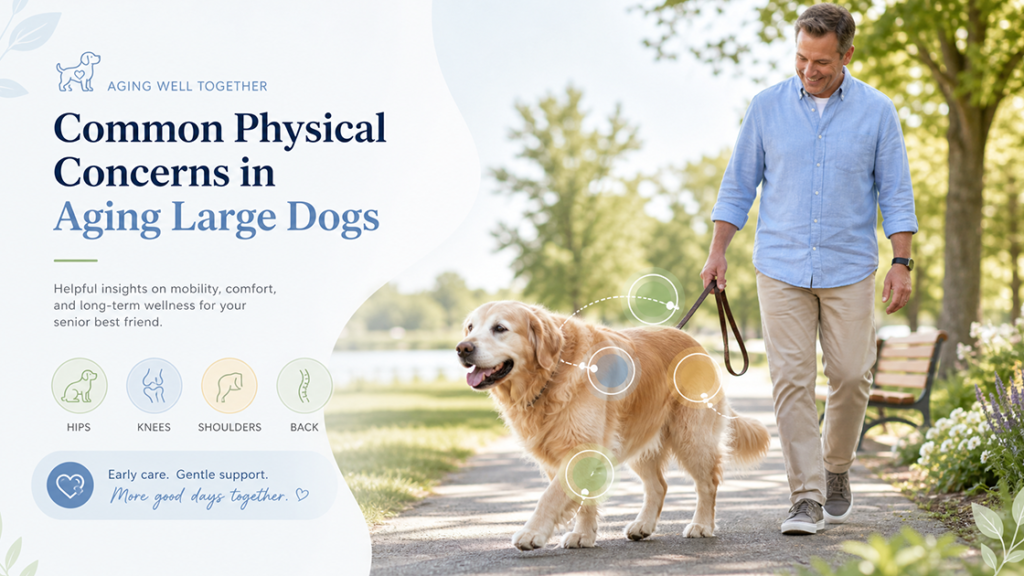
As large dogs enter their senior years, changes in mobility and physical activity can become more noticeable. Owners may pay attention to areas such as hips, knees, shoulders, and the back because these regions are involved in many everyday movements.
Common concerns include reduced flexibility, muscle tension, slower movement after rest, and difficulty maintaining previous activity levels. These changes do not always appear suddenly; instead, they may develop gradually as part of the aging process.
Modern veterinary rehabilitation increasingly focuses on supporting the animal’s overall function rather than only addressing individual symptoms. Technologies such as Class IV Laser Therapy can be included as part of a broader care strategy designed around the animal’s specific needs.
2. How Class IV Laser Therapy Supports Large Dog Rehabilitation
Class IV Laser Therapy uses high-power therapeutic laser energy as part of photobiomodulation applications. Veterinary professionals use this technology in rehabilitation settings to support tissue response, circulation, and recovery management.
2.1 The Role of Photobiomodulation in Canine Care
Photobiomodulation refers to the interaction between specific wavelengths of light energy and biological tissues. During laser therapy sessions, light energy is delivered to targeted areas where it can interact with cells and support natural biological processes.
For large breed dogs, deeper tissue access is an important consideration because their muscles and joints are often larger compared with smaller animals. Class IV Laser Therapy systems can provide higher energy output, allowing professionals to customize protocols based on body size, treatment area, and rehabilitation goals.
Veterinary teams may consider this technology when developing supportive care plans for dogs that need additional assistance with mobility, muscle recovery, or soft tissue management.
2.2 Why Energy Depth Matters for Large Breed Dogs
The size and structure of large breed dogs make treatment depth an important factor in rehabilitation planning. Areas such as the hip region, lumbar area, and larger muscle groups may require approaches that consider deeper anatomical structures.
Class IV Laser Therapy is designed to deliver concentrated energy that can reach deeper tissues compared with lower-powered laser approaches. This characteristic makes it a useful technology option for veterinary professionals working with larger animals.
Different factors, including coat type, body size, treatment area, and individual condition, can influence how laser energy is applied. Professional evaluation helps determine appropriate settings and treatment plans for each animal.
3. Applications of Class IV Laser Therapy in Large Breed Dog Care
Veterinary rehabilitation programs often combine multiple approaches to support animal health. Class IV Laser Therapy can be integrated into different care environments, including rehabilitation centers, veterinary hospitals, and mobility support programs.
3.1 Supporting Active Dogs After Physical Activity
Many large breed dogs remain highly active throughout their adult years. Dogs that participate in hiking, outdoor activities, training programs, or working tasks may place repeated demands on their muscles and joints.
After physical activity, owners often focus on helping their dogs maintain comfortable movement patterns and recover properly between activities.
Class IV Laser Therapy may be used as part of a recovery-focused approach to support muscle relaxation, circulation, and tissue recovery after periods of increased activity.
This application is especially relevant for active breeds that require ongoing physical maintenance while continuing to enjoy exercise and daily interaction.
3.2 Supporting Senior Dog Wellness Programs
Senior large breed dogs often require more attention to their daily comfort and mobility. Veterinary wellness programs may include different strategies designed to help older dogs maintain their lifestyle.
Class IV Laser Therapy can be incorporated into senior pet care plans alongside other rehabilitation methods, such as controlled exercise, physical therapy, and veterinary monitoring.
The goal of these programs is not only to address specific concerns but also to support the overall well-being of aging pets through personalized care.
4. Class IV Laser Therapy for Different Large Dog Breeds
Different large dog breeds have different body structures, activity patterns, and lifestyle needs. Understanding breed characteristics can help veterinary professionals create more suitable rehabilitation approaches.
4.1 German Shepherds and Working Breed Mobility Care
German Shepherds are known for their intelligence, athletic ability, and versatility. Many participate in activities such as training, service work, protection work, and outdoor recreation.
Because of their active lifestyle, owners often focus on maintaining muscle condition, movement quality, and long-term mobility.
Class IV Laser Therapy can be considered as part of a supportive rehabilitation program for German Shepherds by focusing on areas that experience regular physical demands.
Veterinary professionals may combine laser therapy with exercise planning and mobility assessments to create a comprehensive approach.
4.2 Labrador Retrievers and Family Activity Support
Labrador Retrievers are among the most popular companion dogs and are often involved in family activities, swimming, walking, and outdoor play.
Their enthusiasm for activity means maintaining mobility is an important part of their long-term wellness management.
For Labrador Retrievers, Class IV Laser Therapy may support rehabilitation programs that focus on maintaining comfortable movement and supporting recovery after daily activities.
A personalized approach allows veterinary professionals to consider factors such as age, activity level, and individual health background.
5. The Future of Veterinary Rehabilitation With Class IV Laser Therapy
As veterinary medicine continues to develop, pet owners increasingly seek advanced care options that support animal comfort and quality of life. Technologies such as Class IV Laser Therapy are becoming part of modern rehabilitation programs for different animal groups.
5.1 Combining Laser Therapy With Comprehensive Veterinary Care
Class IV Laser Therapy works best as part of a complete veterinary care approach. Professional assessment, exercise management, nutrition, and regular health monitoring all contribute to supporting an animal’s long-term wellness.
For large breed dogs, rehabilitation plans often require attention to multiple factors, including age, activity level, body condition, and lifestyle.
By combining different care methods, veterinary professionals can create more personalized programs that match each dog’s unique needs.
5.2 Supporting Long-Term Mobility Management
Maintaining mobility is an important part of healthy aging for large breed dogs. As pets live longer and owners become more focused on preventive care, rehabilitation technologies continue to receive greater attention.
Class IV Laser Therapy provides another tool that veterinary professionals can consider when developing mobility support programs.
Through customized applications and professional guidance, this technology can contribute to a broader approach focused on helping large dogs remain active and comfortable throughout different life stages.
FAQ
What is Class IV Laser Therapy for large breed dogs?
Class IV Laser Therapy is a veterinary photobiomodulation technology that uses concentrated laser energy to support tissue activity, circulation, and recovery programs for animals.
Why are large breed dogs suitable for laser therapy discussions?
Large breed dogs often have greater body weight, larger muscle groups, and specific mobility needs. Laser therapy can be considered as part of personalized veterinary rehabilitation plans.
Which large dog breeds may benefit from rehabilitation support?
Breeds such as German Shepherds, Labrador Retrievers, Golden Retrievers, and other large dogs may require additional mobility support during active or senior stages of life.
Can Class IV Laser Therapy replace exercise or veterinary care?
No. Laser therapy is designed as a supportive approach and should be combined with professional veterinary care, proper exercise, and overall wellness management.
What areas are commonly considered during canine laser therapy sessions?
Veterinary professionals may focus on areas such as hips, knees, shoulders, back, and other regions depending on the dog’s individual condition and rehabilitation goals.
Conclusão
Large breed dogs require specialized attention because their size, activity levels, and aging process create unique mobility challenges. Class IV Laser Therapy provides veterinary professionals with an advanced photobiomodulation technology option that can be included in rehabilitation and wellness programs for dogs such as German Shepherds, Labrador Retrievers, and other large breeds. By supporting tissue recovery, circulation, and comfortable movement as part of a comprehensive care plan, this technology offers an additional approach for maintaining active lifestyles and supporting healthy aging in companion animals.
References
“Therapeutic Laser in Veterinary Medicine: Photobiomodulation Applications in Animal Rehabilitation”
https://www.veterinarypracticenews.com/laser-therapy-veterinary-medicine
“Therapeutic Laser in Dogs: What Pet Owners Should Know”
https://vcahospitals.com/know-your-pet/therapeutic-laser
“Laser Therapy in Dogs: Uses, Benefits, and Considerations”
https://www.akc.org/expert-advice/health/laser-therapy-in-dogs/
“Photobiomodulation Therapy in Veterinary Medicine: Current Applications and Future Perspectives”
https://pmc.ncbi.nlm.nih.gov/articles/PMC7088515
“Canine Rehabilitation and Physical Therapy: Supporting Mobility and Quality of Life”
https://www.avma.org/resources-tools/pet-owners/petcare/canine-rehabilitation
 English
 العربية
 Français
 日本語
日本語 Português
 Español
 Русский
 Deutsch