
Conteúdo da página
Introdução
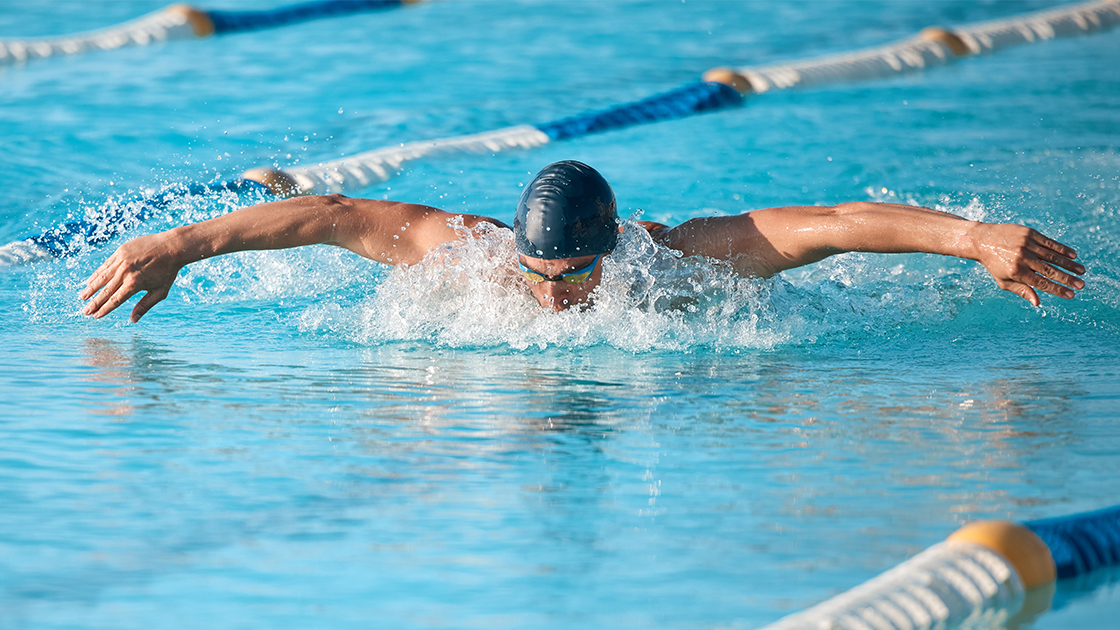
Swimming is a highly demanding sport that requires repetitive, high-intensity motions, particularly involving the shoulders, elbows, and lower limbs. While it offers tremendous cardiovascular and muscular benefits, these repetitive movements often lead to overuse injuries. Traditional treatments for overuse injuries, such as rest, physical therapy, or pharmacological interventions, may be effective but often require extended recovery periods or carry potential side effects. Terapia laser de classe IV has emerged as a modern, non-invasive solution for athletes, offering accelerated tissue repair, pain reduction, and enhanced recovery. By targeting damaged muscles, tendons, and joints with high-intensity infrared light, this therapy stimulates cellular regeneration and improves blood flow. In this article, we will explore how Class IV Laser Therapy can be used to treat swimming-related overuse injuries, highlighting its mechanisms, applications, and integration into athlete training programs.
1. Understanding Overuse Injuries in Swimming
Before exploring laser therapy solutions, it is crucial to understand the nature of overuse injuries in swimming. These injuries are caused by repetitive microtrauma to muscles, tendons, and joints, often compounded by high training volumes and insufficient recovery.
1.1 Common Overuse Injuries
Swimmers frequently experience injuries such as Swimmer’s Shoulder, elbow tendonitis, and knee joint stress. Swimmer’s Shoulder, or shoulder impingement, is the most prevalent, resulting from repetitive overhead strokes that strain the rotator cuff tendons and shoulder capsule. Elbow tendonitis arises from repetitive pulling motions during freestyle or butterfly strokes, while breaststroke or butterfly kicks may stress the knees over time. Recognizing these common injuries helps athletes and medical professionals identify appropriate preventive and therapeutic strategies.
1.2 Causes and Risk Factors
Several factors contribute to overuse injuries in swimmers, including high-intensity training schedules, improper technique, and muscular imbalances. Inadequate rest and recovery between sessions further exacerbate tissue stress, leading to chronic inflammation and microtears. Individual differences such as age, flexibility, and previous injuries also influence susceptibility. Understanding these risk factors is essential for designing effective rehabilitation protocols and minimizing long-term damage.
2. Como funciona a terapia laser de classe IV
Class IV Laser Therapy uses high-power infrared light to penetrate deep into tissues, promoting cellular and vascular responses that accelerate healing. Its efficacy in managing overuse injuries is rooted in both biophysical and biochemical mechanisms.
2.1 Science Behind the Therapy
The primary mechanism behind Class IV Laser Therapy is Photobiomodulation (PBM), in which photons are absorbed by mitochondrial chromophores, leading to increased ATP production, enhanced cellular metabolism, and activation of growth factors. This results in accelerated tissue repair, collagen synthesis, and anti-inflammatory effects. Additionally, laser exposure improves local microcirculation, facilitating oxygen and nutrient delivery while removing metabolic waste. This combination of cellular stimulation and vascular improvement makes Class IV Laser Therapy particularly effective for repairing overused muscles and tendons.
2.2 Advantages Over Traditional Methods
Unlike invasive procedures or pharmacological treatments, Class IV Laser Therapy is non-invasive and has minimal risk of systemic side effects. It can reduce pain, decrease inflammation, and accelerate healing without interrupting an athlete’s training schedule for extended periods. Compared with conventional physical therapy, laser therapy offers faster penetration to deep tissues, targeting muscles, tendons, and joint structures more efficiently. Furthermore, it can be integrated with other rehabilitation modalities, such as stretching, strengthening exercises, and cryotherapy, to optimize recovery.
3. Class IV Laser Therapy for Specific Swimming Injuries
Class IV Laser Therapy can be applied to address the most common overuse injuries in swimmers. By understanding the specific anatomical and physiological challenges of each injury, treatment can be optimized for maximal recovery.
3.1 Swimmer’s Shoulder (Shoulder Impingement)
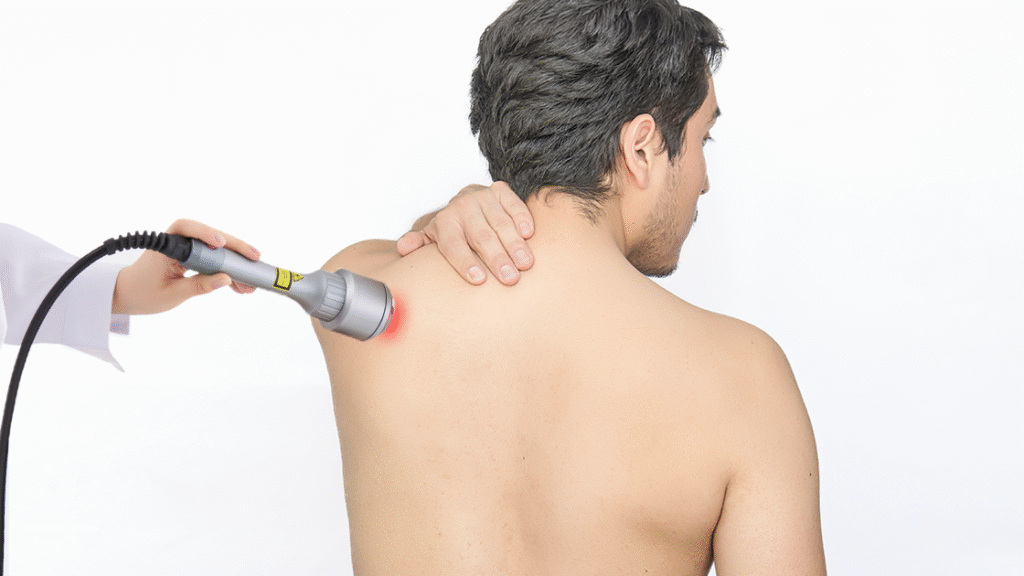
Swimmer’s Shoulder results from repetitive overhead strokes that place stress on the rotator cuff tendons, bursa, and surrounding shoulder tissues. Class IV Laser Therapy penetrates deep into the shoulder complex, reducing inflammation and promoting collagen synthesis in tendon and capsular tissues. The therapy also increases microvascular perfusion, delivering essential nutrients to repair damaged fibers and reducing the production of pro-inflammatory cytokines. Over repeated sessions, swimmers may experience decreased pain, improved range of motion, and enhanced muscular resilience, enabling them to maintain training intensity without aggravating the injury.
3.2 Tendonitis and Elbow Injuries
Repetitive pulling motions during strokes can lead to tendonitis in the elbows, commonly affecting the flexor or extensor tendon groups. Class IV lasers deliver deep photothermal energy to tendon tissue, stimulating cellular repair processes and mitigating inflammation. By increasing local circulation and enhancing fibroblast activity, the therapy accelerates tendon remodeling and reduces the accumulation of scar tissue. Regular treatment sessions can support recovery while minimizing reliance on medications and avoiding the long downtime associated with conventional interventions, allowing swimmers to gradually return to full activity.
3.3 Knee and Lower Limb Overuse Injuries
The repetitive kicking motions required in breaststroke and butterfly strokes can strain the knee joint, quadriceps, and adductor muscles. Laser therapy applied to the affected areas stimulates fibroblast proliferation, collagen alignment, and local vascularization, all of which contribute to faster tissue repair. In addition, the therapy mitigates chronic inflammation in the synovium and surrounding ligaments, decreasing pain and stiffness. For swimmers experiencing knee discomfort or lower limb overuse injuries, integrating Class IV Laser Therapy into their training regimen can enhance recovery efficiency and maintain performance levels.
4. Integrating Laser Therapy into Swimmer Training
Effectively incorporating Class IV Laser Therapy into a swimmer’s routine requires careful planning to maximize benefits while avoiding overuse.
4.1 Scheduling Laser Sessions
Optimal scheduling of laser sessions depends on the severity of the injury and the training intensity. Acute overuse injuries may benefit from more frequent sessions, ideally immediately post-training to reduce inflammation and promote repair. Chronic conditions can be treated 2–3 times per week, allowing tissues to gradually adapt to stress. Timing the therapy in conjunction with warm-up or cool-down phases enhances tissue receptivity and supports muscular recovery, minimizing the risk of re-injury.
4.2 Preventive Strategies
In addition to treating existing injuries, Class IV Laser Therapy can serve a preventive role by maintaining tissue health and resilience. Swimmers may use laser therapy prophylactically to support tendons and joints under high training loads, reducing the incidence of microtrauma accumulation. Combining therapy with strength training, flexibility exercises, and technique adjustments further mitigates risk factors. Regular assessment of muscular balance and joint mechanics ensures that the therapy complements overall injury prevention strategies effectively.
5. Safety, Risks, and Considerations
Class IV Laser Therapy is generally safe when administered by trained professionals. The therapy is non-invasive, and adverse effects are rare and typically mild, such as transient warmth or redness at the application site.
Patients should consult with licensed practitioners to determine contraindications, including photosensitivity disorders, malignancy at the treatment site, or active infections. Proper eye protection is mandatory during therapy to prevent retinal exposure. Additionally, dosage, wavelength, and treatment duration should be tailored to the specific injury, tissue depth, and athlete characteristics to optimize safety and efficacy. Overall, when applied correctly, Class IV Laser Therapy is a low-risk, high-reward intervention for overuse injuries in swimmers.
6. FAQ (Frequently Asked Questions)
Is Class IV Laser Therapy painful?
No. Most patients report a mild warming or tingling sensation. The therapy is non-invasive and generally well-tolerated.
Can I continue swimming during treatment?
Yes. Laser therapy can be integrated into ongoing training, with intensity adjustments as needed.
How soon will I notice improvement?
Many patients observe reduced pain and improved mobility after several sessions, though optimal recovery may require 4–6 weeks depending on injury severity.
Is this therapy suitable for younger swimmers?
Yes, with proper supervision. Pediatric or adolescent athletes should receive treatment from licensed professionals with appropriate dosage adjustments.
Conclusão
Swimming is a physically demanding sport with a high risk of overuse injuries due to repetitive movements and intense training schedules. Class IV Laser Therapy offers a modern, non-invasive solution that accelerates tissue repair, reduces inflammation, and alleviates pain in common swimming injuries such as Swimmer’s Shoulder, elbow tendonitis, and knee overuse injuries. By integrating laser therapy into structured training and preventive programs, swimmers can enhance recovery efficiency, maintain peak performance, and minimize the risk of chronic damage. As scientific understanding of photobiomodulation and tissue healing continues to grow, Class IV Laser Therapy is poised to become a vital component of sports rehabilitation for swimmers.
References
Smart Laser Therapy – Class IV Lasers
https://smartlasertherapy.com/
Photobiomodulation and Cellular Healing – National Center for Biotechnology Information (NCBI)
https://www.ncbi.nlm.nih.gov/pmc/articles/PMC5523874
Swimmer’s Shoulder and Overuse Injuries – Swimming World Magazine
https://www.swimmingworldmagazine.com/news/swimmers-shoulder-prevention-rehab
Overuse Injuries in Swimming – American College of Sports Medicine
https://www.acsm.org/blog-detail/acsm-certified-blog/2019/05/08/common-overuse-injuries-in-swimming
Class IV Laser Therapy for Tendon and Muscle Recovery – PubMed
 English
 العربية
 Français
 日本語
日本語 Português
 Español
 Русский
 Deutsch