
Conteúdo da página
Introdução
Large dogs often experience increased physical demands due to their body size, activity levels, and aging process. Veterinary professionals continue to explore advanced rehabilitation technologies that support mobility, tissue recovery, and overall animal comfort. Class IV laser therapy has become an important tool in modern veterinary care because it uses high-power laser energy and photobiomodulation principles to interact with biological tissues. Through specific wavelengths and controlled energy delivery, this technology is commonly incorporated into veterinary rehabilitation programs for supporting joint comfort, muscle recovery, and post-procedure care. For veterinary clinics, Terapia laser de classe IV provides an additional approach that can complement traditional care methods while focusing on personalized animal wellness plans.
1. Understanding Mobility Challenges in Large Dogs
Large dogs have unique physical characteristics that can influence their movement patterns and overall comfort. Due to their size, weight distribution, and activity requirements, veterinary professionals often pay close attention to maintaining healthy mobility throughout different life stages.
1.1 Why Large Dogs Require Specialized Mobility Support
Large breeds such as German Shepherds, Labrador Retrievers, Golden Retrievers, and other working or active dogs often place greater stress on their joints and soft tissues during daily movement.
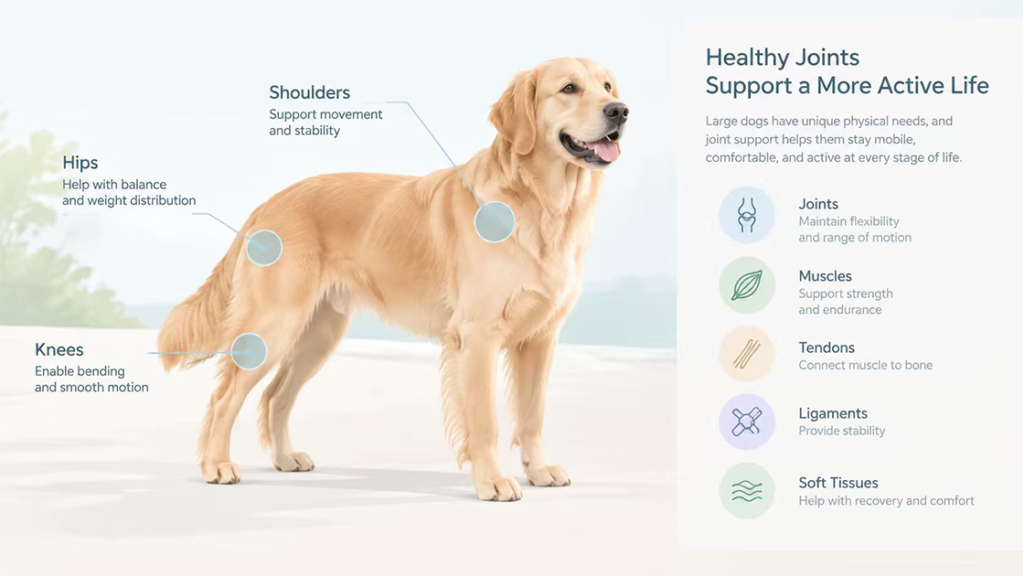
Running, jumping, climbing stairs, and regular exercise all require coordinated function between:
- joints
- muscles
- tendons
- ligaments
- surrounding soft tissues
Over time, changes in movement patterns may affect how comfortably dogs perform normal activities. Veterinary rehabilitation focuses on supporting mobility and maintaining quality of movement through different approaches.
Class IV laser therapy has gained attention in veterinary settings because its deeper tissue energy delivery allows professionals to consider applications beyond surface-level care. The technology uses concentrated light energy to support cellular responses through photobiomodulation processes.
1.2 Common Mobility Concerns Seen in Large Dogs
Veterinary professionals commonly evaluate mobility-related concerns involving different areas of the body, including hips, knees, shoulders, and spinal regions.
Large dogs may experience challenges related to:
- reduced activity levels
- stiffness after rest
- changes in walking patterns
- muscle tension
- reduced willingness to participate in physical activities
These changes can affect daily routines and overall well-being.
Veterinary laser therapy is often explored as part of comprehensive rehabilitation strategies because it can be combined with other professional approaches, including physical rehabilitation exercises and lifestyle adjustments. Class IV laser systems provide adjustable energy settings that allow professionals to consider different animal sizes and treatment goals.
1.3 The Growing Role of Veterinary Rehabilitation Technology
Veterinary medicine has increasingly adopted rehabilitation technologies that focus on supporting animal mobility and comfort. Similar to human physical therapy, veterinary rehabilitation considers movement patterns, tissue condition, and functional ability.
Advanced technologies such as Class IV laser therapy provide veterinarians and rehabilitation specialists with additional tools for creating individualized care plans.
Modern veterinary laser systems often include features such as:
- multiple wavelength options
- adjustable power settings
- different treatment modes
- targeted energy delivery
These functions help professionals adapt laser applications according to the animal’s condition, body size, and rehabilitation objectives.
2. How Class IV Laser Therapy Works in Veterinary Applications
Class IV laser therapy uses high-power laser energy to support photobiomodulation, a process where specific light wavelengths interact with cellular structures. This technology has become increasingly discussed in veterinary rehabilitation because it allows professionals to deliver therapeutic laser energy to deeper tissue areas.
2.1 The Science Behind Veterinary Photobiomodulation Therapy
Photobiomodulation refers to the interaction between light energy and biological tissues. During laser applications, specific wavelengths of light are absorbed by cellular components, which may influence natural biological processes.
Class IV laser systems typically operate with higher power output compared with lower-level laser devices. This allows professionals to deliver energy more efficiently in clinical environments.
Many veterinary laser systems use near-infrared wavelengths because these wavelengths can penetrate deeper into tissues. Common wavelength options include 810nm, 980nm, and 1064nm, depending on the system design and application requirements.
For large dogs, deeper energy delivery can be an important consideration because larger body structures may require different approaches compared with smaller animals.
2.2 Why Wavelength Selection Matters in Animal Rehabilitation
Different tissues respond differently to laser wavelengths, making wavelength selection an important part of professional veterinary laser applications.
Near-infrared wavelengths are commonly used in Class IV laser therapy because they can reach deeper tissue structures compared with visible light wavelengths.
For example:
- 810nm wavelength is often associated with cellular energy interaction and tissue applications.
- 980nm wavelength is commonly discussed in relation to water absorption and tissue effects.
- 1064nm wavelength provides deeper penetration characteristics for specific professional applications.
Veterinary professionals consider these technical factors when designing laser therapy protocols for different animals.
The goal is not simply to apply laser energy but to create a suitable approach based on the animal’s size, condition, and rehabilitation needs.
2.3 Class IV Laser Therapy for Dog Joint Mobility Support
Joint mobility is one of the most common areas where veterinary professionals explore laser therapy applications.
For large dogs, maintaining comfortable movement is important because mobility affects:
- exercise ability
- daily activities
- interaction with owners
- overall lifestyle
Class IV laser therapy may be incorporated into rehabilitation programs designed to support joint comfort and soft tissue function.
By combining laser technology with professional assessment and rehabilitation strategies, veterinary clinics can provide more comprehensive care options for animals with mobility concerns.
3. Class IV Laser Therapy Applications in Veterinary Clinics
Veterinary clinics are increasingly integrating advanced rehabilitation technologies to support animal health management. Class IV laser therapy provides veterinarians and rehabilitation specialists with another option for addressing mobility-related concerns, soft tissue support, and recovery programs for companion animals. Through controlled light energy delivery, this technology can become part of a broader veterinary rehabilitation approach.
3.1 Supporting Joint Mobility Programs for Large Dogs
Joint mobility is an important aspect of veterinary care, especially for large dogs that require strong physical function for daily activities. Dogs with reduced mobility may show changes in walking patterns, activity levels, or willingness to participate in normal routines.
Class IV laser therapy is commonly explored in veterinary rehabilitation programs because photobiomodulation may support cellular activity and tissue responses. By delivering laser energy to targeted areas, veterinary professionals can include this technology as part of a comprehensive mobility support plan.
For large dogs, areas such as hips, knees, shoulders, and back regions often receive attention during rehabilitation planning. The purpose of veterinary laser therapy is to support overall comfort and movement quality while working together with professional assessment and other rehabilitation methods.
Research has explored the use of photobiomodulation therapy with Class IV laser systems in dogs, including evaluations related to mobility indicators and joint function.
3.2 Class IV Laser Therapy in Canine Rehabilitation Programs
Modern veterinary rehabilitation often combines multiple approaches, including controlled exercise, physical therapy techniques, and advanced technologies.
Class IV laser therapy can be included in rehabilitation programs because it offers adjustable energy output and allows professionals to customize applications based on animal size, treatment area, and clinical goals.
Compared with smaller animals, large dogs may require different considerations because of their larger muscle structure and deeper tissue areas. High-power laser systems allow veterinary professionals to deliver appropriate energy levels while considering individual rehabilitation requirements.
The development of veterinary laser technology has encouraged more clinics to explore photobiomodulation as part of their animal wellness services.
3.3 Applications Beyond Dogs: Cats and Equine Care
Although large dogs represent an important group in veterinary rehabilitation, Class IV laser therapy is also discussed in other animal care settings.
Cats may benefit from veterinary rehabilitation approaches designed around mobility support and tissue comfort. Horses, especially performance and working animals, also require specialized care because of their athletic demands and physical workload.
Different animals have different anatomical structures, movement patterns, and rehabilitation needs. Therefore, veterinary professionals usually adjust laser parameters according to species, body size, and treatment objectives.
The versatility of Class IV laser technology allows it to be considered across different veterinary fields, from companion animal clinics to specialized rehabilitation centers.
4. Choosing the Right Class IV Laser Approach for Veterinary Practice
Veterinary professionals need to consider several factors when introducing laser technology into animal rehabilitation programs. Effective application depends not only on the device itself but also on professional knowledge, appropriate settings, and individualized planning.
4.1 The Importance of Power Settings and Treatment Parameters
Laser therapy involves multiple technical factors, including power output, wavelength, pulse frequency, and treatment area.
For veterinary applications, professionals may consider:
- animal size
- coat color
- target tissue depth
- rehabilitation goals
- sensitivity of the treatment area
Different animals may respond differently to laser energy because factors such as body structure and coat characteristics can influence light transmission.
Research has shown that laser power, wavelength, and coat characteristics can influence photon delivery through canine tissues. These factors are important considerations when designing veterinary laser applications.
4.2 Why Veterinary Professionals Focus on Personalized Protocols
Every animal has unique characteristics. A senior large dog, an active working dog, and a recovering companion animal may require different rehabilitation considerations.
Personalized protocols allow veterinary professionals to adjust:
- treatment areas
- energy levels
- session planning
- rehabilitation combinations
This individualized approach helps ensure that laser therapy fits within a broader animal care strategy.
Class IV laser therapy is not designed to replace veterinary diagnosis or traditional care methods. Instead, it can serve as a complementary technology that supports professional rehabilitation planning.
4.3 Integrating Laser Therapy Into Modern Veterinary Services
As pet owners increasingly focus on long-term animal wellness, veterinary clinics continue to expand their rehabilitation services.
Modern veterinary practices may combine:
- physical rehabilitation
- mobility programs
- nutritional support
- professional monitoring
- advanced therapeutic technologies
Class IV laser therapy fits into this trend by providing another option for clinics that want to offer technology-based rehabilitation support.
The future of veterinary care continues to move toward more comprehensive approaches that consider both physical function and overall quality of life.
5. The Future of Class IV Laser Therapy in Animal Rehabilitation
The veterinary industry continues to develop new approaches for supporting animal health and mobility. With advances in laser technology, Class IV laser therapy is expected to remain an area of interest among veterinary professionals.
5.1 Advancing Veterinary Rehabilitation Technology
Future veterinary rehabilitation may focus more on precision, customization, and technology integration.
New developments may include improved:
- laser parameter control
- rehabilitation monitoring
- animal-specific treatment planning
- professional workflow efficiency
As technology improves, veterinary professionals will have more options for creating personalized rehabilitation programs.
Class IV laser therapy represents one example of how modern veterinary medicine is incorporating light-based technologies into animal care environments.
5.2 Supporting Better Mobility Management for Companion Animals
For many pet owners, maintaining their animal’s mobility and comfort throughout different life stages is an important goal.
Large dogs especially require careful attention because their size and activity patterns can influence their physical condition over time.
Through professional veterinary guidance, rehabilitation strategies, and advanced technologies such as Class IV laser therapy, clinics can continue exploring new ways to support animal wellness.
The future of veterinary care will likely continue combining traditional knowledge with innovative technologies to provide more comprehensive support for companion animals.
FAQ
What is Class IV laser therapy for dogs?
Class IV laser therapy uses high-power laser energy and photobiomodulation principles to support veterinary rehabilitation programs focused on mobility, tissue comfort, and recovery support.
Why do veterinary clinics use Class IV laser therapy?
Veterinary clinics may use Class IV laser therapy as a complementary technology within rehabilitation programs for dogs, cats, and other animals.
Is Class IV laser therapy only used for large dogs?
No. Veterinary laser therapy can be considered for different animals, including dogs, cats, and horses, depending on professional evaluation and rehabilitation goals.
What wavelengths are used in veterinary laser therapy?
Many Class IV laser systems use near-infrared wavelengths, such as 810nm, 980nm, or 1064nm, depending on the device and application requirements.
Can laser therapy replace veterinary care?
No. Laser therapy should be used as part of a professional veterinary care plan and does not replace diagnosis or other recommended treatments.
Conclusão
Class IV laser therapy has become an increasingly discussed technology in modern veterinary rehabilitation, especially for supporting mobility and comfort management in large dogs. Through photobiomodulation principles, high-power laser energy, and adjustable parameters, this technology provides veterinary professionals with an additional tool for developing personalized animal care strategies. By combining advanced laser applications with professional assessment, rehabilitation methods, and daily wellness support, veterinary clinics can continue exploring new approaches to help companion animals maintain better movement and overall quality of life.
References
A Randomized Double-Blinded Controlled Trial on the Effects of Photobiomodulation Therapy in Dogs with Osteoarthritis
https://pubmed.ncbi.nlm.nih.gov/35895799
Effects of Laser Power, Wavelength, Coat Length, and Coat Color on Tissue Penetration Using Photobiomodulation in Healthy Dogs
https://pubmed.ncbi.nlm.nih.gov/32255908
Therapeutic Laser
https://vcahospitals.com/know-your-pet/therapeutic-laser
Photomedicine in Veterinary Patients
Systematic Review of Postoperative Rehabilitation Interventions After Cranial Cruciate Ligament Surgery in Dogs
 English
 العربية
 Français
 日本語
日本語 Português
 Español
 Русский
 Deutsch