

Conteúdo da página
Introdução
A day on the water casting for bass, trout, or redfish brings a unique kind of joy. But for many dedicated anglers, that joy comes with a price: a nagging pain on the inner side of the elbow that worsens with every cast. This condition, known as medial epicondylitis or golfer’s elbow, affects the tendons that attach the wrist flexor muscles to the inner elbow. While the name suggests a golf connection, the repetitive motion of gripping a fishing rod, setting the hook, and reeling against resistance places similar—if not greater—strain on those same tendons. For anglers who have tried ice, rest, or over‑the‑counter remedies without lasting relief, Terapia laser de classe IV offers a non‑invasive, drug‑free option that may help manage this stubborn overuse injury and allow them to return to the water with less discomfort.
1. Understanding Medial Epicondylitis in Fishing
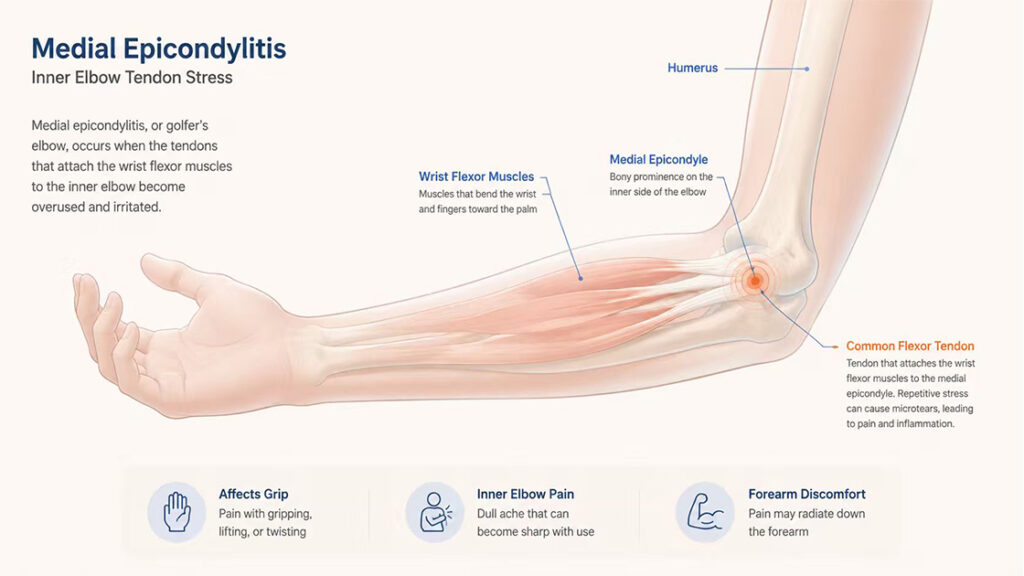
Medial epicondylitis involves damage to the common flexor tendon at its attachment to the medial epicondyle of the humerus—the bony bump on the inner side of the elbow. In fishing, the repetitive gripping, wrist flexion, and sudden forceful movements associated with casting and reeling place exceptional stress on this tendon.
1.1 How Fishing Movements Stress the Elbow
The act of casting a fishing rod requires a coordinated sequence of wrist and forearm motions. For baitcasting or spinning gear, the angler snaps the wrist forward to propel the lure, while the fingers grip the rod handle tightly. This action demands a strong contraction of the wrist flexor muscles. When the lure hits the water or a fish strikes, the sudden resistance forces the wrist into extension against the contracted flexors, adding eccentric load to the tendon attachment. Reeling in a large fish involves sustained gripping and wrist rotation, further aggravating the already stressed tendon.
1.2 Recognizing the Symptoms
Anglers with medial epicondylitis typically feel pain on the inner side of the elbow, right over the bony prominence. The discomfort may start as a dull ache after a long day of fishing but can progress to a sharp pain with each cast. Simple daily activities—turning a doorknob, shaking hands, or lifting a coffee mug—can also provoke the pain. Some anglers notice weakness in their grip, making it harder to hold the rod securely or to reel against strong resistance. In more advanced cases, the pain may radiate down the forearm toward the wrist, and the elbow may feel stiff, especially in the morning.
2. Why Fishing Puts Anglers at High Risk
Several factors contribute to the high prevalence of medial epicondylitis among fishing enthusiasts, regardless of whether they fish from a boat, shore, or kayak.
2.1 Repetitive Nature of the Sport
The typical fishing outing involves hundreds of casting repetitions. Each cast requires rapid wrist flexion followed by a controlled stop. This repeated eccentric loading of the wrist flexor tendons creates microtears that accumulate faster than the body can repair them. Even a weekend angler can log hundreds of casts per trip, and tournament or charter anglers may cast thousands of times weekly.
2.2 Equipment Factors
The weight and balance of the rod and reel also play a role. Heavier setups require more grip force and greater wrist effort to control. Rods with poorly positioned or oversized handles force the wrist into a less ergonomic position, increasing tendon strain. Reels with high‑gear ratios demand more wrist rotation to retrieve line, adding another layer of repetitive load. Many anglers also “high‑stick” the rod—bending it excessively during hook setting—which places extreme tension on the flexor tendons.
2.3 Lack of Conditioning and Warm‑Up
Unlike competitive golfers who may warm up and condition their forearms, many recreational anglers simply pick up their rod and start casting without any preparatory stretching or strengthening. Cold muscles and tendons are more susceptible to microtearing. A full day on the water with no warm‑up and few breaks can easily overload unprepared tissues.
3. How Class IV Laser Therapy Supports Tendon Healing
Class IV laser therapy delivers near‑infrared light deep into the soft tissues. This energy interacts with cellular components through photobiomodulation, promoting tissue repair without heat damage.
3.1 Cellular Activation and Energy Production
When photons from a Class IV laser reach the injured flexor tendon, mitochondria within the tenocytes absorb the light energy. This absorption temporarily increases the production of adenosine triphosphate (ATP), the cell’s primary energy source. Higher ATP availability supports essential repair processes, including protein synthesis and the clearance of metabolic waste. This cellular boost helps the tendon shift from a chronic degenerative state toward active healing.
3.2 Improving Blood Flow to the Injury Site
Chronic tendinopathy often involves reduced microcirculation, which limits oxygen and nutrient delivery. Class IV laser stimulates the formation of new capillary networks around the treated tendon—a process called neovascularization. Improved blood flow brings healing cells and growth factors to the damaged area while carrying away inflammatory mediators and cellular debris. For an angler’s elbow, this enhanced perfusion can accelerate the natural repair timeline.
3.3 Reducing Pain and Modulating Inflammation
The laser energy also influences nerve signaling and local inflammation. It can reduce the activity of pain‑transmitting nerve fibers, providing a period of decreased discomfort without medication. Additionally, photobiomodulation helps regulate pro‑inflammatory cytokines, preventing excessive or prolonged inflammation that can impair healing. The result is a more favorable environment for the tendon to remodel and strengthen.
4. What an Angler Can Expect from Treatment
For fishing enthusiasts considering Class IV laser therapy, understanding the typical course helps set realistic expectations.
4.1 Number of Sessions and Duration
A common protocol for medial epicondylitis involves six to ten sessions delivered over two to four weeks. Each session lasts only a few minutes. The practitioner positions the laser applicator over the inner elbow, moving it in slow passes to ensure even energy distribution. Most anglers find the sensation—a gentle warmth or mild tapping—comfortable and brief. No downtime is required after treatment, so normal daily activities can resume immediately.
4.2 When to Notice Improvement
Some anglers feel reduced pain after the first few sessions, but the full effect typically becomes noticeable several weeks after completing the series. Tendon remodeling takes time; the new collagen fibers must align along lines of tension to restore function. Patience is important. Using the therapy consistently, rather than expecting a single‑session miracle, yields the best outcomes.
4.3 Returning to Fishing
During the treatment period, most anglers can continue light fishing activities, but avoiding movements that provoke sharp pain is wise. After completing the sessions, a gradual return to full casting and reeling is recommended. Starting with shorter outings, using lighter tackle, and incorporating proper warm‑up stretches can help maintain the improvements achieved with laser therapy.
5. Long‑Term Strategies for Elbow Health
Class IV laser therapy works best when anglers also adopt habits that protect their elbows from future injury.
5.1 Equipment Adjustments
Choosing a rod with a comfortable, ergonomic handle reduces grip strain. Rods with balanced weight distribution require less wrist effort. Using a lighter reel and paying attention to gear ratio can also decrease repetitive load. Some anglers benefit from using a rod with a slightly larger diameter grip, which spreads gripping forces over a broader area.
5.2 Pre‑Fishing Warm‑Up and Stretching
Before the first cast, spending five minutes on gentle wrist extensions, flexions, and forearm rotations can increase blood flow and tissue pliability. Simple exercises like making a fist and opening the hand slowly, or using a light resistance band for wrist curls, prepare the flexor tendons for the demands ahead. Stretching the forearm flexors by extending the arm and gently pulling the hand downward with the opposite hand is also helpful.
5.3 Strengthening and Technique Refinement
Eccentric strengthening exercises for the wrist flexors—performed slowly and without pain—build tendon resilience. Focusing on smooth casting motion rather than forceful, jerky movements reduces peak tendon loads. Learning to use body rotation and shoulder movement instead of relying solely on wrist snap can distribute forces more evenly. Regular conditioning of the forearm muscles, even during the off‑season, helps maintain durability.
FAQ
How many sessions does an angler typically need?
A common protocol involves six to ten sessions over two to four weeks. Some notice improvement after a few sessions, while others benefit from the full series.
Can I keep fishing during laser therapy?
Yes, but avoiding movements that cause sharp pain helps. Shorter outings and lighter tackle may be appropriate during the treatment period.
How soon after treatment will I feel less elbow pain?
Some anglers notice reduced discomfort within a few sessions. The most noticeable improvement often appears several weeks after completing the series as the tendon remodels.
Will laser therapy prevent the injury from returning?
Laser therapy helps heal the existing tendon damage. Maintaining good casting technique, proper equipment, and regular conditioning reduces the risk of recurrence.
Conclusão
Fishing brings relaxation, challenge, and connection with nature, but for many anglers, persistent inner elbow pain can turn a passion into a struggle. Medial epicondylitis arises from the repetitive gripping, casting, and reeling that define the sport. For those who have tried rest, ice, and other measures without lasting relief, Class IV laser therapy offers a non‑invasive, drug‑free approach. By stimulating cellular energy, improving blood flow, and modulating pain and inflammation, photobiomodulation supports the tendon‘s natural healing process. When combined with smart equipment choices, proper warm‑up, and gradual strengthening, Class IV laser therapy can help anglers return to the water with less pain and more enjoyment.
References
Hand and Wrist Pain in Anglers: Common Overuse Injuries
https://www.sportsmed.org/fishing-injuries
Class IV Laser Therapy for Tendinopathy
https://smartlasertherapy.com/elbow-pain
Medial Epicondylitis: Non‑Surgical Management
https://orthoinfo.aaos.org/golfers-elbow
Preventing Fishing‑Related Elbow Injuries
 English
 العربية
 Français
 日本語
日本語 Português
 Español
 Русский
 Deutsch