

ページ内容
はじめに
Lower back discomfort is common among active adults, office workers, athletes, and those with daily physical stress from sitting, lifting, or repetitive motion. Class IV Laser Therapy uses controlled, deeper‑penetrating light energy to support tissue recovery and mobility. It is explored as a non‑invasive option to aid comfort, movement, and overall function.
1. Understanding Lower Back Pain and Mobility Challenges
Lower back discomfort can affect people with different lifestyles and activity levels. The link between lumbar anatomy, muscle function, and daily movement drives the growing use of クラスIVレーザー治療 for recovery.
1.1 Common Causes of Lower Back Discomfort in Active Adults
Lower back discomfort can arise from prolonged sitting, repetitive motion, sports, or physical demand. The lumbar spine supports bending, lifting, walking, and exercise, making it vulnerable to mechanical stress.
Active adults may experience temporary discomfort after intense workouts, recreational sports, or physically demanding activities. Office workers may also notice lower back tension due to extended sitting and limited movement throughout the day. Understanding these contributing factors allows individuals to explore supportive approaches that focus on maintaining mobility and overall back health.
1.2 The Relationship Between Muscle Tension, Mobility, and Daily Activities
The lower back works together with surrounding muscles, ligaments, and connective tissues to maintain stability and movement. When these structures experience repeated stress, individuals may notice changes in flexibility, comfort, or movement quality.
Mobility plays an important role in maintaining an active lifestyle. Limited movement comfort can influence exercise routines, work performance, and daily activities. For this reason, many people explore technologies that support the body’s natural recovery processes while helping maintain normal movement patterns.
1.3 Why People Explore Class IV Laser Therapy for Back Support
Class IV Laser Therapy has become a topic of interest because it provides a non-invasive approach that uses therapeutic laser energy to support areas affected by physical stress. Unlike traditional approaches that focus only on temporary comfort, laser therapy technology works by delivering controlled energy to targeted tissues.
Class IV Laser Therapy’s deeper penetration suits rehab, sports, and wellness settings, where it serves as a complementary recovery tool.
2. How Class IV Laser Therapy Works for Musculoskeletal Recovery
Class IV Laser Therapy uses higher-powered therapeutic laser technology to deliver controlled light energy into targeted areas. The technology is designed to interact with biological tissues and support natural cellular processes related to recovery and tissue function.
2.1 The Science Behind Therapeutic Laser Technology
Therapeutic laser technology is based on the principle of photobiomodulation, where specific wavelengths of light interact with cells and tissues. When laser energy reaches targeted areas, cells may absorb the light energy through cellular structures involved in energy production.
This process may support cellular activity, circulation within treated areas, and the body’s natural response mechanisms. Class IV Laser Therapy focuses on providing controlled energy delivery, allowing professionals to adjust treatment parameters according to individual needs and targeted areas.
2.2 Deep Tissue Laser Therapy and Energy Delivery
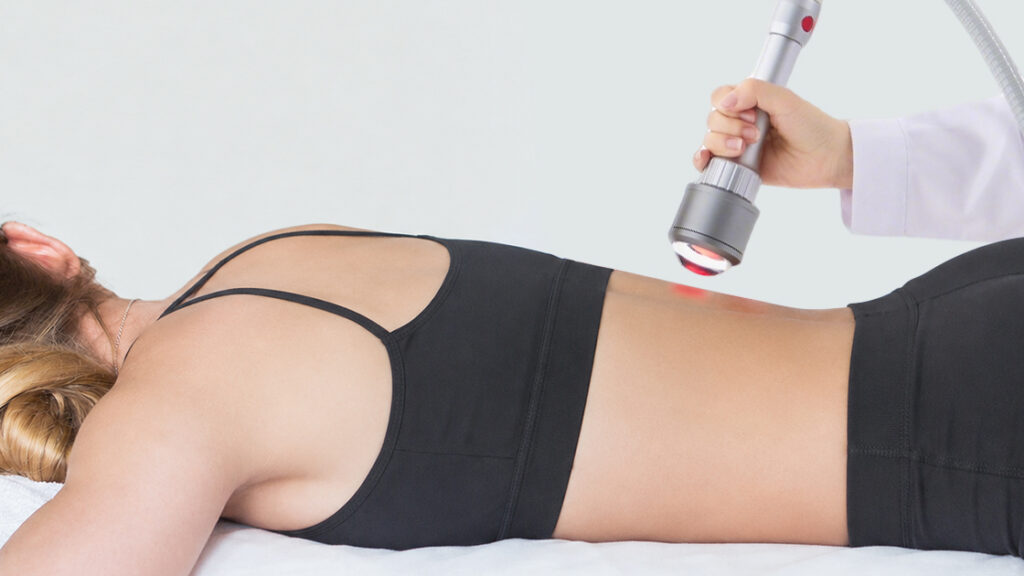
Class IV Laser Therapy delivers deeper tissue energy than lower‑powered systems, making it especially relevant for the lower back.
Deep tissue laser therapy is often used in musculoskeletal care because it allows practitioners to focus on areas associated with movement and physical stress. By supporting tissue response and recovery processes, this technology can become part of a comprehensive mobility support strategy.
2.3 Supporting Circulation and Cellular Activity
Healthy circulation and cellular activity are important factors in maintaining tissue function. Class IV Laser Therapy is designed to support these biological processes through controlled light energy application.
The interaction between laser energy and tissues may contribute to an environment that supports normal recovery functions. This approach does not replace professional evaluation but can complement existing wellness and rehabilitation strategies focused on maintaining comfort and movement.
3. Who May Consider Class IV Laser Therapy for Lower Back Support?
Different groups experience lower back challenges due to different daily demands. Class IV Laser Therapy is commonly explored by individuals whose lifestyles involve physical activity, repetitive movements, or prolonged periods of sitting.
3.1 Office Professionals With Sedentary Work Habits
Many office professionals spend extended periods sitting at desks, which may contribute to muscle stiffness and reduced movement throughout the day. Maintaining proper posture and regular movement breaks are important parts of supporting back health.
Class IV Laser Therapy is often considered by professionals looking for additional support alongside ergonomic improvements and healthy movement habits. Therapeutic laser technology can be incorporated into wellness programs designed to support comfort and mobility for individuals with demanding work schedules.
3.2 Athletes and Fitness Enthusiasts Managing Physical Stress
Athletes and fitness enthusiasts place significant demands on their musculoskeletal systems through training, competition, and repeated physical activity. Activities such as weightlifting, running, cycling, and team sports require coordinated movement from the lower back and surrounding muscles.
Class IV Laser Therapy is frequently explored in sports recovery environments because it supports non-invasive recovery approaches. By focusing on targeted areas affected by physical activity, therapeutic laser technology can become part of a broader strategy for maintaining performance and movement quality.
3.3 Older Adults Seeking Mobility Support
As people age, maintaining mobility becomes an important part of daily wellness. Changes in muscle strength, flexibility, and activity levels may influence how individuals perform everyday movements.
Class IV Laser Therapy may be considered by older adults who want to support comfort and mobility as part of an active lifestyle. Combined with appropriate exercise, stretching, and healthy habits, laser therapy technology can contribute to a comprehensive approach to maintaining physical function.
4. Class IV Laser Therapy Applications in Modern Recovery Programs
As rehabilitation and sports recovery continue to evolve, healthcare and wellness professionals are increasingly exploring advanced technologies that support mobility and physical performance. Class IV Laser Therapy has become part of many modern recovery programs because of its ability to deliver controlled therapeutic laser energy to targeted areas. By combining technology with professional knowledge of anatomy and movement, laser therapy can support personalized approaches for individuals with different recovery goals.
4.1 The Role of Class IV Laser Therapy in Physical Therapy Settings
Physical therapists often focus on improving movement patterns, flexibility, strength, and overall physical function. Class IV Laser Therapy can be incorporated into rehabilitation programs as a supportive technology that complements traditional methods such as exercise programs, stretching, and manual techniques.
In physical therapy environments, therapeutic laser technology may be used to target areas affected by everyday physical stress, including the lower back region. The ability to adjust energy settings allows professionals to customize applications based on individual conditions, activity levels, and recovery objectives.
4.2 Supporting Active Recovery After Exercise and Physical Activity
Recovery is an important part of maintaining an active lifestyle. Whether individuals participate in recreational exercise or structured athletic training, the body requires appropriate recovery strategies to maintain movement quality and comfort.
Class IV Laser Therapy provides a technology-based option that many active individuals explore as part of their recovery routines. By supporting cellular activity and tissue response, deep tissue laser therapy can complement other recovery practices, including proper rest, mobility exercises, and physical conditioning.
4.3 The Importance of Personalized Laser Therapy Approaches
Every individual has different movement patterns, physical demands, and recovery needs. A professional approach to Class IV Laser Therapy considers factors such as the targeted area, lifestyle habits, activity level, and overall wellness goals.
Modern therapeutic laser systems often provide adjustable settings that allow professionals to develop personalized application strategies. This flexibility helps ensure that laser therapy technology is used appropriately within broader recovery and mobility support programs.
5. Important Considerations When Exploring Class IV Laser Therapy for Lower Back Support
Although Class IV Laser Therapy continues to gain attention in rehabilitation and wellness fields, understanding its role is important. Therapeutic laser technology is generally considered a supportive approach that works alongside professional guidance, healthy movement habits, and comprehensive recovery plans.
5.1 Combining Laser Therapy With Healthy Movement Habits
Class IV Laser Therapy works best when combined with healthy lifestyle practices. Maintaining proper posture, engaging in regular physical activity, strengthening supporting muscles, and practicing appropriate stretching routines are important components of long-term back health.
For individuals with active lifestyles, recovery involves multiple factors rather than relying on one single approach. Laser therapy technology can serve as one element within a complete strategy focused on maintaining mobility, comfort, and physical function.
5.2 Choosing Professional Guidance for Laser Therapy Applications
Professional guidance is an important consideration when exploring therapeutic laser technology. Qualified practitioners can evaluate individual needs and determine appropriate application methods based on personal goals and physical conditions.
Understanding how Class IV Laser Therapy works, what areas it can support, and how it fits into a broader wellness plan helps individuals make informed decisions. A balanced approach allows laser technology to complement other strategies designed to support movement and recovery.
FAQ
クラスIVレーザー治療とは?
Class IV Laser Therapy is an advanced therapeutic laser technology that uses controlled light energy to support cellular activity, tissue response, and musculoskeletal recovery.
How does Class IV Laser Therapy work for lower back support?
Class IV Laser Therapy uses specific laser wavelengths to deliver energy into targeted areas, supporting natural biological processes related to tissue function and recovery.
Is Class IV Laser Therapy the same as cold laser therapy?
No. Class IV Laser Therapy typically uses higher-powered laser systems designed for deeper energy delivery, while cold laser therapy generally refers to lower-level laser applications.
Who may consider Class IV Laser Therapy?
Active adults, athletes, physical therapy patients, and individuals seeking mobility support may explore Class IV Laser Therapy as part of a comprehensive recovery approach.
How long does a Class IV Laser Therapy session take?
Session duration depends on the treatment area, application settings, and professional recommendations. Practitioners typically adjust usage based on individual needs.
Can Class IV Laser Therapy replace physical therapy or exercise?
Class IV Laser Therapy is generally used as a supportive technology and is often combined with exercise, rehabilitation programs, and healthy movement habits.
結論
Class IV Laser Therapy has become an important technology in modern musculoskeletal recovery and mobility support. For active adults, office professionals, athletes, and individuals managing daily physical demands, therapeutic laser technology provides a non-invasive option that works alongside established wellness strategies. Through controlled energy delivery, deep tissue laser applications, and photobiomodulation principles, Class IV Laser Therapy supports the body’s natural recovery environment while helping individuals focus on maintaining comfort and movement. When combined with professional guidance and healthy lifestyle habits, this advanced laser technology can become a valuable component of comprehensive recovery programs.
References
Photobiomodulation Therapy: Mechanisms and Applications in Medicine
https://www.ncbi.nlm.nih.gov/pmc/articles/PMC4743666
Low-Level Laser Therapy in the Management of Musculoskeletal Disorders
https://www.ncbi.nlm.nih.gov/pmc/articles/PMC4743665
The Effects of Laser Therapy on Pain and Functional Recovery in Musculoskeletal Conditions
https://www.ncbi.nlm.nih.gov/pmc/articles/PMC4126803
Clinical Applications of Therapeutic Laser Technology in Rehabilitation
https://www.ncbi.nlm.nih.gov/pmc/articles/PMC5215870
Photobiomodulation and Tissue Repair: Biological Effects of Laser Energy
 English
 العربية
 Français
 日本語
日本語 Português
 Español
 Русский
 Deutsch