
ページ内容
はじめに
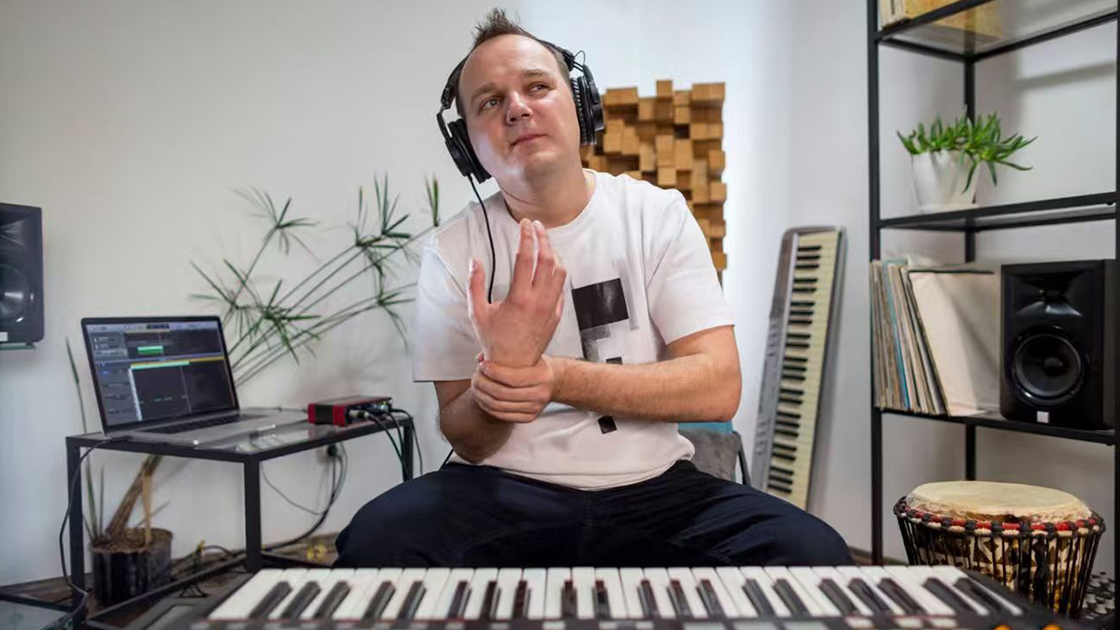
Musicians depend on precise movements, coordination, and physical endurance to create consistent performances. Whether playing guitar, piano, violin, drums, or other instruments, musicians often repeat similar hand, wrist, arm, and shoulder movements for extended periods. These repetitive performance patterns may place continuous physical demands on muscles, tendons, and joints, making body maintenance an important part of a musician’s professional routine. クラスIVレーザー治療 has become a technology option used by rehabilitation and wellness professionals to support muscle and joint comfort through high-power laser energy and photobiomodulation principles. By delivering targeted light energy to specific areas, this approach provides musicians with another supportive method for maintaining physical condition during practice, performances, and intensive training periods.
1. Understanding the Physical Demands of Musicians
Musical performance requires more than technical skill. Behind every successful performance is a combination of repeated movements, controlled posture, and long hours of practice. Understanding these physical demands helps explain why many musicians focus on hand, wrist, and shoulder wellness.
1.1 How Repetitive Instrument Playing Affects Musicians
Playing an instrument often involves thousands of repeated motions. Guitarists continuously adjust finger positions and wrist angles, pianists perform rapid keyboard movements, violinists maintain controlled shoulder and arm positions, and drummers repeatedly use their upper limbs for rhythm and coordination.
These activities require constant interaction between muscles, tendons, joints, and the nervous system. Over time, repetitive movement patterns and prolonged practice sessions may influence overall physical comfort.
For professional musicians, maintaining comfortable movement is essential because even small changes in hand control, flexibility, or endurance may affect performance quality.
1.2 Common Areas of Physical Stress Among Musicians
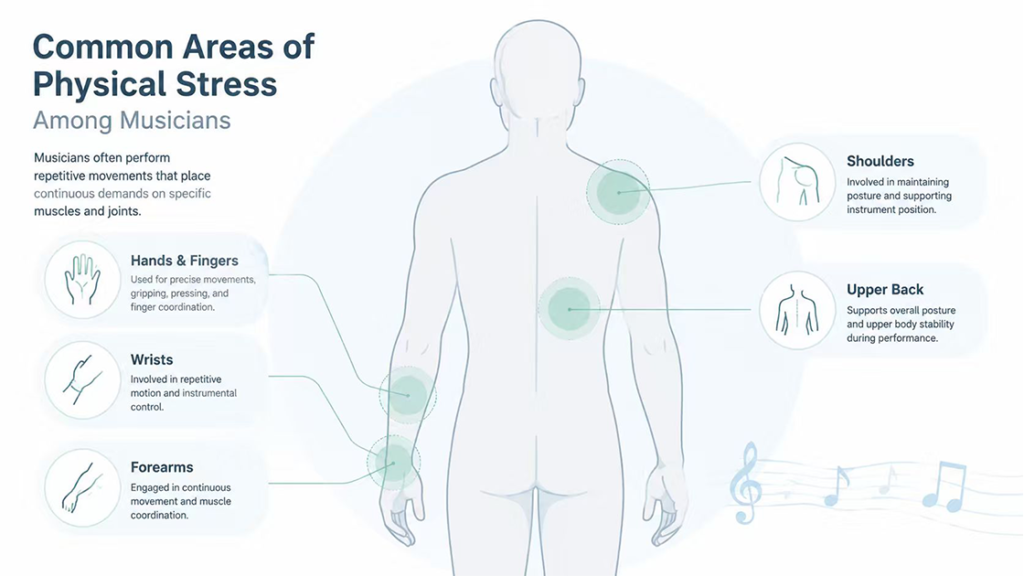
Different instruments create different physical demands. However, several body areas are commonly involved in musical performance:
- Hands and fingers
- Wrists
- Forearms
- Shoulders
- Upper back
String instrument players often focus on hand and wrist mobility, while keyboard players may pay more attention to finger movement and forearm comfort. Musicians who hold instruments for long periods may also experience increased attention toward shoulder positioning.
Understanding these commonly involved areas allows musicians and professionals to develop more targeted wellness routines.
1.3 Why Musicians Focus on Long-Term Physical Maintenance
Unlike occasional activities, professional music performance often requires years of repeated practice. Musicians may spend many hours refining technique, preparing performances, or recording new material.
Because of this long-term commitment, many performers include stretching, ergonomic adjustments, rest periods, and wellness approaches as part of their routine.
Class IV Laser Therapy can be considered one supportive technology within a broader approach to maintaining physical comfort and movement quality.
2. Understanding Class IV Laser Therapy Technology
Class IV Laser Therapy uses high-power laser energy based on photobiomodulation principles. This technology focuses on delivering controlled light energy to targeted areas while allowing professionals to adjust settings according to different applications.
2.1 How Class IV Laser Therapy Works
Class IV Laser Therapy uses specific wavelengths of light energy that interact with biological tissues. The process is based on photobiomodulation, where light energy is absorbed by cellular structures and supports natural biological responses.
Compared with lower-power laser systems, Class IV laser devices provide higher energy output, allowing professionals to focus on deeper tissue areas.
The application method depends on factors such as treatment location, individual needs, and professional assessment.
2.2 The Role of Deep Tissue Light Energy
Musicians often require support for areas that experience repeated movement, including hands, wrists, elbows, and shoulders.
High-power laser technology is designed to deliver light energy beyond the superficial skin layer, making it suitable for professionals who focus on deeper musculoskeletal areas.
By targeting specific locations, Class IV Laser Therapy allows a more customized approach rather than applying the same method to every body area.
2.3 Why Targeted Laser Technology Matters for Musicians
Every musician has different physical requirements. A pianist may focus more on hand and wrist areas, while a drummer may need more attention toward shoulder and arm movement.
Targeted laser technology allows professionals to adjust applications according to:
- Instrument type
- Performance habits
- Body area involved
- Individual comfort goals
This personalized approach makes Class IV Laser Therapy a useful consideration within musician wellness programs.
3. Supporting Musicians’ Wellness With Class IV Laser Therapy
Musicians often combine multiple strategies to maintain performance readiness. Class IV Laser Therapy can complement existing wellness habits by focusing on areas affected by repeated movement.
3.1 Supporting Hand and Wrist Comfort for Instrument Players
Hands and wrists are essential for most musicians. Guitarists, pianists, violinists, and other instrumentalists rely on fine motor control and repeated finger movements.
Frequent practice requires continuous coordination between small muscles and joints. Supporting hand and wrist comfort can help musicians maintain their preferred playing routines.
Class IV Laser Therapy may be applied to targeted areas as part of a professional wellness plan. Combined with proper technique, rest periods, and ergonomic adjustments, it can support musicians who want to maintain hand and wrist function.
3.2 Supporting Shoulder and Upper Body Wellness
Shoulder positioning plays an important role in many musical performances. Violinists, guitarists, and drummers often maintain specific upper-body positions for extended periods.
Long practice sessions may create additional physical demands on shoulder and upper-body muscles.
Class IV Laser Therapy allows professionals to focus on specific shoulder and upper-body areas as part of a comprehensive wellness approach designed around the musician’s activity patterns.
3.3 Supporting Musicians During Intensive Practice Periods
Musicians often experience increased workloads before concerts, tours, competitions, and recording sessions.
During these periods, maintaining physical comfort becomes especially important. Many performers combine recovery strategies such as proper warm-ups, stretching, rest, and professional wellness support.
Class IV Laser Therapy can be included as an additional option for musicians who want targeted support during demanding performance schedules.
4. Class IV Laser Therapy Applications Across Different Music Professions
Different types of musicians experience different physical demands. Understanding these differences helps explain how laser therapy technology can support various performance environments.
4.1 Guitarists and String Instrument Players
Guitarists and string musicians rely heavily on finger control, wrist positioning, and forearm coordination.
Long practice sessions may require repeated gripping, pressing, and controlled movements. These activities make hand and wrist wellness an important part of their performance preparation.
Class IV Laser Therapy may be used by professionals to focus on areas involved in repeated string instrument movements.
4.2 Pianists and Keyboard Performers
Pianists depend on precise finger movement, hand coordination, and consistent wrist positioning.
Because piano performance requires continuous interaction between fingers, hands, and forearms, maintaining comfortable movement patterns is an important consideration.
A targeted laser approach can support wellness routines focused on frequently used upper-extremity areas.
4.3 Drummers and Percussion Musicians
Drummers use repetitive arm, wrist, and shoulder movements throughout performances.
Unlike some instruments that emphasize smaller movements, percussion requires larger upper-body coordination and repeated impact control.
For drummers, Class IV Laser Therapy may be incorporated into broader wellness routines focusing on shoulder, arm, wrist, and muscle comfort.
5. The Future of Laser Therapy in Musician Wellness
As awareness of performance-related physical demands increases, more musicians are exploring technology-based approaches that complement traditional wellness habits.
5.1 Increasing Interest in Performance-Based Wellness
Modern musicians increasingly recognize that physical condition influences their ability to practice and perform.
Professional athletes have long focused on recovery and physical maintenance, and musicians are adopting similar concepts by paying greater attention to movement quality and body awareness.
Class IV Laser Therapy represents one technology option within this growing performance wellness trend.
5.2 Technology Development in Rehabilitation and Wellness
Laser technology continues to develop with improvements in energy control, application flexibility, and professional usability.
Modern Class IV laser systems often include adjustable settings and different applicators designed for various body areas.
These developments allow professionals to create more personalized approaches for musicians with different instruments, performance styles, and physical needs.
FAQ
Can musicians use Class IV Laser Therapy?
Yes. Many wellness and rehabilitation professionals use Class IV Laser Therapy as part of support programs for musicians.
Which areas are commonly focused on for musicians?
Common areas include hands, wrists, forearms, shoulders, and upper back.
Does Class IV Laser Therapy replace stretching and proper technique?
No. It should be considered a supportive option alongside healthy practice habits, ergonomics, and professional guidance.
Why do musicians experience physical stress?
Repeated movements, long practice sessions, and fixed playing positions can create physical demands on different body areas.
Is Class IV Laser Therapy only for professional musicians?
No. It may also be considered by hobby musicians who practice regularly and want additional wellness support.
結論
Musicians rely on precise movement and physical endurance to achieve consistent performances. From guitarists and pianists to violinists and drummers, repeated hand, wrist, and shoulder movements create unique physical demands that require long-term attention. Class IV Laser Therapy uses high-power laser technology and photobiomodulation principles to provide a targeted approach for supporting muscle and joint comfort within professional wellness routines. While it does not replace proper technique, rest, or professional care, it can serve as an additional option for musicians who want to maintain physical readiness throughout their creative careers.
References
Evaluation and Treatment of Performance-Related Upper-Extremity Disorders in Musicians
The Effectiveness of Therapeutic Class IV (10 W) Laser Treatment for Epicondylitis
https://pubmed.ncbi.nlm.nih.gov/23733499
Photobiomodulation as Medicine: Low-Level Laser Therapy (LLLT) for Acute Tissue Injury or Sport Performance Recovery
https://pmc.ncbi.nlm.nih.gov/articles/PMC11503318
Therapeutic Photobiomodulation Before Strenuous Exercise Attenuates Shoulder Muscle Fatigue
https://pmc.ncbi.nlm.nih.gov/articles/PMC11277280
The Importance of Power in Photobiomodulation: A Systematic Review and Meta-Analysis of High Intensity Laser Therapy
https://sciety.org/articles/activity/10.21203/rs.3.rs-4813995/v1
 English
 العربية
 Français
 日本語
日本語 Português
 Español
 Русский
 Deutsch