

ページ内容
はじめに
Rheumatoid arthritis (RA) is a chronic autoimmune condition that causes inflammation, joint pain, and stiffness, often severely affecting daily life. While medications and physical therapy remain the cornerstone of treatment, many patients are seeking complementary solutions for pain relief. One increasingly popular option is Class IV Laser Therapy, a non-invasive, high-powered laser treatment that penetrates deep into tissues to reduce inflammation and promote healing. Understanding how this therapy works, its benefits, and potential considerations can help patients make informed decisions about integrating it into their arthritis care plan.
1. What Is Class IV Laser Therapy?
Before exploring its application for rheumatoid arthritis, it is essential to understand what クラスIVレーザー治療 entails.
1.1 How Class IV Lasers Work
Class IV lasers deliver high-intensity light energy to targeted tissues, reaching deeper layers than lower-class lasers. The light energy stimulates cellular activity, increases blood circulation, and accelerates tissue repair. Unlike Class III lasers, Class IV devices can penetrate several centimeters beneath the skin, making them particularly effective for joint and muscle pain associated with RA.
1.2 Types of Conditions Treated
Class IV lasers are commonly used for:
- Chronic joint and muscle pain
- Tendinitis and bursitis
- Inflammation and edema
- Post-surgical rehabilitation
For RA patients, this means laser therapy can be applied directly to affected joints to alleviate discomfort and improve mobility.
2. How Class IV Laser Therapy Helps RA Patients
Laser therapy offers several mechanisms that specifically benefit individuals with rheumatoid arthritis.
2.1 Reducing Inflammation
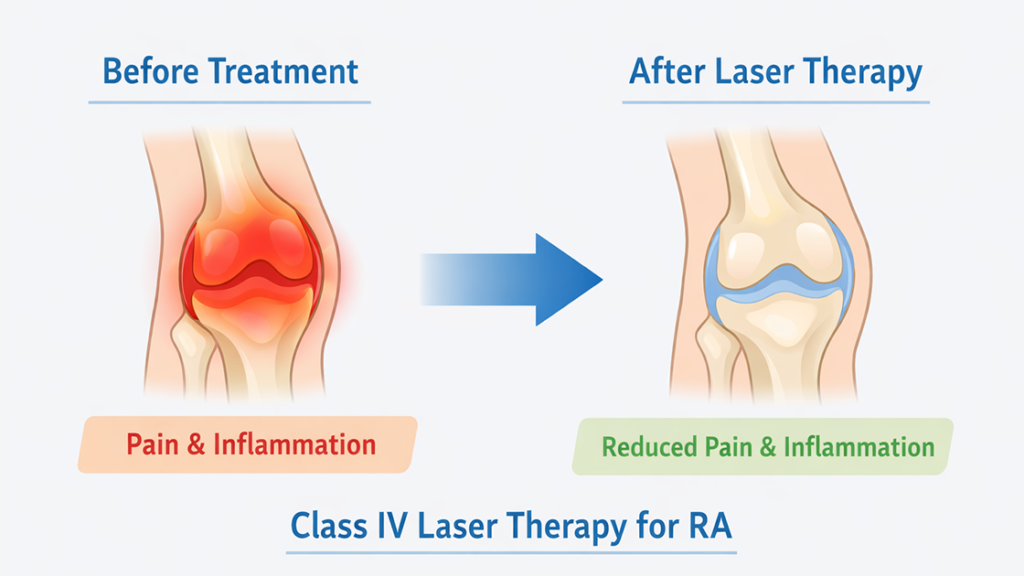
The high-intensity light penetrates tissues and promotes vasodilation, which increases blood flow to the affected joints. This enhanced circulation helps remove inflammatory mediators and reduces swelling, a primary cause of pain in RA patients.
2.2 Alleviating Pain
Class IV lasers stimulate endorphin release and modulate nerve signals, which can lead to significant pain relief. Unlike opioid medications, laser therapy is non-addictive and avoids systemic side effects, making it a safer option for long-term management.
2.3 Promoting Tissue Repair
Laser energy stimulates fibroblast activity and collagen production, supporting joint tissue repair and maintaining flexibility. Over time, this can improve joint function and slow the progression of tissue damage.
3. Benefits of Class IV Laser Therapy for RA
When used appropriately, this therapy provides multiple advantages for rheumatoid arthritis sufferers.
3.1 Non-Invasive and Safe
Class IV Laser Therapy is non-invasive, meaning there is no need for surgery or injections. Patients typically experience minimal discomfort during treatment, and the risk of complications is low when administered by trained professionals.
3.2 Complementary to Conventional Treatments
Laser therapy can be integrated with medications, physical therapy, or occupational therapy. It enhances overall treatment outcomes by targeting inflammation and pain directly, while conventional therapies address systemic autoimmune activity.
3.3 Faster Recovery and Improved Mobility
Patients often report increased joint range of motion and reduced stiffness following a series of laser sessions. This improvement can make daily activities more manageable and support an active lifestyle.
4. What to Expect During a Session
Understanding the treatment process helps patients feel more comfortable and informed.
4.1 Treatment Duration and Frequency
A typical session lasts between 10 to 20 minutes per joint, depending on the severity of symptoms. Most RA patients undergo multiple sessions per week initially, gradually spacing them out as pain diminishes and mobility improves.
4.2 Sensations During Therapy
Patients may feel gentle warmth or tingling in the targeted joint. The intensity is adjustable based on tolerance, and the procedure is generally well-tolerated without the need for anesthesia.
4.3 Post-Treatment Care
After a session, patients are advised to rest the treated joint and avoid strenuous activity for a few hours. Hydration, gentle stretching, and following any prescribed home exercises enhance the effectiveness of laser therapy.
5. Risks and Considerations
While Class IV Laser Therapy is generally safe, RA patients should be aware of potential risks.
5.1 Temporary Redness or Warmth
Some patients may notice mild redness or warmth at the treatment site, which typically resolves within a few hours.
5.2 Eye Safety
Direct exposure to Class IV laser beams can damage the eyes. Protective eyewear is mandatory for both the patient and practitioner during treatment.
5.3 Individual Response
Not all patients respond equally to laser therapy. Factors such as disease severity, joint condition, and treatment adherence influence outcomes. A personalized treatment plan is essential for optimal results.
FAQ
Q1: Can Class IV Laser Therapy replace RA medications?
A1: No, it should be used as a complementary therapy alongside prescribed medications, not as a replacement.
Q2: How soon will I notice pain relief?
A2: Some patients feel improvement after a few sessions, but full benefits often require multiple weeks of consistent therapy.
Q3: Is it safe for long-term use?
A3: Yes, when administered by trained professionals, Class IV Laser Therapy is safe for repeated treatments over time.
Q4: Can it improve joint function permanently?
A4: It supports tissue repair and reduces stiffness, but it does not cure RA. Combined therapy improves mobility and quality of life.
Q5: Are there any side effects?
A5: Side effects are minimal, usually limited to temporary warmth or mild redness at the treatment site.
結論
Class IV Laser Therapy offers a promising, non-invasive option for managing rheumatoid arthritis pain. By reducing inflammation, alleviating discomfort, and promoting tissue repair, it complements conventional RA treatments and enhances patients’ quality of life. With professional guidance and personalized treatment plans, individuals with RA can experience meaningful improvements in mobility and daily functioning.
References
National Center for Biotechnology Information. “Low-Level Laser Therapy for Rheumatoid Arthritis.”
https://www.ncbi.nlm.nih.gov/pmc/articles/PMC5523089
Arthritis Foundation. “Laser Therapy for Arthritis Pain Management.”
https://www.arthritis.org/health-wellness/treatment/laser-therapy
Mayo Clinic. “Laser Therapy: Uses, Benefits, and Risks.”
https://www.mayoclinic.org/tests-procedures/laser-therapy/about/pac-20385123
 English
 العربية
 Français
 日本語
日本語 Português
 Español
 Русский
 Deutsch