
Contenu des pages
1. Introduction: The Physical Demands of Football
Football represents one of the most physically demanding sports in the world, with players subjecting their bodies to intense collisions, rapid directional changes, and explosive movements that place extraordinary stress on musculoskeletal structures. The nature of this contact sport inevitably leads to a wide spectrum of injuries, from acute traumatic incidents to chronic overuse conditions that can sideline athletes for weeks or months.
1.1 Football and High-Impact Injuries
The biomechanical demands of football create a perfect storm for injury development. Players experience forces that can exceed several times their body weight during tackles, jumps, and sudden stops. These high-impact forces primarily affect the lower extremities, with ankle sprains, knee injuries, and muscle strains representing approximately 60% of all football-related injuries according to sports medicine research. The repetitive nature of training and competition further compounds injury risk through cumulative microtrauma. Hamstring strains, Achilles tendonitis, and overuse injuries of the shoulder and elbow joints are endemic in football populations. Traditional treatment approaches often rely heavily on rest, pharmaceutical interventions, and lengthy rehabilitation protocols that can keep players away from their sport for extended periods.
1.2 Brief Introduction to Photobiomodulation and Class IV Lasers
In recent years, photobiomodulation therapy has emerged as a revolutionary treatment modality in sports medicine. This therapeutic approach utilizes specific wavelengths of light to stimulate cellular processes that promote healing, reduce inflammation, and accelerate tissue repair. Among the various laser classifications available for medical applications, Class IV lasers represent the most advanced and powerful option for treating deep tissue injuries. Unlike lower-powered laser systems, Class IV therapeutic lasers can deliver significantly higher photon densities to target tissues, enabling treatment of injuries in deeper anatomical structures such as large muscle groups, joints, and periarticular tissues. This capability makes them particularly valuable for addressing the complex injury patterns commonly seen in football players.
2. What Is Thérapie laser de classe IV and How Does It Work?
Understanding the scientific foundation of laser therapy requires examining both the physical properties of therapeutic light and the biological mechanisms through which photons interact with injured tissues. This knowledge forms the basis for evidence-based treatment protocols in sports medicine applications.
2.1 Understanding Photobiomodulation
Photobiomodulation (PBM), formerly known as low-level laser therapy, represents a non-invasive therapeutic modality that utilizes specific wavelengths of light to stimulate cellular metabolism and promote tissue healing. The process involves the absorption of photons by cellular chromophores, particularly cytochrome c oxidase within mitochondria, leading to enhanced adenosine triphosphate (ATP) production and improved cellular function. The therapeutic mechanism operates through several interconnected pathways. Primary effects include increased mitochondrial respiration, enhanced cellular proliferation, and modulation of inflammatory mediators such as prostaglandins and cytokines. Secondary effects encompass improved microcirculation, enhanced lymphatic drainage, and accelerated collagen synthesis, all of which contribute to faster tissue repair and reduced recovery times. Research demonstrates that optimal photobiomodulation occurs within specific parameters of wavelength, power density, and treatment duration. The biphasic dose response, known as the Arndt-Schulz law, indicates that insufficient or excessive light doses can diminish therapeutic efficacy, emphasizing the importance of precise treatment protocols.
2.2 Deep Tissue Penetration for Muscles and Joints
The effectiveness of laser therapy in football injuries depends on delivering therapeutic light to target tissues at clinically relevant depths. Class IV lasers, with power outputs ranging from 1 to 45 watts, can penetrate tissues 3-5 cm or deeper, depending on wavelength and tissue properties. Near-infrared wavelengths between 800-1000 nanometers are optimal for deep tissue penetration, minimizing absorption by superficial chromophores like hemoglobin and melanin while maximizing delivery to muscles and joints. This combination of power density and appropriate wavelength allows effective treatment of large muscle groups, joint capsules, and periarticular structures in football players. Tissue properties such as absorption and scattering affect light distribution, so understanding these factors helps clinicians optimize treatment for specific injuries and anatomical regions, ensuring maximum benefit and safety.
2.3 The Biological Effects on Injured Tissues
The cellular and molecular responses to photobiomodulation therapy involve complex cascades of biological events that ultimately promote tissue healing and functional recovery. At the cellular level, photon absorption by cytochrome c oxidase increases electron transport chain efficiency, leading to enhanced ATP synthesis and improved cellular energy metabolism. Inflammatory modulation represents another critical mechanism of action. PBM therapy influences the expression of inflammatory mediators, reducing levels of pro-inflammatory cytokines such as tumor necrosis factor-alpha and interleukin-1 beta while promoting anti-inflammatory signaling pathways. This balanced inflammatory response facilitates optimal healing conditions without suppressing necessary immune functions. Vascular effects include vasodilation of arterioles and capillaries, increased angiogenesis, and enhanced endothelial function. These changes improve tissue oxygenation, nutrient delivery, and waste product removal, creating an optimal microenvironment for cellular repair and regeneration. Additionally, PBM therapy stimulates fibroblast proliferation and collagen synthesis, essential processes for structural tissue repair in ligaments, tendons, and muscle fascia.
3. Top Benefits of Laser Therapy for Football Players
The application of Class IV laser therapy in football medicine offers numerous advantages over traditional treatment modalities, providing athletes with faster recovery times, reduced pain levels, and improved functional outcomes. These benefits directly address the unique challenges faced by football players in returning to peak performance following injury.
3.1 Accelerated Muscle Recovery
Muscle injuries, including strains, contusions, and delayed-onset muscle soreness (DOMS), represent a significant proportion of football-related injuries. Class IV laser therapy accelerates muscle recovery through multiple mechanisms that address both acute injury responses and chronic adaptation processes. The enhanced mitochondrial function induced by photobiomodulation increases cellular energy production, enabling faster protein synthesis and cellular repair processes. This metabolic boost is particularly beneficial for type II muscle fibers, which are predominantly utilized during the explosive movements characteristic of football. Research indicates that laser therapy can reduce muscle recovery time by 25-40% compared to conventional treatment approaches. Additionally, the anti-inflammatory effects of PBM therapy help minimize secondary tissue damage while preserving the beneficial aspects of the inflammatory response necessary for proper healing. This balanced approach prevents excessive scar tissue formation and maintains optimal muscle fiber architecture, reducing the risk of reinjury upon return to activity.
3.2 Pain Management Without Drugs
Pain management in football players requires careful consideration of both immediate relief and long-term health implications. Class IV laser therapy provides effective analgesia through neurological mechanisms that reduce pain perception without the side effects associated with pharmaceutical interventions. The analgesic effects of photobiomodulation occur through modulation of nerve conduction velocity, alterations in pain gate mechanisms, and release of endogenous opioids. These mechanisms provide both immediate and sustained pain relief, enabling players to participate more effectively in rehabilitation programs and return to activity sooner. Unlike non-steroidal anti-inflammatory drugs (NSAIDs) or opioid medications, laser therapy carries no risk of systemic side effects, drug interactions, or dependency issues. This safety profile makes it an ideal pain management tool for athletes who must maintain peak physical condition and avoid substances that might impair performance or violate anti-doping regulations.
3.3 Laser Therapy for Ligament and Tendon Injuries
Ligamentous and tendinous injuries present unique challenges in football medicine due to the relatively poor vascularization of these structures and their critical role in joint stability and force transmission. Class IV laser therapy addresses these challenges through targeted stimulation of cellular processes essential for connective tissue repair. The piezoelectric effect generated by mechanical stress on collagen fibers during laser treatment enhances cellular mechanotransduction, promoting optimal collagen fiber alignment and tensile strength development. This process is crucial for restoring normal biomechanical properties in healing ligaments and tendons, reducing the risk of reinjury upon return to sport. Research demonstrates that photobiomodulation therapy can increase collagen synthesis by up to 31% and improve tensile strength of healing tendons by 25-35% compared to untreated controls. These improvements translate directly into faster return-to-play times and reduced reinjury rates in football players with ligamentous or tendinous injuries.
3.4 Enhanced Motion, Flexibility and Prevent Reinjury
Range of motion limitations and flexibility deficits following injury represent significant risk factors for reinjury in football players. Class IV laser therapy addresses these issues through multiple mechanisms that restore normal tissue mechanics and movement patterns. The thermal effects of higher-powered laser systems promote tissue extensibility by increasing collagen fiber mobility and reducing cross-link density in scar tissue. This improved tissue quality translates into better joint mobility and muscle flexibility, essential components of injury prevention strategies. Furthermore, the neurological effects of photobiomodulation include enhanced proprioception and neuromuscular control, critical factors in preventing reinjury. Improved sensorimotor function enables better anticipatory muscle activation and movement coordination, reducing the likelihood of compensatory movement patterns that predispose to subsequent injury.
4. Football Injuries Best Treated with Laser Therapy
The versatility of Class IV laser therapy makes it suitable for treating a wide range of football-related injuries. Understanding which conditions respond best to photobiomodulation therapy enables clinicians to optimize treatment outcomes and develop evidence-based protocols for common injury patterns.
4.1 Ankle Sprains and Achilles Tendonitis
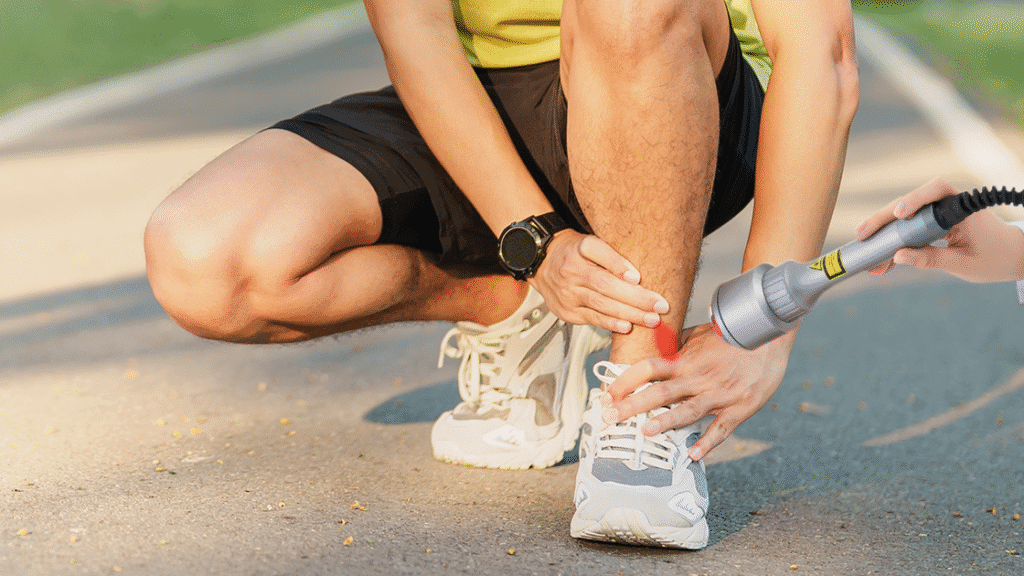
Ankle injuries represent the most common injury type in football, with lateral ankle entorses accounting for approximately 15-20% of all football injuries. The complex anatomy of the ankle joint, including multiple ligamentous structures and the weight-bearing demands of the sport, makes these injuries particularly challenging to treat effectively. Class IV laser therapy demonstrates exceptional efficacy in treating acute ankle sprains by reducing inflammation, accelerating ligament healing, and minimizing scar tissue formation. The deep penetration capabilities of higher-powered systems ensure adequate light delivery to the deeper ligamentous structures, including the anterior talofibular and calcaneofibular ligaments most commonly injured in lateral ankle sprains. Achilles tendonitis, whether acute or chronic, responds particularly well to photobiomodulation therapy due to the relatively superficial location of the tendon and the excellent tissue penetration achieved with near-infrared wavelengths. Treatment protocols typically involve daily sessions during acute phases, with frequency reduction as symptoms improve and functional capacity returns.
4.2 Hamstring and Groin Strains
Hamstring injuries are particularly frustrating for football players due to their high recurrence rate and potential to become chronic if not properly managed. The hamstring muscle group—comprising the biceps femoris, semitendinosus, and semimembranosus—requires a comprehensive treatment approach targeting both acute injury and predisposing factors. Class IV laser therapy is highly effective for hamstring souches, as it penetrates the thick muscle mass of the posterior thigh to deliver therapeutic doses to the musculotendinous junctions, where injuries often occur. The photobiomodulation process accelerates muscle fiber repair and reduces fibrosis and adhesions that can lead to chronic flexibility issues. Groin strains, affecting the adductor muscles, present similar challenges, with high recurrence rates and potential chronicity. Due to the deep location and complex anatomy of these muscles, Class IV laser therapy effectively reaches the affected tissues and promotes optimal healing, reducing the risk of reinjury.
4.3 Knee Pain and Inflammation
Knee injuries in football range from acute traumatic injuries involving ligaments and menisci to chronic overuse conditions affecting the patellofemoral joint and surrounding soft tissues. While severe structural injuries may require surgical intervention, many knee conditions respond excellently to Class IV laser therapy as either primary treatment or adjunctive therapy. Patellofemoral pain syndrome, common in football players due to the repetitive jumping and cutting movements inherent in the sport, responds particularly well to photobiomodulation therapy. The anti-inflammatory effects help reduce synovial inflammation while improved circulation promotes healing of irritated periarticular tissues. Iliotibial band syndrome and patellar tendinopathy also demonstrate good response to laser therapy, with treatment protocols focusing on the affected tissue structures and addressing both inflammatory and degenerative components of these overuse conditions. The ability to treat large surface areas efficiently makes Class IV systems particularly suitable for these conditions.
4.4 Epaule and Elbow Overuse Injuries
Upper extremity injuries in football players often result from overuse patterns related to throwing motions, blocking techniques, or contact with other players and equipment. These injuries frequently involve multiple tissue types, including muscles, tendons, joint capsules, and bursal structures, requiring comprehensive treatment approaches. Rotator cuff tendinopathy and impingement syndrome respond well to Class IV laser therapy due to the ability to treat the deep rotator cuff muscles and subacromial space effectively. Treatment protocols typically address both the inflammatory component of acute exacerbations and the degenerative changes associated with chronic overuse. Lateral epicondylitis (tennis elbow) and medial epicondylitis (golfer’s elbow), while less common in football, can occur in players who engage in cross-training activities or have specific positional demands. The superficial location of the epicondyles makes these conditions highly responsive to laser therapy, with excellent penetration to the affected tendon insertion sites.
4.5 Back and Neck Strain from Tackles
Spinal injuries in football players range from acute muscle strains to chronic issues like facet joint dysfunction and disc pathology. While serious injuries require immediate medical attention, many back and neck problems respond well to Class IV laser therapy. Cervical and lumbar strains, common after tackles or falls, benefit from the muscle relaxation and anti-inflammatory effects of photobiomodulation therapy. Laser therapy is particularly effective for treating large muscle groups, such as the paraspinal muscles and upper trapezius, which are often affected in football players. Facet joint dysfunction and sacroiliac joint pain, frequently causing chronic low-back pain, can also be treated effectively with laser therapy. The deep penetration of Class IV systems allows for targeting deeper structures that are difficult to reach with other modalities, offering a comprehensive solution for managing spinal injuries in football.
5. Real-World Use: Laser Therapy in Professional Football
The adoption of Class IV laser therapy in professional football has grown significantly as teams and medical staff recognize its potential to reduce injury downtime and improve player availability. This real-world application provides valuable insights into optimal treatment protocols and clinical outcomes.
5.1 Case Studies and Team Adoption
Professional football organizations have adopted Class IV laser therapy into their injury management programs, showing significant reductions in recovery times. Case studies from major league teams report up to 50% faster recovery for certain injuries when laser therapy is included in treatment protocols. One notable case involved a wide receiver with recurrent hamstring strains, who returned to full participation after a treatment plan combining Class IV laser therapy, manual therapy, and targeted exercises—without recurrence over an entire season. Team physicians have found laser therapy especially effective for acute injuries, as early intervention can significantly reduce inflammation and speed up healing. The portability and ease of use of modern Class IV systems also allow for treatment on the sidelines during games and practices, optimizing recovery during the critical early stages of injury.
5.2 Endorsements by Sports Physicians and Athletic Trainers
The medical and athletic training communities have increasingly embraced Class IV laser therapy based on both scientific evidence and clinical experience. Sports medicine physicians note the versatility of the modality in treating various injury types and its compatibility with other treatment approaches. Athletic trainers particularly value the immediate pain relief and improved function that players experience following laser therapy sessions. This rapid response enables more effective rehabilitation programs and better player compliance with treatment protocols. The non-invasive nature of the treatment also allows for frequent application without concerns about cumulative side effects. Professional organizations, including the National Athletic Trainers’ Association and various sports medicine societies, have published position statements and treatment guidelines that include photobiomodulation therapy as an evidence-based treatment option for various musculoskeletal conditions common in athletics.
5.3 Athletes’ Testimonials
Professional football players who undergo Class IV laser therapy report significant improvements in pain, function, and recovery times compared to traditional treatments. Many athletes can maintain training intensity and competition schedules while recovering from injuries that once required extended rest. Players appreciate the convenience and comfort of laser therapy, especially when compared to invasive procedures or medication regimens. With no systemic side effects, laser therapy can be administered before or after practices and games, making it a preferred option for sustaining peak performance. Long-term follow-up shows that athletes who incorporate laser therapy into their maintenance and injury prevention routines experience sustained benefits and lower reinjury rates. This evidence supports the use of photobiomodulation therapy for both acute injury treatment and ongoing performance optimization.
6. Final Thought: From Pain to Performance, One Beam at a Time
Thérapie laser de classe IV is transforming football medicine by offering effective, evidence-based treatment for both immediate pain relief and long-term tissue health. As our understanding of photobiomodulation grows, the applications and protocols for laser therapy in football will continue to improve. Ongoing research into combination therapies, personalized treatment plans, and advanced diagnostic tools will further refine laser therapy’s effectiveness. The future holds promise with AI algorithms to analyze treatment responses and optimize protocols. For players at all levels, from youth to professional, Class IV laser therapy provides a safe, drug-free option to accelerate recovery, reduce pain, and enhance performance. As accessibility increases and costs decrease, more athletes will benefit from this cutting-edge treatment in sports medicine.
7. FAQs about Laser Therapy for Football Injuries
Class IV laser therapy accelerates healing by stimulating deeper tissues, improving blood flow and cellular activity. This reduces inflammation, speeds up recovery, and promotes muscle regeneration, helping players recover faster from injuries.
Yes, Class IV laser therapy is non-invasive, FDA-approved, and safe. It uses light energy to target injuries without damaging surrounding tissues, offering a drug-free option with minimal side effects.
Laser therapy works for both acute and chronic injuries. It helps reduce inflammation, ease pain, and repair damaged tissues, benefiting players with conditions like tendonitis or long-term muscle strains.
Yes! Class IV laser therapy reduces pain, inflammation, and muscle spasms without the need for painkillers, making it an ideal choice for players who want to avoid medication while recovering.
While it doesn’t directly prevent injuries, laser therapy improves muscle flexibility, joint mobility, and tissue elasticity, which can reduce the risk of re-injury and help players better handle the physical demands of football.
 English
 العربية
 Français
 日本語
日本語 Português
 Español
 Русский
 Deutsch