
Contenu des pages
Introduction
Cycling is a popular endurance activity that requires consistent lower-body movement, strong muscle coordination, and efficient biomechanics. Whether riding on roads, trails, or competitive tracks, cyclists often repeat the same pedaling motion thousands of times during long-distance sessions. Continuous knee movement, prolonged hip flexion, and sustained saddle positioning can place repeated physical demands on areas such as the knees, hips, and lower back. Thérapie laser de classe IV has gained attention in sports rehabilitation and physical wellness settings because of its ability to deliver targeted laser energy through photobiomodulation principles. By supporting circulation, cellular activity, and soft tissue recovery processes, this advanced laser approach provides cyclists with an additional option for maintaining physical comfort during demanding training routines.
1. Understanding the Physical Demands of Cycling
1.1 Why Long-Distance Cycling Creates Stress on the Knee and Hip Areas
Cycling is often considered a low-impact activity, but the repetitive nature of pedaling creates continuous movement patterns that require repeated engagement of muscles, tendons, and connective tissues.
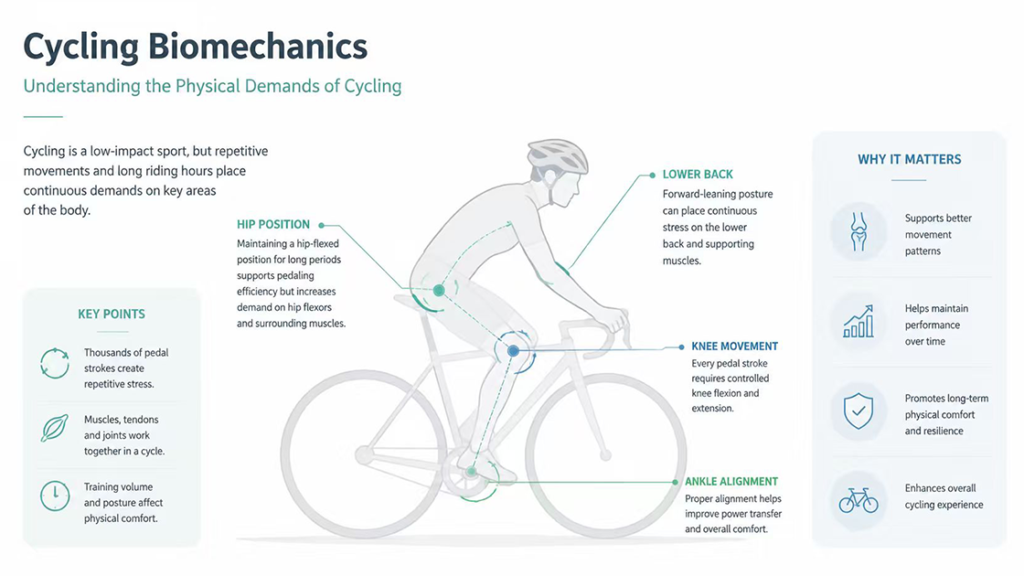
During long rides, cyclists perform thousands of knee flexion and extension cycles. The repeated movement pattern requires coordinated activity between the quadriceps, hamstrings, hip muscles, and lower leg structures.
The knee and hip areas play important roles in maintaining efficient cycling mechanics. When training volume increases, cyclists may experience temporary muscle fatigue, stiffness, or reduced comfort around commonly used areas.
Class IV Laser Therapy focuses on supporting soft tissue recovery through controlled light energy delivery. By applying photobiomodulation principles, this technology may help support normal cellular responses and circulation in targeted areas commonly involved in cycling activities.
1.2 The Role of Saddle Position and Hip Flexion in Cycling Comfort
Bike setup and riding posture strongly influence cycling biomechanics. The saddle position determines how the hips, knees, and lower back interact during every pedal stroke.
A prolonged hip-flexed position is a defining characteristic of cycling. While this position helps improve pedaling efficiency, maintaining the same posture for extended periods may create physical demands on the hip flexors and surrounding muscles.
Tightness around the hip flexors may affect overall movement comfort and influence how cyclists maintain their riding position.
Class IV Laser Therapy provides a supportive approach by focusing on targeted areas involved in repetitive movement patterns. Through deep tissue laser energy, it may support muscle relaxation processes and tissue recovery after demanding cycling sessions.
1.3 Common Areas of Physical Stress for Cyclists
Cyclists rely on several interconnected muscle groups to generate power and maintain balance. Because cycling involves repeated lower-body movement, certain areas commonly receive greater attention during recovery routines.
Frequently focused areas include:
- Patellar area
- Quadriceps muscles
- Hip flexors
- Gluteal muscles
- Lower back region
Each area contributes to cycling performance and comfort. Maintaining proper mobility and muscle condition helps cyclists continue training while managing the physical demands of endurance riding.
Class IV Laser Therapy can be integrated into recovery-focused routines by supporting areas affected by repetitive motion and prolonged positioning.
2. How Class IV Laser Therapy Supports Cycling Recovery
2.1 Understanding High-Power Laser Therapy in Sports Recovery
Class IV Laser Therapy uses higher-power laser energy compared with traditional low-intensity light devices. The technology delivers controlled energy into specific areas to support biological responses within tissues.
In sports and rehabilitation environments, laser therapy is commonly discussed in relation to photobiomodulation, which describes how specific wavelengths of light interact with cellular structures.
Near-infrared laser energy is often used because it can reach deeper tissue areas compared with visible light wavelengths.
For cyclists, this technology provides a non-invasive supportive approach that focuses on maintaining muscle and soft tissue comfort after repetitive training activities.
2.2 How Photobiomodulation Supports Muscles Used During Cycling
Photobiomodulation is based on the interaction between light energy and biological tissues. Specific wavelengths may influence cellular activity and support processes associated with energy production and tissue responses.
Cycling requires continuous activation of major muscle groups, including the quadriceps, hamstrings, glutes, and hip flexors.
After long rides, cyclists often include recovery strategies to support muscle condition and mobility. Class IV Laser Therapy can become part of these strategies by providing targeted light energy to areas exposed to repeated physical demands.
The technology focuses on supporting the body’s natural recovery processes rather than replacing professional evaluation or individualized training guidance.
2.3 Supporting Deep Tissue Areas Related to Cycling Movement
One characteristic of Class IV Laser Therapy is its ability to deliver energy into deeper tissue regions. This makes it suitable for applications involving larger muscle groups commonly used during endurance activities.
Cycling performance depends on coordination between superficial muscles and deeper supporting structures. Areas such as the hip flexors, gluteal muscles, and lower back contribute to maintaining efficient posture and movement patterns.
Through targeted laser energy application, Class IV Laser Therapy may support circulation and soft tissue recovery in areas affected by repetitive cycling movements.
For recreational cyclists and competitive riders, deep tissue support can be an important consideration when developing a complete recovery routine.
3. Common Cycling-Related Areas That Benefit From Recovery Support
3.1 Supporting the Patellar Area During Repetitive Pedaling Movements
The knee plays a central role in cycling performance because every pedal stroke requires controlled flexion and extension movements. Although cycling does not involve the same impact forces as many other sports, the repetitive nature of pedaling can create continuous demand on structures around the knee.
The patellar area is especially important because it connects the movement of the thigh muscles with lower leg mechanics. Factors such as training intensity, riding duration, bike position, and pedaling habits can influence how cyclists experience physical comfort in this region.
Class IV Laser Therapy provides targeted laser energy that may support local circulation and tissue activity around areas exposed to repetitive movement. Through photobiomodulation principles, this technology can be used as part of a broader recovery routine focused on maintaining mobility and physical comfort.
For cyclists who regularly participate in endurance rides, supporting the condition of frequently used areas can help create a more balanced approach to training and recovery.
3.2 Supporting Hip Flexor Mobility After Extended Cycling Sessions
Hip flexors are highly involved during cycling because riders maintain a seated position with repeated hip flexion throughout each ride. Long-distance cycling requires these muscles to remain active for extended periods, especially during endurance training and climbing sessions.
Limited movement variation during cycling may contribute to feelings of tightness or reduced flexibility around the hip area. Maintaining hip mobility is important because the hips influence lower-body movement patterns and overall riding posture.
Class IV Laser Therapy focuses on delivering controlled laser energy to targeted areas, supporting soft tissue recovery processes in muscles commonly involved in cycling.
By including recovery strategies that address hip flexors, cyclists can pay closer attention to areas that experience continuous workload during training sessions.
3.3 Managing Lower Back Stress Associated With Cycling Posture
The lower back plays an important role in maintaining stability during cycling. Riders often maintain a forward-leaning position to improve aerodynamics and riding efficiency, especially during road cycling and competitive events.
While this position supports cycling performance, staying in the same posture for extended periods may place ongoing demand on muscles around the lumbar region.
Factors such as saddle height, riding technique, flexibility, and training duration can influence lower back comfort during and after cycling.
Class IV Laser Therapy may provide supportive care for muscles and soft tissues around the lower back by using targeted laser energy and photobiomodulation principles.
Combining appropriate bike fitting, mobility exercises, and recovery-focused technologies can help cyclists develop a more complete approach to managing physical demands from long rides.
4. The Role of Class IV Laser Therapy in Modern Cycling Recovery
4.1 Why Cyclists Are Exploring Advanced Recovery Technologies
Cycling communities include a wide range of participants, from casual riders to professional athletes. Regardless of experience level, many cyclists share similar recovery concerns due to repeated movement patterns and long training sessions.
Traditional recovery methods often include stretching, mobility exercises, hydration strategies, and rest periods. As sports technology continues to develop, many athletes and active individuals are exploring additional supportive approaches.
Class IV Laser Therapy has gained interest because it combines advanced laser technology with photobiomodulation concepts. The approach focuses on supporting natural biological processes within targeted tissues.
For cyclists who regularly place repeated demands on their knees, hips, and lower back, advanced recovery technology can become part of a comprehensive wellness routine.
4.2 The Importance of Personalized Laser Therapy Parameters for Cyclists
Every cyclist has different riding habits, body mechanics, and training goals. A road cyclist completing long-distance rides may have different physical demands compared with a mountain biker navigating uneven terrain.
Class IV Laser Therapy systems often allow adjustment of different parameters, including energy levels, treatment areas, and application settings.
This flexibility allows professionals to consider individual factors such as:
- Cycling frequency
- Training intensity
- Commonly stressed areas
- Personal recovery goals
A personalized approach helps ensure that laser technology is integrated appropriately into a cyclist’s overall recovery strategy.
4.3 Combining Laser Technology With Proper Cycling Techniques
Recovery technology works best when combined with proper cycling habits. Bike fitting, riding posture, strength training, and flexibility exercises all contribute to maintaining efficient movement patterns.
A properly adjusted bicycle can help support better alignment between the hips, knees, and ankles. In addition, regular mobility work can help cyclists maintain functional movement outside of riding sessions.
Class IV Laser Therapy can complement these practices by providing additional support for muscles and soft tissues affected by repeated cycling activity.
A balanced approach that combines technology, training methods, and healthy movement habits allows cyclists to better manage the physical demands of endurance riding.
5. Building a Complete Recovery Strategy for Cycling Performance
5.1 Supporting Long-Term Cycling Comfort Through Recovery Planning
Successful cycling performance depends not only on training volume but also on how effectively riders manage recovery between sessions.
Long-distance cyclists often create structured routines that include warm-up activities, mobility exercises, rest periods, and recovery strategies.
Class IV Laser Therapy can be included as one component of this approach by supporting muscle and soft tissue recovery after demanding rides.
Rather than focusing only on individual discomfort areas, a complete recovery plan considers the entire cycling movement system, including the knees, hips, lower back, and supporting muscles.
By maintaining attention to recovery, cyclists can create more sustainable training habits and support long-term participation in the sport.
5.2 Choosing a Suitable Class IV Laser Therapy Approach for Cyclists
Choosing a suitable laser therapy approach depends on individual riding patterns, physical condition, and recovery goals.
Cyclists may consider factors such as:
- Type of cycling activity
- Average riding duration
- Frequently stressed body areas
- Training schedule
Professional guidance can help determine appropriate application methods and ensure that laser technology fits within a broader wellness plan.
For cyclists looking for additional support after repetitive riding activities, Class IV Laser Therapy represents an advanced option that focuses on targeted energy delivery, photobiomodulation, and soft tissue support.
FAQ
Why do cyclists experience knee discomfort after long rides?
Repeated pedaling movements, riding posture, and training intensity may place continuous demand on knee-related muscles and tissues.
Can Class IV Laser Therapy support cycling recovery?
Class IV Laser Therapy may support soft tissue recovery processes and physical comfort as part of a broader recovery routine.
What cycling areas are commonly focused on with laser therapy?
Common areas include the knees, hip flexors, lower back, and muscles involved in repeated pedaling movements.
Is Class IV Laser Therapy only for professional cyclists?
No. It can also be considered by recreational cyclists and active individuals who experience physical demands from regular riding.
How does photobiomodulation relate to cycling recovery?
Photobiomodulation uses specific light energy to support cellular activity and tissue responses in targeted areas.
Conclusion
Cycling requires thousands of repeated movements that place continuous demands on the knees, hips, and lower back. Long rides, prolonged hip flexion, and consistent saddle positioning can influence overall physical comfort, especially for riders who train frequently. Class IV Laser Therapy uses advanced laser energy and photobiomodulation principles to provide targeted support for muscles and soft tissues involved in cycling activities. By combining laser technology with proper bike fitting, mobility practices, and balanced recovery habits, cyclists can develop a more complete approach to maintaining comfort and supporting long-term participation in the sport.
References
Photobiomodulation Therapy: Mechanisms and Applications in Sports Medicine
https://pmc.ncbi.nlm.nih.gov/articles/PMC4126805
Photobiomodulation in Sports Recovery and Performance Enhancement
https://www.ncbi.nlm.nih.gov/pmc/articles/PMC7055315
Effects of Photobiomodulation Therapy on Musculoskeletal Recovery
https://pmc.ncbi.nlm.nih.gov/articles/PMC7066013
The Science of Cycling Biomechanics and Injury Prevention
https://www.sciencedirect.com/science/article/pii/S1440244019301226
High-Intensity Laser Therapy in Musculoskeletal Rehabilitation
 English
 العربية
 Français
 日本語
日本語 Português
 Español
 Русский
 Deutsch