
Contenu des pages
Introduction
Seasonal weather changes can influence how many people experience joint stiffness, muscle tightness, and reduced mobility throughout the year. Temperature fluctuations, changes in humidity, and variations in daily activity levels may affect how the body feels, especially for individuals managing age-related mobility concerns, active lifestyles, or recurring joint discomfort. Class IV Laser Therapy has become an important technology in rehabilitation and wellness settings because of its ability to deliver concentrated light energy to targeted areas and support natural cellular processes through photobiomodulation. By combining advanced laser technology with personalized recovery approaches, Thérapie laser de classe IV can provide additional support for maintaining comfort and mobility during seasonal transitions.
1. Understanding Seasonal Joint Stiffness and Its Common Triggers
Seasonal changes can create noticeable differences in how joints and surrounding tissues feel during everyday movement. Many people report increased stiffness during colder months or periods of changing weather patterns, particularly after long periods of inactivity. Understanding the relationship between environmental factors and joint comfort helps explain why supportive technologies such as Class IV Laser Therapy are increasingly considered in mobility and recovery programs.
1.1 How Weather Changes Influence Joint Comfort
Changes in temperature and atmospheric conditions may affect muscles, tendons, and connective tissues surrounding joints. Cooler temperatures can contribute to muscle tightness and reduced flexibility, while changes in barometric pressure and humidity may influence how sensitive certain areas of the body feel. Some individuals with existing joint conditions notice more stiffness during seasonal transitions, although responses can vary from person to person.
The body relies on healthy circulation, tissue flexibility, and regular movement to maintain comfortable joint function. When colder weather reduces outdoor activity or creates longer periods of sitting, joints may experience less movement throughout the day, which can contribute to feelings of stiffness.
1.2 Common Areas Affected by Seasonal Stiffness
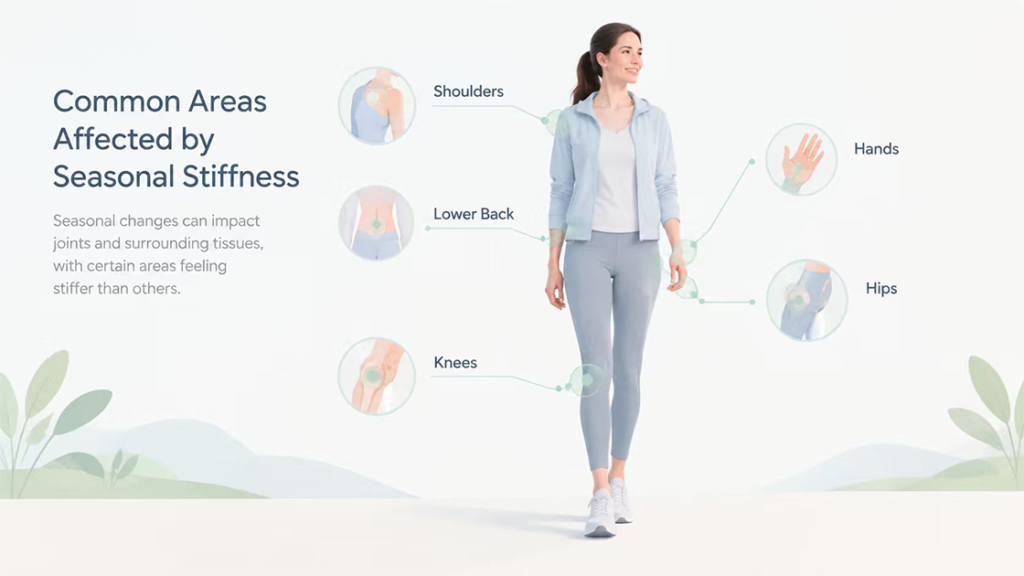
Seasonal joint stiffness can appear in different areas depending on lifestyle, age, physical activity, and previous stress on the body. Common areas include the knees, hips, shoulders, hands, and lower back because these regions experience frequent movement demands.
For active individuals, seasonal changes may affect areas that receive repetitive loading during exercise. For older adults, reduced mobility during colder seasons may make daily activities feel more challenging. Supporting joint comfort often involves maintaining movement habits, proper physical activity, and recovery strategies that address surrounding soft tissues.
2. The Role of Class IV Laser Therapy in Supporting Joint Mobility
Class IV Laser Therapy uses high-powered laser energy to support photobiomodulation, a process where specific wavelengths of light interact with cellular components. This approach is commonly used in rehabilitation environments to support tissue recovery, circulation, and overall comfort in targeted areas.
2.1 How Class IV Laser Therapy Works With Photobiomodulation
Photobiomodulation describes the interaction between light energy and biological tissues. When laser energy reaches targeted tissues, it may influence cellular activity related to energy production and normal recovery processes.
Class IV Laser Therapy is designed to deliver deeper energy compared with lower-output laser technologies. This allows practitioners to focus on larger treatment areas such as joints, muscles, and surrounding soft tissues that may experience seasonal stiffness.
The goal of this technology is not to replace movement, exercise, or professional care plans. Instead, it can be incorporated as a supportive option within broader mobility and recovery strategies.
2.2 Supporting Soft Tissue Function During Seasonal Changes
Joint comfort depends not only on the joint structure itself but also on surrounding muscles, tendons, ligaments, and connective tissues. Seasonal stiffness often involves multiple tissue areas working together.
Class IV Laser Therapy may support soft tissue recovery by encouraging circulation and helping maintain tissue flexibility. This makes it a useful consideration for rehabilitation programs focused on improving mobility during periods when weather changes influence daily movement patterns.
3. Seasonal Joint Stiffness Management for Different Lifestyle Groups
Although seasonal stiffness can affect many people, certain groups may experience more noticeable changes because of their activities, work demands, or physical condition. Class IV Laser Therapy applications can be adapted according to individual needs and specific areas of concern.
3.1 Supporting Active Adults During Seasonal Training Changes
Active adults often adjust their exercise routines when seasons change. Outdoor activities such as running, hiking, cycling, and recreational sports may become less frequent during colder months, which can affect flexibility and movement patterns.
For active individuals, Class IV Laser Therapy can be included as part of a recovery routine that focuses on muscle relaxation, joint comfort, and maintaining mobility. Combined with stretching, strength training, and proper warm-up routines, laser therapy may support consistent physical activity throughout seasonal transitions.
3.2 Supporting Older Adults Maintaining Daily Mobility
Older adults may experience greater sensitivity to seasonal changes because natural aging can affect joint flexibility, muscle strength, and movement confidence. Reduced outdoor activity during colder weather can further influence daily mobility.
Class IV Laser Therapy is often considered within wellness and rehabilitation programs designed to support comfortable movement. By focusing on targeted areas such as knees, hips, shoulders, or hands, it may help individuals maintain their preferred activity levels during changing seasons.
4. Applying Class IV Laser Therapy in Seasonal Mobility and Recovery Programs
Seasonal joint stiffness often requires a comprehensive approach that considers movement habits, physical activity levels, and individual recovery needs. Class IV Laser Therapy is commonly incorporated into rehabilitation and wellness programs as a supportive technology that works alongside exercise, stretching, and other mobility strategies. Its role is to provide targeted light energy to specific areas where individuals experience discomfort or reduced flexibility.
4.1 Supporting Joint Areas Commonly Affected by Seasonal Changes
Different joints may respond differently to seasonal transitions. The knees, hips, shoulders, and hands often receive attention because they are involved in daily movement, weight-bearing activities, and repetitive motions.
For example, knee mobility may become a concern for active adults who reduce outdoor exercise during colder months. Shoulder and hand stiffness may be more noticeable for individuals who spend more time indoors with reduced movement. Class IV Laser Therapy can be used within recovery programs that focus on supporting tissue function and maintaining comfortable movement patterns.
Photobiomodulation approaches, including laser-based technologies, have been explored in rehabilitation settings for supporting pain management and functional improvement in musculoskeletal conditions. Research reviews have examined different laser parameters and applications for areas such as the knee, spine, shoulder, and other musculoskeletal regions.
4.2 Combining Laser Therapy With Lifestyle-Based Mobility Strategies
Class IV Laser Therapy works best when included as part of a broader mobility plan rather than as a standalone approach. Regular movement, appropriate strength exercises, stretching routines, and maintaining healthy daily habits all contribute to joint flexibility and physical comfort.
During colder seasons, people may naturally decrease outdoor activities and spend more time sitting indoors. Creating consistent movement routines can help reduce the effects of inactivity. In rehabilitation environments, laser therapy may complement these efforts by supporting targeted areas that experience seasonal stiffness.
5. How Rehabilitation Professionals Use Class IV Laser Therapy for Seasonal Stiffness Support
Rehabilitation professionals often evaluate each person’s movement patterns, physical goals, and areas of concern before developing a supportive recovery plan. Class IV Laser Therapy provides another option that can be integrated into personalized programs designed around mobility and tissue recovery.
5.1 Class IV Laser Therapy in Physical Therapy and Wellness Settings
Physical therapists and wellness professionals may use Class IV Laser Therapy as part of programs focused on improving comfort, supporting recovery, and encouraging mobility. The technology allows practitioners to apply concentrated energy to selected areas, making it suitable for larger muscle groups and deeper tissues.
Common application areas may include the knee, shoulder, hip, lower back, and other regions affected by seasonal stiffness. Treatment approaches are usually adjusted according to individual needs, activity levels, and professional assessment.
High-intensity laser therapy research has explored applications across various musculoskeletal conditions, including knee, spine, shoulder, and soft tissue-related concerns. Findings suggest that laser-based photobiomodulation continues to be studied as a supportive approach within rehabilitation settings.
5.2 Understanding the Importance of Personalized Recovery Plans
Every person experiences seasonal changes differently. Factors such as age, exercise habits, previous physical stress, and daily activity levels can influence joint comfort during weather transitions.
A personalized plan allows professionals to consider the specific areas that require attention while combining different supportive methods. Class IV Laser Therapy may become one component of a broader strategy designed to help individuals maintain mobility and participate in daily activities more comfortably.
FAQ
Qu'est-ce que la thérapie laser de classe IV ?
Class IV Laser Therapy is a high-power photobiomodulation technology that uses concentrated light energy to support tissue recovery and mobility programs.
Can weather changes increase joint stiffness?
Some people notice increased stiffness during seasonal transitions, especially when temperature changes affect activity levels and daily movement routines.
Is Class IV Laser Therapy only used for athletes?
No. It is used in various rehabilitation and wellness settings for people with different activity levels and mobility goals.
How does Class IV Laser Therapy support joint comfort?
It provides targeted light energy that may support cellular activity, circulation, and soft tissue recovery processes.
Can laser therapy replace exercise?
No. It is generally used as a supportive approach alongside movement, exercise, and professional guidance.
Conclusion
Seasonal weather changes can influence how joints and surrounding tissues feel, especially when activity levels, temperature, and daily routines change. Class IV Laser Therapy offers a technology-based approach that can support mobility programs by using photobiomodulation principles to target specific areas of concern. When combined with consistent movement habits and personalized recovery strategies, it may help individuals maintain comfort and flexibility throughout different seasons.
References
Photobiomodulation for the treatment of knee osteoarthritis: therapeutic effects and molecular mechanism
https://pmc.ncbi.nlm.nih.gov/articles/PMC12989597
Effectiveness of Photobiomodulation in Reducing Pain and Disability in Patients With Knee Osteoarthritis: A Systematic Review With Meta-Analysis
https://pubmed.ncbi.nlm.nih.gov/38775202
Utilization of the 1064 nm Wavelength in Photobiomodulation: A Systematic Review and Meta-Analysis
https://pubmed.ncbi.nlm.nih.gov/35155171
The Importance of Power in Photobiomodulation: A Systematic Review and Meta-analysis of High-Intensity Laser Therapy
https://www.frontiersin.org/journals/integrative-neuroscience/articles/10.3389/fnint.2026.1914223
Effect of Photobiomodulation on Pain and Quality of Life in Fibromyalgia Syndrome: A Systematic Review
https://link.springer.com/article/10.1007/s10103-026-04930-4
 English
 العربية
 Français
 日本語
日本語 Português
 Español
 Русский
 Deutsch