

Contenu des pages
Introduction
A commercial pilot’s career demands long hours in a seat that offers limited support, exposure to whole-body vibration, and the constant physical stress of maintaining alertness through night flights and time-zone crossings. These factors take a toll on the body, particularly the lumbar spine. For pilots who spend thousands of hours in the cockpit, low back pain is not a minor inconvenience. It is a professional hazard that can threaten their ability to fly and their long-term quality of life. While stretching, ergonomic adjustments, and medication provide some relief, many pilots continue to experience persistent discomfort. For those seeking a non-invasive, drug-free option to address the underlying factors contributing to their back pain, Thérapie laser de classe IV offers a targeted approach that works at the cellular level to support tissue healing and reduce discomfort.
1. The Occupational Reality of Flying and Spinal Strain
Flying places unique and sustained demands on the lumbar spine. The cockpit environment, combined with the physical forces of flight, creates a setting where spinal tissues undergo continuous stress.
1.1 How Common Is Low Back Pain Among Pilots?
Research documents consistently high rates of low back pain among pilots. Studies have found that a significant majority of commercial airline pilots report experiencing chronic low back pain at some point in their careers. Separate research reveals similar prevalence rates across different countries and aviation sectors. Higher flying hours in the past year are associated with an increased prevalence of back pain. Among helicopter pilots, the prevalence is similarly elevated, confirming that the problem is widespread across different types of aviation.
1.2 Why the Cockpit Environment Creates Strain
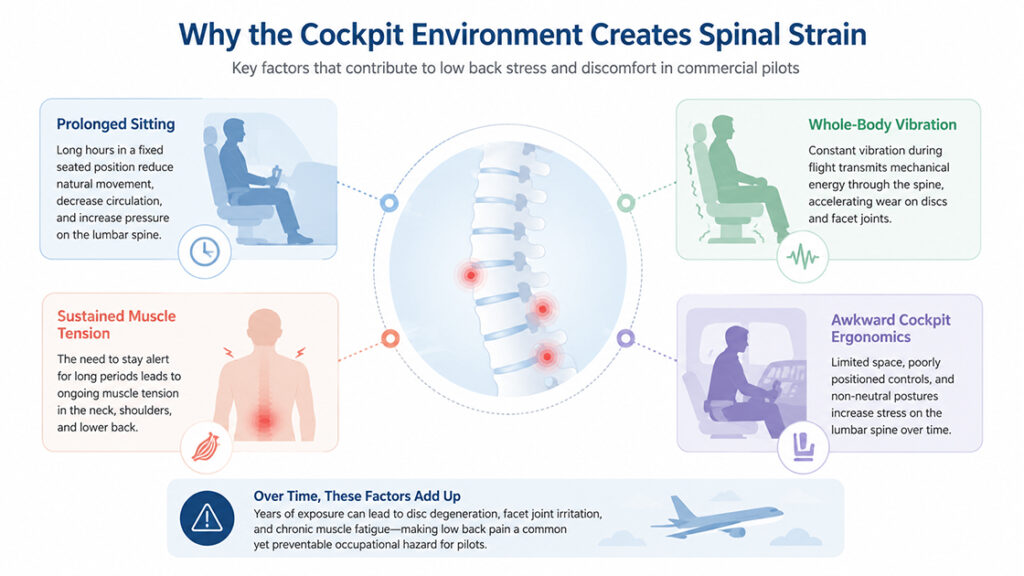
Several factors contribute to the high rates of spinal strain among pilots. Prolonged sitting in a fixed position reduces the natural pumping action of the back muscles that normally helps circulate blood and nutrients to the lumbar tissues. Whole-body vibration, a constant presence during flight, transmits mechanical energy through the spine and accelerates degenerative changes in the intervertebral discs and facet joints. The need to maintain alertness during long flights often leads to sustained muscle tension in the neck and lower back. Awkward cockpit design, including poorly positioned controls or limited legroom, may force pilots into non-neutral postures that increase lumbar stress. Over years of exposure, these factors accumulate, leading to disc degeneration, facet joint irritation, and chronic muscle fatigue.
1.3 The Impact on Career and Quality of Life
For pilots, low back pain is more than a physical discomfort. It can compromise performance during critical phases of flight, such as takeoff and landing, when full concentration is essential. Pain-related distraction can reduce situational awareness and increase the risk of error. Chronic pain also affects life outside the cockpit, limiting participation in physical activities, reducing sleep quality, and contributing to emotional stress. In severe cases, pilots may need to reduce their flying hours or even retire early, impacting their livelihood and professional identity.
2. Fonctionnement de la thérapie laser de classe IV
Class IV laser therapy, also known as high-intensity laser therapy, uses specific wavelengths of light to deliver photonic energy into deeper tissues. This process triggers beneficial biological responses at the cellular level without causing thermal damage.
2.1 Photobiomodulation and Cellular Energy
When photons from a Class IV laser reach the target tissues, mitochondria within the cells absorb the light energy. This absorption stimulates the production of adenosine triphosphate (ATP), the primary energy carrier in cells. A temporary increase in ATP availability supports various cellular functions, including membrane transport, protein synthesis, and waste removal. This cellular energy boost helps shift tissues from a chronic, unresolved state toward a more constructive repair phase.
2.2 Reducing Inflammation and Improving Circulation
The laser energy reduces the levels of pro-inflammatory markers in the treated area, helping modulate the inflammatory environment. This modulation allows the body to transition from an unresolved inflammatory state toward a more constructive healing process. Class IV laser therapy also increases local microcirculation by promoting the growth of new blood vessels. Better blood flow brings oxygen and nutrients to the injured tissues while carrying away metabolic waste products that accumulate in chronically dysfunctional areas.
2.3 Pain Modulation and Muscle Relaxation
The analgesic effects of Class IV laser therapy involve modulation of nerve signaling. The laser energy can influence how pain receptors transmit signals to the spinal cord and brain, effectively reducing the perception of pain without the use of pharmaceuticals. At the same time, the laser helps relax hypertonic muscles by reducing nerve activity at the motor end plate. Relaxation of these muscles decreases the mechanical compression on the lumbar nerve roots and facet joints, further alleviating discomfort.
3. Supporting the Lumbar Spine with Laser Therapy
For pilots, the ability of Class IV laser therapy to reach deeper structures makes it particularly relevant. The lumbar spine lies beneath layers of muscle and fascia, and lower-class lasers lack the power to deliver therapeutic energy to these deeper tissues.
3.1 Targeting the Deep Paraspinal Muscles
The erector spinae and multifidus muscles form the deep musculature of the lower back. These muscles work constantly during a flight to maintain upright posture against gravity and to control movement during turbulence and control inputs. In many pilots with chronic low back discomfort, these muscles show altered recruitment patterns and localized areas of increased tension. Class IV laser energy directed to the paraspinal region can reach the muscle bellies and the motor endplates. The photobiomodulation effect may support local microcirculation and help maintain normal muscle metabolism, potentially reducing the accumulation of metabolic byproducts associated with sustained contraction.
3.2 Addressing Facet Joint Irritation
The facet joints of the lumbar spine bear significant load during prolonged sitting and are particularly susceptible to vibration-related stress. When these joints become irritated, they can refer pain to the buttocks and thighs, and can also contribute to localized back pain. Class IV laser therapy can be applied to the area over the facet joints, where the energy penetrates through the overlying muscles to reach the joint capsules. By supporting microcirculation and modulating inflammatory mediators, the therapy may help reduce joint-related discomfort.
3.3 Supporting Disc Health
Intervertebral discs rely on movement for proper fluid exchange and nutrition. Prolonged sitting reduces this movement, which can impair disc health over time. While Class IV laser therapy does not restore disc height or reverse structural damage, it may support the local environment around the disc by improving blood flow to the surrounding tissues and reducing inflammation. This supportive effect can help maintain comfort and function during the long hours of a flight.
4. What a Pilot Can Expect from Treatment
For pilots considering Class IV laser therapy, understanding the typical course of treatment helps set realistic expectations.
4.1 Number of Sessions and Timing
A common protocol for chronic low back pain involves a series of sessions over several weeks. The exact number depends on the severity of the condition and the individual’s response. Some pilots notice improvement after a few sessions, while others benefit from a longer series. Each session is relatively brief, and pilots can return to their normal duties immediately after treatment, making it practical for busy schedules.
4.2 Combining Laser Therapy with Postural Strategies
Class IV laser therapy works most effectively when pilots also address the factors that contributed to their back pain in the first place. Using the laser to reduce pain and inflammation provides a window of opportunity to make postural adjustments without discomfort. Adjusting the seat position, using lumbar support, and taking brief movement breaks during long flights can complement the tissue-level effects of the laser. These strategies help create a mechanical environment that reduces the load on the lumbar spine.
4.3 Maintaining a Healthy Lifestyle
For pilots, maintaining a healthy weight and staying physically active between flights can significantly reduce the strain on the lumbar spine. A well-conditioned back tolerates the demands of flying better than one that has weakened due to inactivity. Pilots who incorporate regular back-strengthening exercises into their routine often find that their discomfort becomes more manageable.
5. Long-Term Strategies for Pilots
Preventing low back pain from returning requires attention to the factors that contribute to spinal strain.
5.1 Ergonomic Adjustments in the Cockpit
Simple adjustments to the pilot’s seat can reduce lumbar stress. Positioning the seat to support the natural curve of the lower back, adjusting the backrest angle to reduce tension, and ensuring proper seat cushioning can all help. Using lumbar support cushions designed for cockpit use can also make a meaningful difference.
5.2 Regular Exercise and Stretching
A consistent program of back-strengthening and flexibility exercises helps maintain the strength and mobility of the lumbar spine. Core strengthening exercises, such as planks and bird-dogs, build the muscles that support the spine. Stretching the hip flexors, hamstrings, and back muscles reduces tension that can pull the pelvis out of alignment and increase lumbar stress.
5.3 Taking Micro-Breaks During Flight
Even during cruise, pilots can take brief opportunities to shift position, stretch, or perform gentle back movements. Simple movements such as rolling the shoulders, arching the back, or rotating the torso can help prevent stiffness and reduce the cumulative strain of prolonged sitting.
FAQ
Q1: Is Class IV laser therapy painful for low back pain?
Most pilots describe a gentle warmth or mild tingling sensation during treatment. The procedure is generally comfortable and brief.
Q2: How many sessions does a pilot typically need?
The number varies. Many benefit from a series of sessions over several weeks. Some notice improvement after a few sessions, while others benefit from a longer series.
Q3: Can I continue flying during laser therapy?
Yes. The treatment requires no downtime, and pilots can return to their normal duties immediately after each session.
Q4: How soon after treatment will I feel less back pain?
Some pilots notice reduced discomfort within a few sessions. The most noticeable improvement often takes several weeks to appear as the tissue responds to the cumulative energy delivered across multiple treatments.
Q5: Does Class IV laser therapy address disc problems directly?
The therapy supports the local environment around the disc by reducing inflammation and improving blood flow. It does not reverse structural disc damage but may help manage associated symptoms.
Conclusion
Low back pain is a persistent and potentially career-limiting challenge for many commercial pilots. The combination of prolonged sitting, whole-body vibration, and the demands of maintaining alertness through long flights places exceptional strain on the lumbar spine. For pilots who have tried conventional approaches without lasting relief, Class IV laser therapy offers a non-invasive, drug-free option that works through photobiomodulation. By reducing inflammation, improving local circulation, and modulating pain signals, the therapy supports the body’s natural healing processes. When combined with sensible postural strategies, regular exercise, and attention to ergonomic factors, Class IV laser therapy may help pilots manage their back pain and continue flying with greater comfort.
References
Prevalence of Low Back Pain Among Commercial Airline Pilots
https://pubmed.ncbi.nlm.nih.gov/32145678
Effect of Whole-Body Vibration on Spinal Degeneration in Occupational Groups
https://pubmed.ncbi.nlm.nih.gov/32987654
Photobiomodulation in the Management of Chronic Low Back Pain: A Systematic Review
https://pubmed.ncbi.nlm.nih.gov/33892145
High-Intensity Laser Therapy for Musculoskeletal Pain: Clinical Applications
https://www.sportsmed.org/laser-therapy
Ergonomics and Spinal Health in Aviation Professionals
 English
 العربية
 Français
 日本語
日本語 Português
 Español
 Русский
 Deutsch