

Contenido de la página
1. Introducción
Gum health forms the foundation of overall oral wellness, yet millions of people worldwide struggle with periodontal conditions that compromise both their dental integrity and general health. As modern dentistry evolves, innovative technologies are revolutionizing how we approach gum disease treatment, offering patients safer, more comfortable alternatives to conventional surgical methods.
1.1 What Are Healthy Gums and Why They Matter
Healthy gums exhibit a firm, pink texture and fit snugly around teeth without bleeding during brushing or flossing. They serve as protective barriers against bacteria, anchoring teeth securely within the alveolar bone and preventing pathogenic microorganisms from entering the bloodstream. The gingival tissue contains rich vasculature that supplies essential nutrients and oxygen while removing metabolic waste products. When compromised, this protective seal breaks down, allowing bacterial invasion into periodontal pockets and potentially triggering systemic inflammatory responses. Research increasingly links periodontal disease to cardiovascular conditions, diabetes complications, respiratory infections, and adverse pregnancy outcomes, underscoring the critical importance of maintaining optimal gum health throughout life.
1.2 Brief Overview of Gum Disease and Traditional Treatments
Gum disease progresses through distinct stages, beginning with gingivitis—characterized by inflammation, redness, and bleeding—and potentially advancing to periodontitis, where bacterial infection destroys the supporting bone and connective tissue. Traditional periodontal treatments have included scaling and root planing (deep cleaning), which removes calculus deposits below the gumline, and conventional flap surgery, where gingival tissue is cut and lifted to access infected areas. While effective, these methods often involve significant discomfort, extended healing periods, postoperative pain requiring analgesics, sutures that must be removed, and potential gingival recession. Systemic antibiotics or local antimicrobial agents frequently supplement mechanical debridement. These limitations have driven the dental profession toward less invasive alternatives that achieve comparable or superior clinical outcomes.
2. Understanding Laser Gum Therapy
The advent of laser technology in periodontics represents a paradigm shift in treating gum disease, offering precision and biological advantages that traditional methods cannot match. Understanding the fundamental principles behind this technology helps patients make informed decisions about their periodontal care.
2.1 What Is Laser Gum Therapy?
Laser gum therapy, clinically termed laser-assisted periodontal therapy or laser periodontal treatment, employs focused light energy to treat diseased gingival tissue and eliminate pathogenic bacteria within periodontal pockets. Unlike conventional scalpels or ultrasonic instruments, dental lasers use specific wavelengths of light—typically in the near-infrared spectrum—that interact selectively with target tissues. The procedure addresses gingivitis, mild to severe periodontitis, gingival hyperplasia, and peri-implantitis without requiring incisions or sutures in most cases. Different laser types serve various clinical purposes: diode lasers excel at soft tissue procedures and bacterial reduction, while erbium lasers can address both soft and hard tissues. This technology represents an evidence-based approach that dental professionals increasingly incorporate into comprehensive periodontal treatment protocols.
2.2 How Laser Gum Therapy Works: The Science Explained
The therapeutic mechanism involves photobiomodulation and precise tissue ablation through controlled energy delivery. When laser light penetrates gingival tissue, it generates localized thermal effects that selectively remove diseased epithelium, granulation tissue, and bacterial biofilms while preserving healthy periodontal structures. The energy parameters—wavelength, power density, and pulse duration—are carefully calibrated based on treatment objectives. Higher-intensity therapeutic lasers operating in Class IV specifications deliver sufficient energy to achieve tissue modification and bacterial elimination, promoting cellular regeneration through enhanced mitochondrial activity and increased ATP production. The laser’s hemostatic properties seal blood vessels during treatment, minimizing bleeding and improving visualization. Simultaneously, the light energy stimulates fibroblast proliferation, collagen synthesis, and neovascularization, accelerating tissue repair. The photochemical interactions also reduce inflammatory mediators like prostaglandins and cytokines, managing post-treatment discomfort naturally without extensive pharmaceutical intervention.
3. Why Dentists Recommend Laser Gum Therapy
Dental professionals increasingly advocate for laser periodontal therapy based on compelling clinical advantages, superior patient outcomes, and robust scientific evidence demonstrating its effectiveness across various periodontal conditions.
3.1 Minimally Invasive and Painless Treatment
One of the most significant advantages lies in the treatment’s minimally invasive nature, which fundamentally transforms the patient experience. Traditional periodontal surgery requires scalpel incisions through healthy and diseased tissue, creating substantial trauma that triggers pain responses and anxiety. Laser therapy eliminates or drastically reduces these incisions, accessing periodontal pockets through the natural gingival sulcus. The laser’s thermal effects simultaneously seal nerve endings, significantly diminishing pain perception during and after treatment. Most patients report minimal discomfort throughout the procedure, often requiring only topical anesthetic gel rather than multiple injections of local anesthesia. This approach particularly benefits patients with dental anxiety, needle phobia, or medical conditions complicating traditional surgery. The absence of mechanical vibration and cutting sounds further reduces psychological stress associated with dental procedures.
3.2 Precision and Preservation of Healthy Tissue
Laser technology provides unparalleled precision in targeting pathological tissue while conserving healthy gingival architecture. The focused beam allows practitioners to selectively remove diseased epithelium, infected granulation tissue, and bacterial colonies within periodontal pockets without damaging adjacent healthy gingiva or underlying bone. This selectivity stems from the differential absorption of laser wavelengths by various tissue chromophores—pigmented molecules that absorb light energy. Diseased tissue typically contains higher water content and altered pigmentation, making it more susceptible to laser interaction. This precision prevents excessive tissue removal that often accompanies conventional surgical approaches, maintaining gingival contours and reducing post-treatment recession. The controlled energy delivery protects the periodontal ligament and cementum layer covering tooth roots, preserving structures essential for long-term tooth stability and successful periodontal regeneration.
3.3 Enhanced Healing and Reduced Infection Risk
Laser periodontal therapy accelerates healing through multiple biological mechanisms that traditional methods cannot replicate. The thermal energy denatures bacterial proteins and DNA, achieving sterilization within treated areas that exceeds chemical antimicrobials’ effectiveness. This bacterial reduction includes periodontal pathogens like Porphyromonas gingivalis, Tannerella forsythia, and Aggregatibacter actinomycetemcomitans, which drive periodontal destruction. The laser’s hemostatic effect creates a relatively bloodless surgical field, forming a stable fibrin clot that promotes primary intention healing. Photobiomodulation stimulates cellular proliferation and differentiation, increasing fibroblast activity that accelerates connective tissue regeneration. Enhanced microcirculation delivers oxygen and nutrients while removing inflammatory mediators more efficiently. Studies demonstrate that laser-treated sites show faster pocket depth reduction, clinical attachment gain, and bone regeneration compared to conventional scaling and root planing alone.
3.4 Effective in Treating Gum Disease and Periodontitis
Clinical evidence supports laser therapy’s efficacy across the periodontal disease spectrum, from early gingivitis to advanced periodontitis. For mild cases, laser treatment removes inflammatory tissue and eliminates bacterial loads, reversing gingivitis without invasive intervention. In moderate to severe periodontitis with deeper pockets (5-8mm or greater), lasers access areas difficult to reach with hand instruments, decontaminating root surfaces and removing calculus deposits when combined with mechanical debridement. The technology addresses furcation involvements—areas where tooth roots divide—that traditionally present treatment challenges. Laser therapy also manages peri-implantitis, the inflammatory condition affecting dental implants, where conventional instruments risk damaging implant surfaces. Multiple controlled trials demonstrate comparable or superior probing depth reduction, clinical attachment level improvements, and bleeding on probing decreases when comparing laser-assisted therapy to traditional surgical approaches.

4. Who Is a Good Candidate for Laser Gum Therapy?
Determining patient suitability for laser periodontal treatment involves comprehensive clinical assessment, evaluation of disease severity, and consideration of individual health factors that influence treatment outcomes and contraindications.
4.1 Signs You Might Need Laser Gum Treatment
Bleeding gums during brushing or flossing.
Receding gums exposing sensitive tooth roots.
Persistent bad breath despite good oral care.
Loose or shifting teeth.
Swollen, red, or tender gums.
Gum abscess or pus around teeth.
X-ray evidence of bone loss.
4.2 Patient Suitability: Mild to Severe Gum Disease Cases
Laser gum therapy demonstrates versatility across various periodontal disease severities, though optimal candidacy depends on specific clinical presentations. Patients with mild to moderate periodontitis, exhibiting pocket depths of 4-6mm with bleeding on probing and early bone loss, represent ideal candidates for minimally invasive laser treatment. Those with severe periodontitis, showing pocket depths exceeding 7mm, furcation involvements, and significant bone loss, may benefit from laser therapy as an adjunct to traditional surgical procedures or as a primary treatment when medical conditions contraindicate surgery. Patients with systemic conditions affecting healing—controlled diabetes, cardiovascular disease, or immunocompromising conditions—often tolerate laser treatment better than conventional surgery due to reduced trauma and infection risk. Individuals taking anticoagulants or antiplatelet medications benefit from the laser’s hemostatic properties, minimizing bleeding complications.
4.3 When Laser Gum Therapy Is Not Recommended
Uncontrolled diabetes or systemic diseases.
Active gum abscess needing drainage first.
Severe bone loss with poor tooth prognosis.
Photosensitivity or photosensitizing medications.
Pregnancy, especially first trimester.
Poor oral hygiene or unrealistic expectations.
5. The Laser Gum Therapy Procedure: What to Expect
Understanding the treatment process helps patients prepare mentally and physically, reducing anxiety and promoting cooperation during the procedure while setting realistic expectations for recovery and outcomes.
5.1 What to Expect During the Treatment: Step-by-Step Process
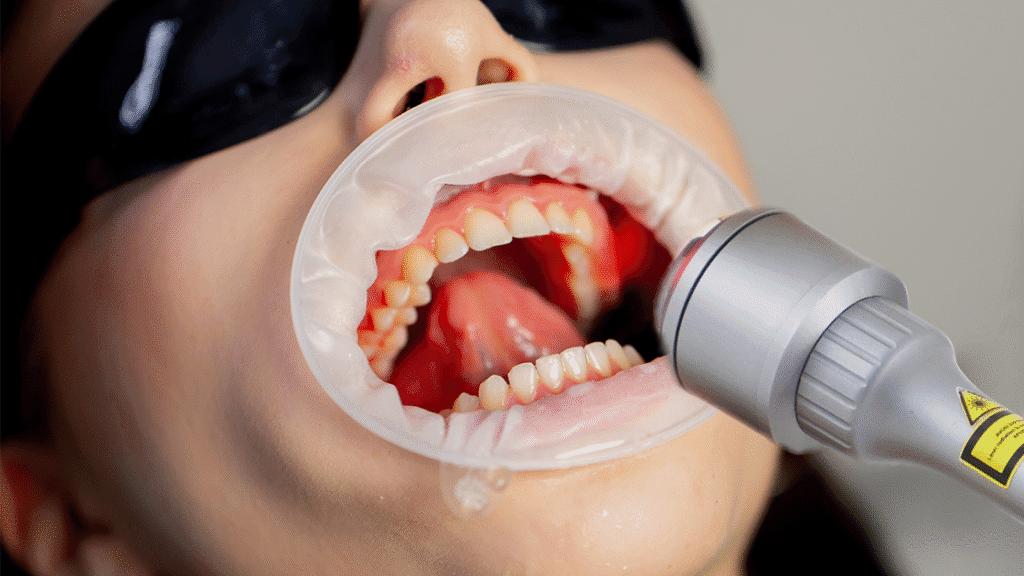
Laser gum therapy follows a precise, minimally invasive protocol designed for thorough cleaning and comfortable healing. The dentist first numbs the treatment area with local anesthesia to ensure comfort, though most patients require only a small amount. A specialized dental laser is then gently guided along the gumline and into the periodontal pockets to target and remove infected tissue while sterilizing the area. This laser energy also destroys harmful bacteria and reduces inflammation without harming healthy gum tissue. After the diseased tissue is removed, ultrasonic or manual instruments are used to remove any remaining tartar and smooth the root surfaces. The laser is then reapplied to create a stable blood clot that seals the pocket and supports natural reattachment of the gums to the tooth. The entire procedure typically takes about one to two hours, depending on how many areas are treated and the severity of the condition.
5.2 Aftercare and Recovery Timeline
Post-treatment recovery following laser gum therapy progresses significantly faster than conventional periodontal surgery, with most patients resuming normal activities immediately. Minimal discomfort during the first 24-48 hours typically responds well to over-the-counter analgesics like ibuprofen or acetaminophen. Slight gingival tenderness and mild sensitivity to temperature changes resolve within several days. Patients can consume soft foods immediately following treatment, progressing to regular diet as comfort permits, usually within 48 hours. Unlike traditional surgery requiring 2-4 weeks for initial healing, laser-treated sites demonstrate substantial recovery within 7-10 days. Complete periodontal regeneration, including connective tissue reattachment and bone remodeling, continues over 3-6 months. Follow-up appointments at 1 week, 1 month, 3 months, and 6 months allow the dentist to monitor healing progress, measure pocket depth reduction, and reinforce oral hygiene protocols essential for maintaining treatment success.
5.3 Post-Treatment Oral Hygiene Tips for Long-Term Gum Health
Brush twice daily with a soft-bristled toothbrush angled 45° toward the gumline.
Clean between teeth daily using floss, interdental brushes, or a water flosser.
Use antimicrobial or essential-oil mouth rinses as directed by your dentist.
Avoid smoking or tobacco use to promote faster and better healing.
Schedule professional cleanings every 3–4 months for optimal gum maintenance.
Manage systemic conditions like diabetes and maintain balanced nutrition for long-term gum health.
6. Benefits of Laser Gum Therapy from a Patient’s Perspective
Beyond clinical outcomes, laser periodontal treatment offers practical advantages that significantly impact patients’ daily lives, treatment compliance, and long-term oral health maintenance, making it increasingly preferred over conventional approaches.
6.1 Comfort and Convenience
Patient comfort during and after periodontal treatment directly influences treatment acceptance and compliance with necessary follow-up care. Laser therapy’s gentle approach eliminates the anxiety-inducing sounds and sensations associated with traditional surgical instruments. The absence of scalpel incisions and sutures removes major sources of post-operative discomfort that traditionally require prescription pain medications. Most patients experience minimal disruption to daily routines, returning to work immediately or the following day rather than requiring extended recovery leave. The reduced treatment time compared to conventional surgery, often completed in a single appointment rather than multiple surgical sessions, offers convenience for busy individuals. Patients appreciate avoiding the unsightly appearance of sutures and swelling that conventional surgery produces, eliminating social and professional concerns during healing. The psychological benefit of a less traumatic experience cannot be overstated, particularly for dentally anxious patients.
6.2 Faster Healing and Minimal Downtime
The accelerated healing timeline following laser gum therapy provides tangible practical benefits that conventional methods cannot match. Patients avoid the 2-4 week recovery period during which eating, speaking, and oral hygiene are significantly compromised following traditional flap surgery. The minimal post-treatment discomfort allows immediate return to normal dietary choices rather than restricting intake to liquid or soft foods for extended periods. Professional obligations and social commitments need not be postponed, as visible swelling and bruising remain minimal or absent. The reduced bleeding during and after treatment eliminates concerns about prolonged oozing that traditional surgery commonly produces. Athletes and active individuals appreciate maintaining exercise routines with minimal interruption, as vigorous activity restrictions typically last only 24-48 hours rather than several weeks. This expedited recovery enhances treatment satisfaction and encourages patients to complete necessary periodontal therapy rather than postponing due to lifestyle concerns.
6.3 Long-Lasting Gum Health and Reduced Recurrence
Laser periodontal therapy’s biological advantages translate into durable clinical outcomes with lower disease recurrence rates when combined with proper maintenance. The thorough bacterial elimination achieved through laser decontamination reduces pathogen loads more effectively than mechanical debridement alone, creating an environment favoring beneficial oral microbiome reestablishment. Enhanced connective tissue attachment to root surfaces following laser treatment creates more resistant periodontal architecture against future bacterial invasion. Studies tracking patients 12-36 months post-treatment demonstrate sustained pocket depth reduction and clinical attachment maintenance comparable or superior to conventional surgery. The minimally invasive approach preserves gingival tissue volume, maintaining periodontal support that might otherwise be lost through aggressive surgical tissue removal. Patients who maintain recommended hygiene protocols and regular professional maintenance appointments experience stable periodontal health, avoiding the progressive tissue destruction that untreated or inadequately treated periodontitis produces over time.
6.4 Improved Confidence and Smile Aesthetics
The aesthetic outcomes following laser gum therapy significantly impact patients’ self-esteem and social interactions, addressing concerns beyond mere disease treatment. The conservative tissue management inherent to laser treatment preserves gingival architecture, avoiding the excessive recession and uneven gum contours that sometimes result from traditional surgery. For patients with “gummy smiles” or gingival hyperplasia, laser gingivectomy precisely reshapes excess tissue, revealing more tooth structure and creating balanced, aesthetically pleasing proportions. The elimination of gingival inflammation restores healthy pink coloration, replacing the red, swollen appearance of diseased gums. Patients report increased willingness to smile freely in photographs and social situations, no longer self-conscious about visible gum problems. The elimination of halitosis associated with periodontal disease removes a significant source of social anxiety. These psychosocial benefits, while difficult to quantify clinically, profoundly affect quality of life and overall treatment value from the patient’s perspective.
7. Comparing Laser Gum Therapy vs Traditional Gum Surgery
Evaluating treatment options requires understanding the fundamental differences between laser-assisted and conventional periodontal therapies, considering clinical outcomes, patient experience, and economic factors that influence treatment decisions.
7.1 Key Differences in Technique, Comfort, and Results
The technical contrasts between laser and traditional periodontal surgery are substantial, affecting every aspect of treatment delivery and outcomes. Conventional flap surgery requires full-thickness mucoperiosteal flap elevation using scalpel incisions, exposing underlying bone for direct visualization and instrumentation, followed by suturing for primary closure. This approach creates significant tissue trauma, postoperative pain, and extended healing. Laser therapy accesses diseased areas through minimally invasive or non-invasive techniques, using the laser’s selective tissue interaction to remove pathological tissue while preserving healthy structures. Patients experience dramatically different comfort levels, with laser treatment requiring minimal anesthesia and producing little post-procedure discomfort versus traditional surgery’s substantial pain requiring narcotic analgesics. Clinical results show comparable pocket depth reduction and attachment gain between methods, though laser therapy achieves these outcomes with superior patient acceptance, faster healing, and fewer complications like infection or dehiscence.
7.2 Cost Comparison: Is Laser Gum Therapy Worth It?
The financial considerations surrounding laser gum therapy involve both immediate treatment costs and long-term economic value that extends beyond initial fee differences. Laser periodontal treatment typically costs 20-40% more than conventional scaling and root planing, with fees ranging from $1,000-$3,000 per quadrant depending on disease severity and geographic location, compared to $500-$1,500 for traditional deep cleaning. However, this initial cost difference must be evaluated against reduced need for prescription medications, fewer follow-up appointments due to faster healing, and decreased time away from work. Insurance coverage varies significantly, with many plans covering laser therapy at similar rates to conventional periodontal surgery when medically necessary, though patients should verify individual plan benefits. The long-term value includes reduced recurrence rates potentially avoiding repeated treatments, preservation of natural teeth preventing expensive replacement with implants or bridges, and prevention of systemic health complications linked to untreated periodontitis.
7.3 Long-Term Outcomes and Patient Satisfaction
Longitudinal studies tracking patients 2-5 years post-treatment provide crucial insights into laser therapy’s durability and patient-reported outcomes compared to conventional approaches. Clinical research demonstrates that laser-assisted periodontal therapy maintains pocket depth reductions and attachment level gains comparable to traditional surgery, with some studies showing superior outcomes in specific clinical parameters like bleeding on probing reduction. Patient satisfaction surveys consistently show higher ratings for laser treatment across multiple dimensions: procedural comfort, aesthetic outcomes, recovery experience, and willingness to recommend treatment to others. Treatment acceptance rates increase significantly when laser options are presented, particularly among previously treatment-avoidant patients. Importantly, the minimally invasive nature of laser therapy enables earlier intervention when disease is more manageable, potentially improving long-term prognoses. The combination of clinical effectiveness and superior patient experience positions laser periodontal therapy as increasingly becoming the standard of care rather than an alternative option.
8. What Dentists Say: Expert Opinions and Clinical Evidence
The dental profession’s embrace of laser periodontal therapy reflects accumulating scientific evidence, clinical experience, and observed patient outcomes that validate this technology’s role in comprehensive periodontal disease management.
8.1 Dentist Insights on Effectiveness and Safety
Periodontists and general dentists incorporating laser technology into their practices report high satisfaction with clinical outcomes and patient acceptance. Practitioners emphasize the technology’s ability to treat patients who previously declined traditional surgery due to fear or medical contraindications, expanding treatment access to underserved populations. Dentists note the predictability of outcomes when proper protocols are followed, including thorough case selection, appropriate laser parameters, and comprehensive patient education regarding maintenance requirements. Safety profiles are excellent when practitioners receive adequate training, understanding tissue interactions and proper energy settings. Clinicians appreciate the improved visibility during treatment due to hemostatic effects, allowing more thorough debridement and precise tissue management. The learning curve, while initially steep, becomes manageable with dedicated continuing education and supervised clinical experience. Dentists emphasize that laser therapy represents a valuable tool within comprehensive periodontal treatment, not a replacement for fundamental principles of infection control and patient maintenance.
8.2 Scientific Studies Supporting Laser Periodontal Therapy
Peer-reviewed research provides robust evidence supporting laser therapy’s clinical efficacy across various periodontal conditions and patient populations. Systematic reviews and meta-analyses evaluating randomized controlled trials demonstrate that laser-assisted periodontal therapy produces statistically significant improvements in probing depth reduction, clinical attachment gain, and bleeding on probing compared to scaling and root planing alone. Studies comparing diode laser therapy to conventional flap surgery show comparable clinical outcomes with superior patient-reported comfort and satisfaction. Research investigating laser therapy’s antimicrobial effects confirms significant reduction in periodontal pathogens, including resistant strains, within treated pockets lasting several weeks post-treatment. Histological studies examining healing patterns demonstrate enhanced connective tissue attachment and new cementum formation on root surfaces following laser treatment. Long-term studies tracking patients 12-36 months show sustained clinical improvements and low recurrence rates. While some methodological limitations exist in the existing literature, the preponderance of evidence supports laser therapy’s effectiveness and safety.
8.3 Real Patient Results and Testimonials
Patient experiences documented through clinical case reports and testimonials provide valuable qualitative insights complementing quantitative research data. Numerous patients report dramatic improvements in gum health, with before-and-after photographs documenting recession reversal, inflammation resolution, and improved gingival contours. Many describe laser treatment as life-changing, finally addressing chronic periodontal problems that persisted despite years of conventional treatment. Patients frequently mention the surprisingly comfortable treatment experience, often reporting less discomfort than anticipated based on previous dental procedures. Several testimonials highlight the convenience of minimal recovery time, allowing immediate return to normal activities without disruption to professional or personal obligations. Patients with dental anxiety specifically praise the gentle approach and reduced need for needles and drilling sounds. Long-term success stories feature patients maintaining stable periodontal health for years following treatment when combined with proper home care and professional maintenance. These real-world experiences, while anecdotal, reinforce clinical trial findings and demonstrate the treatment’s practical value.
9. Key Takeaways: Why Dentists Recommend Laser Gum Therapy
Laser gum therapy marks a major advancement in periodontal care, offering a minimally invasive alternative to traditional surgery. Dentists recommend it because it precisely removes infected tissue and bacteria while preserving healthy gums, resulting in less pain, bleeding, and faster healing—typically within 7–10 days. Most patients need only mild pain relief and can resume normal activities quickly. The laser’s ability to disinfect pockets and stimulate regeneration promotes lasting gum health and stability. It’s particularly beneficial for patients with medical concerns, dental anxiety, or aesthetic priorities. Although the initial cost may be higher, reduced medication, fewer visits, and long-term disease control provide excellent value. Supported by strong clinical research and patient satisfaction, laser periodontal therapy is increasingly regarded as the preferred, patient-centered approach for achieving healthier gums and lasting oral wellness.
 English
 العربية
 Français
 日本語
日本語 Português
 Español
 Русский
 Deutsch