
Contenido de la página
1. Introduction to Class IV Laser Therapy
The evolution of therapeutic laser technology has reached a pinnacle with Class IV laser therapy, representing the most advanced form of photobiomodulation available in modern healthcare. This revolutionary technology harnesses the power of high-intensity laser light to stimulate cellular healing processes, offering unprecedented therapeutic outcomes for a vast array of medical conditions. Class IV laser therapy stands at the forefront of non-invasive medical treatments, combining scientific precision with remarkable clinical efficacy. The technology’s ability to deliver therapeutic light energy deep into tissues while maintaining safety and comfort has transformed how healthcare providers approach pain management, tissue healing, and rehabilitation protocols.
1.1 ¿Qué es la terapia láser de clase IV?
Class IV laser therapy represents the highest classification of therapeutic lasers, defined as devices that emit power in excess of one Watt. This advanced technology utilizes specific wavelengths of near-infrared light to stimulate photobiomodulation (PBM) at the cellular level, triggering cascades of biological responses that promote healing and reduce pain. Unlike lower-class lasers, Class IV systems deliver therapeutic energy with sufficient power density to penetrate deep tissues and achieve clinically significant outcomes. The therapy operates through non-thermal mechanisms, utilizing photochemical and photophysical processes to influence cellular metabolism. This sophisticated approach enables treatment of conditions that were previously difficult to address with conservative therapies. The technology’s precision allows for targeted treatment protocols while maintaining exceptional safety profiles. Class IV lasers represent the culmination of decades of research in photomedicine and laser physics.
1.2 Why Choose High Power Laser Treatment?
High-power laser treatment offers distinct advantages over traditional therapeutic modalities through its ability to deliver significant energy doses to target tissues efficiently. Longer wavelengths and higher power output result in deeper tissue penetration and higher dosage to the target tissue, enabling treatment of structures that remain inaccessible to lower-powered devices. The increased power density allows for shorter treatment times while achieving superior therapeutic outcomes, making it practical for busy clinical environments. High-power systems can overcome the optical scattering and absorption that limit the effectiveness of lower-class lasers, ensuring therapeutic energy reaches intended target tissues. The technology’s ability to stimulate multiple healing pathways simultaneously creates synergistic effects that accelerate recovery. Clinical evidence consistently demonstrates superior outcomes with high-power laser systems compared to conventional treatments. This approach addresses the root causes of dysfunction rather than merely masking symptoms, providing lasting therapeutic benefits.
1.3 Overview of Our Advanced Multi-Wavelength Device (635nm, 810nm, 915nm, 980nm)
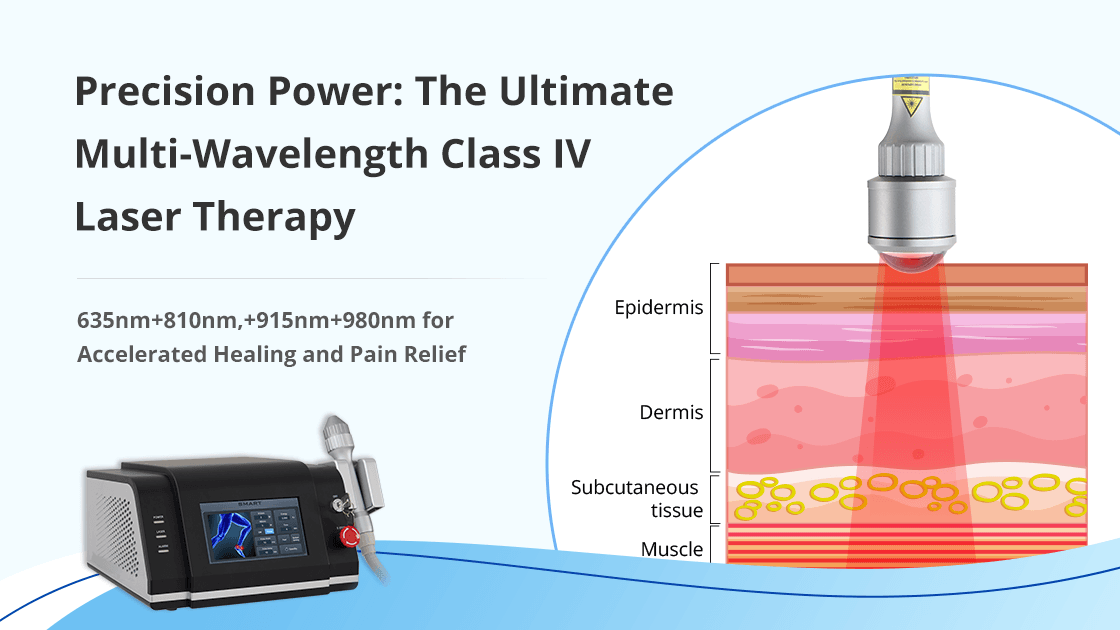
Our state-of-the-art multi-wavelength Class IV laser system incorporates four precisely calibrated wavelengths (635nm, 810nm, 915nm, 980nm) to provide comprehensive therapeutic coverage across diverse tissue types and treatment depths. Over 95% of Class IV Lasers use specific wavelengths of high power laser light through fiber optic cables, to create therapeutic effects such as 635nm, 810nm, 905nm, establishing these wavelengths as the gold standard for therapeutic applications. The 635nm wavelength targets superficial tissues and promotes cellular energy production, while 810nm provides optimal penetration for musculoskeletal structures. The 915nm wavelength offers enhanced tissue saturation capabilities, and 980nm delivers maximum depth penetration for deep tissue applications. This comprehensive wavelength selection ensures optimal treatment outcomes across the full spectrum of clinical presentations. The system’s advanced fiber optic delivery allows for precise energy distribution and consistent treatment protocols. Multi-wavelength capability enables simultaneous treatment of multiple tissue layers, maximizing therapeutic efficiency and patient outcomes.
2. How Class IV Laser Works
Understanding the sophisticated mechanisms underlying Class IV laser therapy provides insight into why this technology achieves such remarkable clinical outcomes across diverse medical applications. The interplay between laser physics and biological processes creates a powerful therapeutic modality that addresses multiple pathophysiological pathways simultaneously.
2.1 The Science Behind Photobiomodulation
Photobiomodulation (PBM) represents the fundamental mechanism through which Class IV laser therapy produces its therapeutic effects. Photobiomodulation has evolved as a rapidly growing therapeutic biophysical non-invasive approach for the acceleration of tissue repair, involving complex cellular processes that begin when photons are absorbed by cellular chromophores. The primary target is cytochrome c oxidase in the mitochondrial electron transport chain, leading to increased ATP production and enhanced cellular metabolism. This process triggers the release of nitric oxide, improving microcirculation and oxygen delivery to tissues. Secondary effects include modulation of inflammatory mediators, stimulation of growth factor production, and activation of cellular repair mechanisms. The therapy also influences ion channel activity and membrane potential, affecting cellular communication and function. These cascading effects create an optimal environment for tissue healing while simultaneously reducing pain and inflammation through multiple pathways.
2.2 Wavelength Synergy: From Superficial to Deep Tissue Penetration
The strategic combination of multiple wavelengths creates synergistic therapeutic effects that maximize treatment outcomes across all tissue depths and types. All of the top class 4 laser manufacturers are now combining 980nm and 810nm in a single laser, running both wavelengths simultaneously produces superior results, demonstrating the clinical value of multi-wavelength approaches. The 635nm wavelength primarily affects superficial tissues, enhancing cellular energy production and promoting wound healing processes. The 810nm wavelength provides optimal penetration for treating musculoskeletal structures, including muscles, tendons, and ligaments. 980nm was the first gold standard wavelength used with class 4 laser systems, with much of the energy converted to heat and absorbed by water/blood in tissue, supporting blood circulation and reduction of inflammation. The 915nm wavelength fills the therapeutic gap between 810nm and 980nm, ensuring comprehensive tissue saturation. This wavelength diversity allows for simultaneous treatment of multiple tissue layers, creating additive therapeutic effects that exceed the capabilities of single-wavelength systems.
2.3 Power & Precision: Benefits of 30–60W Output
High-power output capabilities (30-60W) enable Class IV lasers to deliver therapeutic energy doses that produce clinically significant outcomes within practical treatment timeframes. The increased power density overcomes optical scattering and absorption limitations that compromise the effectiveness of lower-powered systems. This capability allows for treatment of deep tissues that remain inaccessible to Class III lasers, expanding the range of treatable conditions significantly. Higher power output enables shorter treatment times while maintaining therapeutic effectiveness, improving clinical efficiency and patient compliance. The ability to adjust power levels allows practitioners to customize treatment protocols based on individual patient needs, tissue characteristics, and treatment goals. Power modulation capabilities enable both continuous wave and pulsed delivery modes, optimizing therapeutic effects for different applications. The combination of high power and precise control ensures maximum therapeutic benefit while maintaining excellent safety profiles. This power advantage translates directly into superior clinical outcomes and patient satisfaction.
2.4 Difference Between Class III and Class IV Laser Therapy
The distinction between Class III and Class IV laser therapy extends far beyond simple power differences, encompassing fundamental differences in therapeutic capabilities and clinical applications. Several published clinical studies have found LLLT (Classes I-III) to be suboptimal in adequately treating pain in different clinical conditions, highlighting the limitations of lower-class systems. Class III lasers typically operate below 500mW, limiting their penetration depth and therapeutic energy delivery, while Class IV systems operate at significantly higher power levels (>1W). This power difference enables Class IV lasers to overcome tissue scattering and absorption that limits Class III effectiveness. Class IV systems can treat deeper tissues and achieve therapeutic doses in shorter timeframes, making them more practical for clinical use. The increased power also allows for treatment of larger areas efficiently, expanding clinical applications. Class IV technology enables treatment of conditions that show poor response to Class III therapy, including deep tissue pathologies and chronic pain conditions. The superior outcomes achieved with Class IV systems justify their widespread adoption in advanced healthcare settings.
3. Key Benefits of Multi-Wavelength High Power Laser
The therapeutic advantages of multi-wavelength Class IV laser therapy extend across multiple physiological systems, creating comprehensive treatment outcomes that address both symptoms and underlying pathophysiology. These benefits represent the culmination of advanced laser technology and sophisticated understanding of photobiomodulation mechanisms.
3.1 Accelerated Tissue Repair and Regeneration
Multi-wavelength Class IV laser therapy dramatically accelerates tissue repair processes through simultaneous stimulation of multiple healing pathways. The therapy enhances cellular ATP production, providing the energy necessary for tissue synthesis and repair processes. Increased collagen production and improved collagen organization result in stronger, more flexible tissue structures. The stimulation of angiogenesis promotes new blood vessel formation, ensuring adequate nutrient and oxygen delivery to healing tissues. Growth factor activation accelerates the inflammatory resolution phase and promotes transition to proliferative healing stages. The therapy also enhances stem cell activation and differentiation, contributing to tissue regeneration capabilities. Fibroblast proliferation and activity increase significantly, promoting matrix synthesis and tissue remodeling. These combined effects result in faster healing times, reduced scar formation, and improved functional outcomes. The multi-wavelength approach ensures optimal stimulation across all tissue types involved in the healing process.
3.2 Effective Pain Relief Without Medication
Class IV laser therapy provides significant pain relief through multiple neurophysiological mechanisms that address both acute and chronic pain conditions. The therapy modulates pain transmission through the gate control theory, reducing nociceptive signal transmission to the brain. Endorphin and enkephalin release create natural analgesic effects without systemic side effects. The treatment reduces inflammatory mediators that sensitize pain receptors, addressing pain at its source. Improved circulation removes pain-producing metabolites and toxins from affected tissues, reducing chemical irritation. Muscle tension and spasm reduction eliminate mechanical sources of pain and dysfunction. Nerve function improvement through enhanced cellular metabolism reduces neuropathic pain symptoms. The therapy’s anti-inflammatory effects address pain-producing processes while promoting healing. This comprehensive approach to pain management eliminates the need for pharmaceutical interventions and their associated risks. The lasting effects of laser therapy provide sustained pain relief that continues beyond the treatment session.

3.3 Reducción de la inflamación y la hinchazón
The anti-inflammatory effects of multi-wavelength laser therapy address the root causes of tissue dysfunction while promoting resolution of inflammatory processes. The therapy reduces pro-inflammatory cytokine production, including TNF-alpha, IL-1β, and IL-6, while promoting anti-inflammatory mediator release. Improved lymphatic drainage accelerates the removal of inflammatory products and excess tissue fluid. Enhanced microcirculation facilitates the delivery of healing nutrients while removing metabolic waste products. The therapy modulates immune cell activity, promoting healing-phase macrophage activation over inflammatory responses. Histamine release reduction minimizes allergic and inflammatory reactions in treated tissues. Prostaglandin production modulation reduces inflammation while maintaining beneficial healing effects. These anti-inflammatory mechanisms work synergistically to create rapid reduction in swelling and tissue inflammation. The multi-wavelength approach ensures comprehensive anti-inflammatory effects across all tissue depths and types. The lasting benefits extend well beyond the treatment period, preventing inflammatory recurrence.
3.4 Faster Return to Sport & Activity
Athletes and active individuals benefit significantly from Class IV laser therapy’s ability to accelerate recovery and restore function rapidly. The therapy’s comprehensive healing effects enable faster progression through rehabilitation phases while reducing injury recurrence risk. Enhanced tissue strength and flexibility result from improved collagen synthesis and organization, creating more resilient tissues. Reduced recovery time between training sessions allows for maintained fitness levels during treatment periods. The therapy’s ability to address multiple injury components simultaneously accelerates overall healing timelines. Pain reduction enables earlier initiation of active rehabilitation and functional training protocols. Improved tissue quality and function reduce the risk of re-injury upon return to activity. The treatment’s non-invasive nature allows for continued training modifications rather than complete activity cessation. Performance enhancement often results from optimized tissue function and reduced compensatory movement patterns. The therapy’s ability to treat multiple injury sites simultaneously maximizes efficiency for athletes with multiple concerns.
3.5 Versatility: Treating Acute Injuries and Chronic Conditions
The versatility of multi-wavelength Class IV laser therapy enables effective treatment across the full spectrum of musculoskeletal and neurological conditions. Acute injuries benefit from immediate anti-inflammatory effects and accelerated healing initiation, preventing progression to chronic states. Chronic conditions respond to the therapy’s ability to reactivate dormant healing pathways and break cycles of persistent inflammation. The technology’s adjustable parameters allow for protocol customization based on condition type, severity, and patient factors. Results can often be seen after the first treatment, with most conditions having protocols that range from 6-12 treatments, demonstrating both immediate and cumulative benefits. Soft tissue injuries, joint conditions, neurological disorders, and wound healing applications all respond favorably to treatment. The therapy’s safety profile allows for treatment of patients across all age groups and medical conditions. Multiple treatment areas can be addressed within single sessions, maximizing clinical efficiency. The non-invasive nature makes it suitable for conditions where surgical intervention carries excessive risk.
4. Advanced Features of Our Class IV Laser Device
The sophisticated engineering and advanced technology integrated into our Class IV laser system deliver unparalleled therapeutic capabilities while maintaining exceptional ease of use and safety standards. These features represent the culmination of cutting-edge laser technology and clinical expertise.
4.1 Four Wavelengths for Targeted Therapy (635nm+810nm+915nm+980nm)
Our advanced multi-wavelength system incorporates four precisely calibrated therapeutic wavelengths, each optimized for specific tissue interactions and therapeutic effects. The 635nm red wavelength targets superficial tissues, promoting cellular energy production and wound healing processes in skin and subcutaneous layers. The 810nm is a great entry level class 4 laser with the most popular wavelength for structural problems, providing optimal penetration for musculoskeletal structures including muscles, tendons, and ligaments. 905-915nm is commonly used in multi-wavelength class 4 lasers as a means of delivering additional power at a slightly different depth of penetration than the 980nm wavelength, ensuring comprehensive tissue saturation. The 980nm near-infrared wavelength achieves maximum tissue penetration, effectively treating deep structures and chronic conditions. This wavelength combination enables simultaneous treatment of multiple tissue layers, creating synergistic therapeutic effects that exceed single-wavelength capabilities. The system allows for individual wavelength control or combination protocols, maximizing treatment customization.
4.2 Adjustable Power Levels (30W–60W) for Custom Protocols
The system’s variable power output capabilities (30-60W) enable precise energy delivery customization based on individual patient needs and treatment requirements. Power modulation allows for treatment optimization across different tissue types, patient sensitivities, and condition severities. Lower power settings provide gentle treatment for sensitive patients or acute conditions, while higher powers address chronic pathologies and deep tissue applications. The system maintains consistent energy delivery across all power levels, ensuring reliable therapeutic outcomes regardless of selected intensity. Continuous wave and pulsed delivery modes optimize therapeutic effects for different applications and patient responses. Real-time power monitoring ensures accurate energy delivery and consistent treatment protocols. The wide power range accommodates diverse clinical applications from wound healing to deep tissue therapy. Power level documentation enables precise treatment replication and outcome tracking. This flexibility allows practitioners to develop personalized treatment protocols that maximize therapeutic outcomes while maintaining patient comfort and safety.
4.3 Intuitive Interface and Smart Protocol Library
The system features an advanced user interface designed for clinical efficiency and treatment accuracy, incorporating touchscreen technology and intuitive navigation systems. Pre-programmed protocol libraries provide evidence-based treatment parameters for common conditions, ensuring optimal outcomes while reducing setup time. Customizable protocol options allow practitioners to develop and save personalized treatment regimens based on clinical experience and patient response patterns. Real-time parameter monitoring displays power output, energy density, treatment time, and cumulative dose information. Patient data management capabilities enable treatment history tracking and outcome documentation for clinical analysis. The interface provides safety alerts and system status updates, ensuring reliable operation and patient protection. Automatic calibration and system diagnostics maintain optimal performance standards and prevent equipment malfunction. User profiles allow for practitioner-specific settings and protocol preferences, enhancing clinical workflow efficiency. The system’s educational features provide treatment guidance and clinical tips, supporting practitioner development and optimal treatment outcomes.
4.4 Safety Features and Real-Time Monitoring
Comprehensive safety systems integrated throughout the device ensure patient protection and reliable operation during all treatment applications. Automatic power modulation prevents thermal tissue damage through continuous temperature monitoring and feedback control systems. Emergency stop capabilities provide immediate treatment termination in response to unexpected patient reactions or equipment issues. Interlock systems prevent accidental laser activation and ensure proper safety protocol compliance. Real-time monitoring displays provide continuous feedback on treatment parameters, enabling immediate adjustments when necessary. Optical safety features include automatic beam shutoffs and protective barriers to prevent accidental exposure. User authentication systems ensure only trained personnel can operate the device, maintaining treatment quality and safety standards. Comprehensive alarm systems alert users to any operational issues or safety concerns during treatment sessions. Regular self-diagnostic procedures maintain system integrity and prevent equipment malfunction. These advanced safety features enable confident treatment delivery while maintaining the highest standards of patient care and protection.
5. Clinical Applications & Indications
The extensive clinical applications of multi-wavelength Class IV laser therapy span multiple medical specialties, demonstrating the technology’s versatility and effectiveness across diverse pathological conditions. Evidence-based protocols ensure optimal outcomes for specific diagnostic categories.
5.1 Lesiones deportivas and Athletic Recovery
Class IV laser therapy has revolutionized sports medicine through its ability to accelerate recovery and restore athletic performance rapidly. Acute sports injuries including muscle strains, ligament sprains, and contusions respond excellently to immediate laser intervention, reducing inflammation and initiating healing processes. Overuse injuries such as tendinopathies, stress reactions, and chronic pain conditions benefit from the therapy’s ability to break inflammatory cycles and promote tissue repair. The treatment enables athletes to maintain modified training schedules during recovery, preventing deconditioning and competitive disadvantages. Post-exercise recovery protocols utilizing laser therapy reduce muscle soreness, accelerate lactate clearance, and prepare tissues for subsequent training sessions. The therapy’s ability to treat multiple injury sites simultaneously maximizes efficiency for athletes with multiple concerns. Performance enhancement often results from optimized tissue function and reduced compensatory movement patterns. Return-to-play timelines are significantly reduced compared to conventional treatment approaches, maintaining competitive readiness and career longevity.
5.2 Chronic Pain Management (Volver, Cuello, Hombro, Rodilla)
Chronic pain conditions affecting major joint systems respond exceptionally well to multi-wavelength Class IV laser therapy protocols. Chronic back pain, including disc degeneration, facet joint arthropathy, and myofascial pain syndromes, shows significant improvement through laser therapy’s anti-inflammatory and tissue regeneration effects. Cervical spine disorders, including cervical radiculopathy, tension headaches, and whiplash-associated disorders, benefit from the therapy’s ability to reduce nerve irritation and promote healing. Shoulder pathologies such as rotator cuff tendinopathy, adhesive capsulitis, and impingement syndromes respond favorably to targeted laser protocols. Knee conditions including osteoarthritis, patellofemoral pain syndrome, and chronic ligament injuries show marked improvement in pain and function. The therapy’s non-invasive nature makes it ideal for patients seeking alternatives to surgical intervention or long-term medication use. Treatment protocols can be combined with other therapeutic modalities to enhance outcomes and accelerate recovery. The lasting benefits often eliminate the need for ongoing pain management interventions.
5.3 Tendinopathies, Esguinces & Muscle Cepas
Tendinopathies represent ideal indications for Class IV laser therapy due to the technology’s ability to address the underlying pathophysiology of tendon dysfunction. Laser therapy using the 10 W class IV instrument is efficacious for the long-term relief of the symptoms associated with chronic epicondylitis, demonstrating significant clinical effectiveness. Achilles tendinopathy, lateral epicondylitis, rotator cuff tendinopathy, and patellar tendinopathy all respond favorably to targeted laser protocols. The therapy promotes collagen synthesis and organization, restoring tendon strength and flexibility while reducing pain and dysfunction. Acute sprains benefit from immediate anti-inflammatory effects and accelerated healing initiation, preventing progression to chronic instability. Muscle strains heal more rapidly with laser intervention, reducing scar tissue formation and preserving muscle function. The treatment’s ability to address both acute inflammatory phases and chronic degenerative changes makes it valuable across injury timelines. Grade I-III injuries respond proportionally to treatment intensity and duration, with protocols adjusted accordingly. Recovery times are consistently reduced compared to conventional treatment approaches.
5.4 Neuropathic Pain and Rehabilitation
Neuropathic pain conditions, including neuropatía periférica, post-herpetic neuralgia, and complex regional pain syndrome, respond favorably to Class IV laser therapy through multiple neurophysiological mechanisms. The therapy improves nerve conduction velocity and reduces neuropathic pain symptoms through enhanced cellular metabolism and reduced inflammation. Carpal tunnel syndrome and other entrapment neuropathies benefit from the therapy’s ability to reduce nerve swelling and improve local circulation. Post-surgical neuropathic pain often resolves more rapidly with laser intervention, reducing the need for long-term pain medications. Stroke rehabilitation benefits from laser therapy’s ability to promote neuroplasticity and improve motor function recovery. Spinal cord injury patients experience reduced spasticity and improved functional outcomes with regular laser treatments. The therapy’s safety profile makes it suitable for neurologically compromised patients who may not tolerate other interventions. Diabetic neuropathy symptoms improve significantly with consistent laser therapy protocols, enhancing quality of life and functional capacity. Treatment outcomes are enhanced when combined with appropriate rehabilitation exercises and functional training.
5.5 Veterinary and Equine Laser Therapy
Class IV laser therapy has emerged as an effective adjunct for veterinarians to aid in the treatment of their patients, helping animals recover from acute conditions, expanding therapeutic applications beyond human medicine. Equine applications include treatment of tendon and ligament injuries, joint conditions, wound healing, and performance enhancement protocols. Small animal veterinary applications encompass arthritis management, post-surgical healing, wound care, and pain management across diverse species. The therapy’s non-invasive nature eliminates the stress and complications associated with pharmaceutical interventions in animals. Treatment protocols are adapted based on species-specific anatomy, physiology, and condition characteristics. The technology’s safety profile makes it suitable for treating young, elderly, or medically compromised animals. Combination with traditional veterinary treatments enhances outcomes while reducing medication requirements. The therapy’s ability to accelerate healing enables faster return to normal activity and improved quality of life for animal patients. Economic benefits for owners include reduced treatment costs and shorter recovery periods.
6. Comparison: Class IV Laser vs Traditional Modalities
Understanding how Class IV laser therapy compares to established treatment modalities provides valuable perspective on its clinical advantages and appropriate integration into comprehensive treatment protocols.
6.1 Laser Therapy vs Ultrasound and TENS
Class IV laser therapy offers distinct advantages over traditional electrotherapy modalities through its unique mechanism of action and superior penetration capabilities. Unlike ultrasound therapy, which primarily produces thermal effects and mechanical tissue stimulation, laser therapy creates photochemical changes that promote lasting cellular healing. TENS units provide temporary pain relief through electrical nerve stimulation but lack the tissue healing properties inherent in laser therapy. Laser penetration depths exceed those achievable with ultrasound, enabling treatment of deeper structures with consistent energy delivery. The non-contact nature of laser therapy eliminates coupling gel requirements and contamination concerns associated with ultrasound applications. Treatment comfort is superior with laser therapy, as patients experience no electrical sensations or pressure from probe contact. Laser therapy produces cumulative effects that build over treatment sessions, while TENS provides only temporary symptom relief. The therapy’s ability to address multiple pathophysiological processes simultaneously exceeds the single-mechanism approach of traditional modalities. Clinical outcomes consistently favor laser therapy for both pain reduction and functional improvement measures.
6.2 Advantages Over Cold Laser (Class III)
Class IV laser systems provide substantial advantages over Class III (cold laser) devices through superior power output and penetration capabilities. Class 4 lasers (7 to 60 watt) are mostly 980nm while the class 3b lasers (fraction wattage) are typically 810nm, with the higher power enabling deeper tissue penetration and more significant therapeutic effects. Treatment times are dramatically reduced with Class IV systems, improving clinical efficiency and patient compliance. The ability to treat larger areas efficiently makes Class IV systems more practical for comprehensive treatment protocols. Chronic conditions that show poor response to Class III therapy often respond favorably to Class IV intervention. The superior outcomes achieved with Class IV systems justify the investment despite higher initial costs. Power modulation capabilities in Class IV systems enable treatment customization that exceeds Class III limitations. Deeper tissue pathologies remain inaccessible to Class III systems, limiting their clinical applications significantly. The enhanced therapeutic outcomes with Class IV systems result in improved patient satisfaction and better clinical results.
6.3 Complementary Use with Shockwave and Manual Therapy
Class IV laser therapy demonstrates excellent compatibility with other therapeutic modalities, often enhancing their effectiveness through synergistic mechanisms. Combination with extracorporeal shockwave therapy creates additive effects, with laser therapy promoting healing while shockwave therapy addresses mechanical tissue dysfunction. Manual therapy techniques benefit from laser pre-treatment through reduced tissue tension and improved mobility, enhancing therapeutic outcomes. The anti-inflammatory effects of laser therapy can reduce treatment-related soreness often associated with aggressive manual interventions. Sequential treatment protocols utilizing laser therapy followed by exercise or manual therapy optimize tissue preparation and response. The therapy’s analgesic effects enable more aggressive manual therapy techniques while maintaining patient comfort. Shockwave therapy effectiveness is enhanced by laser pre-treatment through improved tissue perfusion and reduced inflammation. Post-manual therapy laser application can minimize treatment reactions and accelerate recovery. These combination approaches often produce superior outcomes compared to individual treatments alone. The non-invasive nature of laser therapy makes it compatible with virtually all other therapeutic interventions.

7. Backed by Science: Research and Clinical Evidence
The scientific foundation supporting Class IV laser therapy continues to expand through rigorous clinical research and documented outcomes across diverse medical applications. This evidence base provides confidence in treatment recommendations and supports evidence-based practice protocols.
7.1 Peer-Reviewed Studies on Class IV Laser Therapy
There are now over 5000 Proof Positive Clinical Studies and Research Papers that reveal beyond a shadow of a doubt that laser therapy, phototherapy aka Photobiomodulation (PBM) is effective, establishing an unprecedented evidence base for therapeutic applications. Randomized controlled trials consistently demonstrate superior outcomes with Class IV laser therapy compared to placebo and conventional treatments across multiple conditions. Systematic reviews and meta-analyses support the efficacy of high-power laser therapy for pain reduction, functional improvement, and accelerated healing. Photobiomodulation using red or near-infrared light has been used to stimulate the proliferation and differentiation of adipose-derived stem cells, demonstrating cellular-level therapeutic mechanisms. Clinical studies in sports medicine show significant reductions in return-to-play times and injury recurrence rates. Chronic pain research demonstrates lasting improvements in pain scores and quality of life measures following laser therapy protocols. Wound healing studies show accelerated closure rates and improved healing quality compared to standard care. The research consistently supports optimal wavelength and power parameters for specific applications, validating current clinical protocols.
7.2 Success Rates and Long-Term Outcomes
Clinical outcome studies demonstrate consistently high success rates across diverse applications, with most conditions showing 70-90% improvement rates in pain and function measures. Long-term follow-up studies reveal sustained benefits extending months to years beyond treatment completion, indicating lasting therapeutic effects rather than temporary symptom relief. Patient satisfaction surveys consistently show high approval ratings and preference for laser therapy over alternative treatments. Return-to-activity rates exceed those achieved with conventional treatments, particularly in athletic populations where performance restoration is critical. Treatment durability studies show minimal symptom recurrence when appropriate protocols are followed and predisposing factors are addressed. Quality of life improvements extend beyond primary symptoms to include better sleep, improved mood, and enhanced functional capacity. Cost-effectiveness analyses demonstrate superior outcomes per dollar spent compared to alternative treatments, including surgical interventions. Comparative effectiveness research consistently favors Class IV laser therapy over lower-class devices and traditional modalities. These outcome measures support the technology’s position as a first-line treatment option for many conditions.
7.3 Expert Testimonials and Practitioner Reviews
Healthcare practitioners across multiple specialties report exceptional clinical outcomes and high patient satisfaction with Class IV laser therapy integration. Sports medicine physicians consistently report accelerated recovery times and improved return-to-play outcomes compared to traditional treatment protocols. Physical therapists emphasize the technology’s ability to enhance other therapeutic interventions while providing independent therapeutic benefits. Pain management specialists report reduced medication requirements and improved functional outcomes in chronic pain patients. Orthopedic surgeons utilize laser therapy for post-operative healing enhancement and non-surgical treatment alternatives. Veterinary practitioners report excellent outcomes across diverse species and conditions, expanding the technology’s therapeutic applications. Academic medical centers incorporate laser therapy into research protocols and teaching curricula, validating its scientific credibility. International medical societies endorse laser therapy protocols and provide certification programs for practitioners. These professional endorsements reflect the technology’s acceptance within evidence-based medical practice. Practitioner surveys consistently show high confidence in treatment outcomes and intention to expand clinical applications.
8. Investing in High Power Laser Technology
The financial and clinical benefits of implementing Class IV laser therapy in healthcare settings extend far beyond initial equipment costs, creating sustainable value propositions for practices and institutions.
8.1 ROI for Clinics and Rehabilitation Centers
Terapia láser de clase IV implementation generates substantial return on investment through multiple revenue streams and operational efficiencies. Treatment fee structures for laser therapy often exceed those of traditional modalities, creating immediate revenue enhancement opportunities. The technology’s efficiency enables higher patient throughput, maximizing clinic productivity and profitability. Reduced treatment session requirements compared to conventional therapies improve patient satisfaction while maintaining revenue levels. The therapy’s broad application range expands service offerings and attracts new patient populations to practices. Insurance reimbursement for laser therapy continues to expand, improving revenue predictability and sustainability. Equipment durability and reliability minimize maintenance costs and operational disruptions over extended periods. Staff efficiency improvements result from simplified treatment protocols and reduced hands-on therapy requirements. Patient retention improves due to superior outcomes and treatment satisfaction, creating long-term revenue stability. Marketing advantages associated with advanced technology implementation attract quality-conscious patients and referral sources. Typical ROI timelines range from 12-24 months depending on utilization rates and fee structures.
8.2 Patient Satisfaction and Retention Benefits
Class IV laser therapy consistently produces high patient satisfaction scores through superior treatment outcomes and enhanced patient experience factors. The therapy’s comfort and convenience appeal to patients seeking effective treatment without invasive procedures or extensive time commitments. Rapid symptom improvement and functional restoration exceed patient expectations and promote positive treatment experiences. The technology’s safety profile and non-invasive nature appeal to patients concerned about treatment risks and side effects. Treatment efficiency allows patients to maintain work and life schedules without significant disruption, improving compliance and satisfaction. Superior outcomes compared to previous treatments create positive word-of-mouth referrals and practice reputation enhancement. Patient education opportunities regarding advanced technology implementation demonstrate practice commitment to excellence and innovation. The therapy’s broad application range allows practices to address multiple patient concerns with single technology investments. Long-term treatment durability reduces the need for ongoing interventions, improving patient satisfaction and reducing healthcare costs. These satisfaction benefits translate into improved patient retention, referral generation, and practice growth opportunities.
9. Frequently Asked Questions About Class IV Laser Therapy
Class IV lasers use higher power (30-60W) and multiple wavelengths, enabling deeper tissue penetration. This allows them to treat both acute and chronic conditions more effectively, compared to Class III lasers, which are lower in power and primarily target superficial tissues.
Each wavelength targets different tissue depths: 635nm for superficial, 810nm, 915nm, and 980nm for deeper tissues. This synergy allows for comprehensive treatment, addressing a variety of injuries and conditions effectively.
Yes, Class IV laser therapy is versatile enough to treat both chronic pain and sports injuries. Its deep penetration helps with long-term pain relief and accelerates recovery from acute injuries like strains and sprains.
Class IV laser therapy is safe with minimal side effects. Some patients may experience mild warmth or temporary discomfort during treatment, but these effects are rare. Always follow safety protocols for best results.
Yes, Class IV laser therapy is highly effective for treating musculoskeletal injuries in animals, including horses and pets. Its deep tissue penetration makes it ideal for large animals with joint or muscle problems.
10. Conclusion: Transform Recovery with Smart, Powerful Laser Therapy
Class IV laser therapy represents a groundbreaking advancement in musculoskeletal care, offering a non-invasive, highly effective solution for a wide variety of pain and injury-related conditions. By utilizing multi-wavelength technology (635nm, 810nm, 915nm, 980nm), this therapy targets different tissue depths, accelerating healing, reducing inflammation, and providing long-lasting pain relief. Its versatility makes it suitable for both acute injuries and chronic pain management, making it an ideal treatment for athletes, active individuals, and patients suffering from ongoing pain. With its high power output (30W-60W) and precision, the device helps patients recover faster, without the need for medications or invasive procedures. The minimal downtime further enhances its appeal, allowing individuals to resume daily activities or athletic performance sooner. Backed by clinical evidence and the latest technology, Class IV laser therapy is rapidly becoming the gold standard for recovery, offering both healthcare providers and patients an innovative tool to improve recovery, performance, and overall quality of life.
 English
 العربية
 Français
 日本語
日本語 Português
 Español
 Русский
 Deutsch