

Contenido de la página
Introducción
Veterinary clinics have always focused on providing high-quality care for animals, but the modern veterinary environment is also placing greater attention on the professionals who make this care possible. Veterinarians, veterinary technicians, and support teams work in demanding clinical settings that require precision, concentration, and physical involvement throughout the day. As veterinary practices continue to evolve, workplace wellness has become an important part of creating sustainable healthcare environments. Class IV Laser Therapy, based on photobiomodulation principles, offers a technology-focused approach that can be incorporated into modern veterinary wellness programs. With features such as near-infrared laser energy, adjustable output settings, and targeted application capabilities, this technology provides veterinary organizations with another option for supporting professional wellness strategies.
1. The Changing Landscape of Veterinary Workplace Wellness
The veterinary industry continues to experience significant changes as clinics adopt more advanced technologies and develop more comprehensive approaches to workplace management. While animal health remains the primary focus, many organizations are also recognizing the importance of supporting the teams behind daily clinical operations.
1.1 Why Modern Veterinary Clinics Are Paying More Attention to Staff Wellness
Veterinary professionals perform a wide range of responsibilities that require both medical knowledge and physical involvement. Daily tasks may include animal examinations, surgical assistance, patient preparation, equipment operation, and communication with pet owners.
Unlike many traditional healthcare environments, veterinary clinics often involve direct interaction with animals of different sizes and behaviors. This creates unique workplace conditions that require flexibility, attention, and physical coordination.
As veterinary practices become more advanced, clinic managers are increasingly exploring ways to create healthier work environments. Staff wellness programs are becoming an important part of maintaining professional satisfaction, workplace efficiency, and long-term career sustainability.
Technology-based solutions, including Terapia láser de clase IV, are gaining attention as one component of modern wellness strategies. Rather than replacing traditional approaches, these technologies can complement existing workplace support methods.
1.2 Physical Challenges Behind Daily Veterinary Procedures
Behind every veterinary examination and procedure is a team of professionals who often work in physically demanding situations. Many daily activities require extended standing, repetitive hand movements, and maintaining specific body positions.
For example, veterinarians may spend extended periods performing detailed procedures that require focus and stability. Veterinary technicians may assist with animal positioning, equipment preparation, and clinical support activities that involve repeated movements.
These professional responsibilities create unique workplace demands compared with many other healthcare occupations.
Modern veterinary clinics are increasingly interested in solutions that support overall workplace wellness. Technologies based on photobiomodulation provide a new perspective by focusing on cellular interaction with specific light energy.
Class IV Laser Therapy uses controlled laser energy delivery to support technology-based wellness programs designed around professional needs and workplace conditions.
1.3 The Growing Role of Technology in Veterinary Workplace Support
Technology has transformed many areas of healthcare, from diagnostic systems to rehabilitation approaches. Veterinary workplaces are also exploring how innovative tools can contribute to improved professional environments.
Advanced laser technology represents one example of how modern science is being integrated into wellness-focused programs.
Class IV Laser Therapy uses high-power laser technology with adjustable parameters, allowing applications to be adapted according to different professional requirements.
Important features include:
- adjustable energy levels
- targeted application areas
- controlled treatment duration
These capabilities allow veterinary organizations to consider flexible approaches when developing wellness strategies.
As workplace expectations continue to change, technology may play an increasingly important role in supporting veterinary teams.
2. Understanding Class IV Laser Therapy in Veterinary Professional Wellness
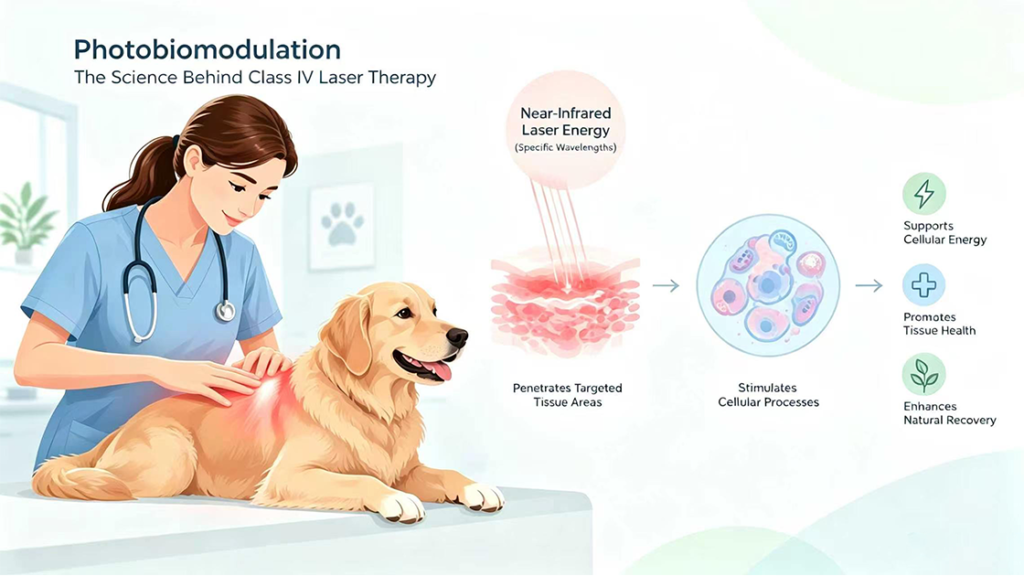
To understand why Class IV Laser Therapy is being considered in workplace wellness environments, it is important to understand the science behind the technology. The foundation of this approach is photobiomodulation, a field that explores how specific wavelengths of light interact with biological tissues.
2.1 Photobiomodulation and Advanced Laser Energy Technology
Photobiomodulation refers to the interaction between light energy and biological systems. Specific wavelengths of light can influence cellular processes and are widely discussed in modern wellness and rehabilitation fields.
Class IV Laser Therapy typically uses near-infrared wavelengths, allowing energy to reach targeted tissue areas through controlled application.
Unlike simple light exposure, advanced laser systems provide higher energy output and more precise control options. This allows professionals to adjust settings based on different application requirements.
For veterinary workplace wellness programs, understanding this technology helps organizations evaluate how laser-based solutions may complement broader employee support strategies.
2.2 How Near-Infrared Laser Technology Supports Modern Wellness Strategies
Near-infrared laser energy is an important feature of many Class IV laser systems. This wavelength range allows professionals to explore deeper energy delivery compared with some surface-level light technologies.
Modern wellness strategies increasingly focus on personalized approaches rather than one-size-fits-all solutions.
Through adjustable parameters, Class IV Laser Therapy provides flexibility for different application needs. Professionals can consider factors such as energy intensity, application area, and session duration when designing technology-supported wellness routines.
This adaptability makes laser technology suitable for environments where different team members may have different workplace requirements.
2.3 The Importance of Adjustable Settings for Different Workplace Needs
Veterinary clinics include multiple roles, and each position involves different responsibilities.
A veterinarian performing procedures may have different workplace demands compared with a technician assisting with animal care. Even administrative team members may experience different physical challenges related to their daily activities.
Adjustable laser technology allows organizations to consider various wellness applications according to individual needs.
By offering customization options, Class IV Laser Therapy supports a more personalized approach to workplace wellness planning.
3. Applications of Class IV Laser Therapy Within Veterinary Clinic Environments
As veterinary clinics continue to develop more comprehensive workplace wellness strategies, technology-based solutions are becoming part of the conversation around professional support. Class IV Laser Therapy provides a modern approach that can be integrated into veterinary environments where teams manage physically demanding clinical responsibilities. By combining advanced laser technology with workplace wellness concepts, veterinary organizations can explore additional ways to support their professional teams.
3.1 Supporting Veterinary Teams During Long Clinical Procedures
Veterinary procedures often require high levels of concentration and physical stability. Whether performing examinations, assisting with operations, or managing animal care activities, veterinary professionals may need to maintain specific working positions for extended periods.
These clinical requirements make workplace wellness an important consideration for veterinary organizations. Supporting professionals behind the examination table can contribute to creating more sustainable working environments.
Class IV Laser Therapy uses controlled near-infrared laser energy and adjustable settings, allowing technology applications to be adapted according to different workplace wellness goals.
Rather than focusing on a single professional role, veterinary clinics can consider how advanced technology fits into broader employee support programs that address the needs of their entire team.
3.2 Integrating Recovery Technology Into Busy Animal Care Facilities
Modern veterinary clinics often operate in fast-paced environments where efficiency and professional performance are essential. Introducing technology into these settings requires solutions that can adapt to existing workflows.
Class IV Laser Therapy systems are designed with adjustable parameters that allow flexible application approaches. This flexibility helps organizations consider how technology may fit into different workplace schedules and professional routines.
For veterinary facilities, technology integration is not only about adding new equipment but also about creating a more complete approach to employee wellness.
By combining professional knowledge, workplace planning, and innovative tools, clinics can develop wellness environments that support both operational needs and team well-being.
3.3 Creating More Sustainable Healthcare Workflows
A sustainable veterinary workplace depends on more than advanced medical procedures. It also requires attention to the professionals who deliver daily care.
Healthcare industries are increasingly exploring ways to improve workplace sustainability through better organization, technology, and employee support programs.
Class IV Laser Therapy represents one example of how modern technology can become part of this movement.
Through photobiomodulation-based technology, adjustable energy control, and targeted applications, laser systems provide veterinary organizations with another option when developing professional wellness strategies.
The goal is not to replace existing workplace practices but to complement them with additional technology-based resources.
4. Why Veterinary Clinics Are Exploring Advanced Wellness Technologies
The growth of veterinary medicine has encouraged clinics to look beyond traditional operational models. Today’s veterinary organizations are not only focused on medical capabilities but also on creating environments where professionals can maintain long-term career development.
4.1 Moving Beyond Traditional Workplace Support Methods
Traditional workplace wellness approaches often include ergonomic improvements, scheduling strategies, and general health awareness. While these methods remain important, many industries are also exploring how technology can provide additional support.
Class IV Laser Therapy reflects the growing interest in advanced wellness technologies that combine scientific principles with practical workplace applications.
Through photobiomodulation technology, laser systems offer a modern approach based on controlled light energy interaction with biological tissues.
For veterinary clinics, adopting new technology can represent an opportunity to expand workplace wellness resources while maintaining professional standards.
4.2 Improving Professional Sustainability Through Technology
Veterinary professionals often build long careers based on their dedication to animal healthcare. Creating sustainable professional environments requires attention to both workplace conditions and employee wellness.
Technology can support this goal by providing additional tools that align with modern healthcare trends.
Class IV Laser Therapy offers features such as adjustable energy output and targeted application methods, allowing organizations to consider customized wellness approaches.
As veterinary clinics continue to evolve, technology-based wellness solutions may become increasingly relevant in supporting professional development and workplace sustainability.
4.3 Building Employee-Centered Veterinary Environments
A successful veterinary clinic depends on teamwork. Veterinarians, technicians, assistants, and administrative professionals all contribute to daily operations.
Employee-centered environments recognize that supporting the healthcare team is an important part of maintaining high-quality services.
Class IV Laser Therapy can be considered as one element within a broader employee wellness framework.
By combining technology, education, and workplace planning, veterinary organizations can create environments that value both animal care excellence and professional well-being.
5. The Future of Technology-Based Wellness in Veterinary Medicine
The relationship between healthcare technology and workplace wellness continues to expand. As veterinary medicine becomes more advanced, organizations are increasingly interested in solutions that support both clinical innovation and professional sustainability.
5.1 Personalized Laser Applications and Professional Wellness
Personalization is becoming an important trend across healthcare and wellness industries.
Different veterinary professionals have different responsibilities, working patterns, and workplace demands. Technology that allows customization can better adapt to these differences.
Class IV Laser Therapy systems with adjustable settings provide flexibility for organizations developing individualized wellness approaches.
By considering specific professional requirements, veterinary clinics can explore more personalized technology applications.
5.2 The Connection Between Healthcare Innovation and Workplace Health
Healthcare innovation is not limited to patient care. It also includes improving the environments where healthcare professionals work.
Veterinary clinics represent a unique healthcare setting because professionals combine medical expertise with physical interaction and hands-on responsibilities.
Advanced laser technology demonstrates how scientific innovation can extend beyond traditional applications and contribute to workplace wellness discussions.
As healthcare technology continues developing, more organizations may explore ways to combine clinical advancement with employee support strategies.
5.3 Creating the Next Generation of Veterinary Workplace Wellness
The future of veterinary workplace wellness will likely involve a combination of professional knowledge, technology, and thoughtful workplace design.
Modern clinics are increasingly recognizing that supporting veterinary teams is an important part of building successful healthcare organizations.
Class IV Laser Therapy represents one technology option within this broader movement.
By integrating innovative solutions with practical workplace strategies, veterinary organizations can continue exploring new ways to create supportive, sustainable, and modern clinical environments.
FAQ
¿Qué es la terapia láser de clase IV?
Class IV Laser Therapy is a high-power photobiomodulation technology that uses controlled laser energy to support modern wellness and recovery-focused programs.
Why are veterinary clinics interested in workplace wellness technology?
Veterinary professionals work in physically and mentally demanding environments, so clinics are exploring additional ways to support long-term professional wellness.
How does Class IV Laser Therapy work?
The technology uses specific laser wavelengths, including near-infrared energy, to interact with biological tissues through photobiomodulation principles.
Can different veterinary professionals use the same laser settings?
Modern systems allow adjustable parameters, making it possible to consider different application approaches based on individual workplace needs.
Is Class IV Laser Therapy only relevant to veterinary environments?
No. Class IV Laser Therapy technology is also used in various rehabilitation, wellness, and healthcare-related settings.
Conclusión
Veterinary medicine continues to advance, and modern clinics are paying increasing attention to the professionals who support daily animal care. Class IV Laser Therapy, based on photobiomodulation principles and near-infrared laser technology, provides a technology-focused option that can be incorporated into veterinary workplace wellness strategies. Through adjustable settings, targeted energy delivery, and flexible applications, this technology supports organizations exploring new approaches to professional wellness. As veterinary workplaces continue to evolve, combining healthcare innovation with employee-centered strategies may become an important direction for building more sustainable clinical environments.
References
Photobiomodulation Therapy: Mechanisms and Applications
https://pmc.ncbi.nlm.nih.gov/articles/PMC11503318
Photobiomodulation in Medicine: From Basic Science to Clinical Practice
https://www.ncbi.nlm.nih.gov/pmc/articles/PMC4743666
Low-Level Laser Therapy and Photobiomodulation: Clinical Applications
https://pubmed.ncbi.nlm.nih.gov/30593010
Laser Therapy in Veterinary Medicine: Applications and Future Perspectives
https://www.frontiersin.org/articles/10.3389/fvets.2021.662867/full
The Role of Light-Based Technologies in Tissue Recovery and Wellness
 English
 العربية
 Français
 日本語
日本語 Português
 Español
 Русский
 Deutsch