

Contenido de la página
Introducción
Musicians rely on precise movement, coordination, and consistent physical control to create performances. Whether playing the guitar, piano, violin, drums, or other instruments, many musicians repeat similar hand, wrist, arm, and shoulder movements for extended periods. Over time, these repetitive performance demands may influence physical comfort and movement quality. Terapia láser de clase IV has become an advanced technology option that some rehabilitation and wellness professionals use to support muscle and joint comfort as part of a broader care approach. By using high-power laser energy and photobiomodulation principles, this technology provides a targeted approach for musicians who want to maintain their physical condition while continuing their creative activities.
1. Understanding Physical Demands on Musicians
Musical performance requires both artistic skill and physical endurance. Behind every performance is a combination of repeated movements, controlled posture, and continuous practice. Understanding these physical demands helps explain why many musicians pay attention to hand, wrist, and shoulder wellness.
1.1 How Repetitive Instrument Playing Affects Musicians
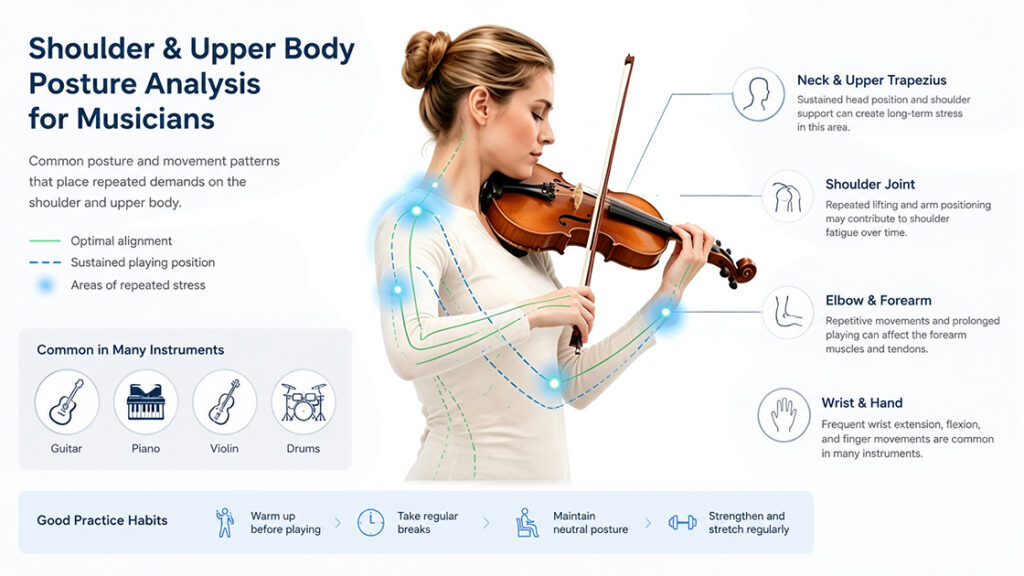
Playing an instrument often involves thousands of repeated movements. Guitarists may continuously use their fingers and wrists for chord changes, pianists perform rapid finger movements across keyboards, and violinists maintain controlled arm and shoulder positions during performances.
These repeated actions require precise coordination between muscles, tendons, joints, and the nervous system. Long practice sessions, rehearsals, and performances can place ongoing demands on specific body areas.
For professional musicians, maintaining physical comfort is an important part of protecting their ability to perform consistently.
1.2 Common Areas of Physical Stress Among Musicians
Different instruments create different physical demands. String players often focus on the hands, wrists, elbows, and shoulders because of continuous gripping and arm positioning. Keyboard players may pay attention to finger movement and wrist positioning, while percussionists often experience higher demands on their arms and shoulders.
Common areas musicians may monitor include:
- Fingers and hands
- Wrists
- Forearms
- Shoulders
- Upper back areas
Because each instrument requires unique movements, personalized approaches are often important when supporting musicians’ physical wellness.
1.3 Why Musicians Focus on Long-Term Physical Maintenance
A musician’s career depends on consistent practice and performance ability. Unlike occasional activities, professional music often requires daily repetition and long hours of training.
Maintaining physical wellness involves multiple factors, including proper technique, breaks during practice, stretching routines, ergonomic adjustments, and professional support when needed.
Advanced technologies such as Class IV Laser Therapy may be considered as one part of a comprehensive wellness strategy for musicians.
2. Understanding Class IV Laser Therapy Technology
Class IV Laser Therapy represents a high-power therapeutic laser technology used in professional healthcare and rehabilitation environments. Understanding its basic principles can help musicians better understand why this technology has gained attention among professionals.
2.1 How Class IV Laser Therapy Works
Class IV Laser Therapy uses concentrated light energy delivered through a therapeutic laser system. The technology is based on photobiomodulation principles, where specific wavelengths of light interact with biological tissues.
Compared with lower-power laser systems, Class IV lasers are designed to deliver higher energy levels, allowing professionals to apply laser energy to targeted areas according to individual needs.
The application process is typically customized based on the body area, professional assessment, and intended wellness goals.
2.2 The Role of Deep Tissue Light Energy
One key characteristic of Class IV Laser Therapy is its ability to deliver light energy to deeper tissue areas compared with some surface-level light-based technologies.
For musicians, this targeted approach may be considered when focusing on areas frequently involved in performance movements, such as hands, wrists, shoulders, and arms.
Professional providers can adjust treatment parameters based on different body areas and individual requirements.
2.3 Why Targeted Laser Technology Matters for Musicians
Musicians often experience physical demands concentrated in specific areas rather than throughout the entire body. A violinist and a drummer, for example, may have very different movement patterns and physical needs.
Targeted laser technology allows professionals to focus on specific areas related to a musician’s activity patterns.
This personalized approach makes Class IV Laser Therapy a technology of interest in rehabilitation and wellness settings.
3. How Class IV Laser Therapy Supports Musicians’ Wellness
Musicians require reliable physical performance abilities throughout their careers. Class IV Laser Therapy can be integrated into professional wellness programs that focus on maintaining comfort and supporting active lifestyles.
3.1 Supporting Hand and Wrist Comfort for Instrument Players
Hands and wrists are essential for many musicians. Guitarists, pianists, violinists, and other instrumentalists depend on fine motor control and repeated movements.
Professional laser therapy approaches may focus on these frequently used areas as part of a broader wellness plan.
Combined with proper playing techniques, scheduled rest periods, and ergonomic adjustments, targeted laser technology may support musicians who want to maintain hand and wrist comfort.
3.2 Supporting Shoulder and Upper Body Wellness
Shoulder positioning plays an important role in many musical performances. Violinists, drummers, and guitarists often maintain specific upper-body positions for extended periods.
Class IV Laser Therapy may be used by professionals to support areas involved in repeated shoulder and upper-body movements.
Maintaining shoulder comfort can help musicians continue practicing and performing while managing the physical demands of their profession.
3.3 Supporting Musicians During Intensive Practice Periods
Professional musicians often experience periods of increased activity before concerts, tours, competitions, or recordings.
During these demanding periods, many musicians pay greater attention to recovery routines and physical maintenance.
Laser therapy technology can be included in professional wellness plans designed around the needs of active performers.
4. Class IV Laser Therapy Applications Across Different Music Professions
Different types of musicians experience different physical requirements. Understanding these differences helps explain how targeted laser therapy approaches may fit into various performance environments.
4.1 Guitarists and String Instrument Players
Guitarists and string instrument players frequently rely on finger coordination, wrist control, and arm positioning.
Long practice sessions require repeated small movements that involve multiple muscle groups. Professional wellness approaches may focus on supporting these commonly used areas.
Class IV Laser Therapy provides another option for professionals who want to include technology-based support within their physical maintenance routines.
4.2 Pianists and Keyboard Performers
Pianists depend heavily on finger precision, wrist movement, and forearm coordination. Even small changes in comfort or movement ability can influence playing experience.
A balanced approach that includes proper posture, technique adjustments, rest periods, and professional wellness support can help pianists manage the demands of regular practice.
Class IV Laser Therapy may be considered as part of this comprehensive approach.
4.3 Drummers and Percussion Musicians
Drummers use dynamic movements involving the hands, wrists, arms, shoulders, and upper body. Their performances often require strength, speed, and endurance.
Because percussion involves repeated striking motions, musicians may pay attention to maintaining overall upper-body comfort.
Targeted laser therapy technology can provide professional providers with another tool for supporting active musicians.
5. The Future of Laser Therapy in Musician Wellness
As awareness of occupational wellness grows, more professionals are exploring technologies that support individuals whose careers depend on physical performance. Musicians represent one group where movement quality and physical comfort are closely connected to professional success.
5.1 Increasing Interest in Performance-Based Wellness
Modern wellness approaches increasingly focus on prevention, maintenance, and personalized care. Musicians, athletes, and other performance professionals often require specialized support because their careers involve repeated physical activities.
Class IV Laser Therapy fits within this trend by offering a technology-based approach that can be customized for different professional needs.
5.2 Technology Development in Rehabilitation and Wellness
Advancements in therapeutic technology continue to influence rehabilitation and wellness practices. Modern laser systems are becoming more precise, adaptable, and easier to integrate into professional settings.
For musicians, these developments may provide additional options for supporting their long-term performance routines while combining technology with traditional wellness strategies.
FAQ
¿Qué es la terapia láser de clase IV?
Class IV Laser Therapy is a high-power therapeutic laser technology that uses light energy based on photobiomodulation principles for professional wellness and rehabilitation applications.
Why do musicians consider Class IV Laser Therapy?
Musicians may consider this technology because their careers often involve repetitive hand, wrist, and shoulder movements.
Can Class IV Laser Therapy replace proper instrument technique?
No. Proper technique, posture, rest, and professional guidance remain important parts of musician wellness.
Which musicians may benefit from learning about laser therapy?
Guitarists, pianists, violinists, drummers, and other instrumentalists may explore this technology as part of their wellness planning.
Is Class IV Laser Therapy suitable for everyone?
Individual needs vary. Professional assessment is important when considering any advanced wellness technology.
Conclusión
Class IV Laser Therapy provides musicians with a modern technology option for supporting hand, wrist, shoulder, and overall physical comfort as part of a comprehensive wellness approach. From guitarists and pianists to drummers and other instrumental performers, musicians rely on precise movements that require long-term physical maintenance. By combining targeted laser technology with proper playing techniques, ergonomic habits, rest periods, and professional guidance, musicians can explore additional ways to support their performance routines. As rehabilitation and wellness technologies continue to develop, Class IV Laser Therapy remains an area of interest for professionals seeking personalized approaches for active lifestyles.
References
Photobiomodulation Therapy: Mechanisms and Applications
https://pubmed.ncbi.nlm.nih.gov/29750791
Low-Level Laser Therapy and Photobiomodulation in Rehabilitation
https://www.ncbi.nlm.nih.gov/pmc/articles/PMC4743666
Laser Therapy in Musculoskeletal Disorders: Clinical Applications
https://pubmed.ncbi.nlm.nih.gov/30674838
The Role of Physical Wellness in Musicians’ Performance Health
https://www.ncbi.nlm.nih.gov/pmc/articles/PMC5856205
Photobiomodulation and Therapeutic Laser Technology: Current Perspectives
 English
 العربية
 Français
 日本語
日本語 Português
 Español
 Русский
 Deutsch