

Seite Inhalt
1. Introduction: Why Infected Wounds Need a Better Solution
Infected wounds represent one of the most challenging problems in modern healthcare, affecting millions of patients worldwide and creating significant burdens on both healthcare systems and individual quality of life. As antibiotic resistance continues to rise and traditional wound care approaches show limitations in complex cases, the medical community has increasingly turned to innovative technologies that can address the multifaceted nature of wound infection and delayed healing. Laser therapy has emerged as a promising solution that combines antimicrobial effects with enhanced tissue regeneration capabilities, offering new hope for patients struggling with chronic, non-healing wounds.
1.1 The Growing Challenge of Chronic and Infected Wounds
The prevalence of chronic and infected wounds has reached epidemic proportions, with an estimated 6.5 million patients in the United States alone suffering from these conditions. This growing challenge stems from multiple factors including an aging population, increased prevalence of diabetes and vascular disease, and the emergence of antibiotic-resistant bacterial strains that complicate treatment protocols. Chronic wounds, defined as wounds that fail to progress through normal healing phases within three months, often become infected due to compromised immune responses, poor circulation, and bacterial colonization. The economic impact is staggering, with annual costs exceeding $25 billion in the United States alone. Healthcare providers face increasing pressure to find effective treatments that can break the cycle of failed healing while avoiding the pitfalls of antibiotic overuse and resistance development.
1.2 Limitations of Conventional Wound Treatments
Traditional wound management approaches, while foundational to care, often fall short when dealing with complex infected wounds that resist standard interventions. Topical antibiotics face limitations including poor tissue penetration, selection pressure for resistant organisms, and potential for allergic reactions or contact dermatitis. Systemic antibiotics may not achieve adequate tissue concentrations in poorly vascularized wounds, while contributing to the global problem of antibiotic resistance. Conventional wound dressings, though essential for wound protection and moisture management, cannot actively address bacterial biofilms or stimulate cellular regeneration. Debridement, while necessary for removing necrotic tissue, is often painful and may require repeated procedures. These limitations highlight the need for adjunctive therapies that can enhance healing while addressing infection through novel mechanisms that don’t rely solely on traditional antimicrobial approaches.
1.3 Introduction to Laser Therapy in Wound Management
Laser therapy represents a paradigm shift in wound management, offering a non-invasive technology that simultaneously addresses multiple aspects of wound pathophysiology. This therapeutic modality utilizes specific wavelengths of light to stimulate cellular processes, reduce bacterial load, and accelerate tissue repair through photobiomodulation mechanisms. Unlike traditional treatments that often target single aspects of wound healing, laser therapy provides comprehensive benefits including antimicrobial effects, enhanced circulation, accelerated cellular metabolism, and improved collagen synthesis. The technology has evolved significantly since its introduction to medicine, with different laser classifications offering varying power outputs and therapeutic capabilities. Modern laser therapy systems can deliver precise energy doses to achieve optimal therapeutic outcomes while maintaining excellent safety profiles, making them valuable additions to comprehensive wound care programs.
2. Understanding Infected Wounds and Healing Delays
The complexity of infected wounds requires a thorough understanding of both normal healing processes and the pathophysiological disruptions that occur when bacterial contamination overwhelms local immune defenses. This knowledge forms the foundation for appreciating how laser therapy can effectively address the multifaceted challenges presented by these difficult-to-treat conditions.
2.1 What Are Infected Wounds?
Infected wounds represent a state where bacterial proliferation overwhelms the body’s natural defense mechanisms, creating an environment that impairs normal healing processes and perpetuates tissue damage. Clinical signs of wound infection include increased pain, erythema extending beyond wound edges, purulent drainage, foul odor, and systemic symptoms such as fever or elevated white blood cell count. The bacterial burden typically exceeds 10^5 organisms per gram of tissue, though this threshold may vary based on bacterial virulence factors and host immune status. Critical colonization, a state between contamination and frank infection, occurs when bacterial levels interfere with healing without producing overt clinical signs of infection. Biofilm formation represents a particularly challenging aspect of wound infection, as bacteria within these protective matrices demonstrate increased resistance to antimicrobial agents and host immune responses. Understanding these distinctions is crucial for appropriate treatment selection and monitoring response to therapeutic interventions.
2.2 Common Causes and Risk Factors (diabetes, pressure sores, trauma)
Diabetes increases infection risk: High blood sugar impairs immune function, and complications like neuropathy and poor circulation worsen wound healing.
Pressure ulcers develop from limited mobility: Sustained pressure causes tissue death, opening pathways for bacteria to invade.
Traumatic wounds often harbor infections: Extensive tissue damage and contamination provide an ideal environment for bacterial growth.
Advanced age contributes to susceptibility: Older patients often have weakened immune systems and slower healing responses.
Immunosuppression raises infection risk: Medications or diseases that suppress immunity reduce the body’s ability to fight bacteria.
Malnutrition impairs healing: Lack of essential nutrients affects protein synthesis and immune defense mechanisms.
Venous insufficiency causes chronic tissue hypoxia: Poor venous return leads to low oxygen levels, making tissues vulnerable to infection.
2.3 How Infections Disrupt the Healing Cascade
Normal wound healing progresses through overlapping phases of hemostasis, inflammation, proliferation, and remodeling, each requiring precise coordination of cellular and molecular events. Bacterial infection disrupts this cascade at multiple levels, creating a pathological state that perpetuates tissue damage and prevents progression toward healing. During the inflammatory phase, bacterial endotoxins and exotoxins trigger excessive inflammatory responses, prolonging this normally self-limiting phase and creating chronic inflammation that impairs subsequent healing stages. Bacterial proteases and collagenases degrade newly formed extracellular matrix, preventing stable scaffold formation necessary for tissue regeneration. Biofilm formation alters local pH and oxygen tension, creating environments hostile to normal cellular function. Bacterial competition for nutrients and oxygen deprives healing tissues of essential resources, while bacterial metabolites can be directly cytotoxic to regenerating cells. This understanding explains why traditional wound care approaches often fail and highlights the need for interventions that can simultaneously address bacterial burden and stimulate healing processes.
3. Laser Therapy: The Science Behind the Beam
The application of laser technology in wound management represents a sophisticated approach that harnesses specific wavelengths of electromagnetic radiation to achieve therapeutic outcomes through photobiomodulation. Understanding the scientific principles underlying laser therapy provides insight into how this technology can effectively address the complex challenges presented by infected wounds while stimulating natural healing processes.
3.1 Was ist Lasertherapie? und wie funktioniert es?
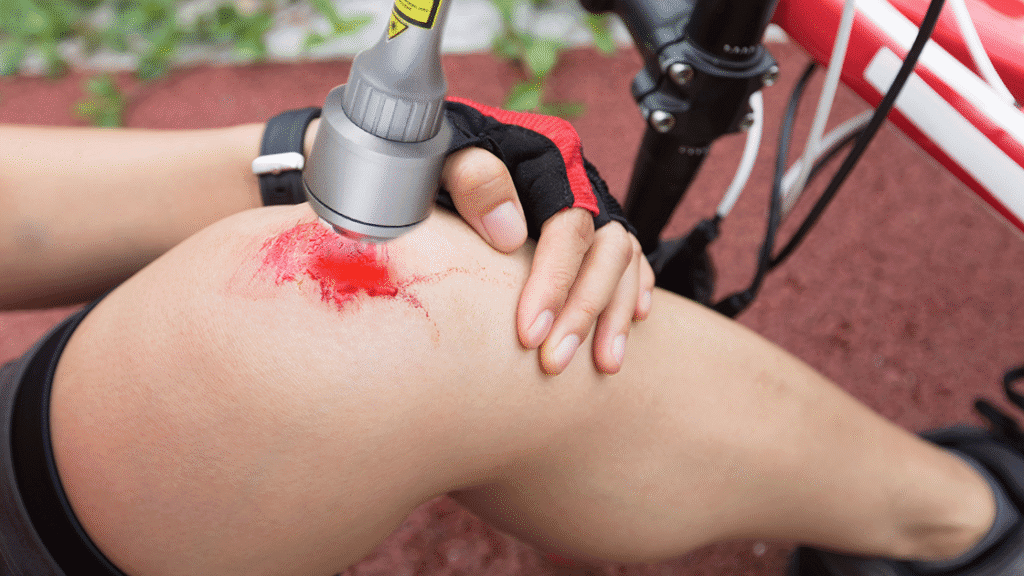
Laser therapy encompasses the therapeutic application of coherent, monochromatic light at specific wavelengths to stimulate biological processes within target tissues. The term “laser” (Light Amplification by Stimulated Emission of Radiation) describes devices that produce highly focused beams of electromagnetic energy with unique properties including coherence, monochromaticity, and collimation. Medical lasers are classified into four categories based on their power output and potential for tissue damage. Class I and II lasers produce low power outputs (<1mW and <1W respectively) considered safe for direct viewing, while Class III lasers are subdivided into IIIa and IIIb categories with increasing power outputs. Class IV lasers produce power outputs exceeding 500mW and represent the highest-powered therapeutic laser category, capable of delivering significant energy to target tissues. These high-powered systems can achieve therapeutic effects in shorter treatment times and penetrate deeper into tissues compared to lower-power alternatives, making them particularly valuable for complex wound applications.
3.2 Wavelengths and Their Biological Effects (Red and NIR lasers)
The therapeutic efficacy of laser treatment depends critically on wavelength selection, as different wavelengths interact with tissue chromophores in distinct ways to produce specific biological effects. Red light wavelengths (typically 630-700nm) demonstrate optimal absorption by hemoglobin and other tissue chromophores, making them particularly effective for superficial wound treatment and antimicrobial applications. These wavelengths show excellent penetration through the first few millimeters of tissue while maintaining high energy density at target sites. Near-infrared (NIR) wavelengths (typically 700-1000nm) penetrate deeper into tissues due to reduced absorption by hemoglobin and water, allowing effective treatment of deeper wound structures and surrounding tissues. The 810nm and 980nm wavelengths are commonly employed in therapeutic applications due to their optimal balance of tissue penetration and cellular absorption. Both red and NIR wavelengths can stimulate mitochondrial function through cytochrome c oxidase activation, though the specific cellular responses may vary based on wavelength-specific absorption characteristics.
3.3 Photobiomodulation and Antibacterial Action Explained
Photobiomodulation is the core mechanism behind laser therapy’s healing effects. It begins with the absorption of photons by cellular chromophores, primarily targeting cytochrome c oxidase in the mitochondrial respiratory chain. This interaction boosts enzyme activity and ATP production, which energizes cells to accelerate protein synthesis, cell division, and tissue regeneration. Laser therapy also exhibits antibacterial effects through two main mechanisms. First, photodynamic reactions generate reactive oxygen species that exert direct bactericidal action. Second, it enhances immune defense by stimulating leukocyte activity and improving local immune responses. Studies show that pulsed low-intensity laser therapy at 904 nm produces cell type, time, and frequency specific effects on the metabolism and proliferation of human wound cells. These findings highlight the importance of optimizing laser parameters—like wavelength and pulse frequency—for targeted wound healing and infection control.
3.4 Targeting Bacterial Biofilms with Laser
Bacterial biofilms represent one of the most challenging aspects of wound infection management, as these structured communities demonstrate remarkable resistance to conventional antimicrobial agents. Laser therapy offers unique advantages in addressing biofilm-associated infections through mechanisms that complement traditional treatment approaches. The photodynamic effects of laser irradiation can disrupt biofilm architecture through generation of reactive oxygen species that damage the extracellular polymeric matrix protecting bacterial communities. Additionally, the thermal effects of higher-powered laser systems can create temperature elevations that compromise biofilm integrity without causing significant damage to surrounding healthy tissue. Pulsed low-intensity laser treatment stimulates wound healing without enhancing biofilm development in vitro, indicating that appropriate laser parameters can promote healing while avoiding potential complications from enhanced bacterial growth. The mechanical effects of laser energy can also improve antibiotic penetration into biofilm structures, potentially enhancing the efficacy of concurrent antimicrobial therapy when combined treatment approaches are employed.
4. Clinical Benefits of Laser Therapy for Infected Wounds
The therapeutic advantages of laser therapy for infected wound management extend beyond simple antimicrobial effects to encompass comprehensive healing enhancement that addresses multiple aspects of wound pathophysiology. These multifaceted benefits explain why laser therapy has gained increasing acceptance as an adjunctive treatment modality in challenging wound care scenarios.
4.1 Reduces Bacterial Load Without Antibiotic Resistance
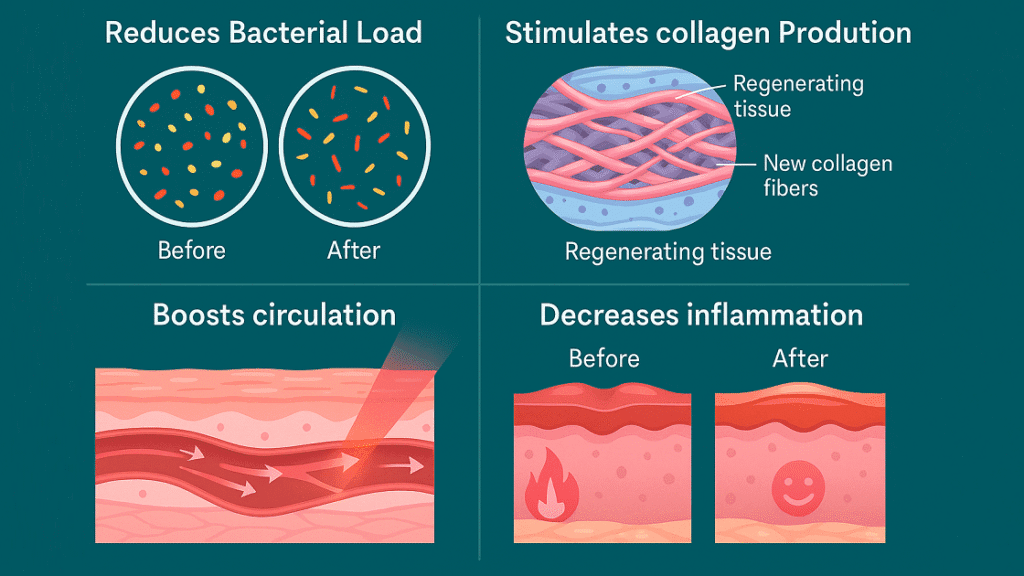
One major advantage of laser therapy in infected wound care is its ability to reduce bacterial load without fostering antibiotic resistance. Laser-induced photodynamic effects generate reactive oxygen species (ROS) such as singlet oxygen, hydroxyl radicals, and superoxide anions. These ROS damage bacterial cell walls, disrupt membranes, and inhibit essential enzymes, leading to cell death. Unlike antibiotics that target specific bacterial mechanisms and can be resisted through mutations, the broad oxidative damage from laser therapy is harder for bacteria to evade. Additionally, laser therapy boosts the body’s natural defenses by enhancing leukocyte activity, increasing phagocytosis, and stimulating the release of antimicrobial peptides. This dual mechanism—direct bacterial destruction and immune enhancement—offers a potent, non-resistance-inducing antimicrobial approach. By addressing both infection control and immune support, laser therapy presents a safe and effective adjunct in managing infected wounds, especially where antibiotic resistance poses a clinical challenge.
4.2 Stimulates Collagen Production and Tissue Regeneration
Laser therapy exerts profound effects on collagen synthesis and tissue regeneration through multiple cellular and molecular mechanisms that address the fundamental requirements for wound repair. Photobiomodulation enhances fibroblast proliferation and differentiation, increasing the cellular population responsible for collagen production and extracellular matrix formation. The therapy stimulates increased expression of growth factors including transforming growth factor-beta (TGF-β), platelet-derived growth factor (PDGF), and basic fibroblast growth factor (bFGF), which orchestrate the complex processes of tissue regeneration. Enhanced ATP production from mitochondrial stimulation provides the energy necessary for protein synthesis and cellular division essential for tissue repair. Laser therapy also promotes angiogenesis through vascular endothelial growth factor (VEGF) upregulation, improving blood supply to healing tissues and facilitating nutrient delivery. It is one of the most widely studied effects in laser therapy, accelerating the process by as much as 30-40% in some cases. It also achieves healing of a better quality.
4.3 Boosts Local Circulation and Oxygenation
Laser therapy improves local circulation and oxygenation—vital for healing infected or chronic wounds. High-Intensity Laser Therapy (HILT) enhances blood flow by promoting nitric oxide release and relaxing vascular smooth muscles, resulting in vasodilation and increased capillary perfusion. This boosts oxygen delivery to hypoxic tissues and supports cellular metabolism. Improved circulation also enhances immune cell delivery, facilitates nutrient transport, and promotes the clearance of waste and bacterial toxins. In infected wounds where oxygen deficiency hinders healing, this effect is especially beneficial. Additionally, better perfusion supports the action of antibiotics by increasing their availability at the infection site. According to clinical studies, HILT also improves vascular permeability and tissue oxygenation—key to reversing impaired healing conditions in chronic wounds.
4.4 Decreases Inflammation and Pain at the Site
Laser therapy offers dual benefits in infected wound care—Verringerung der Entzündung and alleviating pain. It downregulates pro-inflammatory cytokines like IL-1β and TNF-α, while upregulating anti-inflammatory mediators such as IL-10. This rebalances the immune response, resolving chronic inflammation without hindering repair. Laser therapy also relieves pain by triggering endorphin release, modulating nerve conduction, and applying gate control mechanisms to block pain signals. These effects increase patient comfort and may reduce reliance on systemic pain medications. Class IV lasers offer deeper tissue penetration and faster results, making them suitable for managing inflammation and pain in more complex wound cases. The non-invasive nature of laser therapy also enhances treatment compliance and safety.
5. Real-World Applications and Case Evidence
The clinical application of laser therapy for infected wounds has generated substantial evidence supporting its efficacy across diverse patient populations and wound types. Understanding real-world outcomes helps healthcare providers make informed decisions about incorporating laser therapy into comprehensive wound management protocols.
5.1 Clinical Studies Supporting Laser Use in Wound Infection
Multiple human studies have shown that laser therapy can accelerate wound healing and reduce infection, though results vary due to inconsistent methodologies. Controlled clinical trials report statistically significant improvements in healing speed, bacterial reduction, and pain relief when laser therapy is added to standard wound care. A systematic review highlighted consistent benefits across study designs, though optimal parameters (wavelength, dose, power) remain under investigation. Class IV lasers, delivering higher power, have shown particularly strong results, with some trials reporting 30–40% faster healing than conventional care alone. However, discrepancies in treatment protocols, laser types, and outcome measurements complicate direct comparison. Experts agree that laser therapy works best when integrated into broader wound care strategies, not used alone. Continued research is required to standardize treatment guidelines and validate long-term benefits. Despite limitations, current data supports the adjunctive use of laser therapy in managing infected wounds.
5.2 Case Reports: Laser Healing in Diabetic Foot Ulcers
Diabetic foot ulcers are notoriously difficult to treat due to poor circulation, neuropathy, and frequent infections. Case reports and small clinical series suggest that Class IV laser therapy, combined with standard care, can significantly enhance healing. One report noted 85% of chronic ulcers completely healed in 8 weeks—half the time of historical averages. Patients with 6–12 month non-healing ulcers often saw progress within 2–4 weeks of laser use. The therapy’s benefits include reduced inflammation, improved blood flow, and better infection control, especially in antibiotic-resistant cases. While these outcomes are promising, most evidence comes from small-scale studies. Nevertheless, some diabetic wound centers now incorporate laser therapy into routine care. Broader trials are needed to confirm efficacy and optimize protocols, but the potential for faster healing and infection resolution makes laser therapy a valuable tool in managing complex diabetic wounds.
6. Safety, Contraindications, and Patient Suitability
The implementation of laser therapy for infected wound management requires careful consideration of safety parameters, contraindications, and patient selection criteria to ensure optimal outcomes while minimizing potential risks. Understanding these factors enables healthcare providers to make appropriate treatment decisions and optimize patient safety.
6.1 Is Laser Therapy Safe for Infected Wounds?
Laser therapy is considered safe for infected wounds when performed by trained professionals using proper protocols. It’s a non-invasive option with a low risk of complications, especially compared to surgical interventions. Class IV lasers, though more powerful, are safe with appropriate eye protection and dosage controls. Mild, temporary effects such as slight skin redness or warmth may occur but typically resolve quickly. Unlike systemic medications, laser therapy carries no risk of drug interactions or organ toxicity, making it suitable for patients with multiple comorbidities or polypharmacy. Its ability to deliver energy precisely allows for tailored treatment based on wound type and patient condition. However, safety relies heavily on proper technique, equipment calibration, and adherence to protocols. While rare, inappropriate use can lead to overtreatment or ineffective results. Overall, laser therapy has an excellent safety record in wound care when used as part of a structured and monitored clinical program.
6.2 Contraindications and Precautions to Note
Avoid laser therapy over malignant tumors.
Do not use laser therapy on the abdomen or pelvis during pregnancy.
Exercise caution with patients who have photosensitive disorders or take photosensitizing medications.
Use care in patients with bleeding disorders or on anticoagulant medications.
Adjust laser parameters when treating areas near metallic implants.
Avoid laser exposure over the thyroid gland.
Set realistic expectations with patients regarding laser therapy outcomes.
Emphasize proper patient selection and clinical judgment.
Educate patients about the role of laser therapy in their overall care.
6.3 Integrating Laser with Other Wound Care Strategies
Integrate laser therapy into comprehensive wound care programs.
Laser therapy complements fundamental wound care principles.
Combine laser therapy with appropriate wound dressings.
Improved circulation and cellular function enhance other treatments.
Carefully time laser treatments with wound debridement.
Educate patients on treatment expectations and home care.
Use evidence-based protocols with regular monitoring.
7. Conclusion: When to Consider Laser Therapy for Infected Wounds
Die Lasertherapie ist a powerful adjunct in managing infected wounds, especially those resistant to standard care. Ideal candidates include patients with chronic, non-healing wounds—such as diabetic foot ulcers, pressure sores, or venous leg ulcers—and those unable to undergo invasive treatments. Its benefits lie in reducing bacterial load, improving circulation, stimulating cell repair, and decreasing inflammation. Class IV lasers, when used at reduced intensity, offer faster application and excellent tissue response—making them both effective and cost-efficient. However, laser therapy should support—not replace—comprehensive wound care protocols. Proper patient selection, realistic expectations, and integration into broader care plans are key to success.
8. FAQs about Laser Therapy for Wound Healing
Yes. Laser therapy reduces bacterial load by disrupting bacterial cells and biofilms through photobiomodulation. It doesn’t rely on antibiotics, making it an ideal choice in an era of rising antibiotic resistance.
Laser light boosts cellular energy (ATP), enhances collagen synthesis, and improves local circulation. These effects accelerate tissue regeneration and reduce healing time, especially for chronic wounds.
Absolutely. Studies and case reports show significant improvements in chronic, non-healing wounds like diabetic ulcers and bedsores when laser therapy is added to standard wound care.
Not at all. Laser therapy is non-invasive and painless. It reduces inflammation and pain at the wound site while stimulating repair — without causing thermal damage.
Primarily red (around 660nm) and near-infrared (NIR, 810–980nm) lasers. These wavelengths penetrate tissue deeply and trigger photobiological effects that promote healing and control infection.
Yes. Laser therapy complements other treatments like debridement, dressings, or antibiotics. It’s best used as part of an integrated wound care plan guided by a healthcare provider.
 English
 العربية
 Français
 日本語
日本語 Português
 Español
 Русский
 Deutsch