

Seite Inhalt
Einführung
Pet sitters and dog walkers keep pets happy and healthy, but the physical demands of this growing profession often come at a significant cost. Daily tasks such as bending to leash and unleash dogs, lifting large breeds into vehicles, crouching to clean litter boxes, and pulling against sudden lunges place repeated stress on the lower back. Many pet care professionals work alone without supervision, and the unpredictable nature of animal behavior adds sudden, unguarded movements that strain the spine. This article explores why chronic low back pain is so common among pet care professionals, how it develops from daily tasks, and how Lasertherapie der Klasse IV may serve as a supportive tool for managing this persistent occupational challenge.
1. Understanding the Physical Demands of Pet Sitting and Dog Walking
Pet care professionals perform physically demanding work every day, yet many people outside the industry do not recognize the toll this takes on the body.
1.1 A Profession with Hidden Physical Costs
The pet sitting and dog walking industry has expanded significantly over the past decade. Millions of households now own pets, and the number of people employed in animal care and service occupations continues to grow. As more individuals enter this profession, the number of people experiencing its physical toll also rises. Unlike office jobs where ergonomic adjustments can reduce strain, pet care work involves unpredictable movements, varying animal sizes, and physically demanding tasks that simply cannot be avoided.
1.2 Daily Tasks That Strain the Spine
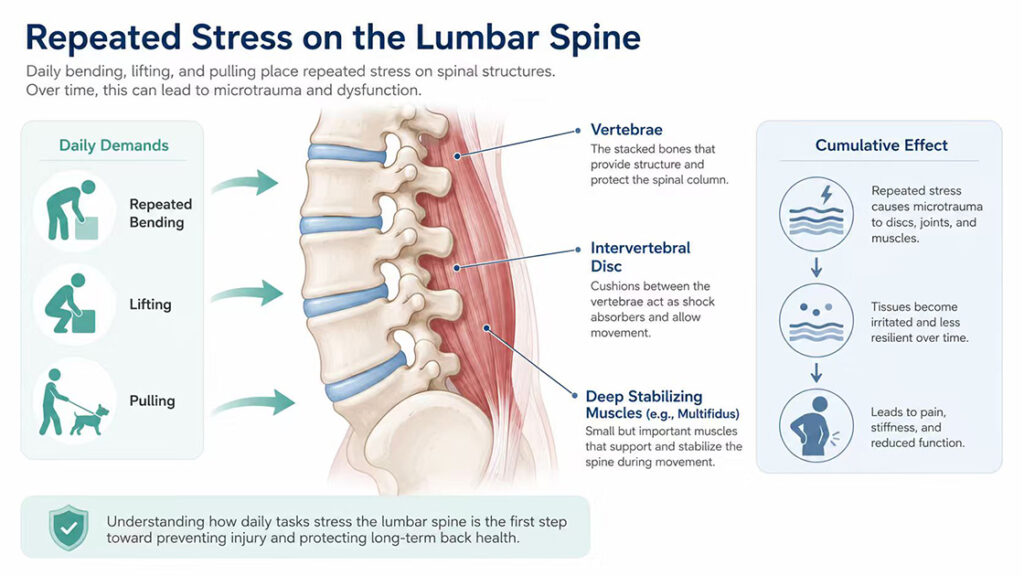
A typical workday for a pet sitter or dog walker involves multiple activities that stress the lumbar spine. Bending to leash and unleash dogs requires forward flexion of the lower back. Lifting medium and large breeds into vehicles or onto grooming tables demands heavy lifting, often performed with poor body mechanics in crowded or awkward spaces. Crouching and kneeling to clean litter boxes, pick up waste, or reach under furniture places the back in compromised positions. Walking multiple dogs simultaneously adds sudden pulling forces when animals lunge after distractions. These tasks often happen in rapid succession without adequate rest between them.
1.3 Why Pet Care Professionals Are at Elevated Risk
Pet sitters and dog walkers face a combination of risk factors that make chronic low back pain particularly common. Work-related musculoskeletal disorders occur in jobs with awkward postures, high hand force, highly repetitive motions, repeated impact, and heavy and frequent lifting. Pet care work includes nearly all of these factors. Additionally, professionals often work alone without supervision to correct poor body mechanics. The unpredictability of animal behavior means they cannot plan their movements perfectly—a sudden tug from a dog or a cat‘s unexpected reaction forces immediate, unguarded motions that strain the spine.
2. How Chronic Low Back Pain Develops in This Occupation
Understanding the mechanisms behind chronic low back pain helps pet care professionals recognize early warning signs and seek appropriate support.
2.1 Repeated Microtrauma to Lumbar Structures
Each bending, lifting, and pulling motion places small amounts of stress on the lumbar spine. Healthy tissues can repair this microtrauma with adequate rest between activities. However, the high frequency of these movements in pet care work means the spine may not receive enough recovery time. Over weeks and months, the cumulative stress exceeds the body‘s repair capacity. The lumbar intervertebral discs gradually lose hydration and resilience. The small stabilizing muscles around the spine, particularly the multifidus, may become inhibited and fail to activate properly. This sets the stage for persistent discomfort that does not resolve with simple rest.
2.2 The Pain Cycle
Chronic low back pain often follows a self-perpetuating cycle. Pain from an initial injury or accumulated strain causes the body to alter movement patterns to avoid discomfort. This compensatory strategy shifts load to other structures, which may become irritated themselves. Fear of movement may lead to reduced physical activity overall, which weakens core stabilizing muscles. Weaker muscles provide less support to the spine, increasing the risk of further injury with each subsequent workday. Breaking this cycle requires approaches that address both discomfort and the underlying functional changes.
2.3 Why Standard Treatments Often Fall Short
Traditional approaches to low back pain include rest, pain medications, and general exercise recommendations. However, pet care professionals cannot simply stop working for extended periods without losing income. Pain medications may temporarily reduce symptoms but do not address the tissue changes driving the discomfort. Generic exercise advice often fails to account for the specific movement patterns and demands of pet care work. This gap between available treatments and the needs of professionals explains why many pet sitters and dog walkers continue working through pain, hoping it will eventually resolve on its own.
3. How Class IV Laser Therapy Supports the Body
Class IV laser therapy offers a non-invasive approach that may help pet care professionals manage chronic low back discomfort without taking significant time away from work.
3.1 Understanding Photobiomodulation
Class IV laser therapy delivers specific wavelengths of light energy to deep tissues, where it interacts with cells through a process called photobiomodulation. Within the mitochondria—the energy-producing components of cells—photons stimulate the cytochrome c oxidase complex, leading to increased adenosine triphosphate production. This biological cascade results in increased cellular metabolism, improved microcirculation, and enhanced tissue repair. The higher power output of Class IV lasers allows deeper penetration than lower-level lasers, reaching the spinal structures that typical surface-level treatments cannot access effectively.
3.2 Evidence for Class IV Laser in Musculoskeletal Pain
A systematic review examining the efficacy of Class IV laser in musculoskeletal pain found that the therapy effectively reduces pain and improves function in patients with musculoskeletal disorders. The review observed pain reduction at the end of laser treatments and in follow-up evaluations, with decreased disability favoring laser management. This evidence suggests that Class IV laser therapy may serve as a valuable supportive tool for managing chronic low back pain. Additional research indicates that Class IV laser can be effective for orthopedic injuries and disorders, supporting its effects on pain reduction while restoring functionality and range of motion.
3.3 What Class IV Laser Therapy Does for Low Back Pain
For pet care professionals with chronic low back discomfort, Class IV laser therapy may help break the pain cycle through several mechanisms. The therapy supports the body’s natural anti-inflammatory processes without the side effects associated with long-term medication use. It promotes local microcirculation, improving the delivery of oxygen and nutrients to fatigued spinal tissues while helping remove metabolic waste products accumulated during daily work. Additionally, research shows that chronic low back pain often stems from dysfunction of the deep spinal stabilizing muscles, particularly the lumbar multifidus. Class IV laser therapy can help reduce neural inhibition of these muscles, improve tissue metabolism, and prepare patients to engage effectively in motor control rehabilitation.
3.4 How a Typical Session Works
A Class IV laser therapy session for low back pain is quick and comfortable. The practitioner applies the laser handpiece directly to the skin over the painful area, moving it slowly in a circular pattern. Most people feel a gentle warmth during treatment, and the session typically lasts between five and ten minutes. There is no downtime afterward, so pet care professionals can return to work immediately. Multiple sessions may be recommended, often spaced a few days apart, to achieve cumulative benefits.
4. Supporting Your Back Between Clients
Managing chronic low back pain in pet care work requires a combination of on-the-job strategies, supportive therapies, and lifestyle habits.
4.1 Smart Body Mechanics During Daily Tasks
Small adjustments to daily work habits can reduce cumulative spinal stress. When leashing and unleashing dogs, kneel on one knee rather than bending at the waist. When lifting a dog into a vehicle, bring your feet close to the vehicle, keep your back straight, and use your leg muscles. If you walk multiple dogs, use a waist belt rather than holding leashes in your hands to distribute pulling forces through your core rather than your arms and shoulders. Consider using a long-handled scoop for waste collection to avoid repeated bending. These modifications may feel awkward at first but become automatic with consistent practice.
4.2 Building Core Strength
A strong core provides natural support to the lumbar spine. Simple exercises such as planks, bird-dogs, and glute bridges can be performed at home in just a few minutes each day. The goal is not to become a powerlifter but to develop enough endurance in the deep stabilizers to protect the spine throughout a full workday. Consistency matters more than intensity—a few minutes of core work most days will serve you better than an hour-long session once per week.
4.3 Recognizing Early Warning Signs
Paying attention to how your back feels before, during, and after work helps you catch problems before they become severe. Morning stiffness that lasts more than 15 minutes, discomfort that worsens as the workday progresses, or pain that lingers into the evening all warrant attention. Do not ignore these signals hoping they will disappear on their own. Early intervention with appropriate support strategies tends to produce better outcomes than waiting until the pain forces you to stop working.
5. Practical Recovery Strategies for Pet Care Professionals
Creating a sustainable approach to back health helps pet sitters and dog walkers maintain their careers without chronic pain limiting their ability to work.
5.1 When to Use Supportive Therapies
Using Class IV laser therapy after a full workday may help manage the discomfort that accumulates from bending, lifting, and pulling. The therapy does not require downtime, meaning you can return to your daily activities immediately after a session. Some professionals find that regular weekly treatments help them stay ahead of discomfort rather than waiting until pain becomes severe. However, therapy should not replace listening to your body—if a particular task consistently causes significant discomfort, you need to modify how you perform it or reduce its frequency.
5.2 The Role of Rest and Recovery
Complete rest may not be realistic for most pet care professionals, but strategic rest periods within the workday can make a meaningful difference. If your schedule allows, arrange a short break between client visits rather than scheduling them back-to-back. Use this time to stretch, change positions, and give your spine a rest before the next round of physical demands. On your days off, avoid activities that place similar strain on your back. Give your body the opportunity to complete the repair processes that cannot happen during a busy workday.
5.3 Working with Healthcare Providers
If you have persistent low back discomfort despite making adjustments to your work habits, consider consulting a healthcare provider who understands the demands of physical work. A physical therapist can assess your movement patterns and design a specific strengthening program. A sports medicine physician can evaluate whether additional diagnostic testing or other interventions would be appropriate. When considering Class IV laser therapy, seek a qualified practitioner who can tailor the treatment to your specific needs and work demands.
Frequently Asked Questions
Q1: Can I continue working as a pet sitter or dog walker if I have chronic low back pain?
Yes, many professionals continue working while managing their back discomfort. Modifying how you perform tasks and using supportive therapies may help you stay active.
Q2: Does Class IV laser therapy hurt?
Most people feel a gentle warmth during treatment. The therapy is non-invasive and does not require any downtime afterward.
Q3: How many laser sessions are typically needed?
The number of sessions varies by individual. Some people notice improvement after just a few sessions, while others benefit from regular weekly treatments.
Q4: Can laser therapy replace core strengthening exercises?
No. Laser therapy supports tissue recovery, but core strengthening remains essential for protecting your spine over the long term.
Q5: Is Class IV laser therapy safe to use with other treatments?
Generally yes. A qualified practitioner can help you integrate laser therapy with other approaches as part of a comprehensive plan.
Q6: How soon can I return to work after a laser session?
You can return to your normal activities immediately. There is no downtime required after Class IV laser therapy.
Schlussfolgerung
Pet sitters and dog walkers play an essential role in keeping pets healthy and happy, but the physical demands of this profession place genuine strain on the lower back. From bending and lifting to pulling against sudden lunges, the daily tasks of pet care involve repeated loading of the lumbar spine that can lead to persistent discomfort over time. Class IV laser therapy offers a non-invasive supportive tool that may help pet care professionals manage chronic low back discomfort through photobiomodulation, improved tissue metabolism, and reduced neural inhibition of deep stabilizing muscles. It does not replace proper body mechanics, core strengthening, or adequate rest, but it may serve as a valuable addition to a comprehensive back care plan. By combining smart work habits, consistent core training, attentive self-monitoring, and supportive therapies like Class IV laser therapy, pet care professionals can continue providing excellent care to their animal clients while protecting their own spinal health.
References
Wakasa, K. (2023). The Effects of Class IV Laser Therapy in Treatment for Orthopedic Injuries and Disorders: A Systematic Review.
https://scholars.fhsu.edu/sacad/vol9/iss1/7
Physiotherapy Quarterly. (2021). Efficacy of Class IV Laser in the Management of Musculoskeletal Pain: A Systematic Review.
Smart Laser Therapy. Managing Chronic Low Back Pain with Laser Therapy.
 English
 العربية
 Français
 日本語
日本語 Português
 Español
 Русский
 Deutsch