

Seite Inhalt
Einführung
A young athlete falls during a basketball game and catches themself with an outstretched hand. The thumb bends in a direction it should not go. The diagnosis comes back as a fracture, and the doctor mentions weeks in a splint followed by weeks of rehabilitation. For an active person, hearing that recovery will take months feels devastating. There is good news. Lasertherapie der Klasse IV offers a way to support bone healing at the cellular level, potentially reducing recovery time and getting athletes back to their sports sooner.
1. Understanding Thumb Fractures in Active People
Thumb fractures are common in sports that involve falling, catching, or direct impact. Knowing what happens inside the bone helps explain why laser therapy might support faster healing.
1.1 How Thumb Fractures Happen
The thumb has two main bones: the proximal phalanx and the distal phalanx, plus several smaller bones at the base called carpals. The most common fracture in the thumb involves the first metacarpal near the wrist. This injury often occurs when someone falls onto an outstretched hand. The force of impact travels up the thumb and causes the bone to break. Athletes in basketball, football, skiing, and martial arts face higher risks of this type of injury.
1.2 The Natural Bone Healing Process
When a bone breaks, the body immediately starts repairing it. Bleeding around the fracture site forms a clot called a hematoma. Within days, new blood vessels grow into the area and bring cells that will build new bone tissue. Over several weeks, soft callus forms around the fracture, which gradually hardens into new bone. This process takes time because bone cells work relatively slowly. The body can only build new bone tissue so fast, even under ideal conditions.
1.3 Why Traditional Recovery Takes Weeks
Conventional treatment for a thumb fracture involves immobilization with a splint or cast to keep the bone aligned while it heals. Most patients need to wear the splint for four to six weeks. During this time, the joint becomes stiff, and the muscles weaken. After the splint comes off, physical therapy helps restore motion and strength. Total recovery often takes two to three months before the athlete returns to full activity. This long timeline frustrates active people who want to get back to their sports.
2. How Class IV Laser Supports Bone Healing
Class IV laser therapy uses specific wavelengths of light to interact with cells. When applied to a fracture site, the light energy triggers biological responses that may speed up the natural healing process.
2.1 The Science of Photobiomodulation
Inside every cell, tiny structures called mitochondria produce energy that powers cellular activities. In fractured bone, the cells responsible for healing need large amounts of energy to build new tissue. When light from a Class IV laser penetrates the skin and reaches these cells, the mitochondria absorb the light and convert it into cellular fuel. This process, known as photobiomodulation, gives bone-building cells more energy to do their work.
2.2 How Light Reaches Deep Bone Tissue
Class IV lasers deliver higher power output than low-level lasers, allowing the light energy to penetrate through skin, muscle, and soft tissue to reach the bone. The thumb is a relatively small structure, so the light does not need to travel far. However, the bones are surrounded by ligaments, tendons, and other tissues that absorb and scatter light. Class IV lasers provide enough starting power to ensure that therapeutic doses reach the fracture site, not just the surface tissues.
2.3 What Happens at the Cellular Level
Research has shown that laser therapy influences several steps in the bone healing process. The light energy stimulates the activity of osteoblasts, which are the cells that build new bone. It also encourages the growth of new blood vessels into the healing area, bringing oxygen and nutrients that support tissue repair. Some studies suggest that laser therapy may reduce inflammation around the fracture site, allowing healing to proceed more efficiently.
2.4 The Role of Energy in Healing Rate
Bone healing requires energy. The cells that build new bone tissue need adenosine triphosphate, the molecule that stores and transports energy within cells. In a freshly fractured bone, the local cells may be stressed or damaged. They may not produce enough energy to keep up with the demands of healing. Class IV laser therapy provides an external energy source that supplements the cells’ own production, potentially helping them work at full capacity rather than being limited by their internal energy stores.
3. What the Research Shows About Fracture Healing
Clinical reports and case studies have documented accelerated bone healing in patients receiving Class IV laser therapy. While every case is different, the pattern of faster recovery appears consistently.
3.1 A Documented Case of Thumb Fracture
A clinical case report described a patient with a thumb fracture that was treated with Class IV laser therapy. The patient received six treatments over a period of days. After the course of treatment, the fracture had healed sufficiently for the splint to be removed. The patient reported no pain and had normal range of motion in the thumb. The timeline from injury to splint removal was significantly shorter than the typical four to six weeks expected with conventional care alone.
3.2 Research on Bone Healing Acceleration
Studies on laser therapy for bone fractures have shown that treated animals heal faster than untreated controls. The laser groups demonstrated earlier formation of callus, more organized new bone, and greater mechanical strength in the healed bone. While human studies are more limited, the existing case reports and small trials suggest similar benefits. Patients receiving laser therapy often report less pain, reduced swelling, and earlier return to normal function.
3.3 The Importance of Treatment Timing
The timing of laser therapy after a fracture matters. Starting treatment soon after the injury may produce the greatest benefits because the body is already in the early stages of healing. Delaying treatment until the bone has already begun healing may still help, but the effects may be less dramatic. For athletes who want to return to sports quickly, starting laser therapy within the first few days after the fracture gives the best chance of accelerated recovery.
3.4 Individual Responses Vary
Not every patient responds the same way to laser therapy. Factors that affect healing include the severity of the fracture, the patient’s age, overall health, nutrition, and whether the fracture is stable or displaced. Patients who follow their doctor’s recommendations about immobilization and activity restrictions tend to do better than those who try to do too much too soon. Laser therapy supports healing, but it does not replace proper medical care.
4. What to Expect During Laser Treatment for a Thumb Fracture
If your doctor recommends Class IV laser therapy for a thumb fracture, understanding what the treatment involves helps you prepare and set realistic expectations.
4.1 Before Your First Session
Your doctor will confirm that the fracture is stable and that you are a good candidate for laser therapy. You will continue to wear your splint or cast as directed. The laser can be applied over the splint or directly to the skin if the area is accessible. No special preparation is needed before your first session. The treatment is painless and has no known side effects when used as directed.
4.2 The Treatment Experience
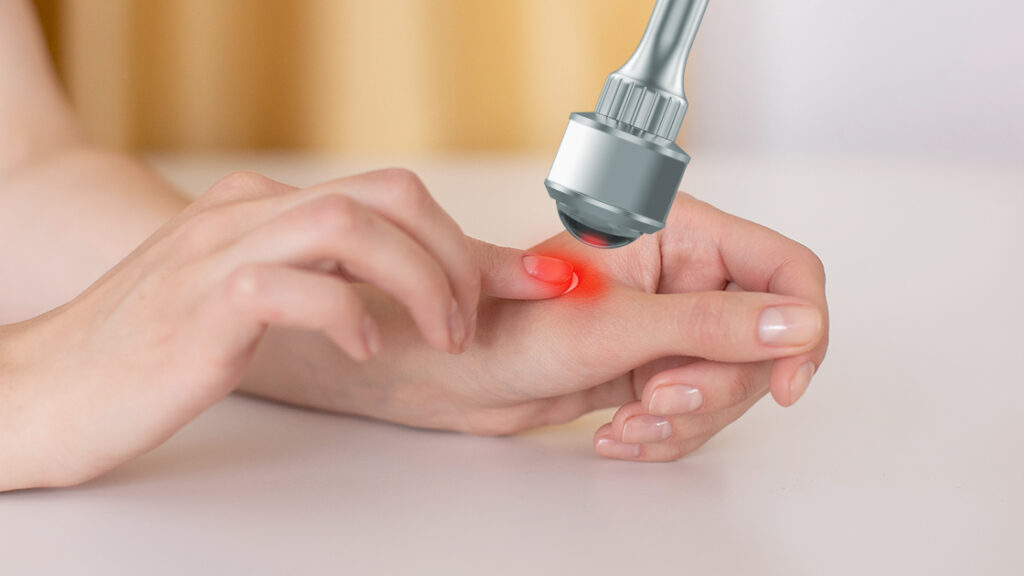
You will sit comfortably while your provider positions the laser handpiece over your thumb. The device may be held against your skin or positioned a short distance away, depending on the specific protocol. You will not feel the laser light. Some patients notice a gentle warmth during treatment, but many feel nothing at all. Each session typically lasts between five and fifteen minutes. The treatment does not interfere with your splint or cast.
4.3 How Many Sessions You May Need
For a thumb fracture, treatment protocols often include multiple sessions over a relatively short period. The documented case involved six sessions over several days. Some patients may need fewer sessions, while others with more severe fractures may benefit from additional treatments. Your provider will monitor your progress and adjust the treatment plan based on your healing. Most patients receive laser therapy two to three times per week.
4.4 What You May Notice as Healing Progresses
You may not feel immediate changes after each session. The benefits of laser therapy accumulate over time as the bone cells respond to the energy. After several treatments, you may notice that the pain has decreased. You may feel more comfortable moving your fingers even while the thumb is splinted. The swelling around the fracture site may go down more quickly than expected. Your doctor will monitor healing with repeated x-rays to confirm that new bone is forming.
5. Practical Advice for Returning to Activity
Healing a fracture is only the first step. Returning to sports requires careful planning and patience, even with accelerated healing from laser therapy.
5.1 Following Immobilization Guidelines
Even with laser therapy, the bone needs time to build enough strength for normal use. Your doctor will tell you how long to keep the splint or cast on. Removing it too early risks re-injury or displacement of the fracture. Use the laser as directed, but continue to protect the thumb from stress during the healing period.
5.2 Gradual Return to Movement
After the splint comes off, your thumb will likely feel stiff and weak. The joint may not move through its full range of motion. Gentle exercises prescribed by your doctor or physical therapist will help restore mobility. Do not force the thumb to move if it feels stuck. Slow, consistent movement works better than aggressive stretching. Laser therapy may continue during this phase to support ongoing tissue repair.
5.3 Strengthening and Sport-Specific Training
Once motion returns, you will need to rebuild strength in the thumb and hand. Gripping, pinching, and other activities that stress the thumb should be introduced gradually. For athletes, returning to sport requires sport-specific training. A basketball player needs to practice catching and dribbling. A martial artist needs to work on gripping and striking. Your physical therapist can design a progression that gets you back to your sport safely.
5.4 Listening to Your Body
Pain is a signal that you are doing too much too soon. If activities cause sharp pain in the thumb, back off and give the area more time to heal. Some discomfort during rehabilitation is normal, but pain that lasts for hours after activity suggests you have pushed too hard. Pay attention to how your thumb feels during and after exercise. Let your progress guide your return to activity rather than following a strict calendar.
FAQ
Q: Does Class IV laser therapy hurt?
A: Most patients feel nothing during treatment. Some notice gentle warmth. The treatment is not painful.
Q: How many sessions will I need for a thumb fracture?
A: Treatment protocols vary, but a documented case involved six sessions over several days. Your provider will track your healing and adjust the plan as needed.
Q: How long does each session take?
A: Each treatment session typically lasts between five and fifteen minutes, depending on the size of the fracture and the specific protocol being used.
Q: Are there any side effects?
A: Side effects are rare and mild when they occur. Some patients experience temporary warmth or mild redness in the treated area.
Q: Can I use Class IV laser while my thumb is in a cast?
A: Yes, the laser can be applied over the splint or cast. The light energy penetrates through the material to reach the fracture site.
Q: Will laser therapy completely replace the need for a splint?
A: No. Laser therapy supports healing but does not replace immobilization. You should follow your doctor’s recommendations about splinting and activity restrictions.
Q: How soon can I return to sports after treatment?
A: Your doctor will determine when it is safe to return based on x-ray findings and your functional recovery. Laser therapy may shorten recovery time, but each case is different.
Schlussfolgerung
A thumb fracture does not have to mean months away from the activities you love. Class IV laser therapy offers a way to support your body’s natural bone healing process at the cellular level. By delivering light energy to the fracture site, this non-invasive treatment may help accelerate healing, reduce pain, and shorten recovery time. For athletes who want to get back on the court as soon as safely possible, Class IV laser therapy represents a reasonable option to discuss with their doctor.
References
- Photobiomodulation Therapy for Bone Healing: Mechanisms and Clinical Applications. National Center for Biotechnology Information.
https://pubmed.ncbi.nlm.nih.gov/31482121/ - Low-Level Laser Therapy for Bone Fractures: A Systematic Review. Journal of Orthopaedic Research.
https://pubmed.ncbi.nlm.nih.gov/26265520/ - Class IV Laser Therapy in Orthopedic Rehabilitation. Practical Pain Management.
https://www.practicalpainmanagement.com/treatments/physical-medicine/laser-therapy/class-iv-laser-therapy-orthopedic-rehabilitation - Bone Healing and Photobiomodulation: A Review of the Literature. Frontiers in Bioengineering and Biotechnology.
https://www.frontiersin.org/journals/bioengineering-and-biotechnology
 English
 العربية
 Français
 日本語
日本語 Português
 Español
 Русский
 Deutsch