
Seite Inhalt
Einführung
The postpartum period brings many physical changes as the body adapts after pregnancy and childbirth. New mothers often experience increased physical demands from daily activities such as carrying the baby, feeding, lifting, and maintaining new routines. These changes may contribute to muscle tension, back discomfort, shoulder stiffness, and overall body fatigue. As interest in non-invasive wellness technologies continues to grow, Lasertherapie der Klasse IV has become an emerging option used by healthcare and rehabilitation professionals to support postpartum recovery programs. Through photobiomodulation, high-power laser energy interacts with targeted tissues and supports natural cellular responses related to comfort, circulation, and tissue recovery. When combined with professional guidance, movement practices, and healthy lifestyle habits, Class IV Laser Therapy may provide additional support for mothers during their postpartum wellness journey.
1. Understanding Physical Changes During the Postpartum Period
Pregnancy creates significant changes in the musculoskeletal system as the body adapts to support fetal growth and prepare for childbirth. After delivery, many women continue experiencing physical adjustments while managing new responsibilities. Understanding these common postpartum challenges helps explain why recovery-focused technologies are becoming increasingly important.
1.1 Why New Mothers Often Experience Muscle Tension and Body Fatigue
After childbirth, daily activities often involve repetitive movements and new physical demands.
Common activities include:
- holding and carrying the baby
- feeding in fixed positions
- lifting baby supplies
- spending extended time in seated positions
These movements can place additional stress on areas such as:
- lower back
- shoulders
- neck
- upper back muscles
The combination of hormonal changes, altered posture, and increased physical workload may influence overall comfort during the postpartum period.
Many new mothers focus on finding supportive wellness approaches that fit into their changing routines while allowing them to continue caring for their families.
1.2 The Impact of Postpartum Posture Changes on Muscle Comfort
During pregnancy, the body experiences changes in weight distribution and posture. After childbirth, the body gradually adapts back to new movement patterns.
However, caring for a newborn may introduce additional posture-related challenges.
For example:
- bending forward while feeding
- carrying the baby on one side
- prolonged sitting during nursing
- repetitive lifting movements
These daily habits may contribute to muscle tension around the lower back, shoulders, and neck.
Maintaining proper posture, performing gentle movement exercises, and using supportive recovery methods can help mothers better manage physical demands during this transition period.
1.3 Why Postpartum Recovery Requires a Personalized Approach
Every mother experiences postpartum recovery differently. Factors such as delivery method, physical condition, activity level, and daily routines can influence individual recovery needs.
A personalized wellness approach may include:
- physical activity guidance
- stretching routines
- rehabilitation support
- professional recovery technologies
Rather than focusing on one single method, many postpartum programs combine multiple approaches to support overall physical comfort.
Class IV Laser Therapy represents one technology that professionals may consider as part of a broader recovery strategy because it provides targeted energy delivery to specific areas.
2. Understanding How Class IV Laser Therapy Supports Postpartum Wellness
Class IV Laser Therapy is a high-power photobiomodulation technology that uses concentrated light energy to stimulate biological responses within targeted tissues. Unlike traditional light-based approaches that mainly focus on surface applications, Class IV laser systems are designed to deliver higher levels of energy that can reach deeper tissue areas.
Understanding the science behind this technology helps explain why it has gained attention in rehabilitation and wellness environments.
2.1 The Science Behind Photobiomodulation and Laser Energy
Photobiomodulation refers to the interaction between light energy and biological tissues.
During this process, specific wavelengths of light interact with cellular structures, particularly components involved in cellular energy production.
The process is associated with several natural biological responses, including:
- supporting cellular activity
- promoting circulation responses
- supporting tissue recovery processes
Class IV Laser Therapy uses higher-powered laser energy compared with lower-level laser approaches, allowing professionals to adjust treatment parameters according to different application needs.
This technology has been explored in various rehabilitation settings because of its potential role in supporting tissue comfort and recovery.
2.2 Why Deep Tissue Support Matters for Postpartum Recovery
Many postpartum concerns involve areas deeper than the skin surface, including muscles and connective tissues.
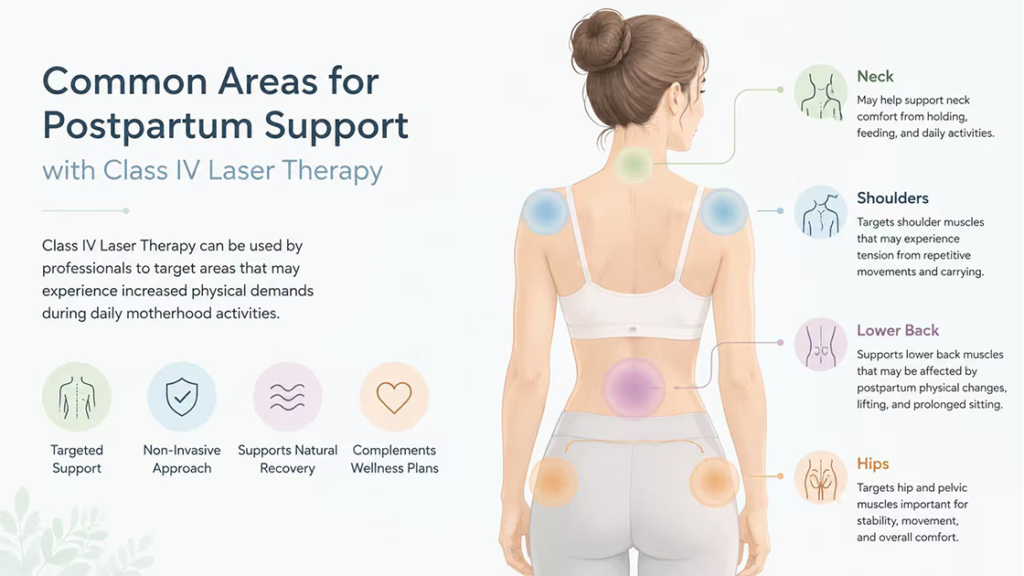
Common areas where mothers may seek additional support include:
- lower back muscles
- hip-related muscle groups
- shoulder areas
- upper back regions
Class IV Laser Therapy is designed to deliver controlled energy into targeted areas, making it suitable for professionals who focus on deeper tissue applications.
By supporting natural cellular responses, this technology can become part of a comprehensive approach to postpartum wellness.
2.3 Class IV Laser Therapy and Muscle Recovery Support
After pregnancy, muscles may experience increased workload due to changes in daily movement patterns.
New mothers frequently perform repetitive actions such as:
- lifting
- carrying
- bending
- maintaining feeding positions
These activities require continuous muscle engagement.
Class IV Laser Therapy may be incorporated into professional recovery programs to support muscle relaxation, circulation, and overall comfort.
It is important to understand that laser therapy works as a supportive wellness technology and should be combined with appropriate professional assessment and healthy recovery habits.
3. Common Areas Where New Mothers May Consider Class IV Laser Therapy Support
Postpartum physical challenges often appear in specific body regions affected by daily activities. Because Class IV Laser Therapy allows targeted application, professionals can focus on areas that experience greater physical demand.
3.1 Lower Back Support After Pregnancy-Related Physical Changes
The lower back is one of the most commonly discussed areas during postpartum recovery.
Pregnancy can influence:
- spinal alignment
- muscle balance
- movement patterns
After childbirth, activities such as lifting the baby, carrying supplies, and prolonged sitting may continue placing stress on the lower back area.
Class IV Laser Therapy can be used by professionals as part of a recovery plan focusing on localized energy application around targeted muscle areas.
Combined with proper movement habits, stretching, and rehabilitation guidance, this approach may help support overall lower back comfort.
3.2 Supporting Shoulder and Neck Comfort During Baby Care
New mothers often spend significant time holding, feeding, and caring for their babies.
These activities may require:
- repeated arm movements
- forward shoulder positions
- prolonged upper-body engagement
As a result, the neck and shoulder regions may become areas where mothers seek additional comfort support.
Class IV Laser Therapy allows professionals to focus on specific muscle areas and incorporate targeted photobiomodulation into postpartum wellness programs.
3.3 Hip and Core Muscle Recovery Considerations
The hips and core muscles play important roles in supporting body stability and movement.
During pregnancy, these areas experience significant adaptation.
After childbirth, many mothers gradually rebuild strength and mobility through:
- guided exercise
- rehabilitation programs
- personalized wellness routines
Class IV Laser Therapy may complement these approaches by providing targeted energy support for areas involved in movement and muscle function.
4. Integrating Class IV Laser Therapy Into Postpartum Recovery Programs
Postpartum recovery involves more than addressing physical discomfort. It is a gradual process that includes rebuilding strength, improving movement patterns, and adapting to new daily responsibilities. Many healthcare and rehabilitation professionals use a combination of approaches to support mothers during this period. Class IV Laser Therapy can be incorporated into these programs as a technology-based option that focuses on targeted areas and supports overall wellness.
4.1 Combining Laser Therapy With Movement and Rehabilitation Practices
Recovery after pregnancy often involves multiple components working together. Physical activity, mobility exercises, and professional guidance all play important roles in helping new mothers regain confidence in their bodies.
Class IV Laser Therapy is often considered alongside other supportive practices, including:
- gentle stretching
- postpartum exercise programs
- mobility training
- rehabilitation guidance
Rather than replacing movement-based recovery approaches, laser therapy can serve as an additional tool that supports the body’s natural recovery processes.
By combining different strategies, professionals can create more personalized postpartum wellness plans based on each mother’s physical condition and lifestyle needs.
4.2 How High-Power Laser Technology Fits Into Modern Rehabilitation
Modern rehabilitation continues to explore technologies that provide targeted support for different recovery needs.
Class IV Laser Therapy uses high-power laser energy and adjustable treatment settings, allowing professionals to customize applications according to specific areas of focus.
Common factors considered during professional planning include:
- targeted body area
- tissue condition
- individual recovery goals
- overall wellness needs
This flexibility makes Class IV Laser Therapy suitable for various rehabilitation environments, including physical therapy clinics, wellness centers, and professional recovery settings.
Photobiomodulation research has explored how laser-generated light energy interacts with biological tissues and supports cellular responses related to tissue recovery and comfort.
4.3 Supporting New Mothers With Convenient Recovery Options
New mothers often have limited time because of childcare responsibilities and changing daily schedules.
For this reason, recovery approaches that can be incorporated into professional wellness routines may become valuable options.
Class IV Laser Therapy offers targeted application, allowing professionals to focus on specific areas rather than requiring a whole-body approach.
For mothers experiencing muscle fatigue related to daily activities, targeted recovery support may help create a more comfortable wellness routine during the postpartum transition.
5. The Future of Technology-Based Postpartum Wellness
As healthcare and wellness industries continue developing, more attention is being placed on personalized recovery solutions. Postpartum care is gradually expanding beyond immediate recovery after childbirth and moving toward long-term physical wellness and lifestyle support.
5.1 Why Advanced Laser Therapy Is Gaining Attention in Women’s Wellness
Technology-based recovery solutions are becoming increasingly popular because they offer personalized approaches for different physical needs.
Class IV Laser Therapy attracts attention in wellness and rehabilitation environments because of features such as:
- targeted energy delivery
- adjustable treatment parameters
- deep tissue application capability
- compatibility with professional rehabilitation programs
For postpartum wellness, these characteristics allow professionals to focus on areas where mothers commonly experience physical demands from daily childcare activities.
As more women seek individualized recovery options, advanced technologies may continue becoming part of comprehensive wellness programs.
5.2 The Growing Role of Personalized Postpartum Care
The future of postpartum wellness is moving toward more individualized care plans.
Instead of using one standard approach, professionals increasingly consider:
- personal recovery goals
- lifestyle demands
- physical condition
- daily activity patterns
This personalized direction allows mothers to receive support that matches their specific needs.
Class IV Laser Therapy represents one example of how modern technology can complement traditional recovery approaches and provide additional options within professional wellness settings.
FAQ
Was ist eine Lasertherapie der Klasse IV?
Class IV Laser Therapy is a high-power photobiomodulation technology that uses concentrated laser energy to support biological responses in targeted tissues.
Why might new mothers consider Class IV Laser Therapy?
Some new mothers explore Class IV Laser Therapy as part of a wellness routine to support areas affected by postpartum physical demands, such as the back, shoulders, and muscles.
Can Class IV Laser Therapy replace postpartum exercise?
No. Laser therapy is considered a supportive technology and should be combined with appropriate movement, rehabilitation guidance, and professional advice.
Which areas may be considered for postpartum laser therapy support?
Common areas include the lower back, shoulders, neck, hips, and other muscle regions affected by daily activities.
How does photobiomodulation work?
Photobiomodulation uses specific light energy wavelengths that interact with cells and support natural biological processes related to tissue response.
Is Class IV Laser Therapy only used for postpartum recovery?
No. Class IV Laser Therapy is also used in various professional rehabilitation and wellness settings for different applications.
Schlussfolgerung
The postpartum period brings many physical adjustments as new mothers adapt to changing body conditions and daily responsibilities. Activities such as carrying a baby, feeding, and repetitive movements may create additional demands on muscles and joints. Class IV Laser Therapy provides a modern photobiomodulation approach that can be included in professional wellness and rehabilitation programs to support targeted areas such as the back, shoulders, and muscle groups. When combined with proper movement, professional guidance, and healthy recovery habits, advanced laser technology offers an additional option for mothers seeking personalized postpartum wellness support.
References
Photobiomodulation Therapy: Mechanisms and Applications in Medicine
https://pubmed.ncbi.nlm.nih.gov/30610596
Photobiomodulation and Its Effects on Cellular Function and Tissue Recovery
https://pubmed.ncbi.nlm.nih.gov/31821456
The Effects of Low-Level Laser Therapy on Musculoskeletal Pain and Recovery
https://pubmed.ncbi.nlm.nih.gov/26377379
Laser Therapy in Physical Rehabilitation: Current Applications and Clinical Considerations
https://pubmed.ncbi.nlm.nih.gov/32758854
Photobiomodulation Therapy in Rehabilitation and Sports Medicine