
Seite Inhalt
Einführung
Massage therapy has become an important part of modern wellness and recovery programs, helping individuals manage muscle tension, physical stress, and overall body comfort. As clients increasingly look for more comprehensive approaches, massage therapy clinics are exploring advanced technologies that can complement traditional manual techniques. Class IV Laser Therapy, based on photobiomodulation principles, uses targeted light energy to support cellular activity, circulation, and tissue recovery processes. When combined with professional massage techniques, this technology provides massage therapists with another option to enhance personalized wellness and recovery programs while addressing different soft tissue concerns.
1. Understanding the Role of Class IV Laser Therapy in Massage Therapy Clinics
Massage therapy focuses on manipulating soft tissues to support relaxation, mobility, and physical comfort. The introduction of Lasertherapie der Klasse IV creates new possibilities for clinics that want to expand their service approach with light-based technology.
1.1 How Class IV Laser Therapy Works With Photobiomodulation
Class IV Laser Therapy uses high-intensity laser energy to deliver specific wavelengths of light into targeted areas. The process is commonly associated with photobiomodulation, where light energy interacts with cellular structures, particularly mitochondria, to support cellular energy production and natural recovery responses.
At the cellular level, photons from laser energy can influence mitochondrial activity and support the production of adenosine triphosphate (ATP), which provides energy for cellular functions. This process is connected with tissue metabolism, circulation support, and the body’s natural recovery mechanisms.
1.2 Why Massage Therapy Clinics Are Exploring Laser Technology
Traditional massage therapy remains widely used for muscle relaxation, mobility support, and wellness care. However, some clinics are expanding their services by combining hands-on techniques with advanced technologies to create more complete client experiences.
Class IV Laser Therapy offers a non-invasive approach that can complement massage practices by focusing on deeper tissue areas. High-power laser systems are designed to deliver controlled energy, allowing practitioners to consider different body areas and individual wellness goals when developing service plans.
1.3 Combining Manual Techniques With Light-Based Technology
Massage therapy and Class IV Laser Therapy work through different approaches. Manual techniques focus on physical manipulation of muscles and soft tissues, while laser technology focuses on light energy interaction at the cellular level.
When combined within a professional wellness setting, these approaches may provide a broader strategy for supporting muscle relaxation, tissue comfort, and recovery routines. This combination allows massage clinics to create more diversified programs based on individual needs.
2. Benefits of Integrating Class IV Laser Therapy Into Massage Practices
The integration of Class IV Laser Therapy can help massage therapy clinics develop more advanced service options. Understanding the potential applications allows professionals to better match technology with different client goals.
2.1 Supporting Muscle Recovery and Physical Comfort
Many massage therapy clients seek support after physical activities, repetitive movements, or daily lifestyle stress. Muscle fatigue and tension can affect comfort and mobility, making recovery-focused services an important part of modern wellness care.
Class IV Laser Therapy provides deep tissue energy delivery that can support circulation and cellular activity in targeted areas. When combined with massage techniques, it may help create a more comprehensive approach to managing muscle-related discomfort and maintaining physical wellness.
2.2 Supporting Soft Tissue Wellness Through Advanced Technology
Soft tissues, including muscles, tendons, and connective tissues, experience daily stress from movement and physical activity. Massage therapists often focus on maintaining flexibility and comfort in these areas.
Laser therapy technology can support soft tissue wellness through photobiomodulation mechanisms. By encouraging cellular energy processes and circulation support, Class IV lasers provide another option for clinics that focus on recovery and mobility programs.
2.3 Expanding Recovery Programs Beyond Traditional Massage
Many massage therapy clinics are evolving from relaxation-focused services toward broader wellness and recovery models. Clients increasingly value services that address both immediate comfort and long-term physical maintenance.
Adding Class IV Laser Therapy allows clinics to create more diverse recovery programs while maintaining the foundation of professional massage techniques. This combination supports a more personalized approach for active individuals, professionals, and clients with different lifestyle demands.
3. Common Applications of Class IV Laser Therapy in Massage Therapy Settings
Class IV Laser Therapy can be applied in various wellness and recovery environments. Massage professionals can explore how this technology fits into different service categories.
3.1 Supporting Active Lifestyle Recovery
People who participate in fitness activities, recreational sports, or physically demanding routines often experience temporary muscle stress. Massage therapy clinics frequently serve these individuals by providing recovery-focused services.
Class IV Laser Therapy can complement these programs by delivering targeted light energy to specific areas of concern. The technology may support circulation, tissue comfort, and recovery routines alongside massage techniques.
3.2 Supporting Clients With Repetitive Movement Stress
Daily activities such as prolonged standing, repetitive motions, and physical work can contribute to muscle tension and discomfort. Massage therapy clinics often encounter clients looking for ways to maintain body function and comfort.
By combining manual therapy with photobiomodulation technology, clinics can provide additional options for addressing areas affected by repetitive physical stress while maintaining a personalized wellness approach.
3.3 Supporting Whole-Body Wellness Programs
Modern wellness centers increasingly focus on integrated care approaches rather than isolated services. Massage therapy, stretching programs, lifestyle guidance, and technology-based solutions are often combined to support overall wellness goals.
Class IV Laser Therapy fits into this trend by offering a technology-based option that works alongside traditional hands-on methods. This allows clinics to create structured wellness programs that focus on comfort, mobility, and recovery support.
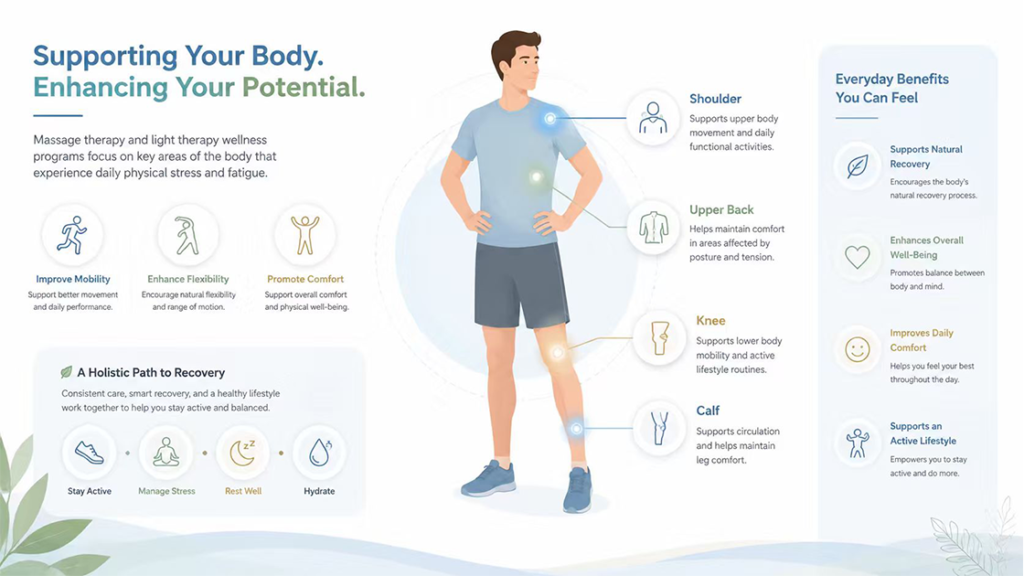
4. How Class IV Laser Therapy Enhances the Massage Therapy Experience
The combination of Class IV Laser Therapy and massage therapy represents a growing trend in integrated wellness services. While massage focuses on physical techniques to influence muscles, fascia, and connective tissues, laser therapy introduces a technology-based approach that works through photobiomodulation mechanisms. Many wellness clinics are exploring this combination because it allows practitioners to create more customized programs that consider both hands-on care and advanced recovery support. Class IV laser systems are designed to deliver higher-power light energy into targeted tissues, supporting cellular activity and circulation-related processes.
4.1 Creating More Personalized Client Recovery Programs
Every client has different lifestyle demands, physical activity levels, and wellness goals. A massage therapy clinic that integrates Class IV Laser Therapy can develop more personalized sessions by combining manual assessment with technology-based support.
For example, clients who experience muscle tension from exercise, repetitive movements, or daily physical stress may benefit from a program that includes massage techniques alongside targeted laser applications. This approach allows practitioners to adjust session strategies according to specific body areas, tissue conditions, and individual comfort preferences.
4.2 Supporting Deeper Tissue-Focused Massage Approaches
Traditional massage techniques mainly rely on manual pressure, stretching, and movement to address soft tissue concerns. However, some areas of the body may require additional approaches when clients experience persistent tension or reduced mobility.
Class IV Laser Therapy provides targeted light energy that can reach deeper tissue areas compared with many traditional light-based approaches. The interaction between laser energy and cellular structures is associated with supporting mitochondrial activity, ATP production, and natural tissue recovery processes.
By combining laser technology with massage therapy, practitioners can create a broader recovery-focused experience that includes both physical manipulation and cellular-level support.
4.3 Improving Efficiency in Modern Wellness Clinics
Modern massage therapy clinics are continuously looking for ways to improve service quality while meeting changing client expectations. Technology integration has become one approach for clinics that want to provide more advanced wellness options.
Class IV Laser Therapy systems often include adjustable energy settings and different treatment options, allowing practitioners to consider various treatment areas. This flexibility can support different wellness programs, from muscle recovery sessions to broader mobility-focused services.
5. Building a Future-Focused Massage Therapy Practice With Laser Technology
As wellness industries continue to develop, massage therapy clinics are expanding beyond traditional relaxation services. Many professionals are exploring how advanced technologies can complement manual methods and create more comprehensive client experiences.
5.1 The Growing Interest in Technology-Enhanced Massage Services
Consumers are becoming more interested in wellness solutions that combine professional expertise with modern technology. Massage therapy clinics that incorporate Class IV Laser Therapy can offer an additional service option based on photobiomodulation principles.
This technology-focused approach aligns with the growing demand for personalized wellness programs. Instead of relying on one single method, clinics can combine different techniques to support muscle comfort, mobility, and recovery routines.
5.2 Training and Professional Knowledge in Laser Therapy Applications
Successful integration of Class IV Laser Therapy requires proper education and understanding of laser safety, energy delivery, and application methods. Massage professionals need to understand how laser technology works alongside manual therapy techniques.
Knowledge of concepts such as wavelength selection, energy dosage, tissue response, and photobiomodulation mechanisms helps practitioners create more professional and structured wellness programs.
5.3 The Future of Integrated Recovery and Wellness Care
The future of massage therapy may continue moving toward integrated approaches that combine traditional expertise with advanced technologies. Class IV Laser Therapy provides another tool that clinics can consider when expanding their wellness services.
By combining hands-on techniques with light-based technology, massage therapy professionals can create more diverse service models focused on comfort support, mobility maintenance, and personalized recovery planning.
FAQ
What is Class IV Laser Therapy used for in massage therapy clinics?
Class IV Laser Therapy is used as a complementary technology to support muscle recovery, tissue wellness, and overall physical comfort programs.
How does Class IV Laser Therapy work?
It uses specific laser wavelengths to deliver light energy into targeted tissues through photobiomodulation, supporting cellular activity and natural recovery processes.
Can laser therapy replace massage therapy?
No. Class IV Laser Therapy is designed to complement massage techniques rather than replace professional manual therapy.
Why are massage clinics adding laser technology?
Many clinics are exploring laser technology to provide more diverse wellness options and create personalized recovery programs.
Is Class IV Laser Therapy suitable for every client?
Individual suitability depends on personal health conditions and professional assessment before beginning any laser-based wellness program.
Schlussfolgerung
Class IV Laser Therapy is becoming an increasingly discussed technology in modern massage therapy environments because it provides a different approach that can complement traditional manual techniques. By combining photobiomodulation principles, targeted light energy delivery, and professional massage methods, clinics can create more personalized wellness and recovery programs. From supporting active lifestyles to helping clients manage everyday physical stress, this technology offers massage professionals another option for expanding their service capabilities. As the wellness industry continues to evolve, the combination of advanced laser technology and hands-on care may play a valuable role in creating more comprehensive approaches to physical comfort and recovery support.
References
Photobiomodulation Therapy: Mechanisms and Applications in Medicine
https://pubmed.ncbi.nlm.nih.gov/31792445
Mechanisms and Applications of Photobiomodulation Therapy in Tissue Recovery
https://pubmed.ncbi.nlm.nih.gov/30052198
Low-Level Laser Therapy and Photobiomodulation: Clinical Applications and Biological Effects
https://pubmed.ncbi.nlm.nih.gov/28185154
Laser Therapy in Rehabilitation and Sports Medicine: Current Perspectives
https://pubmed.ncbi.nlm.nih.gov/31228828
Photobiomodulation and Cellular Energy Production: The Role of Mitochondria
 English
 العربية
 Français
 日本語
日本語 Português
 Español
 Русский
 Deutsch