

Seite Inhalt
Einführung
Medical professionals such as surgeons and dentists often spend long hours performing highly precise tasks that require sustained concentration and controlled body positioning. During procedures, many professionals naturally maintain a forward head posture, leaning toward patients or equipment for better visibility and accuracy. Over time, this working position may contribute to neck, shoulder, and upper back discomfort that affects daily comfort and professional performance. Lasertherapie der Klasse IV has become an area of interest in modern wellness and rehabilitation settings because of its ability to deliver targeted light energy to specific areas. This technology is often explored as part of a comprehensive approach to supporting muscle comfort, mobility, and recovery routines for professionals with physically demanding work environments.
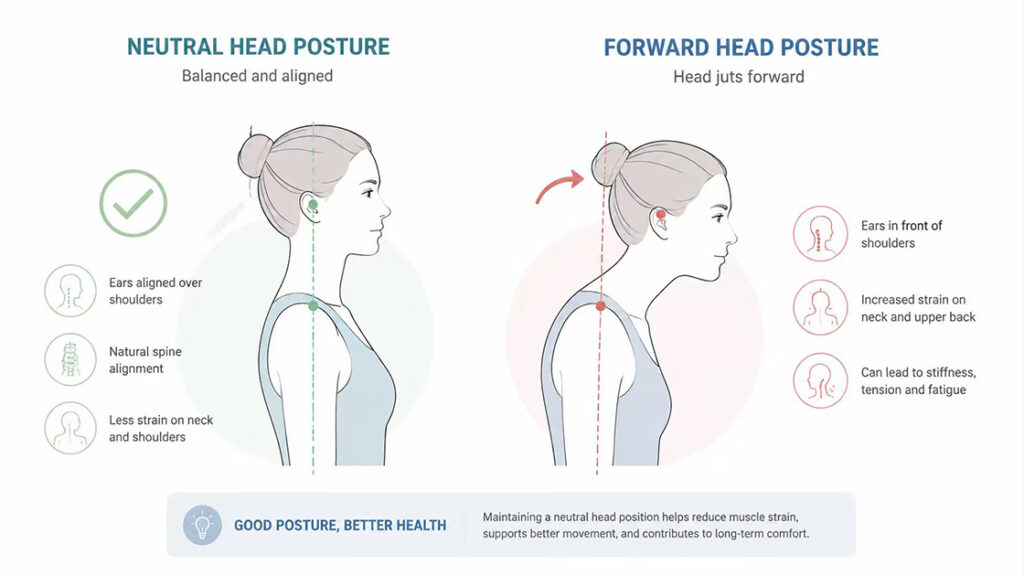
1. Understanding Forward Head Posture in Medical Professions
Medical careers require precision, focus, and consistent hand control. However, these professional demands can also create unique physical challenges due to prolonged static positions.
1.1 Why Surgeons and Dentists Are More Exposed to Forward Head Positioning
Surgeons and dentists frequently work in positions where the head moves forward relative to the shoulders. This posture helps improve visibility during detailed procedures but can place additional stress on the neck and upper body muscles.
Common workplace factors include:
- leaning toward patients for better access
- maintaining fixed head positions during procedures
- focusing on small operating areas
- performing repetitive hand movements
Over time, these working patterns may influence muscle comfort around areas such as the cervical region, shoulders, and upper back.
1.2 The Impact of Prolonged Static Working Positions
Unlike many active professions, medical specialists may remain in one position for extended periods. Limited movement during procedures can affect normal muscle activity and flexibility.
Professionals may experience concerns related to:
- Nackensteifheit
- shoulder tension
- upper back fatigue
- reduced movement comfort
Understanding these occupational challenges helps highlight why specialized recovery approaches have gained attention among medical professionals.
2. Exploring Class IV Laser Therapy Technology
Class IV Laser Therapy is an advanced photobiomodulation technology that uses concentrated light energy to interact with targeted areas of the body. It is commonly discussed in rehabilitation, wellness, and professional recovery environments.
2.1 How Class IV Laser Therapy Supports Modern Recovery Approaches
Class IV laser devices are designed to deliver therapeutic laser energy at higher power levels compared with lower-level laser technologies. The controlled energy application allows professionals to focus on specific areas based on individual needs.
In rehabilitation settings, Class IV Laser Therapy is often considered for supporting:
- muscle relaxation
- temporary discomfort management
- circulation support
- mobility-focused recovery routines
The technology is typically integrated into broader care strategies that may include movement exercises, stretching programs, and professional guidance.
2.2 The Role of Deep Tissue Laser Technology
One key feature of Class IV Laser Therapy is its ability to deliver energy into deeper tissue areas. This makes it a technology of interest for professionals who experience discomfort in larger muscle groups, including the neck, shoulders, and upper back.
Deep tissue laser technology focuses on targeted application rather than general body exposure, allowing practitioners to customize sessions according to specific areas of concern.
3. Class IV Laser Therapy Applications for Neck and Shoulder Areas
For surgeons and dentists, the neck and shoulder regions are among the most commonly stressed areas due to professional posture requirements.
3.1 Supporting Neck Comfort for Forward Head Posture
Forward head posture can place additional demands on muscles around the cervical area. Professionals who frequently lean forward may look for approaches that support neck comfort and normal movement patterns.
Class IV Laser Therapy may be incorporated into wellness routines that focus on:
- neck muscle relaxation
- movement support
- recovery after long procedures
When combined with ergonomic improvements, targeted laser technology can become part of a comprehensive strategy for managing workplace-related physical stress.
3.2 Supporting Shoulder and Upper Back Recovery
Dentists and surgeons often rely on precise arm positioning, which requires continuous shoulder stability. Repeated positioning may contribute to muscle fatigue in the shoulder and upper back areas.
Laser therapy technology may support recovery routines focused on:
- shoulder mobility
- upper back comfort
- muscle condition maintenance
A balanced approach that includes proper posture awareness and regular movement can help professionals maintain better physical habits throughout their careers.
4. The Importance of Ergonomics Combined With Laser Therapy
Technology alone is only one part of professional wellness management. Workplace ergonomics plays an important role in reducing physical stress caused by repetitive positions.
4.1 Improving Workplace Posture Awareness
Medical professionals can benefit from understanding how daily working positions influence muscle function. Small adjustments may include:
- adjusting equipment height
- maintaining neutral spine alignment
- taking movement breaks between procedures
- improving workspace organization
These practices can complement Class IV Laser Therapy by supporting healthier movement habits.
4.2 Creating a Comprehensive Professional Recovery Routine
A complete recovery routine may combine different approaches based on individual needs. For medical professionals, this may include:
- stretching exercises
- mobility activities
- ergonomic improvements
- technology-based support
Class IV Laser Therapy can be considered as one component within a broader wellness strategy designed around professional lifestyle demands.
5. Why Class IV Laser Therapy Is Gaining Attention Among Healthcare Professionals
Modern healthcare professionals are increasingly interested in technologies that fit into demanding work schedules while supporting physical wellness.
5.1 Meeting the Needs of Precision-Based Careers
Careers requiring detailed manual skills often involve repetitive movements and long periods of concentration. Surgeons and dentists represent examples of professionals who require both mental focus and physical endurance.
Class IV Laser Therapy technology provides another option for professionals exploring ways to support:
- muscle comfort
- movement flexibility
- recovery routines
5.2 The Future of Technology-Based Professional Wellness
As workplace wellness continues to develop, more professionals are exploring technology-supported approaches that fit their specific occupational needs.
For medical professionals, combining ergonomic awareness, physical activity, and advanced recovery technologies may help create a more balanced approach to long-term professional wellness.
FAQ
What is forward head posture?
Forward head posture refers to a position where the head moves forward compared with the shoulders, often associated with prolonged screen use or fixed working positions.
Why do dentists and surgeons experience neck and shoulder discomfort?
Their work often requires long periods of precise positioning, leaning forward, and maintaining limited movement during procedures.
How does Class IV Laser Therapy support professionals?
Class IV Laser Therapy uses concentrated light energy and may support muscle comfort, mobility, and recovery routines.
Can Class IV Laser Therapy replace ergonomic improvements?
No. It is generally considered a complementary approach alongside posture awareness, movement habits, and professional guidance.
Which areas are commonly considered for Class IV Laser Therapy?
Common areas include the neck, shoulders, upper back, and other areas affected by professional physical demands.
Schlussfolgerung
Class IV Laser Therapy offers a technology-based approach that may support medical professionals who experience physical demands from forward head posture and prolonged working positions. Surgeons and dentists can benefit from understanding the relationship between workplace ergonomics, posture habits, and recovery strategies. By combining targeted laser technology with healthy movement practices and professional guidance, individuals can explore personalized approaches to maintaining comfort and mobility throughout their careers.
References
Photobiomodulation Therapy: Mechanisms and Clinical Applications
https://www.ncbi.nlm.nih.gov/pmc/articles/PMC5215874
Low-Level Light Therapy and Photobiomodulation: Biological Effects and Medical Applications
https://www.ncbi.nlm.nih.gov/pmc/articles/PMC4126803
Occupational Musculoskeletal Disorders Among Dental Professionals
https://www.ncbi.nlm.nih.gov/pmc/articles/PMC5714079
Ergonomics and Musculoskeletal Health in Healthcare Professionals
https://www.ncbi.nlm.nih.gov/pmc/articles/PMC7468747
Therapeutic Effects of Laser Therapy in Musculoskeletal Conditions
 English
 العربية
 Français
 日本語
日本語 Português
 Español
 Русский
 Deutsch