

Seite Inhalt
Einführung
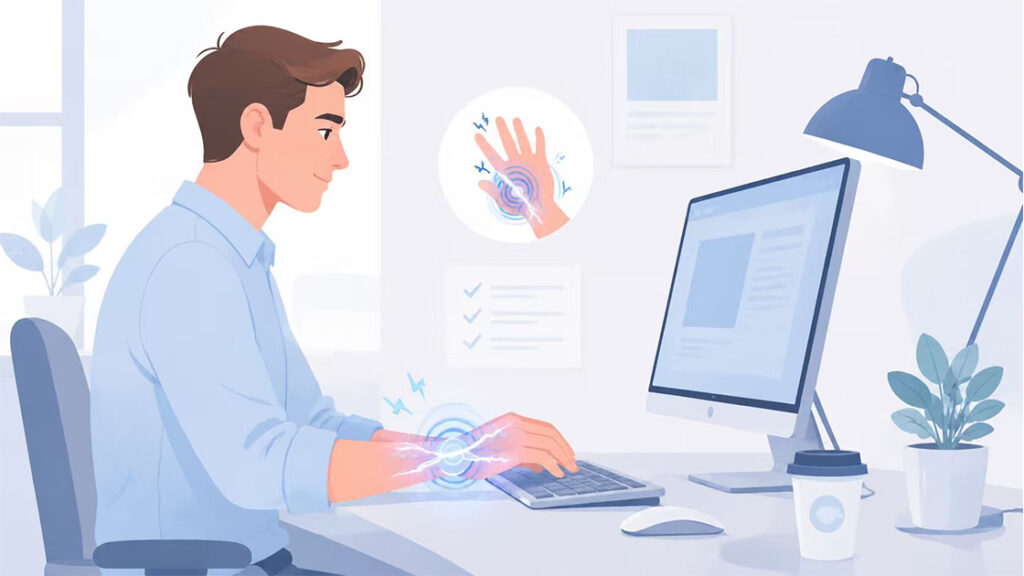
The tingling sensation that wakes you at night. The numbness that makes it difficult to grip a coffee cup or fasten a button. The dull ache that travels from the wrist up the forearm after a long day of typing. For millions of people, carpal tunnel syndrome is not just an occasional annoyance but a persistent condition that interferes with work, sleep, and daily life. The compression of the median nerve within the narrow carpal tunnel creates a cascade of symptoms that can range from mild discomfort to significant functional limitation. While splinting, activity modification, and sometimes surgery have long been the standard approaches, many individuals continue to seek non-invasive alternatives that address both the nerve compression and the surrounding tissue dysfunction. Class IV laser therapy, when combined with neural mobilisation techniques, offers a supportive approach that may help relieve symptoms and restore nerve function.
1. Understanding Carpal Tunnel Syndrome
Carpal tunnel syndrome develops when the median nerve becomes compressed as it passes through the wrist. The carpal tunnel itself is a narrow passageway formed by the carpal bones and the transverse carpal ligament. Within this confined space, the median nerve and the flexor tendons must coexist. When the tissues surrounding the nerve swell, the available space within the tunnel diminishes, and the nerve becomes compressed.
1.1 Why the Nerve Becomes Compressed
Several factors can contribute to the development of carpal tunnel syndrome. Repetitive wrist movements, particularly those involving flexion or extension, can increase pressure within the tunnel. Prolonged gripping or vibration exposure may also contribute to nerve irritation. In some cases, fluid retention, hormonal changes, or underlying conditions such as diabetes or rheumatoid arthritis can predispose individuals to nerve compression. The result is a reduction in blood flow to the nerve, leading to the characteristic symptoms of tingling, numbness, and pain in the distribution of the median nerve.
1.2 Recognizing the Symptoms
The symptoms of carpal tunnel syndrome typically affect the thumb, index finger, middle finger, and the radial half of the ring finger. Many individuals experience a pins-and-needles sensation or numbness that is often worse at night. Some find that shaking their hands provides temporary relief. As the condition progresses, grip strength may diminish, and fine motor tasks such as buttoning a shirt or handling small objects may become more difficult. In more advanced cases, weakness or wasting of the muscles at the base of the thumb can occur. Early recognition of these symptoms is important for preventing progression.
2. Neural Mobilisation: Restoring Nerve Movement
The median nerve is not a static structure. It moves and glides within the carpal tunnel as the wrist and fingers move. When the nerve becomes compressed or adherent to surrounding tissues, its normal gliding motion is restricted. This restriction can contribute to nerve irritation and perpetuation of symptoms.
2.1 What Neural Mobilisation Involves
Neural mobilisation is a therapeutic approach that aims to restore the normal movement of nerves within their surrounding tissues. Through specific movements and positioning, the clinician encourages the nerve to glide more freely. This may help reduce pressure on the nerve and improve its ability to tolerate movement. Neural mobilisation techniques can be performed by a trained practitioner, and patients may also learn exercises to perform at home. The goal is not simply to stretch the nerve but to encourage more normal motion and reduce the mechanical irritation that contributes to symptoms.
2.2 Why Nerve Gliding Matters
When the median nerve moves freely, it experiences less tension and friction during wrist and finger movements. This free movement reduces the mechanical stress on the nerve and may help maintain its health. When the nerve is restricted, even normal movements can provoke symptoms. Restoring nerve gliding through neural mobilisation may help reduce the frequency and intensity of symptoms and support overall nerve function.
3. The Role of Class IV Laser Therapy
Class IV laser therapy, also known as high-intensity laser therapy, uses specific wavelengths of light to penetrate deep into the tissues. This light energy interacts with cells through a process called photobiomodulation, which can support tissue repair and reduce inflammation.
3.1 Photobiomodulation and Cellular Activity
When the light from a Class IV laser reaches the tissues around the carpal tunnel, it is absorbed by mitochondria within the cells. This absorption enhances the production of adenosine triphosphate (ATP), the primary energy carrier in cells. Increased ATP availability supports essential cellular functions, including protein synthesis, membrane transport, and the removal of waste products. This cellular boost may help shift tissues from a state of chronic irritation toward a more active repair phase.
3.2 Reducing Perineural Edema
One of the key challenges in carpal tunnel syndrome is the swelling that can accumulate around the nerve. This perineural edema increases pressure within the carpal tunnel and contributes to nerve compression. Class IV laser therapy may help reduce this swelling by improving local circulation and modulating the inflammatory environment. Better circulation allows for more effective removal of excess fluid and supports the delivery of oxygen and nutrients to the affected tissues.
3.3 Supporting Nerve Health
The laser energy may also support the health of the nerve itself. By reducing oxidative stress and promoting cellular repair, the therapy may help maintain the integrity of the nerve fibres. This supportive effect may be particularly valuable for individuals whose symptoms have persisted for some time, as the nerve may have undergone changes that require ongoing support to recover.
4. The Combined Approach: Laser and Neural Mobilisation Together
When Class IV laser therapy is combined with neural mobilisation, the two approaches may work synergistically to support recovery. The laser addresses the local inflammation and swelling that contribute to nerve compression, while neural mobilisation helps restore the normal movement of the nerve within the carpal tunnel.
4.1 Addressing Multiple Factors
Carpal tunnel syndrome is rarely caused by a single factor. The compression of the nerve often involves a combination of local inflammation, swelling, and mechanical restriction. By addressing both the tissue environment and the nerve mechanics, the combined approach may offer more comprehensive support than either treatment alone. The laser can help reduce the swelling that narrows the tunnel, while neural mobilisation can help ensure that the nerve can move freely within the available space.
4.2 Supporting Functional Improvement
The ultimate goal of any intervention for carpal tunnel syndrome is to improve function and reduce symptoms. The combined approach may help individuals return to their daily activities with less discomfort and greater confidence. For those whose symptoms have limited their ability to work or perform household tasks, this support can make a meaningful difference in their quality of life.
5. What Patients Can Expect from Treatment
For individuals considering Class IV laser therapy combined with neural mobilisation, understanding the typical course of treatment helps set realistic expectations.
5.1 The Treatment Process
A typical session involves both the laser application and the neural mobilisation techniques. The laser is applied to the wrist and surrounding tissues, while the neural mobilisation involves specific movements and positioning of the wrist and fingers. The duration and frequency of sessions may vary depending on the severity of symptoms and individual response.
5.2 Consistency and Patience
The benefits of this combined approach often develop gradually. Some individuals may notice improvement after a few sessions, while others may require a longer series to experience meaningful change. Consistency is important, as the cumulative effects of the treatment build over time. Patience is also important, as nerve healing and tissue recovery take time.
5.3 Integrating with Other Measures
The combined approach works best when integrated with other supportive measures. Ergonomic adjustments, such as modifying workstation setup or using supportive equipment, can help reduce the mechanical stress on the wrist. Activity modification, including taking breaks from repetitive tasks, may also support the healing process. When used alongside these measures, Class IV laser therapy and neural mobilisation may contribute to a more comprehensive approach to managing carpal tunnel syndrome.
FAQ
Q1: Is the combined treatment painful?
Most patients describe the laser application as a gentle warmth or mild tingling. Neural mobilisation involves movement and positioning that should not cause sharp pain. Any discomfort is generally brief and well tolerated.
Q2: How many sessions do I need?
The number varies depending on symptom severity and individual response. Some patients notice improvement after a few sessions, while others benefit from a longer series.
Q3: Can I continue my normal activities during treatment?
Yes. The treatment does not require downtime, and patients can usually return to their normal activities immediately after each session.
Q4: How soon will I feel improvement?
Some patients notice reduced tingling and numbness within a few sessions. The most noticeable improvement often takes several weeks to appear as the cumulative effects of the treatment build.
Q5: Is this treatment suitable for severe carpal tunnel syndrome?
A thorough evaluation by a healthcare professional helps determine whether this combined approach is appropriate for your specific condition. The suitability may depend on the severity and duration of symptoms.
Schlussfolgerung
Carpal tunnel syndrome can turn simple daily tasks into sources of frustration and discomfort. The numbness, tingling, and weakness that accompany nerve compression can affect work, sleep, and quality of life. For those seeking a non-invasive approach that addresses both the local tissue environment and the movement of the nerve itself, Class IV laser therapy combined with neural mobilisation offers a supportive option. By reducing swelling and inflammation around the nerve and restoring its normal gliding motion, this combined approach may help individuals manage their symptoms and return to their daily activities with greater ease.
References
A systematic review and meta-analysis of the effectiveness of high-intensity laser therapy in patients with carpal tunnel syndrome. Physiotherapy, 2025.
https://www.sciencedirect.com/science/article/abs/pii/S0031940625003189
Combined Effect of Class IV Laser Therapy with Neural Mobilisation on Improving Vibration and Sensory Function in Individuals with Diabetic Peripheral Neuropathy: A Case Series. JCDR, 2024.
Lasertherapie der Klasse 4 for Chronic Neuropathic Pain. FotonMedix.
https://fotonmedix.com/class-4-laser-therapy-for-chronic-neuropathic-pain.html
Class 4 Laser Therapy: A Powerful Solution for Pain and Healing. Smart Laser Therapy.
Laser Therapy in Physiotherapy. Smart Laser Therapy.
 English
 العربية
 Français
 日本語
日本語 Português
 Español
 Русский
 Deutsch