

Seite Inhalt
Einführung
As dogs age, their bodies undergo complex physiological changes that directly affect mobility, comfort, and overall quality of life. Eight years of age is commonly recognized as a turning point at which many dogs begin to show signs of musculoskeletal decline, chronic inflammation, and delayed tissue repair. These changes often manifest as stiffness, reluctance to move, altered gait, or persistent pain. In response, veterinary professionals and pet owners are increasingly seeking non-invasive, drug-free modalities that support long-term comfort without adding systemic burden. Lasertherapie der Klasse 4 has emerged as one such modality, offering deep tissue photobiomodulation that addresses pain, inflammation, and impaired healing at the cellular level. This article explores how aging alters therapeutic needs after age eight and how Class 4 Laser Therapy can be integrated into comprehensive care for senior dogs.
Understanding the Aging Process in Senior Dogs
Aging in dogs is a gradual, multifactorial process affecting nearly every biological system. Understanding these changes is critical for selecting appropriate interventions.
Physiological Changes After Age 8
After age eight, many dogs experience a decline in cellular metabolism. Mitochondrial efficiency decreases, reducing adenosine triphosphate (ATP) production, essential for tissue repair and muscle contraction. Simultaneously, muscle mass diminishes through sarcopenia, and connective tissues lose elasticity due to changes in collagen composition. Circulatory efficiency declines, limiting oxygen and nutrient delivery to peripheral tissues. These changes collectively contribute to increased stiffness, reduced endurance, and slower recovery from physical stress. Clinically, these physiological shifts explain why older dogs often require longer recovery periods and more supportive therapies.
How Aging Affects Healing and Recovery
The inflammatory response and tissue repair mechanisms are significantly altered in senior dogs. Inflammation tends to persist longer due to dysregulated cytokine activity and impaired lymphatic drainage. Fibroblast activity slows, reducing collagen synthesis and delaying wound and soft tissue healing. Neurological signaling may also decline, altering pain perception and motor coordination. As a result, injuries that resolve quickly in younger dogs can become chronic in older animals. These factors underscore the importance of therapies that stimulate cellular activity and circulation rather than merely masking symptoms.
Common Pain and Mobility Issues in Senior Dogs
Physiological aging predisposes senior dogs to chronic musculoskeletal and neurological conditions. Understanding these issues is crucial for effective therapy planning.
Degenerative Joint and Musculoskeletal Conditions
Degenerative joint diseases are among the most prevalent conditions affecting senior dogs. Osteoarthritis, characterized by cartilage degradation and joint inflammation, leads to pain, reduced range of motion, and progressive mobility loss. Degenerative joint disease (DJD) exacerbates these effects through chronic synovial inflammation and bone remodeling. Hip and elbow dysplasia, even when diagnosed earlier, often worsen with age as compensatory mechanisms fail. These conditions create a cycle of pain and reduced activity, accelerating muscle atrophy and joint instability, highlighting the need for therapies that support both pain relief and tissue health.
Chronic Soft Tissue and Neurological Conditions
Beyond joints, senior dogs often develop chronic soft tissue disorders. Long-standing muscle tension, tendon degeneration, and ligament laxity contribute to altered biomechanics and discomfort. Neuropathic pain may arise from spinal degeneration or nerve compression, presenting as weakness, sensitivity, or altered gait. Unlike acute injuries, these conditions resist rest alone and require targeted therapies to restore circulation, reduce inflammation, and improve neuromuscular function.
Challenges of Traditional Pain Management in Older Dogs
Although pharmacological pain management is foundational, aging imposes limitations on medication-only approaches.
Long-Term Medication Risks
Non-steroidal anti-inflammatory drugs (NSAIDs) are commonly prescribed but carry increased risks in senior dogs. Age-related declines in renal and hepatic function reduce drug clearance, heightening toxicity risk. Gastrointestinal irritation, ulceration, and appetite suppression are also more common. These risks may necessitate dosage reductions that compromise pain control, prompting consideration of adjunctive therapies that minimize systemic medication reliance.
Limitations of Single-Modal Treatment Approaches
Pain management strategies relying on a single modality rarely address chronic pain’s multifactorial nature. Medications may temporarily relieve symptoms but do not promote tissue healing or restore function. Without addressing circulation, cellular metabolism, and neuromuscular integrity, pain often recurs. This limitation drives interest in multimodal approaches combining pharmacology, rehabilitation, and advanced therapeutic technologies such as Class 4 Laser Therapy.
How Class 4 Laser Therapy Supports Aging Canine Tissues
Class 4 Laser Therapy targets pain and dysfunction at the cellular level, making it particularly relevant to aging-related changes.
https://smartlasertherapy.com/laser-therapy-for-dogs/
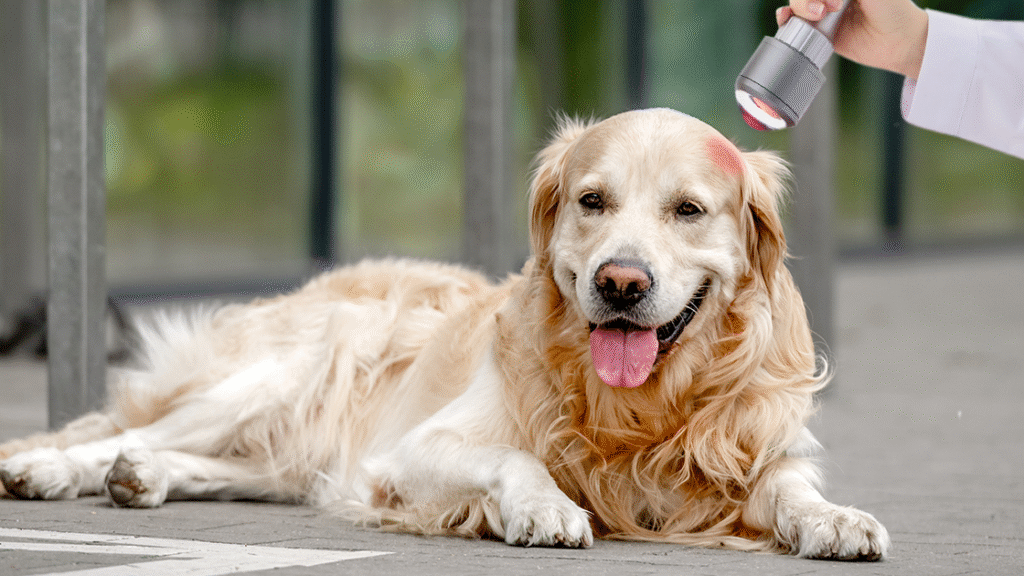
Mechanism of Action: Photobiomodulation
Class 4 Laser Therapy uses photobiomodulation, where specific light wavelengths are absorbed by mitochondrial chromophores. This absorption enhances electron transport, increasing ATP production, supporting cellular repair, protein synthesis, and active transport. Laser therapy also modulates inflammatory mediators, reducing prostaglandin and cytokine activity while promoting nitric oxide release, improving microcirculation. These effects accelerate tissue repair and reduce pain perception, providing objective therapeutic benefits for aging tissues.
Why Class 4 Lasers Are Suitable for Senior Dogs
Unlike low-level lasers, Class 4 devices deliver higher power output, enabling deeper tissue penetration without thermal damage when properly applied. This depth reaches joints, muscles, and connective tissues commonly affected in senior dogs. Treatments are non-invasive, painless, and generally well tolerated, even in dogs with limited mobility or sensitivity. The ability to deliver effective therapy without systemic stress makes Class 4 Laser Therapy ideal for aging canine patients.
Conditions in Senior Dogs That May Benefit from Class 4 Laser Therapy
Class 4 Laser Therapy can be applied across a wide range of age-related conditions.
Orthopedic and Joint Conditions
Older dogs with osteoarthritis, joint capsule inflammation, or DJD often experience significant improvement with laser therapy. By enhancing circulation and reducing inflammatory mediators in joints, stiffness is reduced and range of motion improves. Repeated sessions support cartilage health and reduce compensatory muscle tension, improving functional mobility over time.
Post-Surgical and Chronic Injury Recovery
Older dogs undergoing surgery face higher risks of delayed healing. Class 4 Laser Therapy accelerates tissue repair, reduces edema, and minimizes pain post-operatively. For chronic injuries that have not fully resolved, laser therapy can reinitiate healing pathways, improving tissue quality and function. These benefits make it an important adjunct in acute and chronic rehabilitation protocols.
Adjusting Laser Therapy Protocols for Dogs Over 8 Years Old
While the mechanisms remain consistent, treatment protocols must adapt to senior dogs’ needs.
Treatment Frequency and Duration
Senior dogs often require more frequent initial sessions at carefully calibrated dosages. Short, consistent treatments maintain therapeutic effects without overwhelming compromised tissues. Maintenance sessions may be extended to sustain improvements. Individualization based on response and tolerance is essential for optimal outcomes.
Monitoring Response and Progress
Evaluating efficacy involves more than pain scoring. Improvements in gait symmetry, ease of rising, willingness to move, and demeanor are valuable indicators. Regular reassessment allows protocol adjustment, ensuring continued benefit and minimizing unnecessary exposure.
Safety Considerations for Class 4 Laser Therapy in Senior Dogs
Proper application and clinical oversight are critical for safe therapy in aging patients.
General Safety Profile
When administered by trained veterinary professionals, Class 4 Laser Therapy has an excellent safety profile. Treatments are non-thermal and non-invasive, with minimal risk. Protective measures, including eye safety protocols, further enhance treatment safety.
Contraindications and Precautions
Laser therapy should be avoided over neoplastic lesions, directly over eyes, or areas requiring diagnostic evaluation. Careful screening and adherence to guidelines ensure safe and effective use in senior dogs.
Integrating Class 4 Laser Therapy Into a Comprehensive Senior Dog Care Plan
Laser therapy is most effective when combined with a holistic approach.
Combination With Physical Rehabilitation
Controlled exercise, stretching, and manual therapy enhance outcomes by addressing both pain and functional deficits. Improved tissue pliability facilitates safer and more effective rehabilitation exercises.
Nutritional and Lifestyle Support
Weight management, joint-supportive nutrition, and environmental modifications complement laser therapy. Together, these interventions maximize comfort and mobility in senior dogs.
What Pet Owners Can Expect From Laser Therapy
Setting realistic expectations improves satisfaction and compliance.
During the Treatment Session
Sessions typically last 5–15 minutes, depending on area and protocol. Most dogs remain relaxed, with some even falling asleep, reflecting its non-invasive nature.
Short-Term and Long-Term Outcomes
Some dogs show improvement within a few sessions, while others require longer courses. Long-term benefits include enhanced mobility, reduced reliance on medications, and improved quality of life.
Frequently Asked Questions (FAQ)
At what age should dogs start Class 4 Laser Therapy?
Dogs may benefit as soon as age-related mobility or pain issues emerge, often around eight years old.
How many sessions are typically required?
Most senior dogs require multiple sessions over several weeks, followed by maintenance treatments.
Can laser therapy reduce medication use?
Laser therapy can allow for reduced dosages under veterinary supervision in many cases.
Is it safe for dogs with multiple health conditions?
Generally safe with proper assessment and professional application; individual evaluation is essential.
How soon can improvements be seen?
Some dogs respond within days, while others show gradual improvement over weeks.
Schlussfolgerung
Aging presents complex challenges for canine health, particularly after age eight. Class 4 Laser Therapy offers a scientifically grounded, non-invasive approach to pain, inflammation, and impaired healing. When integrated into a comprehensive care plan, it supports mobility, comfort, and overall quality of life, helping senior dogs age with dignity and improved well-being.
References
Alves, A. C., et al. Photobiomodulation in veterinary medicine: mechanisms and applications. Frontiers in Veterinary Science.
https://www.frontiersin.org/articles/10.3389/fvets.2020.00241/full
Epstein, M. E., et al. Laser therapy in veterinary medicine: current clinical applications. Veterinary Practice News.
https://www.veterinarypracticenews.com/laser-therapy-in-veterinary-medicine/
Lascelles, B. D., et al. Guidelines for pain management in dogs. American Animal Hospital Association (AAHA).
https://www.aaha.org/aaha-guidelines/pain-management/
Millis, D., et al. Canine rehabilitation and physical therapy, 2nd Edition. Elsevier Health Sciences, 2013.
https://www.ncbi.nlm.nih.gov/pmc/articles/PMC5523874/
Draper, L. Veterinary photobiomodulation: a review of mechanisms and clinical outcomes. Journal of the American Veterinary Medical Association.
https://avmajournals.avma.org/view/journals/javma/252/8/javma.252.8.915.xml
 English
 العربية
 Français
 日本語
日本語 Português
 Español
 Русский
 Deutsch