

محتويات الصفحة
مقدمة
Chronic wounds remain a complex challenge in modern healthcare because they often involve multiple factors, including impaired circulation, prolonged inflammation, tissue stress, and delayed natural recovery processes. As healthcare professionals continue to explore advanced supportive technologies, Class IV Laser Therapy has gained attention as a non-invasive approach that uses photobiomodulation principles to support wound care programs. By delivering high-power laser energy to targeted areas, this technology focuses on influencing cellular activity, microcirculation, and tissue environment. Clinicians are exploring Class IV Laser Therapy in professional settings for different wound-related applications, including chronic wounds, diabetic wounds, pressure ulcers, and slow-healing tissue conditions.
1. Understanding Class IV Laser Therapy in Modern Wound Care
The management of chronic wounds requires a comprehensive understanding of biological processes involved in tissue recovery. Unlike short-term injuries, chronic wounds may remain in prolonged inflammatory phases, creating challenges for normal tissue restoration. Advanced technologies such as Class IV Laser Therapy are becoming part of discussions surrounding modern wound care because they focus on supporting the body’s natural repair environment.
1.1 ما هو العلاج بالليزر من الفئة الرابعة؟
Class IV Laser Therapy is a high-power photobiomodulation technology that uses concentrated light energy to interact with biological tissues. Manufacturers design Class IV lasers to deliver deeper and more targeted energy applications compared with lower-power laser systems, making them suitable for professional healthcare environments.
The technology works through specific wavelengths of laser light that interact with cellular components. When light energy reaches tissue, it can be absorbed by cellular chromophores, including components associated with mitochondrial activity. This interaction may influence cellular energy production and support biological processes related to tissue recovery.
In wound care settings, Class IV Laser Therapy is generally considered a supportive technology used alongside professional wound management approaches. It does not replace wound assessment, infection control, or standard medical care but may complement existing strategies.
1.2 Why Chronic Wounds Require Advanced Support Technologies
Chronic wounds are different from typical injuries because they may experience delayed progression through normal healing phases. Factors such as reduced circulation, metabolic conditions, repeated tissue stress, and prolonged inflammatory responses can affect the wound environment.
Healthcare professionals often focus on creating conditions that support:
- Healthy tissue environment
- Oxygen and nutrient delivery
- Balanced inflammatory response
- Cellular activity
Class IV Laser Therapy has attracted attention because photobiomodulation may influence several biological pathways associated with these processes. Through controlled light energy delivery, the technology provides a non-invasive option that can be integrated into broader wound care programs.
1.3 The Role of Photobiomodulation in Tissue Support
Photobiomodulation is the scientific principle behind many therapeutic laser technologies. It describes how specific wavelengths of light can interact with cells and influence biological responses.
At the cellular level, light energy may affect mitochondrial function, which plays an important role in producing adenosine triphosphate (ATP), the primary energy source used by cells. Increased cellular energy availability may support normal cellular activities involved in tissue maintenance and repair.
Research discussions around photobiomodulation often focus on areas such as oxidative stress regulation, inflammatory pathway modulation, and tissue recovery processes. These mechanisms explain why light-based therapies continue to be explored across wound care, rehabilitation, and other healthcare fields.
2. How Class IV Laser Therapy Supports Chronic Wound Care Approaches
Modern wound care focuses on creating an optimal environment for tissue recovery rather than relying on a single method. Class IV Laser Therapy is considered a technology that may provide additional support through targeted energy delivery and biological stimulation.
2.1 Supporting Microcirculation Around Wound Areas
Adequate circulation plays an important role in maintaining healthy tissue conditions. Blood flow helps deliver oxygen and nutrients while supporting the removal of metabolic waste from affected areas.
Class IV Laser Therapy uses targeted light energy that may influence local circulation responses. Improved microcirculation is one of the commonly discussed mechanisms in photobiomodulation because better blood supply can contribute to a more supportive tissue environment.
For chronic wound management, maintaining suitable circulation around the wound area is an important consideration. Laser therapy may be incorporated into professional protocols designed to support these physiological processes.
2.2 Managing the Inflammatory Environment During Wound Recovery
Inflammation is a natural part of the body’s response to injury. However, when inflammatory activity remains prolonged, it may create challenges for normal tissue recovery.
Photobiomodulation has been studied for its potential role in regulating inflammatory responses. Class IV Laser Therapy may interact with cellular pathways involved in inflammation management, helping create a more balanced tissue environment.
In professional wound care settings, maintaining appropriate inflammatory activity is an important part of supporting recovery. Laser therapy is often discussed as a complementary technology that works together with established wound care practices.
2.3 Supporting Different Types of Chronic Wounds
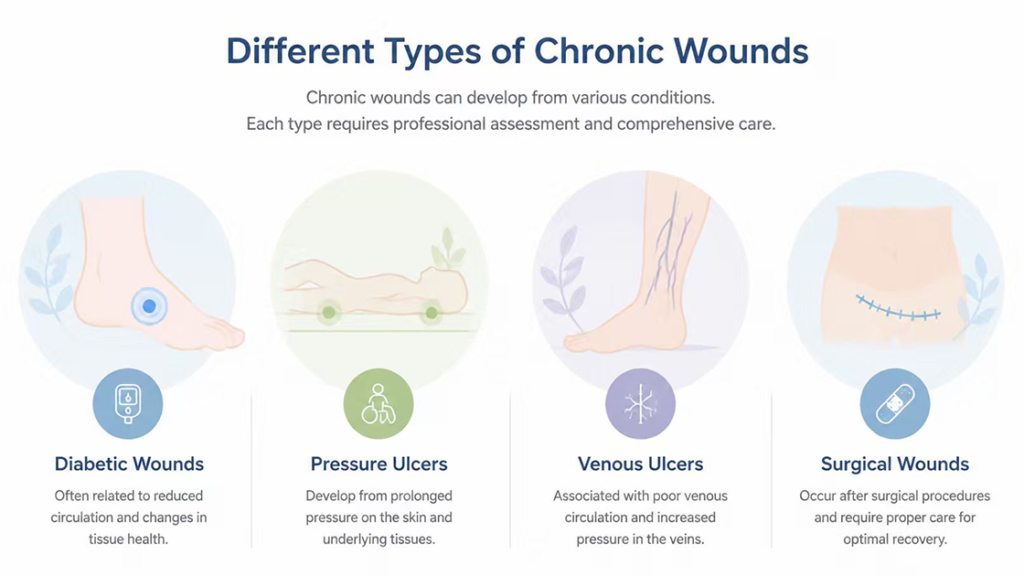
Chronic wounds can develop from various underlying conditions and may require specialized management approaches. Different wound types can include:
- جروح السكري
- قرح الضغط
- Venous ulcers
- التقرحات الشريانية
- Slow-healing wounds
Class IV Laser Therapy has been explored in these areas because of its ability to deliver targeted energy to specific tissue locations. The flexibility of professional laser systems allows healthcare providers to adjust application methods based on wound location, tissue condition, and overall care objectives.
3. The Science Behind Class IV Laser Therapy and Tissue Recovery
Understanding the biological mechanisms behind Class IV Laser Therapy helps explain why this technology continues to attract attention in wound care and rehabilitation fields. The interaction between light energy and cellular processes is the foundation of photobiomodulation.
3.1 Cellular Energy and Mitochondrial Activity
Mitochondria are often described as the energy-producing structures inside cells. They generate ATP, which supports many cellular functions, including processes related to tissue maintenance.
When therapeutic laser energy reaches cells, specific wavelengths may interact with mitochondrial components. This interaction is believed to influence cellular metabolism and energy availability.
For wound care applications, supporting cellular activity is an important consideration because damaged tissues require coordinated biological processes during different recovery stages.
3.2 The Relationship Between Laser Energy and Tissue Environment
The effectiveness of Class IV Laser Therapy depends on several technical factors, including wavelength, power level, treatment area, and energy delivery method.
Professional laser systems may include different applicators designed for various treatment areas. Larger treatment surfaces may require broader light delivery, while smaller or more precise areas may benefit from focused application methods.
This flexibility allows healthcare providers to consider different wound locations and tissue conditions when developing supportive care plans.
3.3 Why Non-Invasive Technologies Are Gaining Attention in Wound Care
Healthcare continues to explore technologies that can provide supportive benefits while minimizing additional physical stress on patients. Non-invasive approaches are becoming increasingly important because they can often be incorporated into existing care routines.
Class IV Laser Therapy represents one example of a technology-based approach that focuses on targeted light energy rather than invasive procedures. Its role in wound care continues to develop as professionals explore how photobiomodulation can complement comprehensive wound management strategies.
4. The Role of Class IV Laser Therapy in Different Chronic Wound Care Applications
Chronic wounds can develop from various health conditions and environmental factors, which means each wound requires careful assessment and individualized management. Class IV Laser Therapy provides a flexible technology option that can be adapted for different wound-related applications. By using high-power laser energy and photobiomodulation principles, this technology may support biological processes involved in tissue recovery while working alongside professional wound care methods.
4.1 Supporting Diabetic Wound Management
Diabetic wounds are among the most challenging types of chronic wounds because they are often associated with factors such as reduced circulation, altered tissue metabolism, and prolonged inflammatory responses. Maintaining a supportive wound environment is an important part of professional care strategies.
Class IV Laser Therapy uses near-infrared laser energy that can reach deeper tissue areas compared with some traditional light-based approaches. Through photobiomodulation mechanisms, laser energy may interact with cellular components related to mitochondrial activity, circulation support, and tissue response.
For diabetic wound management, laser therapy is generally considered a complementary technology that may be incorporated into broader care plans. Professional evaluation, wound monitoring, and appropriate medical management remain essential components of comprehensive wound care.
4.2 Supporting Pressure Ulcer and Tissue Stress Management
Pressure ulcers often develop when prolonged pressure affects local circulation and tissue conditions. Clinicians commonly associate these wounds with limited mobility, and they require careful attention to skin integrity, pressure management, and tissue environment.
Class IV Laser Therapy may provide targeted energy delivery to areas affected by tissue stress. By supporting microcirculation and cellular activity, photobiomodulation technology is being explored as an additional option within professional wound management programs.
The ability to adjust laser parameters allows healthcare providers to consider different wound locations, tissue conditions, and patient needs. This flexibility makes high-power laser technology a valuable area of interest for modern wound care professionals.
4.3 Supporting Surgical Wound and Tissue Recovery Programs
After surgical procedures, tissue recovery involves multiple biological processes, including inflammation regulation, collagen formation, and tissue remodeling. Healthcare professionals continue to explore supportive technologies that may help create a favorable recovery environment.
Class IV Laser Therapy can be used as part of professional recovery programs where light energy is applied to targeted areas based on clinical objectives. Photobiomodulation principles focus on cellular responses and tissue support rather than invasive intervention.
By integrating laser technology with established post-procedure care approaches, professionals can develop more comprehensive recovery strategies that consider both tissue condition and patient comfort.
5. The Future of Class IV Laser Therapy in Advanced Wound Care
As healthcare technology continues to evolve, wound care is moving toward more personalized and technology-supported approaches. Class IV Laser Therapy represents one of the developing technologies that combines physics, biology, and clinical application to support modern wound management.
5.1 Personalized Laser Parameters for Different Wound Conditions
Every chronic wound has different characteristics, including size, depth, location, tissue condition, and underlying factors. Because of these differences, personalized approaches are becoming increasingly important in professional wound care.
Advanced Class IV laser systems allow professionals to adjust parameters such as power output, wavelength selection, application method, and treatment area. These adjustments provide flexibility when working with different wound conditions.
Personalized laser application does not replace professional wound assessment but provides another supportive tool that can be considered within a complete care strategy.
5.2 Combining Laser Technology With Comprehensive Wound Management
Modern wound care rarely depends on a single technology. Successful management usually involves multiple approaches, including wound assessment, dressing selection, infection monitoring, pressure management, and lifestyle considerations.
Class IV Laser Therapy can be integrated into this broader framework by providing targeted photobiomodulation support. The combination of laser technology with established wound care practices reflects the growing trend toward multidisciplinary healthcare solutions.
This integrated approach allows professionals to focus on the overall wound environment rather than relying only on one specific method.
5.3 The Growing Importance of Non-Invasive Technologies in Healthcare
Non-invasive technologies continue to attract attention because they offer additional options for supporting patient care without creating additional physical stress. Light-based therapies, including photobiomodulation, are being explored in multiple healthcare fields because of their interaction with cellular processes.
Class IV Laser Therapy demonstrates how modern healthcare is combining advanced technology with biological understanding. As research continues to explore optimal parameters and applications, high-power laser technology may continue to develop as a supportive option in professional wound care environments.
Frequently Asked Questions
What is Class IV Laser Therapy used for in wound care?
Class IV Laser Therapy is used as a supportive technology in professional wound care programs to provide targeted light energy and support tissue-related biological processes.
Can Class IV Laser Therapy replace traditional wound care?
No. It is generally used as a complementary approach alongside professional wound assessment, wound cleaning, dressing management, and other standard care methods.
How does photobiomodulation work?
Photobiomodulation uses specific wavelengths of light energy that interact with cellular structures and may influence cellular activity and tissue responses.
Is Class IV Laser Therapy suitable for chronic wounds?
Healthcare professionals may consider Class IV Laser Therapy for different chronic wound applications based on individual wound conditions and overall care goals.
What types of wounds may benefit from laser therapy support?
Applications may include diabetic wounds, pressure ulcers, surgical wounds, and other slow-healing tissue conditions under professional guidance.
Why is laser technology gaining attention in wound care?
Laser technology provides a non-invasive approach that focuses on targeted energy delivery and cellular support, making it an area of interest in modern healthcare.
الخاتمة
Class IV Laser Therapy is becoming an increasingly discussed technology in modern chronic wound care because of its ability to deliver targeted photobiomodulation energy and support biological processes related to tissue recovery. From diabetic wounds and pressure ulcers to surgical wound management, this technology provides healthcare professionals with an additional supportive option within comprehensive care programs. By combining high-power laser energy, cellular science, and personalized application methods, Class IV Laser Therapy represents the continued development of non-invasive approaches in advanced wound management.
References
Photobiomodulation Therapy for Wound Care: A Potent, Noninvasive, Photoceutical Approach
https://pubmed.ncbi.nlm.nih.gov/30889017
The Effects of Low-Level Laser Therapy on Wound Healing and Pain Management in Skin Wounds: A Systematic Review and Meta-Analysis
https://pmc.ncbi.nlm.nih.gov/articles/PMC11602420
Photobiomodulation and Diabetic Foot and Lower Leg Ulcer Healing: A Narrative Synthesis
https://www.sciencedirect.com/science/article/pii/S0958259221000730
Limb Blood Flow After العلاج بالليزر من الفئة 4
https://pmc.ncbi.nlm.nih.gov/articles/PMC3418129
The Clinical and Cost Analysis of Laser Therapy for Healing Hard-to-Heal Leg Ulcers: A Self-Control Service Evaluation Study
https://www.magonlinelibrary.com/doi/full/10.12968/jowc.2025.0050