
محتويات الصفحة
مقدمة
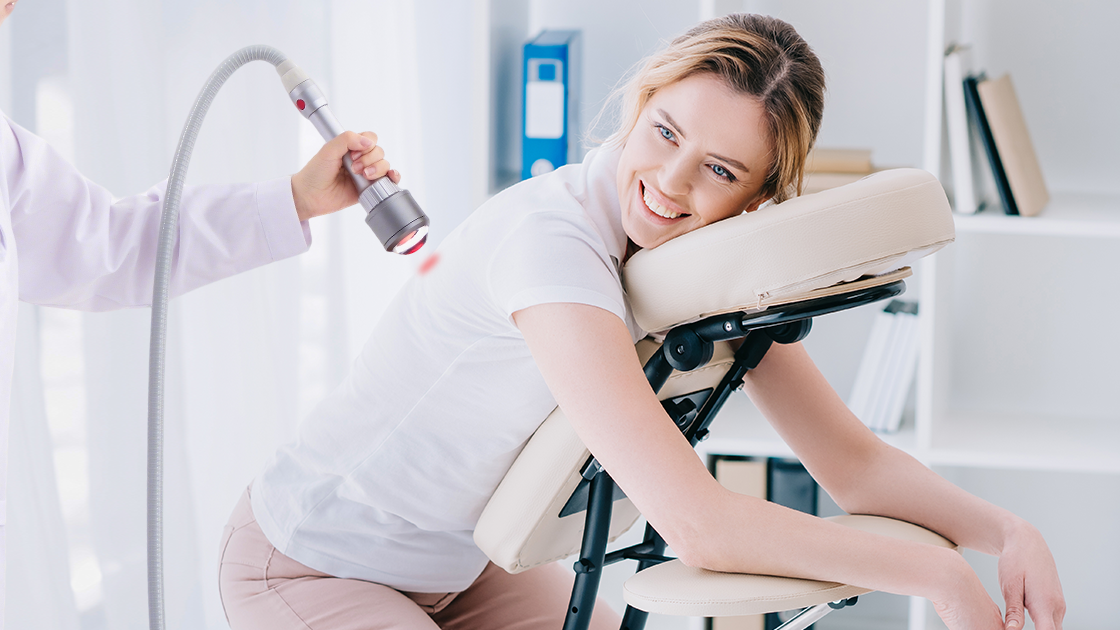
Postural problems and minor scoliosis are increasingly common in modern society due to prolonged sitting, poor ergonomics, and lifestyle habits. These conditions can lead to chronic back pain, muscle tension, and reduced flexibility, impacting daily life quality. Class IV laser therapy has emerged as a non-invasive method to support spine alignment and alleviate discomfort associated with postural issues and mild scoliosis. By promoting cellular repair, reducing inflammation, and enhancing blood circulation, this therapy offers a promising adjunct to traditional physical therapy, helping patients regain mobility and improve overall spinal health.
1. Understanding Postural Spine Issues
1.1 The Prevalence of Postural Problems
Modern lifestyles, including desk jobs, prolonged screen time, and sedentary behavior, contribute to widespread postural misalignment. Studies estimate that up to 80% of adults experience some form of musculoskeletal imbalance, ranging from rounded shoulders to subtle spinal curvature. Poor posture not only affects aesthetics but also imposes undue stress on spinal ligaments and surrounding musculature. Over time, these stresses may exacerbate minor spinal deformities such as scoliosis, leading to pain, stiffness, and limited mobility.
1.2 Minor Scoliosis: Causes and Effects
Minor scoliosis, typically defined as a spinal curvature of less than 25 degrees, often develops during adolescence but may also emerge in adults due to muscular imbalances or repetitive strain. Although mild scoliosis may not require surgical intervention, it can cause asymmetry in shoulder height, uneven hips, and discomfort during prolonged standing or activity. Physiological consequences include uneven load distribution on vertebrae and intervertebral discs, increasing the risk of chronic pain and postural fatigue.

2. كيف يعمل العلاج بالليزر من الفئة الرابعة
2.1 Cellular Mechanisms
Class IV lasers emit high-intensity infrared light that penetrates deep into tissues, stimulating cellular activity. The photons interact with mitochondrial chromophores, enhancing adenosine triphosphate (ATP) production and promoting cellular repair. Increased ATP availability accelerates recovery in muscle fibers, ligaments, and connective tissue, which are often strained due to poor posture or spinal curvature. This bio-stimulation contributes to improved muscle function, reduced tissue stiffness, and overall support for spinal alignment.
2.2 Reducing Inflammation and Pain
One of the primary challenges in postural and scoliosis-related discomfort is chronic inflammation. العلاج بالليزر من الفئة الرابعة modulates inflammatory pathways by decreasing pro-inflammatory cytokines and increasing local blood flow. Enhanced circulation facilitates nutrient delivery and waste removal, alleviating localized edema and soreness. Patients often report reduced muscle tension and a more comfortable range of motion, even after a few treatment sessions.
2.3 Supporting Spinal Flexibility
Spinal misalignment often leads to compensatory stiffness in surrounding musculature, including the erector spinae, multifidus, and quadratus lumborum. By promoting tissue relaxation and improving microcirculation, Class IV laser therapy helps restore flexibility and balance in paraspinal muscles. This facilitates corrective exercises and postural retraining, allowing patients to engage in rehabilitation with less discomfort and better long-term results.
3. Benefits Beyond Pain Relief
3.1 Enhanced Muscle Activation
Correcting postural deviations requires effective engagement of stabilizing muscles. Class IV laser therapy primes muscles by improving neuromuscular function, allowing deeper activation of postural stabilizers. Stronger, more responsive musculature helps maintain proper spinal alignment, reducing compensatory patterns that exacerbate curvature or postural fatigue. Over time, this can prevent further progression of minor scoliosis and support a more balanced musculoskeletal system.
3.2 Improved Quality of Life
Chronic postural pain and minor spinal curvature can interfere with daily activities, exercise, and sleep quality. By alleviating discomfort and improving spinal mobility, Class IV laser therapy can positively impact overall well-being. Patients often experience enhanced posture awareness, reduced fatigue, and increased confidence in movement, which may indirectly support better ergonomic habits and long-term spinal health.
3.3 Non-Invasive Alternative
Unlike surgical interventions or intensive manual therapies, Class IV laser therapy is non-invasive, painless, and generally well-tolerated. This makes it particularly suitable for individuals seeking conservative management for minor scoliosis or postural deviations. The therapy can complement physical therapy, chiropractic adjustments, or targeted exercise programs, enhancing overall treatment efficacy without significant risk.
4. Integrating Therapy into Daily Life
4.1 Complementing Physical Therapy
While Class IV laser therapy addresses inflammation, cellular repair, and tissue flexibility, it works best when combined with structured postural exercises. Strengthening the core, glutes, and back muscles alongside laser therapy promotes long-term spinal support and helps correct habitual postural deviations. This integrative approach targets both the symptoms and underlying muscular imbalances.
4.2 Monitoring Progress and Adaptation
Patients undergoing Class IV laser therapy for spinal alignment are encouraged to track improvements in pain levels, mobility, and posture. Regular assessments allow therapists to tailor treatment parameters, including session duration, intensity, and frequency. Personalized therapy plans maximize therapeutic benefits and ensure that patients experience gradual, sustainable improvements in spinal function.
4.3 Lifestyle Modifications
Beyond therapy sessions, lifestyle factors such as ergonomics, activity breaks, and proper sleep posture play a critical role in postural health. Ergonomic chairs, supportive mattresses, and mindful movement can enhance the effects of Class IV laser therapy. Combined with exercise and laser treatment, these adjustments help maintain spinal alignment and prevent recurrence of discomfort.
FAQ
Q1: Is Class IV laser therapy safe for all ages?
A1: Yes, it is generally safe for adolescents and adults with minor spinal curvature, though professional evaluation is recommended before starting therapy.
Q2: How long does it take to see results?
A2: Many patients notice improved flexibility and reduced pain within a few sessions, but optimal results often require multiple weeks depending on individual conditions.
Q3: Can Class IV laser therapy replace physical therapy?
A3: No, it is most effective when combined with exercises and posture training; it supports but does not replace comprehensive rehabilitation.
Q4: Are there any side effects?
A4: Side effects are rare but may include mild temporary redness or warmth at the treatment site.
الخاتمة
Class IV laser therapy offers a non-invasive, scientifically-supported method to alleviate discomfort, enhance muscle function, and support spinal alignment in individuals with minor scoliosis or postural deviations. By addressing cellular repair, inflammation, and tissue flexibility, it complements traditional rehabilitation approaches and promotes overall spinal health. Patients seeking pain relief, improved posture, or preventive care for spinal imbalances can benefit from integrating Class IV laser therapy into a structured wellness plan.
References
Chow, R., Johnson, M., Lopes-Martins, R., & Bjordal, J. (2009). Efficacy of low-level laser therapy in the management of neck pain: a systematic review and meta-analysis. The Lancet, 374(9700), 1897-1908.
https://www.thelancet.com/journals/lancet/article/PIIS0140-6736(09)61436-2/fulltext
Chung, H., Dai, T., Sharma, S., Huang, Y., Carroll, J., & Hamblin, M. (2012). The nuts and bolts of low-level laser (light) therapy. Annals of Biomedical Engineering, 40(2), 516-533.
https://link.springer.com/article/10.1007/s10439-011-0454-7
Leal-Junior, E., Lopes-Martins, R., & Bjordal, J. (2010). Effects of phototherapy (low-level laser therapy) on skeletal muscle fatigue. Lasers in Medical Science, 25(5), 637-642.
https://link.springer.com/article/10.1007/s10103-009-0713-6
Tumilty, S., Munn, J., McDonough, S., Hurley, D., & Basford, J. (2010). Low-level laser treatment of tendinopathy: a systematic review with meta-analysis. Photomedicine and Laser Surgery, 28(1), 3-16.
https://www.liebertpub.com/doi/10.1089/pho.2009.2516
Chow, R., Armati, P., & Smith, P. (2011). Photobiomodulation therapy for musculoskeletal disorders. Clinical and Experimental Rheumatology, 29(6), 1023-1031.
 English
 العربية
 Français
 日本語
日本語 Português
 Español
 Русский
 Deutsch