

محتويات الصفحة
مقدمة
Chronic knee pain and meniscus injuries affect millions worldwide, particularly athletes, older adults, and physically active individuals. Daily activities such as walking, climbing stairs, or standing for long periods can become painful and challenging. Traditional treatments often include medications, injections, physical therapy, or surgery, each with limitations such as side effects, long recovery, or incomplete pain relief. العلاج بالليزر من الفئة الرابعة has emerged as a safe, non-invasive alternative that promotes tissue healing, reduces inflammation, and accelerates recovery. This article explores the science behind Class IV laser therapy, its benefits for knee health, and what patients can expect during treatment.
1. Understanding Chronic Knee Pain & Meniscus Injuries
1.1 Common Causes of Knee Pain
Chronic knee pain often arises from osteoarthritis, ligament strains, repetitive motion injuries, or biomechanical imbalances. Over time, cartilage wears down, ligaments become stressed, and muscles surrounding the knee may weaken, contributing to persistent discomfort. Understanding the cause of knee pain is essential for effective treatment. Class IV laser therapy targets inflamed tissues, enhances blood flow, and stimulates cellular repair, providing relief for patients struggling with ongoing knee discomfort. This non-invasive approach complements conventional rehabilitation methods.
1.2 Meniscus Injuries and Their Impact
The meniscus is a C-shaped cartilage that cushions and stabilizes the knee joint. Tears or degeneration can result from sports injuries, aging, or sudden trauma. Patients with meniscus injuries often experience swelling, limited range of motion, and pain during activities like bending or squatting. Left untreated, meniscus injuries can accelerate joint degeneration. Class IV laser therapy assists in reducing inflammation, stimulating fibroblast activity, and promoting collagen synthesis, which can improve joint function and overall mobility without surgery.
2. كيف يعمل العلاج بالليزر من الفئة الرابعة
2.1 Photobiomodulation and Tissue Repair
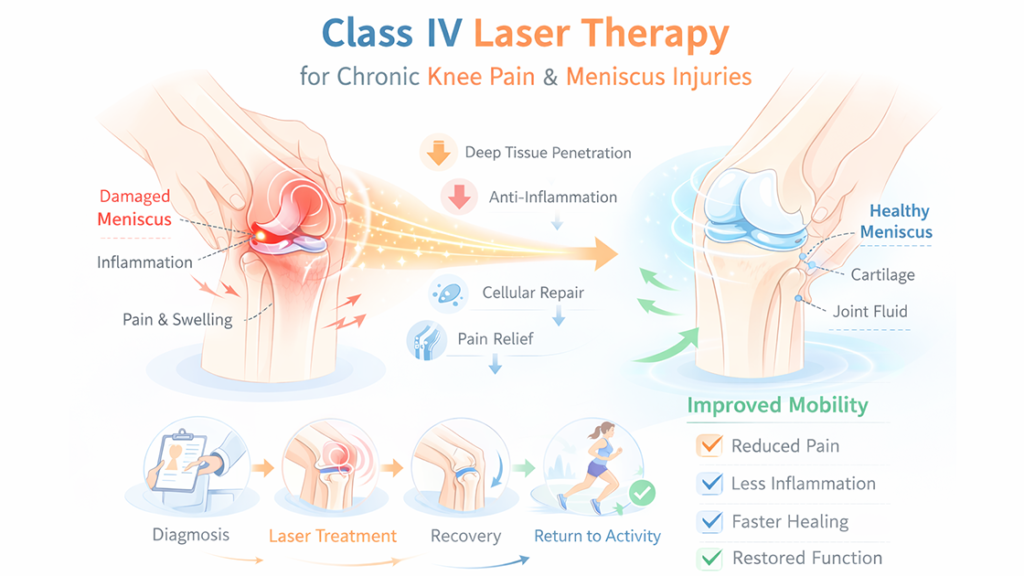
Class IV lasers emit high-powered infrared light that penetrates deep into tissues, triggering photobiomodulation. This process increases ATP production within cells, enhancing energy availability for tissue repair. Photobiomodulation also stimulates collagen production, promotes microcirculation, and accelerates healing of damaged meniscus tissue. By targeting the specific area of injury, Class IV laser therapy aids in reducing pain and promoting structural recovery in chronic knee conditions.
2.2 Pain Reduction Mechanisms
Pain relief from Class IV laser therapy involves multiple mechanisms. The laser decreases inflammatory mediators, modulates nerve signal transmission, and temporarily blocks pain pathways. Enhanced blood flow improves oxygenation and removes metabolic waste products that contribute to discomfort. Over successive sessions, these effects accumulate, reducing chronic pain intensity, improving joint flexibility, and allowing patients to resume normal daily activities more comfortably.
2.3 Treatment Protocols and Duration
Treatment sessions typically last 15–30 minutes per knee, depending on the severity of the injury. Multiple sessions are often recommended over several weeks to achieve optimal results. Patients usually feel mild warmth or tingling at the treatment site, with no need for anesthesia. Clinicians customize the laser parameters, including wavelength and power, based on individual conditions, ensuring safe and effective therapy tailored to each patient.
3. Benefits of Class IV Laser for Knee Health
3.1 Non-Invasive Alternative to Surgery
Class IV laser therapy offers a non-surgical solution for patients who want to avoid incisions, anesthesia, and extended recovery periods. It reduces pain, promotes healing, and improves joint function without the risks associated with surgical intervention. For individuals with mild to moderate meniscus injuries or chronic knee pain, laser therapy provides a conservative and effective treatment option.
3.2 Accelerated Recovery for Athletes
Athletes with meniscus injuries, ligament strains, or overuse-related knee pain benefit from faster recovery using Class IV laser therapy. By reducing inflammation, promoting microcirculation, and stimulating cellular repair, athletes can maintain mobility, resume training sooner, and reduce downtime compared to traditional rehabilitation methods. This advantage makes laser therapy particularly appealing for sports professionals and active individuals.
3.3 Long-Term Joint Function Improvement
Beyond immediate pain relief, Class IV laser therapy supports long-term knee function. The therapy stimulates collagen synthesis and enhances tissue repair, strengthening the joint structure. Over time, patients often notice improved stability, reduced stiffness, and enhanced mobility. When combined with appropriate physical therapy and exercise, laser therapy contributes to overall joint health and reduces the likelihood of recurring injuries.
4. Ideal Candidates for Treatment
4.1 Age and Activity Considerations
Class IV laser therapy is suitable for adults of all ages. It is particularly effective for individuals with mild to moderate knee pain, meniscus degeneration, or post-injury discomfort. Athletes, active adults, and older adults experiencing joint stiffness or inflammation can benefit from therapy. Combining laser sessions with targeted exercise enhances outcomes and supports long-term joint health.
4.2 Health Conditions and Contraindications
Patients with severe knee deformities, infections, active cancer, or certain chronic medical conditions should consult a clinician prior to therapy. A thorough evaluation ensures patient safety and maximizes the benefits of treatment. Clinicians can adjust laser parameters to accommodate specific health considerations and monitor progress throughout the therapy course.
4.3 Expectations and Lifestyle Integration
Laser therapy complements lifestyle modifications such as strengthening exercises, stretching, and weight management. Patients should maintain realistic expectations, understanding that therapy reduces pain and promotes healing but may not fully replace surgical intervention in severe cases. Integrating treatment with healthy habits enhances long-term knee function and mobility.
5. Procedure Overview and Patient Experience
5.1 Pre-Treatment Preparation
Before treatment, clinicians evaluate the knee, identify target areas, and clean the skin to ensure optimal laser absorption. Patients may be advised to avoid certain medications that affect sensitivity or inflammation. Clear communication of goals and expectations enhances patient confidence and adherence to the therapy plan.
5.2 Step-by-Step Treatment Process
During the session, the Class IV laser is applied over the affected knee, delivering controlled energy to inflamed tissues and damaged meniscus regions. Patients typically feel mild warmth or tingling. Sessions are painless, require no anesthesia, and can be performed in a clinical setting or physical therapy office.
5.3 Post-Treatment Care and Recovery
Most patients experience minimal temporary redness or warmth at the treatment site. Normal activity can usually be resumed immediately, though clinicians recommend gentle stretching and targeted exercises to maximize results. Consistent sessions over several weeks often yield cumulative benefits, with noticeable pain reduction and improved joint function.
FAQ
Q1: How soon will I notice improvement?
A1: Some patients feel relief after the first session, but full benefits typically require multiple sessions over several weeks.
Q2: Is the procedure painful?
A2: Most patients report only mild warmth or tingling during treatment; discomfort is minimal.
Q3: Can Class IV laser repair a torn meniscus completely?
A3: Laser therapy promotes healing and reduces pain, but severe meniscus tears may still require surgical intervention.
Q4: Are there any side effects?
A4: Side effects are rare; mild temporary redness or warmth may occur at the treatment site.
Q5: Who should avoid Class IV laser therapy?
A5: Patients with severe knee deformities, infections, or certain chronic medical conditions should seek medical advice before treatment.
الخاتمة
Class IV laser therapy is a safe, non-invasive, and effective option for chronic knee pain and meniscus injuries. By promoting tissue repair, reducing inflammation, and improving joint function, it provides relief without surgery and accelerates recovery for active individuals. Combined with proper rehabilitation, exercise, and lifestyle adjustments, Class IV laser therapy supports long-term knee health, enhances mobility, and reduces the risk of recurring injuries.
References
Smart Laser Therapy – Treatments Overview
https://smartlasertherapy.com/
Bjordal JM, et al. “A Systematic Review of Low-Level Laser Therapy in Musculoskeletal Pain”
https://www.ncbi.nlm.nih.gov/pmc/articles/PMC4743669
Chow RT, et al. “Photobiomodulation Therapy in Knee Osteoarthritis: Mechanisms and Clinical Applications”
https://www.sciencedirect.com/science/article/pii/S174438811930143X
 English
 العربية
 Français
 日本語
日本語 Português
 Español
 Русский
 Deutsch